
15 Best Board Games for Large Groups | 5+ Players
15 Best Board Games for Large Groups | 5+ Players
---
|---|---|---|---|---|---|---|
| Codenames | 6–8 | 6–8 | Light | Team association, discussion | No | High | High |
| Dixit | 5–6 | ~6 | Light | Intuition, metaphor, empathy | No | High | High |
| 6 Nimmt! | 6–10 | 7–10 | Light | Simultaneous-flip accidents | No | High | Medium |
| Coyote | 5–8 | 5–8 | Light | Bluffing, short psychological standoff | No | High | Medium |
| The Resistance: Avalon | 6–8 | 6–8 | Medium | Debate, hidden role | No | Medium | Very high |
| ito Rainbow | 6–10+ | 6–10 | Light | Cooperative conversation, value sharing | No | High | High |
| Challengers! | 6 or 8 | 6 or 8 | Medium | Competing + spectating | No | Medium | Medium |
| Hellapagos | 7–9 | 7–9 | Light | Cooperation flipping to betrayal | Yes | High | High |
| Telestrations | 6–8 | 6–8 | Light | Drawing telephone mishaps | No | High | Medium |
| Just One | 6–7 | 6–7 | Light | Cooperative association, overlapping hints | No | Very high | Medium |
| Insider Game | 6–8 | ~6 | Light | 20 Questions + insider deduction | No | Medium | High |
| The Culprit is Dancing | 5–8 | 5+ | Light | Hand-traveling bluffing card game | No | High | Medium |
| Time's Up! | 8–12+ | Large team format | Light | Recall, gesture | No | High | High |
| One Night Ultimate Werewolf | 5–7 | 5–7 | Light | Short-form role deduction | No | Medium | High |
| Quiz Iisen Ikima SHOW! | 6–10 | 6–10 | Light | Median guess, conversational gap | No | Very high | Medium |
For 6–7 people after dinner, prioritizing "2-minute explanation, 15–20 minute play time": the most reliable picks are Just One, Insider Game, The Culprit is Dancing, and Coyote. For laughs: Telestrations. For debate: Avalon. For dramatic betrayal: Hellapagos. For 10-ish people, lean toward simultaneous-participation games like Quiz Iisen Ikima SHOW!, 6 Nimmt!, and ito Rainbow.
💡 Tip
With 6–7 players, prioritizing "short explanation," "minimal Downtime," and "15–20 minutes per round" — start with Just One or Insider Game, or Telestrations if laughs are the priority.
ℹ️ Note
Player count, play time, age rating, and prices were verified against official pages, retailer listings, and BGG at time of writing.
Some editions mix base game player counts with expanded or Party Pack numbers. Especially for Telestrations, Time's Up!, and One Night Ultimate Werewolf, contents vary by edition — confirm what's in the box before buying. Just One and Quiz Iisen Ikima SHOW! both have verified tax-inclusive prices on the Arclight Games official page. Insider Game's player count is clearly listed on the Oink Games official page.
Editions aimed at international markets, parallel imports, and expansion-included player count listings can mix into the same search results. Keeping "base set supported players" and "with Party Pack or expansion" separate makes it easier to know what you're actually buying. Large-group games are the easiest category to buy wrong if you chase the maximum player count number — what you actually want is whether the fun holds up at your count.
The Real Best Picks for 5 / 6–8 / 10-ish Players
Best for exactly 5: Just One / Insider Game / Dixit / (if the table likes hidden role) Avalon
When five players are trying to decide, the smarter filter than "how many players does this support?" is "does the game stay dense at five?" The strongest picks are those where everyone is involved on nearly every turn with no one sitting idle.
Just One genuinely works at five even though it shines at larger counts. The one guesser is supported by four simultaneous hint-writers, so the actual pace is brisk. Overlapping hints don't cascade as often as at 6–7, but that shifts the feel toward "we can be a bit more thoughtful about our hints" — which actually works well for a five-person mixed-acquaintance table.
Insider Game also holds together at five. The two-phase structure — closing in on the answer through questions, then switching to catching the Insider based on who said what — keeps the pacing tight. At larger counts, conversation volume can drown out quieter players; at five, everyone can track every statement, and the game is more stable for it. Having a defined Master role also helps the tempo at this size rather than feeling like overhead.
Dixit suits five players who want to sit with the interesting gaps between each other's sensibilities. At five, the card reading doesn't get scattershot, and the "oh, you went there with that?" moments land cleanly. The laugh volume is a step below six players, but the conversation that unfolds has its own quality. It's the right pick for a night when you want something thoughtful rather than high-energy.
For tables that enjoy hidden role, The Resistance: Avalon becomes a candidate. At five, arguments stay focused and every statement carries weight. It's a different experience from the boisterous seven-player version — the density comes from how much each word matters rather than from volume. If nobody at the table minds bluffing, the atmosphere can swing completely in a very short time.
The core range: 6–8 players — Codenames / Telestrations / Coyote / Challengers!
6–8 is the most forgiving band for large-group gaming. Teams are easy to organize, simultaneous play keeps Downtime low, and even "mixed acquaintances," "age-diverse," or "not everyone games" tables tend to find a shape here. This range has enough proven titles that even BoardGameGeek treats 5–8 as its own distinct category.
Codenames is the standard-bearer. The moment you split into two teams, conversational roles emerge naturally — the guessers and the observers all have something at stake. At 6–8, the clue-giver's tension and the "wait, that word?" moments hit their stride. Wirecutter recommending it as a party game staple makes sense: experience gaps don't derail it.
Telestrations visibly unlocks past six players. Each drawing phase is 60 seconds, so at six players a full round takes about 7–10 minutes — and then the reveal laugh lands on top of that. As you add players, the telephone chain lengthens and the gap between the original word and the final answer widens, which multiplies the "how did it end up here?!" reactions. One rough artist at the table is not a liability — it's an asset.
Coyote is especially strong for 6–8 groups that want to run it multiple times quickly. Everyone grasps the situation simultaneously, and the bluffing escalates in very few turns — easy to pull out at the start of a party or a trip. Short explanation, fast restart after a loss. As the count grows, tracking "who went bold when" becomes harder, and that opacity becomes part of the fun.
Challengers! is a different flavor — it locks in when you hit 6 or exactly 8. It's not a game where everyone sits in focused silence together; instead, it alternates between competing and watching, and the watching time has its own event energy. It's the pick for groups that enjoy game night mechanics but find pure conversation games unsatisfying. In the 6–8 range, it functions well as the "something with a bit more substance" option.
【全てわかる】ブラウザ版『コードネームオンライン』のルール・設定を徹底解説 | ぼくボド
このご時世で、オンライン飲み会をするようになりました。その合間によく遊ぶのが『コードネームオンライン』。登録不要&簡単でみんながスムーズに参加できるので、すごく重宝しています! そこで今回は、『コードネームオンライン(CODENAMES O
boku-boardgame.netPractical picks for 10-ish players: 6 Nimmt! / Time's Up! / One Night Ultimate Werewolf / ito Rainbow
Around 10 players, the selection criteria shift. Short rounds, no elimination, and manageable facilitator load are the filters that matter — skip any one of them and every subsequent decision falls apart. Enough separate articles exist specifically for 9, 10, and 10+ that this tier genuinely narrows the field. Forcing a heavier game to stretch across 10 people rarely pays off; picking something with a realistic success rate does.
6 Nimmt! is the obvious practical answer. Cards are played simultaneously and resolved in one sweep, so even 10 players don't create much of a wait. More players just means more "wait, you put it there?!" accidents — skill gaps compress, and the chaos is the feature. Quick explanation, short game length, easy to deploy as the room-warming opener.
Time's Up! handles 10-ish people cleanly as the flagship of the team format in this tier. The cumulative structure — description, then single word, then gesture — means each round recontextualizes the same cards, building shared in-jokes as you go. The bigger the group, the stronger that "everyone remembers that card" bond becomes, and the payoff compounds over multiple rounds.
One Night Ultimate Werewolf at this size shines as an icebreaker. Each game is short, the app carries the MC load, and "get everyone talking at once" becomes its actual job. The psychological stakes are lower than a full werewolf campaign, and the role explanations fit in a couple of minutes. Think of it less as the main event and more as the tool that gets every voice into the room before the main event.
ito Rainbow also holds up well at 10-ish players. Calibrating shared values through words keeps the competitive pressure low and welcomes age-diverse groups. The team variant, Nijino Ito, scales to 14 — useful when you genuinely need one table to hold a large crowd. It also doesn't reward being the loudest voice, which leaves room for quieter players to participate.
💡 Tip
A reliable 10-person formula: start with 6 Nimmt! or One Night Ultimate Werewolf to loosen the room, then move into Time's Up! or ito Rainbow as the main game. Leading with a longer "headliner" before the energy is up tends to land flat — let everyone warm up first.
At large player counts, "what's the acclaimed game?" matters less than "does this actually run well at this headcount?" For 5, think turn density and engagement; for 6–8, think team structure and simultaneous play; for 10+, think cycle speed and facilitator load. Frame it that way and the right pick reveals itself.
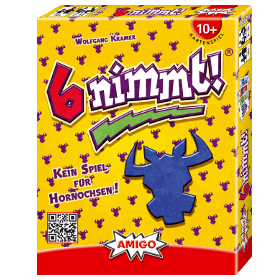
Play 6 nimmt! online from your browser
Play 6 nimmt! online from your browser with the whole world!
en.boardgamearena.comScene-by-Scene Picks: Beginners / Hidden Role / Cooperative / Strategy
| 305|
| 306| From a practical networking event standpoint, a solid sequence is: start with Quiz Iisen Ikima SHOW! to pick up names and how people think, then shift into Codenames where those associations become conversation. The first game surfaces "this is how this person reasons," and the second game turns that reasoning into shared language. For a broader overview of how large-group game trends work, the site's Rules explanation tips article (on communicating rules clearly from setup to scripted walkthrough) is worth a look — but in practice, more than the game itself, how you set the atmosphere is what determines whether the session works.
When beginners are at least half the table: Just One / Telestrations / ito Rainbow
Beginner-heavy tables need games where you understand what to do the moment someone explains it. Just One is the most reliably stable option here. The setup — one person needs an answer, everyone else writes a hint — is intuitive, and the rule overhead is low. Conversation volume is moderate, but the natural laugh at each reveal warms even a still-cautious room. It doesn't advantage experienced players heavily; "knows better hints" matters less than "can imagine what this person needs."
Telestrations has a particular talent for turning embarrassment into laughs, which makes it great with beginners. The mechanics are pure repetition — draw, pass, guess, repeat — so even non-gamers slot in quickly. At six players, a round takes roughly 7–10 minutes and the reveal comes before anyone gets bored. Conversation volume is slightly lower than Just One, but the reveal payoff hits harder. Experienced players don't have a meaningful edge; if anything, a terrible artist at the table is an asset. The atmosphere skews lively, upbeat, failure-is-fine.
ito Rainbow works differently from the other two — it's for situations where you want quiet conversation to close the distance rather than big laughs. The rules are light, and the structure (express your number through a theme-based analogy) is easy to grasp. That said, it's high-conversation, and the nuance of "how much should I say?" is where the actual fun lives — so an entirely passive table can take a while to warm up. Experienced players aren't strongly advantaged, though someone with a feel for calibrating answers helps the table flow. The atmosphere runs closer to gradual warmth than sudden laughter.
For the hidden role crowd: Avalon (no elimination) / Insider Game / One Night Ultimate Werewolf
When the table wants hidden role, matching how much you want to argue to the right game avoids most misfires. For serious debate, Avalon is the anchor. It has the heaviest rules explanation of the three and requires players to track roles, but the payoff is an enormous amount of conversation and a room that heats up fast. No elimination means longer arguments don't leave anyone stranded. It advantages experienced players visibly — someone who knows how to speak credibly tends to run the table — so it peaks with at least one person who can model good discussion without dominating it. The atmosphere is high-tension, genuinely fun arguments.
Insider Game is the lighter path into hidden role. The mechanics connect the question game to the deduction game, so the fun isn't "lie outright" but "nudge the conversation just slightly without getting caught." Explanation is quick, rounds are short, and it's accessible to hidden-role newcomers. Conversation is high, but it doesn't run as long as Avalon — the questions naturally move things forward. Experienced players have a moderate edge; the person who knows how to stay quiet and look innocent benefits, but short rounds equalize things across sessions. The atmosphere is deduction without the tension getting too sharp.
One Night Ultimate Werewolf prioritizes tempo. The role explanations scale with how many roles you add, but a single round is short, and the app handles the pacing. Conversation spikes immediately, but since it's not a long campaign, even someone who struggles to speak feels like they can push through one round. Experienced players have an edge from role familiarity, but fast cycling offsets it. The atmosphere is burst of energy, then immediately into the next round — it fits the momentum of a trip or an after-party more than a long study session of the meta.
AVARON
シーズンごとのコンセプトは設けず、ダイヤモンドやゴールドなど天然の上質な素材を用いてシンプル、トレンド、オリジナリティのキーワードを取り入れフォルムを表現しています。 繊細でさりげない存在感が光る、日常に寄り添うジュエリーを提案しています。
shop.avaron.jpFor cooperative energy: ito Rainbow / Just One / Time's Up!
When the goal is "let's win together, not against each other," cooperative or team-vs-team formats are the reliable baseline. ito Rainbow's particular strength is that listening to how someone else sees the world is itself the enjoyable part. Rules are light, conversation is high. It doesn't strongly favor experienced players — in fact, one person pushing too hard actually dilutes the experience — so tables where everyone's voice gets picked up tend to run it better. The atmosphere is gentle, making it a natural icebreaker for mixed groups.
Just One is the faster way to build that same cooperative feeling. Everyone aims at the same answer together, so whether you succeed or fail, "that was so close" is always shared. Conversation volume is moderate, but the shared direction doesn't require anyone to facilitate. Low skill advantage, works without a designated leader. The atmosphere is a steady accumulation of small wins — easy to use as the session-opener before moving to something with more friction.
Time's Up! is cooperative energy turned up loud for a big room. Rules are light; the escalating restriction structure means first-timers catch on quickly even mid-game. Conversation is high and laughter increases as rounds go by. Experienced players aren't strongly advantaged — what matters is how much "inside joke" your team has built with the card set. The atmosphere is loud and high-energy, built for the whole venue to be part of the same moment — networking events, post-project wrap parties, that kind of occasion.
💡 Tip
To build cooperative energy progressively: start with Just One to give everyone a shared success, shift to ito Rainbow once people want to talk more, and move to Time's Up! when the room's energy is already high. This keeps the temperature differential from getting too wide.
ito レインボー - ArclightGames Official
ご購入はコチラから! 価値観のズレが面白い! これ一箱で遊べる大人気会話ゲーム第2弾! 数字を言葉で「たとえる
arclightgames.jpAfter drinking / late-night travel: 6 Nimmt! / Coyote / The Culprit is Dancing
When concentration is down, you need to know whether the game still runs — otherwise you'll watch attention drift mid-session. For this condition, 6 Nimmt! is genuinely strong. Short explanation, simultaneous play so nobody waits, moderate conversation so you're not expected to talk nonstop. But each card flip triggers "wait, you're putting it there?!" — which is just enough stimulus to keep people awake. Experienced players have a slight edge, but larger groups generate enough accidents that no one can read the table fully, keeping it level. The atmosphere is reliably funny without getting loud.
Coyote is for when you want something more reflexive. The premise — you can't see your own number, only everyone else's — lands immediately, so there's almost no rules overhead. Conversation is moderate, but each declaration pulls every eye to one person for a beat of tension and then a laugh. Bluffing skill matters less than table momentum. The atmosphere is late-night psychological play that doesn't demand a lot.
The Culprit is Dancing slides into a post-drinks atmosphere naturally. Light explanation, card effects are quick to absorb. Conversation is moderate — it doesn't turn into heavy Avalon-style arguments. Player experience doesn't strongly skew results; the more people you add, the harder the culprit card is to track, and that's what makes it more fun. The atmosphere is quick bluffing, immediate laughs — a particularly good fit for a night with friends you know well.
For a dedicated game night: Codenames (multiple rounds) / Challengers! (tournament, even numbers) / Avalon
When the occasion calls for real play — not just filler — it's worth asking whether a game gets better across multiple rounds. Codenames is the benchmark for that. Explanation is light but the game deepens as a team builds shorthand together. Conversation is high; experienced players have a small advantage on the clue-giving side, but guessers with no background can fully participate. The atmosphere is lively while leaving a real sense of having thought something through. The reason it pairs well with Quiz Iisen Ikima SHOW! at networking events is that the "now I know how this person thinks" from the quiz directly feeds the word association chemistry.
Challengers! fills a gap when some players need more than pure conversation games. The explanation is heavier than the others here — the initial run takes a moment — but once the tournament bracket starts, the spectating has its own event energy. Conversation is moderate; it's not a game where everyone talks the whole time. But discussions about deck directions after a match, or reacting to a round in progress, keep the table hot in a different way. Experienced players have a clearer advantage, so it plays best with a game-night-caliber group rather than a pure beginner crowd. The atmosphere is closer to a competitive tournament than a casual hangout.
Avalon is the pick for a dedicated game night where the conversation is the main event. Medium rules load, maximum conversation, noticeable skill advantage. What that buys you is the way a second or third game with the same group deepens the read on each other — the second game is better than the first, the third is better than the second. It doesn't suit quiet rooms, but if the energy is already "let's argue and have fun doing it," very few games can hold the temperature this high for this long. Among all these options, it has the most backbone.
Watch-Outs for Large-Group Play
Deciding Whether to Use an Elimination Game
One mistake that happens after purchase: the games that generate energy and the games that need the right audience are different things. Elimination games in particular go wrong when you misread this. At first-timer sessions or mixed-acquaintance groups, anyone not yet comfortable with the group tends to wonder "what do I do now that I'm out?" — which is why no-elimination is usually the safer default.
For that reason, Just One, Telestrations, and Quiz Iisen Ikima SHOW! — games where everyone stays involved until the end — are the low-risk options. Hellapagos is the opposite: its appeal is the moment cooperation flips to betrayal, but since that includes voting someone out, it works best with a group that can roll with the drama and laugh about it. Strong for a close friend night or a trip, but dropped into a welcome-party slot as the first game, it tends to leave tension without resolution.
If you're bringing in an elimination game, the question to ask first isn't "is this good?" but "will these specific people laugh when it happens?" The more people there are, the more one person's mood shift ripples through the table.
Running Even-Number Games
"Supports large groups" in the box copy doesn't always mean odd player counts run cleanly. The clearest example is any game built around round-robin or bracket play. Challengers! works brilliantly because of spectating — but at odd numbers, one player waits on the sideline each round, and that breaks the tempo. For games like this, "does it run cleanly at even numbers?" is more actionable than looking at the upper player count.
This is especially true for games that peak at 6 or 8 exactly — hitting 7 means "one person is just waiting" every round. In a game session, that waiting feels longer than it sounds. The rules explanation doesn't surface it, but a single rotation of sitting out per round quietly degrades table focus. Round-robin and tournament formats: even numbers are reliably safe, full stop.
If your group frequently lands on odd numbers, design around simultaneous-action or all-participation formats from the start. Conversation games, cooperative games, and simultaneous-play games are robust to one extra person — they don't break at odd counts.
Running Two Sets or Using Expansions
Buying based only on the box's player count is how you end up surprised. Some games only reach their potential with an expansion or a separate pack. Telestrations is the textbook case: the base set covers 4–8 players, but for 9+, you realistically need the 12-player Party Pack or a second set. More players doesn't help if there aren't enough booklets and markers to go around.
Running two sets is less complicated than it sounds and actually works well in practice. Split the table into two groups running in parallel, then reveal all the drawings simultaneously for the scoring round. The laugh peaks align and the room gets that one-big-moment energy together. I've run Telestrations at two parallel tables of six and syncing the reveals made the eruption from one table spread to the other — it was a noticeably better atmosphere.
Even team-format games vary in how much the base box handles versus how much relies on expansions. Time's Up! is a good example: the edition and configuration affect how many players it comfortably handles, and it's not always obvious from the base box alone. "Designed for large groups" and "complete in one box" are separate claims — keeping them separate prevents most post-purchase surprises.
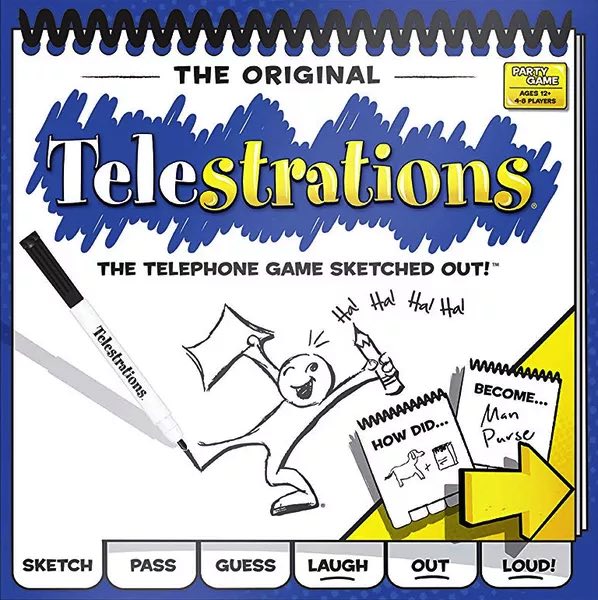
テレストレーション
Telestrationsのレビュー記事です。絵で伝える伝言ゲーム。抱腹絶倒、面白すぎます。
tbgl-r.comVenue Noise and Game Selection
The same 10 people in a conference room and 10 people in a busy bar call for different games. More conversation typically means more energy — but some games require you to hear each other to actually work. Time's Up! and argument-heavy hidden role games depend on voices carrying; in a loud environment, they can't deliver what makes them good.
In a quieter room the size of a conference space, team word association and gesture games run well. In a venue with background music or overlapping conversations, constant "sorry, what?" moments slow the tempo. For those settings, quiz formats with visual answer reveals, or games where you can read a card or a board, are more stable. Quiz Iisen Ikima SHOW! — where the MC controls the cadence and every answer is visually presented — handles noise reasonably well.
Table size is also worth checking. Games like Telestrations, where each player works through their own booklet, need actual hand space per person. The number works on paper, but at a table covered in drinks and food, it gets cramped fast. **The number of players a game supports and the number it supports comfortably at a real table are different numbers.**

人気女優がこぞって訴える「Time's Up(時間切れ)」のメッセージが意味するものとは? | フロントロウ
ハリウッド女優たちがこぞって支持を表明する「Time's Up(タイムズ・アップ)」運動を解説。 「タイムズ・アップ」運動が始動 2018年に突入した新年早々、多数の人気女優たちがこぞってSNS上でシェアしている「Ti 『…
front-row.jpJapanese Edition and New Edition Checklist
Edition mismatches cause more problems at large player counts. For Time's Up!, the card content directly affects whether the proper nouns land naturally for your group. When you're guessing people and names, a localization that doesn't match your group's shared cultural knowledge creates an uneven playing field — and often the problem turns out to be the cards, not the rules.
Telestrations similarly has murky Japanese edition availability and parallel import editions floating around. The language of the prompts feeds directly into playability, so this is worth verifying. And it's easy to assume the large-group edition is what you're buying, then realize the box you received is the 8-player base set.
There aren't many things to verify — these five cover most situations:
- Does the base box support your planned player count on its own?
- Is a Party Pack or expansion required for the full experience?
- Does an odd player count break the flow?
- Do the cards or prompts translate well to your group's shared context?
- Has the player count or contents changed between old and new editions?
| 399|
| 400| Even looking at our own Beginner's Guide to Board Games on this site, the fact that player-count-specific features work as standalone articles shows how much the "sweet spot player count" question actually matters. For large-group games, the real skill isn't finding a great game in the abstract — it's not getting the wrong box for your actual headcount, venue, and group energy.
Frequently Asked Questions
Can you enjoy a 6-player game with only 5?
You can, but if you have five people, the better move is to prioritize something that hits its sweet spot at five. Games designed for 6+ are built around a broader player range, which often means one fewer person creates a slightly thinner experience — less information, fewer conversational dynamics. Hidden role games and team-discussion games in particular can feel meaningfully different with just one person missing.
At five, the reliable picks are lighter games where everyone stays engaged on every turn. The Culprit is Dancing, for example, picks up steam at five or more — the culprit card's location becomes genuinely hard to track. Codenames, by contrast, tends to feel most alive at 6–8; at five, managing the team split sometimes takes more work than the game itself.
For a five-person table where the goal is "no dead time, conversation stays alive, everyone's involved," Just One tends to run more smoothly than Codenames. Everyone writes hints simultaneously, so the pace doesn't drop at five. Focus on "does this thin out at five?" rather than the upper player count limit, and you'll avoid most bad picks.
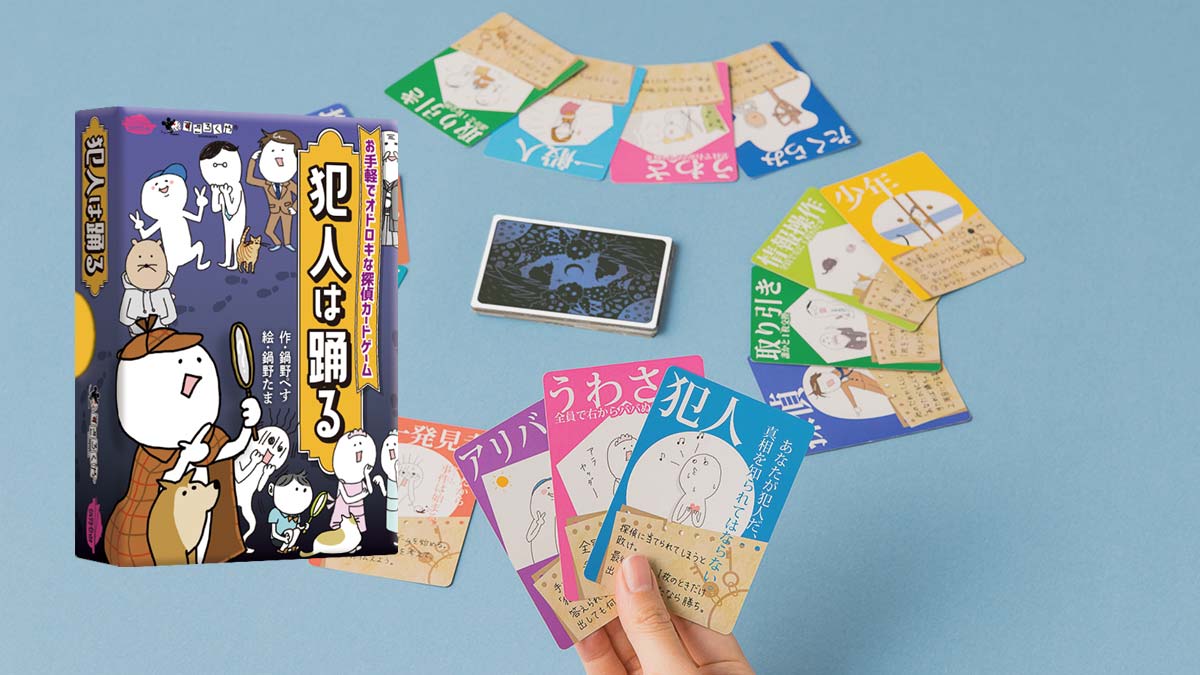
犯人は踊る | すごろくやのボードゲーム
すごろくやのボードゲーム『犯人は踊る』の紹介
sugorokuya.jpWhat's the right standard when most players are beginners?
With a beginner-majority table, the standard is clear: short explanation, rules that click in one round, no elimination, and failure that turns into laughs. Hit all four and the table warms up fast.
Practically, that points to games like Just One, Quiz Iisen Ikima SHOW!, and Telestrations — games where the reveal itself is the payoff. Telestrations has players drawing for 60 seconds per turn, so at six players a round runs about 7–10 minutes. Long thinking doesn't stall the game, and being bad at drawing actually makes you more entertaining rather than less.
The other side: going straight into hidden role or heavy argument games with a beginner crowd tends to split the table between the people who can speak confidently and those who go quiet. Insider Game is light enough to work, but for groups unfamiliar with social deduction dynamics, starting with cooperative or quiz formats first is the safer path. Whether something is "beginner-friendly" means more than "simple rules" — it means "no one ends up feeling awkward."
What's the safe bet for a drinking party?
For a drinking party, 15–20 minutes, easy to run simultaneously, manageable by one MC is the safe zone. With alcohol involved, something you can start immediately beats something that requires careful attention through a rules explanation.
That points to Quiz Iisen Ikima SHOW!, Just One, and Insider Game. Quiz Iisen Ikima SHOW! turns the answer spread into natural conversation, which keeps the atmosphere loose even with strangers in the mix. Insider Game lets the MC role keep things organized, which is useful when the room needs some structure.
Heavy hidden-role games or medium-weight games that require board state awareness can technically run after drinks, but the fatigue tends to surface before the fun does. At a house party with people you know well, The Culprit is Dancing or Hellapagos can explode in the best way — but as safe bets, lighter communication games have the edge.
💡 Tip
For a post-drinks table, "a game you can start explaining in 30 seconds" beats "the most exciting game." When you need to bridge the energy, that difference matters more than you'd think.
クイズいいセン行きまSHOW! - ArclightGames Official
ご購入はコチラから! デザイナー:川崎晋 「『アツアツのカップル』という表現に最適な温度は?」 「『贅沢な食事
arclightgames.jpWhat's the optimal pick for 7 or more players?
Past seven players, the answer becomes fairly clear: simultaneous-action or team formats. Without a mechanism that keeps everyone involved at all times, Downtime starts to bite immediately.
For a lighter session, Telestrations, Quiz Iisen Ikima SHOW!, and ito Rainbow all run well — they're conversation-driven, and more players means more opportunities for things to go hilariously wrong. Telestrations peaks somewhere in the 6–8 range and keeps getting better as the chain lengthens.
For a more substantial session, medium-weight team games in the 30–60 minute range are the right shape. Individual turn-heavy games with long wait times lose ground fast past seven players — being able to consult a teammate in between keeps satisfaction higher. If you're choosing a debate-heavy game, the prerequisite is a group that actually has time and energy for extended discussion. At large player counts, "everyone stays involved" is worth more than "we can play for a long time."
Should you avoid elimination games?
For beginner sessions or events where you want to run multiple short games, generally yes. Elimination creates idle time for whoever is out, and the split between "still in the game" and "waiting with nothing to do" is immediate. When some players are meeting for the first time, that split shows up as a comfort gap.
Hellapagos is the clearest example — the flip from cooperation to betrayal is exactly what makes it compelling, and the emotional swings peak around 7–9 players. But the ejection mechanics are structural, not incidental, so it belongs at a regular group that's bought into the premise. At a first-meeting session, or anywhere you want to run rapid-fire rounds, a no-elimination game in the same 20-minute range is simply easier to manage.
If the group has high tolerance for chaos and genuinely wants dramatic stakes, elimination is entirely valid. Whether to avoid it isn't absolute — it depends on whether it's a "let's all laugh together" kind of night or a "let's really play for something" kind of night. Even for a sit-down session that calls for more substance, a medium-weight game where everyone stays in tends to outperform one where spectating stretches longer than playing.
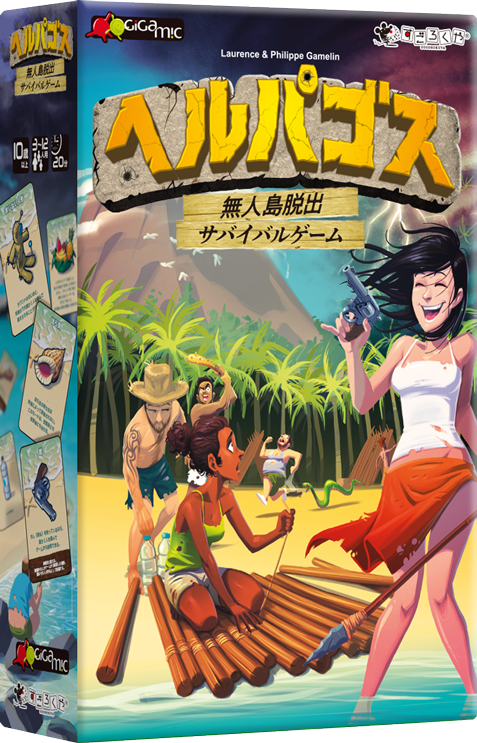
ヘルパゴス | 『ゲームマーケット』公式サイト | 国内最大規模のアナログゲーム・ テーブルゲーム・ボードゲーム イベント
ヘルパゴス | 国内最大規模のアナログゲームイベント『ゲームマーケット』公式サイトです。
gamemarket.jpThe Bottom Line: Start with Player Count, Skip the Guesswork
| 449| The process is simple: narrow by player count first, cut by available time second, confirm with elimination rules and conversation volume third. When in doubt — five people: Just One. Six to eight: Codenames. Around 10: 6 Nimmt!, One Night Ultimate Werewolf, or ito Rainbow. Use the comparison table to find "the game that hits its sweet spot at your count," and you'll land somewhere noticeably better than chasing maximum player count alone. For a 10-person work event, warm up the room with 6 Nimmt! first — then check out the beginner's guide to buying your first board game if you want to build from there.
A former nursery school teacher and current board game cafe staff member. With experience recommending games to over 200 groups per month, she finds the perfect match based on player count, time, and group dynamics.
Related Articles
8 Best Word Games in Japan | Laugh With Vocabulary
Looking for games where wit and wordplay bring the laughs? Need something that won't feel awkward even when playing with strangers? Word games are your answer. From association to improv, paraphrasing to hidden roles, the genre spans wide—but once you nail down your selection criteria, finding the perfect game for your group becomes much easier.
12 Must-Have Party Games by Player Count | Reliable Picks
Picking party games in Japan shouldn't mean just lining up famous titles—group size and atmosphere matter more than fame. This guide narrows it down to 12 carefully selected analog board and card games across three player-count categories (2 players, 3–4 players, 5+ players) that reliably land without missing the mark.