
15 Card Games Adults Actually Get Hooked On
15 Card Games Adults Actually Get Hooked On
Adult card games stretch far beyond the usual suspects like playing cards or UNO — from tense bluffing sessions that wrap up in minutes to conversation-starters that warm up any room, to deep strategy games that demand real thought. This guide compares 15 titles across player count, playtime, and complexity so you can find the one that fits your group.
Adult card games span a much wider range than most people expect. At one end you have tight psychological duels that resolve in five minutes; at the other, conversation-driven games that warm up any room, and strategy titles that reward sustained thinking. This guide compares 15 games across three practical axes — how many people are playing, how much time you have, and how heavy you want the rules — to make it easier to land on the right one for your group.
| 43| Our editorial team runs a regular game night with players in their 20s–40s, meeting twice a month with an average of seven people (internal data). For two players, the market-reading tension in Jaipur tends to hit hardest. At three or four, the hand-reading in SCOUT and The Crew clicks. At five or more, the conversational energy of ito and Codenames takes over.
The most reliable way to pick a card game for adults isn't to go by name recognition — it's to look at player count fit and what kind of fun it produces. Love Letter's lightness can feel thin on a night when everyone wants something meatier. Dominion and Splendor, on the other hand, jump in satisfaction the moment you have players who want to actually think. Matching the game to the mood matters more than the game's reputation.
How to Choose an Adult Card Game
Start with Player Count
Working through player count → playtime → type of fun → complexity keeps you from going wrong. Player count is the most important filter: even a great game undershoots when the fit is off. Our team has found that "player count mismatches" — bringing Codenames to a two-player game, or Jaipur to a table of six — are the single most common cause of a disappointing session.
For two players who want a proper game, the most reliable option is Jaipur, a two-player-only title. It wraps up in about 30 minutes and packs a lot of set collection and market-manipulation tension into that time. If you want something lighter that still has real reads in it, Love Letter handles 2–5 players and plays in 5 minutes — bluffing and deduction compressed into one card. Thirty minutes gives you five or six rounds, so win or lose, another game is always a reasonable idea.
For three to five players, SCOUT and the cooperative The Crew: Mission Deep Sea are strong contenders. SCOUT officially supports 2–5, but the hand-restriction mechanic comes alive most clearly at three or more. The Crew works at 2–5 players and is cooperative, which makes it a good fit for groups that don't want competitive friction.
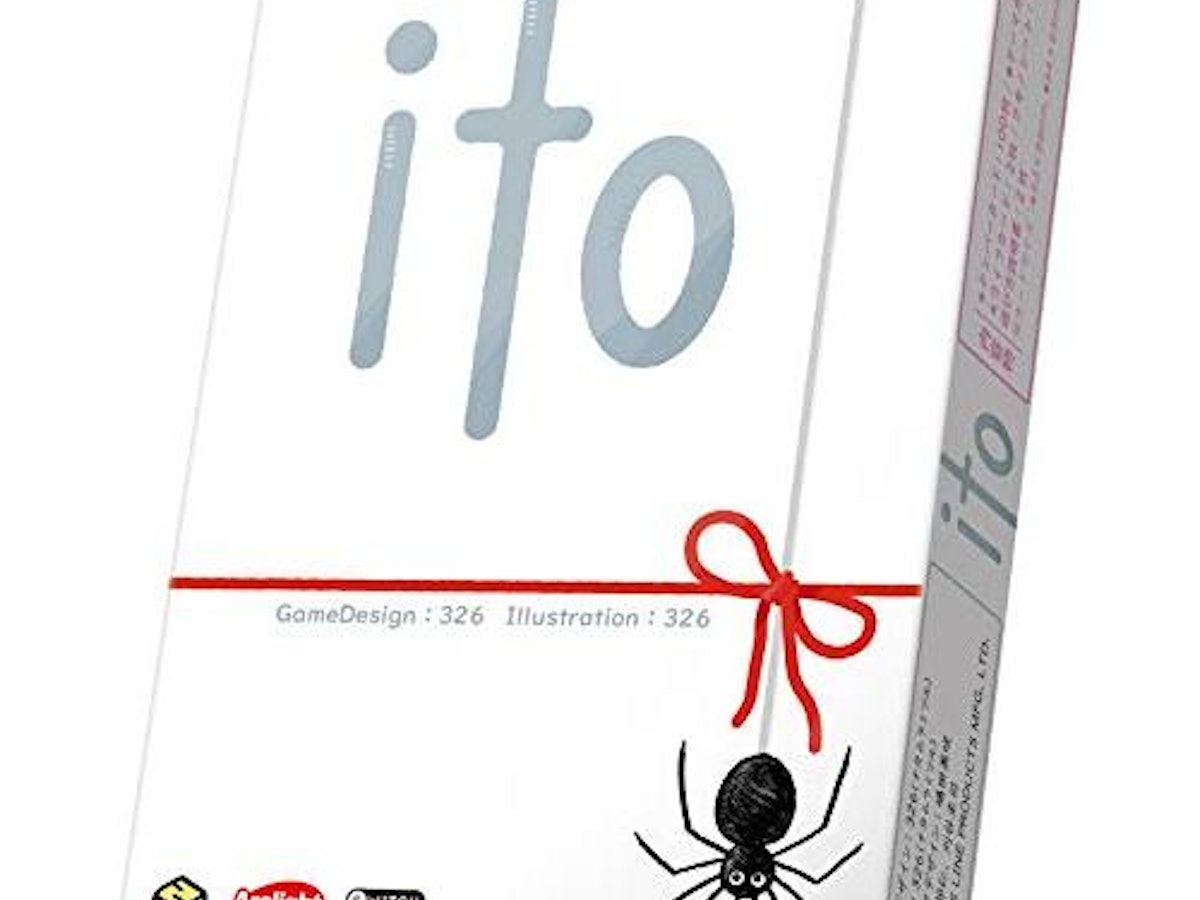
Four or more players who want conversation-driven energy should look at Codenames and ito. Codenames is a team game for 4–8 where the right word connection can light up the room instantly. ito supports 2–10 and turns differences in how people think about numbers into the whole game — the gaps in perspective become the laughs.
Larger groups benefit from simultaneous-action games like 6 Nimmt!, or quick-cycling titles like One Night Ultimate Werewolf and Hannari/Hannari-style deduction games. Games that genuinely improve with more players do exist, and it's worth checking player count fit before anything else.
カードゲームのおすすめ人気ランキング【2026年3月】
大人も子どもも手軽に遊べるカードゲーム。トランプやUNOといった定番商品に加え、パーティーゲームにぴったりなito・カタカナーシなど、楽しいゲームがたくさん販売されています。とはいえ実際に購入するとなると、驚くほど種類が豊富なため、商品選び
my-best.comPicking by Playtime
Once you've sorted for player count, think about how many minutes feel comfortable. Card games range from 5-minute sprints to 30-minute games that still fit a weekday evening — they're genuinely practical in a way that heavier board games aren't.
At the lightest end, Love Letter clocks in at 5 minutes a round. It works as an opener before a heavier game or a way to warm up a group that's still trickling in. One Night Ultimate Werewolf runs about 10 minutes, which makes it easy to run even when concentration is low — after drinks, for instance. Our experience is that in those contexts, games with a 1–2 minute explanation and lots of talking clearly outperform everything else.
The 15-minute tier hits a sweet spot between quick and substantial. SCOUT ends in about 15 minutes, but with an hour you can play three rounds, and the game genuinely improves as players understand the hand constraint. Coup and Codenames sit in this range too — short enough to feel light, addictive enough that one round is rarely the end.
With 30 minutes available, the options expand considerably. The Crew, Splendor, Dominion, Jaipur, and 6 Nimmt! all land around that duration, with a satisfying weight that's neither too thin nor too demanding. In our experience, the ideal session structure for an evening is one 30-minute game followed by one 5–10 minute game as a finisher. Just short games leaves you feeling underfed; just the 30-minute game can lack a good wind-down. The combination tends to feel complete.
Complexity and Key Terms
"Adult card game" doesn't automatically mean complex. Games that hook adults include light bluffing titles built around reading people and strategic games built around optimizing decisions. What matters is where the satisfying feeling comes from — not how heavy the rulebook is.
A few terms worth knowing upfront: Bluffing means manipulating what your opponent believes — games like Cockroach Poker and Coup are built around this, with simple rules and deep human-reading underneath. Trick-taking is the mechanic where players compete to win individual rounds by playing higher-ranked cards — The Crew and Skull King are good entry points here. Deck building means you're strengthening your personal draw deck as you play, and Dominion is the defining example.
For complexity, three tiers cover most decisions: beginner, beginner-intermediate, and intermediate. Love Letter, Cockroach Poker, and light deduction games sit in the easy tier. SCOUT, Splendor, Hanabi, and The Crew are mid-range — rules are manageable, but the game deepens over multiple plays. Dominion rewards players who think carefully about deck composition, which makes it feel intermediate in practice.
It's worth noting: players who struggle with rules explanation are often reacting to the volume of terminology rather than actual difficulty. Conversation games and bluffing games have short rules but punch well above their weight in adult settings.
What Kind of Fun Are You After?
Answering this first makes the rest of the selection easy. Adult card games produce three main types of enjoyment: conversation-driven, psychological/bluffing, and strategic.
Conversation-driven games make talking the core of the experience. ito and Codenames are the clearest examples — the fun comes from discovering how differently people see things, not just from who wins. These work especially well when new people are in the group or when the atmosphere is relaxed. Adults tend to laugh at differences in word choice and gut instinct rather than knowledge gaps, which gives these games strong social warmth.
Psychological games center on reading expressions and choices. Love Letter, Cockroach Poker, and Coup all belong here — even in short sessions, the feeling of "I had you pegged" or "I totally got away with that" comes through clearly. They work well at three to five players and need a group willing to poke at each other a little. A table that's too polite will blunt the experience.
Strategy games are about the satisfaction of planning and anticipation. SCOUT has a hand constraint that forces real decisions despite its short runtime. Splendor rewards the steady accumulation of discounts that eventually lets you snap up expensive cards — there's a growth curve in 30 minutes. Dominion takes that direction further, and the pleasure of finding a working combo increases with every additional play.
💡 Tip
To narrow down fast: ito for laughs and conversation, SCOUT or Love Letter for reads and bluffing, Splendor or Dominion for genuine strategy.
Price, Box Size, and Portability
Beyond the gameplay, physical practicality matters too. Card-focused games lean toward small boxes, which makes them easy to bring to a friend's place or a café. As a rough guide, small-box games run ¥1,000–¥2,500 (~$7–$17 USD) and mid-box games run ¥3,000–¥5,000 (~$20–$33 USD).
| 97| Some specific examples: Love Letter is listed at ¥1,850 (~$12 USD) on the Arclight product page (reference price at time of listing), Cockroach Poker has a reference price of ¥1,800 (~$12 USD) on its product page (reference price at time of listing), and Codenames appeared at ¥2,570 (~$17 USD) including tax on price comparison sites (reference price at time of listing). Games in this range are accessible enough that they make a good first or second purchase for someone not yet committed to the hobby.
On box size: Love Letter and SCOUT are small enough to toss in a bag on the off chance people are free that evening. Dominion and Splendor, on the other hand, are games you set up at home and sit down to properly — portability isn't really the point with those.
For English availability, the games covered here have well-established editions: Love Letter is widely available from multiple publishers, Dominion and Codenames have major English releases, and SCOUT (Oink Games) is stocked internationally.
One thing to watch for: auction-site averages for "card games" can be misleading because they include trading card game lots. The TCG market is large and skews those numbers up. For non-TCG card game purchases like these, player count, playtime, and how the game feels are much more useful guides than any aggregate price data.
Quick Comparison Table
Before diving in, here's a side-by-side view of all 15 games across the same axes. In the adult card game space, two 30-minute games can produce completely different experiences — the table is designed to make that visible at a glance.
Difficulty ratings use three levels — Beginner / Beginner-Intermediate / Intermediate — based on rule volume and actual decision weight, since official difficulty numbers aren't consistent across publishers. Fun type is shown as a badge: [Conversation] [Bluffing] [Strategy] [Cooperative].
| Game | Players | Time | Age | Difficulty | Fun Type | Best Count | Best For | Price Range |
|---|---|---|---|---|---|---|---|---|
| Love Letter | 2–5 | 5 min | 10+ | Beginner | [Bluffing] | Unlisted | Between games, session opener | Small box · ¥1,850 (~$12 USD) |
| SCOUT | 2–5 | 15 min | 9+ | Beginner-Int. | [Strategy] | 3–5 | Reads at 3–5, short focused play | Small box |
| The Crew: Mission Deep Sea | 2–5 | ~20–30 min | 10+ | Intermediate | [Cooperative] | 3–4 | Cooperative regulars, trick-taking intro | Small–mid box |
| Dominion | 2–4 | ~30 min | 14+ | Intermediate | [Strategy] | Unlisted | Thinking groups, repeated play | Mid box |
| Splendor | 2–4 | ~30 min | 10+ | Beginner-Int. | [Strategy] | 2–4 | Mixed groups, engine-building intro | Mid box |
| Cockroach Poker | 2–6 | ~20 min | 8+ | Beginner | [Bluffing] [Conversation] | 4–6 | Party, friends, casual social settings | Small box · ~¥1,800 (~$12 USD) |
| ito | 2–10 | ~30 min | 8+ | Beginner | [Conversation] [Cooperative] | 4–6 | Icebreaker, mixed groups, opening the room | Small box |
| Codenames | 4–8 | 15 min+ | 10+ | Beginner-Int. | [Conversation] | 4–8 | Large groups, warming up a team | Mid box · ~¥2,570 (~$17 USD) |
| Jaipur | 2 | ~30 min | 12+ | Beginner-Int. | [Strategy] [Bluffing] | 2 | Head-to-head for two, repeated duels | Small–mid box |
| Hanabi | 2–5 | ~25–30 min | ~10+ | Intermediate | [Cooperative] | 3 | Quiet coordination, cooperative enthusiasts | Small–mid box |
| 6 Nimmt! | 2–10 | ~30 min | 8+ | Beginner | [Conversation] [Bluffing] | 4–10 | Large groups, cutting wait time | Small box |
| Coup | 2–6 | ~15 min | 10+ | Beginner-Int. | [Bluffing] | 3–6 | Bluff fans, short high-stakes play | Small box |
| Skull King | 2–6 | ~30 min | 8+ | Intermediate | [Strategy] | 3–6 | Prediction and reading groups | Small–mid box |
| Deduction party games | 3–8 | ~20 min | 8+ | Beginner | [Bluffing] [Conversation] | 4–6 | Light mystery, mixed groups | Small box |
| One Night Ultimate Werewolf | 3–7 | ~10 min | — | Beginner-Int. | [Bluffing] [Conversation] | 4–7 | Fast energy spike, quick social session | Small box · ~¥1,500–2,000 (~$10–$13 USD) |
Even at a glance, the table reveals something worth noting. Love Letter, Coup, and SCOUT all qualify as short games, but they feel different in practice. Love Letter turns over so fast you can run five or six rounds in 30 minutes. Coup packs intense bluffing pressure into its brief runtime. SCOUT, despite its 15-minute estimate, keeps making players want to try that hand layout one more time. Short doesn't mean thin — what's dense about the short game varies by title.
The 30-minute games also spread across a wide range of experiences. Splendor builds toward the satisfying moment when your accumulated discounts finally unlock an expensive card. The Crew and Hanabi measure success by how well the team coordinated, not by individual victory. ito and Codenames put word choice and conceptual gaps at the center rather than win conditions.
Player count preferences diverge too. Jaipur for two, SCOUT or Love Letter for three to five, ito or Codenames or 6 Nimmt! or One Night for five and up. Large-player-count games aren't automatically enjoyable at all those player counts — the Best Count column is more practically useful than the maximum.
The individual write-ups below follow the table order and dig into what each game actually feels like, when it works, and when it doesn't.
15 Adult Card Games Worth Playing
Love Letter
One card in hand, one action per turn — and somehow it produces a tense read every time. The peak moment is correctly targeting the opponent holding the high-value card; the low point is a table where everyone plays too cautiously and rounds end without drama. Five minutes to a result makes it easy to slot into the start of a session or between heavier games, and 30 minutes gives you five or six rounds. The rules explanation is short enough that players who are nervous about explaining games will find this manageable — getting the win condition across first, then the card effects, tends to land well.
| 143| 2–5 players, 5 minutes, age 10+, Beginner difficulty. Works well as a filler between games, a session opener, or when newcomers are present. Less satisfying for players who want sustained strategic thinking or a heavy-game feeling. At 2 players, the dynamic is almost pure psychological dueling. At 3–4, reads scatter in more interesting ways. At 5, the pace stays lively but the luck factor ticks up slightly. Small box, priced at ¥1,850 (~$12 USD) on the Arclight product page (reference price at time of listing). Japanese and English editions are widely available.
SCOUT
The hand constraint — you can't rearrange your cards — is the whole game. A hand that looks weak can suddenly come alive when you Scout the right card from the table; successfully clearing your hand in one run is a great feeling. The flip side: players who haven't internalized the constraint yet tend to play passively, and the first round can drag slightly.
2–5 players, 15 minutes, age 9+, Beginner-Intermediate difficulty. Works well for reads at 3–5 players and for groups that want a real game without a long time commitment. Less suited to players who want big splashy wins or a party conversation game. At 2 players, it's workable but a bit austere — the lateral reads between opponents are thinner. 3–4 hits the sweet spot, with a good balance of table state changes and targeting decisions. 5 players is the liveliest, and Scouting becomes a much higher-stakes decision. Small box — widely available through Oink Games internationally.
The Crew: Mission Deep Sea
The novelty here is using a trick-taking structure cooperatively rather than competitively. When someone plays exactly the right card at the right moment despite limited information, that's what the game is built for — and team precision visibly improves mission by mission. The risk is a dominant player who overrides the cooperative dynamic; it works best when everyone is figuring it out together.
2–5 players, ~20–30 minutes, age 10+, Intermediate difficulty. Strong for regular groups who enjoy cooperative play, trick-taking learners, or groups that play multiple sessions together. Less suited to players who want direct head-to-head competition or party-game energy. 2 players requires a variant mode and doesn't deliver the classic feel cleanly. 3–4 is the best configuration — team coordination reads naturally. 5 players raises the stakes and the payoff on success, though personal taste varies. Small–mid box, Japanese and English editions available.
Dominion
The foundational deck-building game. The feel of a weak starting deck transforming into something coherent through your own decisions is unmistakable here — and the round where your combo finally connects is genuinely satisfying. The difficulty is that the first game can feel repetitive if players don't understand what makes a card worth buying; having someone experienced at the table makes a real difference for onboarding.
2–4 players, ~30 minutes, age 14+, Intermediate difficulty. Strong for groups who like thinking, want to replay the same game and go deeper, or are interested in expansions. Less suited to players who want to play by feel after a quick explanation, or who prioritize bluffing and direct interaction. 2 players brings out clean deck-building strategy with less external interference. 3 players adds visible competition for key cards. 4 players creates busier turns. Mid box — widely available in English.
Splendor
Simple rules, but every turn produces a genuine decision: stockpile resources now, or grab that reservation before someone else does? The payoff is the late-game moment when your accumulated discounts make an expensive card suddenly affordable. The slow opening can feel unclear before players see how the engine works, but the game structure reveals itself quickly.
2–4 players, ~30 minutes, age 10+, Beginner-Intermediate difficulty. Works well for mixed groups, players who enjoy optimizing their turn rather than talking, or as a gateway to heavier strategy. Less ideal for players who want direct attacks or bluffing. 2 players is clean and reads-based. 3 players introduces enough competition for resources to create tension without chaos. 4 players raises the interaction level significantly. Mid box — widely available in English.
Cockroach Poker
The goal isn't to win — it's to not lose, by pushing your bad cards onto other players. The best moments come when a completely absurd bluff gets through because the delivery was just convincing enough. The game dies at a table where conversation is sparse: the bluffing only works when there's air in the room.
2–6 players, ~20 minutes, age 8+, Beginner difficulty. Strong at parties, casual home settings, and any group that enjoys light social friction. Not for players who dislike bluffing games or prefer quiet strategic play. 2–3 players narrows the targeting too much and loses the chaotic push-and-pull. 4–6 is where it lives — the cross-table blame-shifting and commentary are the experience. Small box, reference price ~¥1,800 (~$12 USD). Available with English-language editions.
ito
ito asks players to communicate number values using an assigned topic without naming the number directly — and the entertainment is entirely in how differently people interpret the prompt. When a connection clicks perfectly it gets applause; when everyone retreats into safe, generic answers the game goes flat. It's one of the most reliable conversation-starters for adult groups that include people who don't know each other.
2–10 players, ~30 minutes, age 8+, Beginner difficulty. Excellent as an icebreaker, at work events, or wherever you need conversation to flow naturally. Not for players who want strict scoring or quiet contemplative play. 2–3 players works but the value-gap range narrows, and the game's best moments come from more spread-out perspectives. 4–6 is the reliable sweet spot. 7+ gets chaotic and hilarious, though precision drops. Small box — available in English-language editions.
Codenames
A single-word clue linking multiple target words — this mechanic is strong enough to sustain many, many sessions. When a clue lands and your whole team connects the same dots, the shared satisfaction is immediate. The risk is teams whose word associations are so misaligned that discussions drag and the pace collapses.
4–8 players, 15 min+, age 10+, Beginner-Intermediate difficulty. Strong for larger groups, settings where you want the whole table involved, and word-game fans. Not suited to 2–3 players or players who struggle with language-heavy games. 4 players is the minimum and works fine; 6–8 is where the team energy really builds. Mid box, reference price ~¥2,570 (~$17 USD) including tax. Widely available in English.
Jaipur
Among two-player card games, Jaipur has an unusually high density of real decisions. Every turn you're weighing whether to grab cards from the market now, sell your current set, or hold camels — and correctly anticipating your opponent's next move is what separates good plays from great ones. It's purely for two, and the head-to-head format is exactly right for couples, partners, or close friends who want a proper duel.
2 players, ~30 minutes, age 12+, Beginner-Intermediate difficulty. Works for any two-player setting where real back-and-forth competition is the goal. Does not scale to three or more players. Not for groups looking for laughs or big social energy. The two-player-only design is what makes the opponent-reading work. Small–mid box — available in English.
Hanabi
Your own hand is hidden; you can only see everyone else's cards. Coordinating on what to play using limited clue tokens is the whole puzzle, and the moments when someone correctly reads a clue and plays the right card despite uncertainty are quietly spectacular. This is a focused, slightly serious game — it's better suited to a group that wants to concentrate than one that wants to chat through everything.
| 197| 2–5 players, ~25–30 min, ~age 10+, Intermediate difficulty. Ideal for groups who enjoy quiet coordination and cooperative depth. Not suited to players who want free discussion or direct head-to-head competition. 2 players skews toward puzzle-solving. 3 players has the best information-pacing. 4–5 is harder and more nail-biting. Small–mid box — English editions available.
6 Nimmt!
All you do is play one number card per round — and somehow every reveal triggers gasps and laughter. Simultaneous play means nobody waits around, and the game holds its pace regardless of how many people are at the table. The feeling of slipping safely into a good row is satisfying; a room full of overly cautious players can quiet things down.
2–10 players, ~30 min, age 8+, Beginner difficulty. Works well for large groups, mixed-generation gatherings, and anywhere you want to keep things moving. Not for players who want heavy strategy or long-arc planning. 2–3 players is functional but a bit muted. 4–6 is when the chaos starts to click. 7–10 makes the unpredictability itself the draw. Small box — widely available in English.
Coup
Among short bluffing games, Coup has real intensity. The tension of questioning whether someone actually holds the role they're claiming — and the table-wide shift when a challenge succeeds — is the core experience. The game flattens at tables where nobody challenges anyone; it rewards groups willing to apply pressure.
2–6 players, ~15 min, age 10+, Beginner-Intermediate difficulty. Works well for bluff enthusiasts, fast high-stakes play, or groups that will run multiple rounds back to back. Not for players who dislike bluffing games or elimination mechanics. 2 players is workable but thin. 3–6 is the real range, with 4–5 offering the best balance of challenge directions and bluff space. Small box — English editions widely available.
Skull King
Adding a prediction requirement to trick-taking — you declare how many tricks you'll take before the round begins — gives the game its dramatic quality. Hitting your exact bid is the peak; the pirate and mermaid special cards create turn-on-a-dime moments. The game is hard to access for players with no trick-taking experience, since the prediction layer is only meaningful once you understand card hierarchy.
2–6 players, ~30 min, age 8+, Intermediate difficulty. Good for prediction-and-reading groups, existing trick-taking fans, and mid-weight games with some theatrical flair. Not for players who want to minimize variance or find exception cards irritating. 2 players is a different experience and loses most of the game's character. 3–4 is where the reads come through clearly. 5–6 adds chaos and scales the fun accordingly. Small–mid box — English editions available internationally.
Hannari/Culprit is Dancing (light deduction game)
The mechanic of a culprit card moving from hand to hand as players use special actions creates ongoing tension — a light mystery game that still produces a little drama every round. The best moment is when you've cornered a suspect, only to discover they passed the card just in time.
3–8 players, ~20 min, age 8+, Beginner difficulty. Works well for groups who want easy mystery and social play, or when newcomers are in the mix. The game is weaker at very low player counts where logical deduction narrows too quickly. 4–6 is the best range. 7–8 is louder and funnier, though the precision goes down. Small box — Japanese editions available through specialist retailers.
One Night Ultimate Werewolf
One Night compresses the social deduction of a full Werewolf game into roughly 10 minutes. No game master is needed, role swaps happen automatically, and the brief discussion period is enough to generate real momentum — especially that moment when someone's claim contradicts what another player knows about the roles. Players who prefer long-form Werewolf may find it too quick.
3–7 players, ~10 min, age unlisted, Beginner-Intermediate difficulty. Good for groups that want fast energy spikes, players new to social deduction, or casual secondary sessions. Not for people who want long discussion arcs or who dislike elimination-style mechanics. 3 players works but loses the role complexity. 4–7 is the playable range. 5–6 has the best balance of argument density and chaos. Small box, ~¥1,500–2,000 (~$10–$13 USD) through the official store — English and variant editions widely available.
Notes on Reading the Individual Write-Ups
All 15 write-ups above share the same evaluation axes, which makes them easier to compare directly. What the editorial team focuses on: player count, playtime, age suitability, and difficulty as basics, then what mechanism produces the fun, and finally what setting makes the game work. Bluffing games like Love Letter, Coup, Cockroach Poker, and One Night live or die on whether the group is comfortable with social pressure — if people hold back, the game loses its edge. Cooperative games like The Crew and Hanabi are the opposite: the fun is in how information flows, not in who wins.
Mechanics are worth tracking too. SCOUT's hand constraint turns every turn into a real decision despite the short runtime. Dominion is deck building; Splendor runs closer to engine building, where early investments pay off in the back half. Codenames and ito make conversation the main course — the interesting thing is how people interpret a word or number, not whether they win. Skull King and The Crew as trick-taking games add layers to what would otherwise be a simple card-strength comparison: who should take this trick, and what should you deliberately lose?
Player count works differently than the spec sheet suggests. Jaipur is genuinely two-player-only. 6 Nimmt! and ito get better as you add people. For mixed groups that include beginners, Love Letter, 6 Nimmt!, Cockroach Poker, and light deduction games all have short setup times and low explanation friction. Dominion, The Crew, Hanabi, and Skull King aren't hard, but they take a round or two before new players understand what's worth pursuing. Tolerance for social pressure is another variable: players who don't enjoy bluffing will find Splendor, Hanabi, or The Crew more comfortable than Coup or One Night.
ℹ️ Note
Short games are often labeled "light," but Love Letter is short precisely because it's designed for repeated play — 30 minutes gives you multiple rounds and enough data to read how someone is adjusting. SCOUT's 15-minute estimate works the same way: an hour with three plays is when the game stabilizes.
On availability: most of the 15 games here have solid international distribution. Love Letter, Dominion, Hanabi, and Jaipur have major publisher releases. SCOUT (Oink Games), Coup, and Codenames are also widely stocked. If you're choosing based on awards recognition, The Crew, Hanabi, and Codenames have international critical recognition that overlaps with this list's recommendations for anyone who wants to "start with something proven."
The write-ups are designed so you can compare games side by side. Something like Codenames is broad-appealing through word association; Cockroach Poker generates laughs through table reads and timing; The Crew gives you quiet moments that feel genuinely earned. That difference in how the fun lands is what the individual reviews try to preserve.
Recommendations by Player Count
2 Players: Jaipur / Love Letter / The Crew (2P Variant) / Hanabi / SCOUT
The dynamic shifts more dramatically at two players than at any other count. With just one opponent, pushing the game with big social energy isn't really an option — what matters is reading their choices and building the next move from limited information. The games that work best at two don't rely on spectacle; they rely on thinking density.
Jaipur is the anchor for two players. It's designed exclusively for two, and its entire 30-minute structure is built around the push and pull of market decisions — take cards now, sell for points now, or hold camels to enable bulk trades later. The rules aren't heavy, but a player who correctly predicts when their opponent will sell can shift momentum instantly. If two players want a focused, quiet duel, this is the easiest recommendation.
For something lighter, Love Letter is strong. Five minutes a round means you can replay it many times within a half hour, and the short loop lets you adjust your reads between games rather than just winning one and being done. Two players makes the card tracking more precise, and the game rewards inference in a way that's tangible even at such a short runtime.
Hanabi fits two players who prefer cooperation over competition. Since you can't see your own cards, the question is always: what is my partner trying to tell me with this clue, and how do I respond in a way they'll understand? The game is less dramatic than a direct contest, but two players creates high-density communication — every hint and every decision to hold or play is worth examining afterward.
The 2-player variant of The Crew is also worth considering. Three or four players is where it shines, but the cooperative trick-taking structure still works at two. Missions are short and self-contained, so failure isn't punishing — you adjust and retry immediately. SCOUT at two is playable but, honestly, the hand-constraint reads come through much more clearly with three or more people at the table. If it's just two players, Jaipur or Love Letter will serve you better.
3–4 Players: Splendor / Dominion / SCOUT / Coup
Three to four players is the most balanced range for most card games. There's enough competition to create real decisions without the noise level of a larger group, which means analytical and casual players can often share the same table without either feeling neglected.
Splendor works well here. As you accumulate card discounts across the 30-minute game, the tempo of what you can do accelerates — and at three or four players, competition for desirable cards creates just enough friction to make planning matter without turning into a scramble. Rules go in quickly, and the question of "what should I be building toward?" becomes visible within a few turns even for first-time players.
Dominion runs at a similar time commitment but demands more deliberate thinking. The deck-building archetype means every purchase decision compounds — buy a weak card now and you'll draw it for the rest of the game. At three or four, you can see what your opponents are building toward, and the question of whether to race for fast points or build a more powerful engine is different every game.
For fast, reads-heavy play, SCOUT is the best option in this range. The hand constraint means raw card strength isn't enough — you need to pick the right moment to play and the right moment to Scout the table. At 15 minutes per game, you can run three rounds in an hour, and the game's evaluations typically stabilize after the second round. The rhythm of "learn the constraint, plan around it, refine the plan" fits three or four players particularly well.
Coup also lands well at this count. About 15 minutes, and claiming a role convincingly enough to go unchallenged is almost entirely a social skill. At two players the psychological game is a bit flat; at five or more the signal-to-noise ratio drops. Three to four gives everyone enough room to apply pressure without the game devolving into chaos.
5+ Players: ito / Codenames / 6 Nimmt! / One Night Ultimate Werewolf / Cockroach Poker / Skull King
At five or more, the priorities reorder. Conversation flow and pace come first. Deep individual turns matter less than whether everyone stays involved, and whether the room feels warm. The games that work here have low explanation overhead and fast response loops.
ito is built for this. Players express their number using a topic without naming it directly — the conversation starts automatically, works with strangers, and makes value-gap differences the entertainment rather than a failure state. It's listed at a best count of 4–6, but the game's social warmth scales up well and it's one of the strongest icebreakers in this list. If you want the room open before the session properly starts, this is the tool for it.
Codenames handles the large group format through team structure. Because you're always part of a team, no individual is ever just watching — even the non-cluegiver roles are active. One well-landed clue that connects multiple words creates a shared moment that benefits from having more people around it. Five players and up is where the game feels like itself.
6 Nimmt! is the pace anchor for large groups. Simultaneous card reveal means nobody is waiting for their turn, and the game compresses naturally to about 30 minutes regardless of how many people are playing. Its durability at large counts comes entirely from this no-downtime structure — the game doesn't drag because there is no drag.
One Night Ultimate Werewolf provides the sharpest energy spike in this category. Ten minutes, no game master, and the role-swap mechanics mean every discussion starts from incomplete information and gets intense fast. Five or six players gives the accusation dynamics room to move, and the low stakes of a single short round make "one more" an easy ask. Works especially well for groups that already know social deduction games.
Cockroach Poker is the lighter version of the same idea. Twenty minutes, one core concept, and the bluffing requires no rules overhead — you just read people. It's a natural fit for parties and home game nights where the mood is relaxed. The reference price of around ¥1,800 (~$12 USD) is almost beside the point; the real value is how fast it produces laughs from a standing start.
For groups at five or more who want something a bit more gamey, Skull King is worth considering. The prediction mechanic adds stakes to every trick, and the special cards create reversals that benefit from a larger audience. More experienced players don't dominate automatically, which is helpful in mixed groups.
One note on SCOUT at this count: as a game it's excellent, but at five players the turn rotation slows enough that a group still warming up may lose momentum between turns. For experienced players who know the game, it's fine. For pace-first large groups, 6 Nimmt! or ito are the safer defaults. As the player count grows, the ability to ride the room's energy matters more than any single game's design quality.
Choosing by Preference
Beginners (under 5-minute explanation): Love Letter / 6 Nimmt! / Cockroach Poker / ito
When the priority is minimizing learning friction, the standard isn't just "how long do the rules take" — it's "how many uncertain decisions does a new player face per turn?" For mixed groups, "I'm already playing" matters more than accuracy, and it determines how the session feels for everyone.
Love Letter is the most reliable beginner pick. Five minutes a round, 30 minutes for five or six games. The action is simple — use your one card to deduce what the opponent is holding — but the bluffing and deduction emerge naturally without needing to be taught directly. New players feel the psychological tension quickly, which is the real goal.
6 Nimmt! extends to large groups and teaches in one pass. Play a number card; it goes on a row; whoever causes a row to overflow takes those cards as penalty points. Simultaneous reveal means no waiting, and the table interaction ("no, not that row!") generates comments naturally. It's less a competitive game and more a shared experience of managed chaos, which is exactly right for mixed groups.
Cockroach Poker works particularly well when players don't mind bluffing. The whole game is one question — is this card what they say it is? — and you don't need any card game fluency to participate. The skill gap between experienced and inexperienced players shows up in reading people, not in game knowledge, so newcomers are genuinely competitive from round one.
ito is the right pick when conversation is the goal more than competition. Expressing a number through a topic prompt requires zero card game knowledge; the whole game is already familiar social behavior. It's the most forgiving of the four for players who feel anxious about "playing wrong."
A natural session flow for a mixed group: Love Letter first to establish individual reads, 6 Nimmt! to involve everyone simultaneously, Codenames to close with team energy. The rules explanation length and conversation volume increase in steps, which makes the temperature rise without a jarring jump.
Psychological/Bluffing: Coup / Cockroach Poker / Love Letter / One Night Ultimate Werewolf
If the best part of a game is watching someone commit to a lie, the variable that matters most is how much pressure the bluffing actually creates. Bluffing isn't just lying — it's making the other person believe you might be telling the truth. The games here all do this, but at different weights.
Coup is for players who want dense bluffing in a short game. Claiming a role you don't hold works until someone calls it — and the interesting thing is that actually holding the role often makes it harder to play it convincingly, while a complete bluff delivered confidently can go unchallenged all game. The reads are tight even with minimal conversation.
Cockroach Poker trades Coup's tight logic for social texture. The game is won and lost on expression, timing, and delivery — "that pause felt fake" is a valid read. Losing a round doesn't create the heaviness that role-reveal does in Coup, which keeps the atmosphere lighter. The better fit for players who enjoy bluffing but get tired of tracking capabilities and threats.
Love Letter sits between the two. The card set is small enough that players quickly understand what's dangerous, and the game layer of "who should I target, and when should I look harmless?" builds without requiring players to track complex information. Less about committing to a big lie, more about managing inference — closer to deduction with a bluffing edge.
One Night Ultimate Werewolf puts conversation in front. The short discussion generates real information chaos, and what you do with your speaking time — building a narrative, deflecting suspicion, pointing at someone else — is as important as the role you're holding. For players who want their social deduction to feel like a debate, this is the most dramatic option in the group.
Conversation Focus: Codenames / ito
When talking is the point, the evaluation axes shift to how much conversation the game creates and how easy it is to speak up. Conversation-first games don't reward optimized decisions; they reward honest expression. They're good for warming up new relationships and don't create the expertise gap that strategy games can.
Codenames puts the conversation inside a team dynamic. Connecting multiple words through one clue requires a shared framework — and the disagreements about whether a connection makes sense are the best part. "That clue makes total sense" and "there's no way that word connects to this one" are both interesting, and neither is wrong in a way that creates social awkwardness. The game has winners and losers, but the atmosphere stays warm.
ito removes even that competition. There's no wrong answer to "how do you express a 73 using the topic 'things you'd find in a kitchen'?" — just different answers, and the distance between them is entertaining. The game asks less of players than Codenames does: you don't need a vocabulary advantage or strong word association, just a willingness to say something. It's the most accessible conversation game on this list.
The difference between the two: Codenames for settings where you want team energy and a win condition that matters, ito for settings where the primary goal is opening conversation and making people comfortable. If you want clear right and wrong answers to rally around, go Codenames. If you want the friction itself to be the entertainment, ito.
Strategy and Engine Building: Dominion / Splendor / SCOUT / Skull King
Strategy games in this list vary significantly in feel. The connecting thread is that good decisions compound — what you do on turn 3 affects what's available to you on turn 10. Deck building, engine building, and trick-taking are the relevant subcategories.
Dominion is the deck-building standard. Choosing which cards to add to your deck — and which weak cards to eventually cut — creates a personalized engine that plays differently from everyone else's. Strong combos produce memorable turns, and the desire to build the same combination more efficiently is what brings players back. The best match for players who think "I'll do better next game."
Splendor is the best entry point for engine-building. Each card you acquire gives a permanent resource discount, so the later the game goes, the more powerful your available actions become. The arc is visible and intuitive: buy cheap cards early, build toward expensive ones, close it out. Less abstract than Dominion, and the decision space per turn is cleaner.
SCOUT is where strategy and reading overlap. The hand constraint rules out passive play — you need to decide when to commit your tiles and when to Scout rather than fight. It's not engine building in the traditional sense, but the skill development from game to game is real, and the improvement between first and third plays tends to be significant.
Skull King brings strategy to trick-taking through the prediction mechanic. You can't just play your strongest cards — you need to estimate how many tricks you'll take and hit that number exactly. Overbidding and underbidding both hurt, which means hand evaluation and risk management are in play on every round. Among the strategy options here, it's the one most likely to appeal to both serious players and people who just want some theatrics.
Cooperative: The Crew / Hanabi
If what you want is time spent thinking in the same direction rather than against each other, cooperative games deliver something qualitatively different from competitive ones. The constraint — limited communication — is what makes both of these work. When coordination succeeds, the feeling is distinct from winning a competition.
The Crew is cooperative trick-taking, which is unusual enough to feel fresh. You can't directly tell teammates what to do, so reading intentions from the cards that are played is the core skill. Missions are short enough to fail and immediately retry, which makes the learning curve forgiving. "Oh, that card was the signal" is a regular moment in good sessions.
Hanabi takes constraint further. You can only see your teammates' hands — your own hand is hidden — and the limited information tokens structure every hint. It's quieter and more focused than The Crew, and it suits players who find loud coordination games draining but still want genuine cooperative depth. The reads here are more abstract: why did my partner give me this clue about rank instead of color? What does that tell me about what I'm holding?
Choosing between them: The Crew has a stronger sense of level progression and accumulated achievement across missions. Hanabi has a meditative quality that some groups find more satisfying, especially in smaller sessions. If the group has had a competitive session and wants to decompress, either one works — though Hanabi's lower communication overhead makes it quieter, which may be exactly what's needed.
If You're Still Deciding: Three Starting Points
When nothing is clicking, the editorial team's default recommendation is SCOUT, Jaipur, and ito — three games that point in clearly different directions and cover different player counts and group energies without a lot of overlap.
The General-Purpose Pick: SCOUT
SCOUT delivers a genuine sense of having actually played something, despite taking only 15 minutes. Supports 2–5 players, and in an hour you can run three rounds. The first round is for learning the hand constraint; the second round is where the reads start; by the third, you're thinking about which specific arrangement to exploit. Short without being disposable — and flexible enough to work at most player counts.
The constraint itself is the design: you can't rearrange your hand, so building a strong combination requires Scouting the right cards at the right moment. Pure card strength doesn't carry you, and neither does luck — the timing decisions matter continuously. This balance is why it holds up as a reliable session-opener or mid-evening game even for groups that play regularly.
The Two-Player Pick: Jaipur
Jaipur is the strongest dedicated two-player option on this list. Thirty minutes, clean rules, and every turn produces a choice between taking cards now, selling for maximum bonus points, or holding camels to enable bigger trades later. The reads are real — leaving a favorable market for your opponent is a meaningful mistake — and the game doesn't pad itself to feel substantial. It simply is.
It rewards repetition without requiring it. The first game produces solid decisions; subsequent games add a layer of reading the opponent's tendencies. Partners, couples, or friends who want a genuine head-to-head without an all-evening commitment will find it a reliable go-to.
The Large-Group Pick: ito
ito is the lowest-risk choice for groups of five or more, especially when the group includes people who don't know each other well. The game doesn't require card game fluency, doesn't have a language barrier (once translated), and generates conversation by design. The disparity between how different players value the same thing is already interesting before anyone has learned the rules.
It works particularly well when the room isn't fully warmed up yet — drinks, a company event, a gathering where people are still finding their footing. The game's output is people talking and laughing, which is the goal anyway. Win or lose is almost beside the point.
💡 Tip
For a structured evening with a mixed group: open with SCOUT to set a game-night tone, then move to ito for the social wind-down. The first half gives people something to focus on; the second half opens the room.
For word-game fans with a large group, Codenames is the natural alternative to ito — team structure, more competition, strong group energy. For groups that prefer to think hard, Dominion is the longer-arc option that rewards committed players over multiple sessions.
The shortcut: three to five players who want reads — SCOUT. Two players who want a proper game — Jaipur. Six or more players who want conversation — ito.
Frequently Asked Questions
Can beginners play these?
Yes. The safest starting points are Love Letter, 6 Nimmt!, and ito — all have short rules explanations. Love Letter plays in 5 minutes, making it easy to try a round, recalibrate, and go again. 6 Nimmt!'s rules are simple and simultaneous play means no one is waiting around feeling lost. ito requires conversation rather than card game strategy, so players who've never played a card game can participate fully.
SCOUT and Splendor are manageable for beginners but benefit from a well-organized explanation before the first round. The game gets noticeably better once players understand what they're optimizing for — someone experienced at the table makes a real difference.
Is it fun with just two players?
Several games are genuinely strong at two. Jaipur is the standout — two-player only by design, and the reading tension comes through cleanly. It leaves you with a satisfying feeling of having competed without overstaying its welcome.
Love Letter also works well: short rounds mean variance evens out across multiple games, and two players make card tracking more precise. SCOUT has its fans at two, though the lateral reads are thinner without more players. For cooperative play, Hanabi and The Crew are both good options — if you'd rather solve something together than fight each other, either fits. The Crew in particular builds a good rhythm of signal-reading over its short missions.
What works at a casual party or work event?
Games that move fast and generate natural conversation are what you want. Our top picks for this context: ito, Codenames, and 6 Nimmt!. ito sparks discussion through value differences, Codenames builds shared energy quickly even among strangers, and 6 Nimmt! stays on pace regardless of group size thanks to simultaneous play.
The less obvious point: whether a game works at a party depends less on how fun it is in the abstract and more on how short the rules explanation is. Games you can explain in 5–10 minutes let you run a second round before the energy drops.
Which games are easiest to explain?
The "1–3 minute" tier includes Love Letter, 6 Nimmt!, Cockroach Poker, and ito. Love Letter covers all the card effects and still stays compact. 6 Nimmt! has a clear objective and one placement rule. Cockroach Poker has one central mechanic — pass a card honestly or bluff, and your opponent decides — which players can visualize immediately. ito lets you skip any tactical nuance and just start.
Dominion and The Crew aren't difficult, but there's more ground to cover in the explanation. If you want the lightest possible first round, stick with one of the above four.
How do I find a game with an English edition?
Most titles in this guide have widely available English editions through major publishers. Love Letter, Dominion, Hanabi, and Jaipur are all well-stocked internationally. Cockroach Poker and 6 Nimmt! also have English releases. SCOUT (Oink Games) and Coup are both distributed internationally. The thing to verify is whether there's a publisher or recognized distributor product page for the English version — import-only editions can create issues around translation quality or edition differences.
What should I expect to pay?
Small-box games generally run ¥1,000–¥2,500 (~$7–$17 USD), and mid-box games run ¥3,000–¥5,000 (~$20–$33 USD). Concrete examples: Love Letter is listed at ¥1,850 (~$12 USD) on the Arclight product page (reference price at time of listing), Cockroach Poker has a reference price of ¥1,800 (~$12 USD) (reference price at time of listing), and Codenames appeared at ¥2,570 (~$17 USD) including tax on price comparison sites (reference price at time of listing).
Secondhand auction averages for "card games" sit around ¥4,208 (~$28 USD) in aggregate data, but this includes trading card games and covers a wide range of products. For non-TCG purchases, box size and player count are more useful filters than any blended average.
Related Topics
Comparing the best party-focused titles
If you want to narrow from "general overview" to "what will move the room the most," the logical next step is sorting by energy type rather than title. The 15 games covered here span a wide range, but in practice most game nights benefit from matching the game's energy output to the room's energy level rather than picking by reputation.
International sources like Wargamer regularly surface SCOUT and Dominion as durable picks, and domestic roundups consistently highlight ito and Love Letter as the safest beginner-friendly entries. Our own read is similar: start with Love Letter, SCOUT, and The Crew to find your preference across bluffing, reading, and cooperation, then use that to filter toward "more laughs" or "more conversation."

The 14 best card games in 2026
These days, the best card games have outpaced those you get from a 52-card deck - here are the modern card games for adu
www.wargamer.comThe next step beyond playing cards
For players coming from a background of Poker or classic card games who don't want to jump straight into complex board games, the natural bridge is a set of games that share the familiar feel of a card hand while adding a mechanic or two. This guide covers the full range, but filtering to just the games that feel like natural extensions of playing-card games narrows the list considerably.
The key splits are "reads-focused," "conversation-focused," and "bluff-focused" — and which way you lean determines which game to try first.
This guide is designed to give you the full picture upfront. Players who feel overwhelmed by too many options tend to do better with a narrower follow-up search once they've identified which axis matters most to them.
Going deeper on deck building
If the strategic side of Dominion stood out, deck building is the genre worth exploring further. The satisfaction isn't just drawing cards — it's the feeling of a deck you've shaped running the way you intended it to. That's a different kind of satisfaction from winning a single round.
Dominion wraps in about 30 minutes and changes its card pool every game, so the same group can play many sessions without repeating the same decisions. The early-game insight — reducing your weak cards improves your overall draw quality — tends to click suddenly rather than gradually, and once it does the game opens up. Players who enjoyed Splendor often take well to this kind of accumulation-focused thinking.
Budget-friendly small-box options
For players who want to keep costs low without sacrificing quality, small-box card games are well-suited to the constraint — portability and replayability tend to be where the real value is anyway.
Love Letter is priced at ¥1,850 (~$12 USD) and runs multiple times in a 30-minute window. Cockroach Poker is around ¥1,800 (~$12 USD) and works best at four to six players where the cross-table blame-shifting creates momentum on its own. At similar price points, the two games produce different kinds of fun — Love Letter trades in inference density, Cockroach Poker in social pressure. Knowing which one fits your group is the decision that matters, not the price difference.
Bluffing and psychological games in depth
If psychological tension is the draw, it's worth knowing that bluffing games aren't all the same beneath the surface — what you're actually reading differs by game.
Love Letter centers on deduction: you're trying to narrow down what the opponent is holding based on limited information. Coup makes the bluff itself explicit — name a role, face a potential challenge, hold or fold. Cockroach Poker is less about logic and more about reading the person: their timing, their delivery, their composure. SCOUT isn't a bluffing game, but the hand constraint creates a reading element that bluff fans tend to respond to.
The deeper comparisons between these games belong in a dedicated follow-up. Start with the top three here to calibrate your preference, then narrow toward the specific dynamic that interests you most.
Summary and Next Steps
The shortest path to a good pick: decide on player count, then figure out how much time you have, then ask whether you want psychological tension, laughs and conversation, or real strategy — and filter by how much explanation friction you can manage. When too many options are left, get one versatile general-purpose game, then add a two-player-only title alongside it. That combination covers most situations without leaving anyone stranded.
For further reading on buying and setup, beginner board game purchase guides and board game café guides are useful companions if you want to feel solid about the first step before you commit.
Related Articles
12 Card Games Beyond Playing Cards — What to Buy Next
Even if a standard deck and UNO are your go-tos, picking the next card game can feel overwhelming. This guide compares 12 games — including Dobble, 6 Nimmt!, SCOUT, Love Letter, and ito — across player count, play time, difficulty, and price so you can quickly find the right match for your group.
7 Best Deck-Building Card Games|A Dominion-Style Beginner's Guide
Many newcomers to deck-building games wonder whether to start with the classic Dominion or try something more intuitive. This guide compares 7 titles—including Dominion itself—through practical lenses like player count, play time, and experience type, then recommends the right entry point for your table.
Affordable Card Games Ranked | Must-Try Classics Under ¥1,500 in Japan
Even in the ¥1,000–1,500 price range in Japan, you'll find card games that earn immediate praise the moment they hit the table. This guide breaks down classic small-box staples like [[Nimmt]], [[Nanja Monja]], [[Love Letter]], [[Coyote]], [[Penguin Party]], and [[Timeline: Inventions]] by more than just price—covering player count, play time, beginner-friendliness, and how the energy builds, so you can find exactly what fits your game night.
6 Must-Play Card Games That Get Everyone Pumped Up | Comparison Chart Included
Card games that get people excited come in different flavors—ones that trigger laughter, ones fueled by psychological bluffing, ones that naturally spark conversation. This guide compares six classics—UNO, Love Letter, Nimmt, ito, Cockroach Poker, and Nanjamonja—across player count, playtime, ease of teaching, and conversation flow.