
12 Card Games Beyond Playing Cards — What to Buy Next
12 Card Games Beyond Playing Cards — What to Buy Next
Even if a standard deck and UNO are your go-tos, picking the next card game can feel overwhelming. This guide compares 12 games — including Dobble, 6 Nimmt!, SCOUT, Love Letter, and ito — across player count, play time, difficulty, and price so you can quickly find the right match for your group.
Even if a standard deck and UNO are your go-tos, picking the next card game can feel paralyzing — you don't want to make the wrong call. This guide compares 12 games — including Dobble, 6 Nimmt!, SCOUT, Love Letter, and ito — across player count, play time, difficulty, and price so you can quickly narrow the field to the right match for your group.
This is for people who want to add one more game to a family game night, find something that genuinely works at a casual party, or pick a game light enough to pack for a trip. Running these games at our regular game nights, family gatherings, short trips, and casual hangouts revealed a clear pattern: chasing hype alone leads to misses, but once you factor in how well a game fits your player count and how easy it is to explain, satisfaction goes up sharply.
3 Things to Look for When Choosing a Card Game Beyond a Standard Deck
Player Count and Table Vibe
The single most reliable factor is how many people you usually play with. Two games can both be described as "exciting," yet one shines with two players while another only hits its stride at five or more. That's why sorting by player count is so widespread — and why breaking candidates into "mostly 2 players," "mostly 3–4," and "5 or more often" keeps the decision manageable.
If you mostly play with two people, games like Love Letter work beautifully. Arclight's official listing puts it at 2–4 players, 5–10 minutes per round — meaning you can theoretically fit six to twelve rounds into a single hour. With fewer people, every decision carries more weight, and you get a "reading your opponent" feel that's completely different from the speed-race energy of a standard deck.
At 3–4 players, games like SCOUT and Skull hit a sweet spot where compact rules still generate real tension. SCOUT is 2–5 players, around 15 minutes, and the constraint of never rearranging your hand generates natural conversation and groans. Skull handles 3–6 players, but three people gives you a quiet psychological duel while five or six turns the table electric. Same game, completely different energy.
For groups that regularly hit five or more, 6 Nimmt!, ito, and Katakana-Shii (a Japanese word-based game) keep everyone involved because information is flying in all directions. 6 Nimmt! and ito both scale up to 10 players, so they hold up even when attendance varies week to week. When strangers are in the mix, whether the game generates natural conversation and shared laughs matters more than how sharp the victory condition is. At our events, word-driven games like ito tend to break the ice earlier in the evening than more competitive options.
Play Time and Pacing
Play time isn't simply "long vs. short" — the more useful question is whether the pacing fits the occasion. Card games broadly fall into the 10–15 minute, 20–30 minute, and around-60-minute ranges, but if you're looking to complement a standard deck rather than replace it, shorter games fail less often the first time out.
Take Dobble: 2–8 players, roughly 15 minutes. Niji no Hebi / Nyanjamonja (see below) is 2–6 players, around 15 minutes. Love Letter runs 5–10 minutes. The low per-game cost makes a "one more round" feel completely natural. Short-cycle games also reward new players before the rules have fully sunk in — their appeal is immediate. At family nights or on trips, a game that ends quickly also makes it easier to take breaks and rotate seats, which in practice means more total plays.
6 Nimmt! and ito at around 30 minutes sit in a useful middle ground — not too light, not too heavy. They deliver a complete, satisfying arc in a single session, so they work best when the group has already decided "we're here to play." With ito at roughly 30 minutes, two sessions fit easily into an hour, three into ninety minutes. For games built around conversation, the time within each turn to actually talk is just as important as the total runtime.
Pacing isn't only about speed. Whether someone thinking hard is entertaining to watch matters just as much. Dobble basically eliminates downtime through pure reflex. Codenames or ito turn the listening and deliberation into the experience itself — a pause becomes part of the game, not dead air. If you'd find a gap "heavy," go reflex-first. If conversation is the point, go talk-first.
Difficulty and Rules Explanation Time
Where beginners actually stumble isn't the strategic depth — it's whether they can start playing immediately after the rules explanation. That's why recommended age and difficulty weigh so heavily in card game write-ups: the steepness of the rules barrier directly determines how often a game gets played. For families or first-time groups, a short rules explanation is worth more than deep strategy.
Nyanjamonja (ages 4+) and Dobble (ages 7+) both pass this test. Their core action — what you're supposed to do — is instantly clear from the design. Games aimed at younger ages almost always have short explanations even between adults, which means the table turns faster. If you're running several games in one evening, that efficiency adds up fast.
If you want a little more to think about, 6 Nimmt!, Cockroach Poker, and Love Letter hit a good middle ground. None of them are complicated, but with experience you'll develop a feel for when to press and when to fold. Love Letter in particular uses very few cards — the explanation is brief — yet the puzzle of reading your opponent has real texture. It's beginner-accessible without boring experienced players.
For one more layer of depth, mid-range options like SCOUT, Spicy, and Codenames become relevant. SCOUT's explanation is short, but hand management creates meaningful skill gaps. Codenames is straightforward to explain, yet the art of giving a good clue involves linguistic intuition more than just understanding the rules. One person who knows the game well can carry the table.
💡 Tip
When strangers are involved, "a game that gets a laugh during the rules explanation" beats "a hard game" every time. Nyanjamonja, ito, and Katakana-Shii consistently produce that early laugh.
Price and Value
Price is better judged by how often the game comes back to the table than by the sticker amount alone. Looking at recent auction data in the card game category, the 30-day average sale price runs around 4,208 yen (~$28 USD) — a rough market benchmark. But plenty of games under 2,000 yen (~$13 USD) deliver well above their price in enjoyment.
Some examples: ito lists for 2,200 yen (~$15 USD) at Arclight's official store, Love Letter for 1,850 yen (~$12 USD), Dobble for around 2,200 yen (~$15 USD) at retail, Cockroach Poker for around 1,800 yen (~$12 USD), and Katakana-Shii for 1,118 yen (~$7 USD) per price comparison sites. Even at those prices, a game you can run multiple times in a session pulls well above its weight. Love Letter, at 5–10 minutes a round, earns its keep not through a single memorable session but by always having another excuse to play.
On the flip side, games worth spending a bit more on are the ones that work regardless of who shows up. 6 Nimmt! and ito both scale from two players to a full crowd, meaning they rarely sit on the shelf. Even with a small price gap, wide player-count range and Replayability push the value well above face value.
Our own gut check as editors: the games that feel worth it aren't the ones you play once — they're the ones that show up again at the next gathering. Short play time, fast rules, works at any player count. When all three line up, the math on cost-per-fun quietly gets very good.
Playing Cards vs. Dedicated Card Games: What Makes the Difference
A standard deck's greatest strength is universal familiarity. The key difference with dedicated card games is that they're designed from the start to produce a specific kind of decision — not just suits and numbers, but a system that shapes how information is revealed, hidden, and misread.
Love Letter works because its small card set makes "what is my opponent holding?" a sharp, answerable puzzle. Cockroach Poker and Spicy embed the logic of bluffing directly into the cards — lying and catching lies aren't optional tactics, they're the literal rules. In Codenames, the layout of word cards changes every time, so familiar words create unexpected association conflicts that become the game.
Dig a little deeper and what's really happening is that dedicated games are clever about which information is public and which is private. The face-up tableau, the private hand, the misreadings and signals that emerge from the gap — each game has its own engineered version of that tension. Skull, where a single face-down disc can shift the entire table's mood, is a textbook example. Standard decks enable psychology too, but "a psychological duel that could only arise from this specific set of symbols" requires dedicated design.
Some games push further, making the components themselves part of the experience. Dobble turns visual pattern recognition into competitive sport. Nyanjamonja makes naming a creature — and then remembering that name — the source of laughs. Katakana-Shii turns the act of describing something (without using loanwords) into the entire game. None of those experiences are a substitute for playing cards — they're only possible because the game was designed specifically for them.
When you're shopping for that next card game, look beyond the rule differences for whether the game has its own particular information asymmetry and its own way of generating conversation. Long-lasting classics — check any top card game ranking — survive because they have a form of play-reading that belongs only to them.
【2026年版】人気カードゲームのおすすめランキング80選 | ぼくボド
【人気カードゲームのおすすめランキング】アナログゲームのレビューを450件以上書いている僕が面白い作品を厳選しました。紹介しているカードゲームは全て実際に遊んでレビューしているので、気になるゲームがあればすぐにルール&レビューをチェックでき
boku-boardgame.net12 Card Games Worth Buying Next
As covered in our first-purchase guide, player count flexibility and short rules explanations drive satisfaction more than almost anything else. See our beginner board game guide and our rules explanation tips article for more on setting up a successful first session.
Nyanjamonja
Nyanjamonja is a memory game that never feels stiff — the act of naming a creature is itself the joke. You're assigning on-the-spot names to bizarre little monsters ("Deputy Fluffface," "Sleepy Loaf"), and as the game progresses, the table builds up its own private shorthand. The best moment is when someone completely forgets the name they came up with and freezes in the middle of shouting it.
2–6 players, about 15 minutes, ages 4+, easy difficulty. Sweet spot is 4–5 players. Works best at family nights, mixed groups with strangers, and settings where kids and adults are at the same table. High conversation volume, essentially no psychological tension, more about memory and imagination than luck. One of the fastest games to get through a rules explanation.
The weak point: it doesn't suit players who want to think quietly. Since the humor depends heavily on table energy, a group that's playing it reserved won't get much out of it. One enthusiastic person changes everything, though. Related articles: beginner board game guide, board game café guide.
6 Nimmt!
6 Nimmt! is a classic that manages to be both simple and genuinely engaging. Everyone plays a number simultaneously and the cards slot into rows in ascending order — yet the card you thought was safe keeps landing exactly where you didn't want it. There's a satisfying rhythm of reading the table right, combined with pileups that nobody saw coming, and both of those things keep happening to everyone.
2–10 players, about 30 minutes, ages 8+, easy difficulty. No official best player count, but the drama sharpens noticeably around 5+. Two solid rounds fit into an hour. Works well for groups of 3–8, a longer game on a trip, or the family game night moment where someone wants a little more to think about. Moderate conversation, read-oriented tension, moderate luck.
The weak point: it doesn't deliver the flashy moments of bluffing or performance. The core pleasure is in number-reading, so if you're expecting a loud crowd-pleaser, there's a temperature mismatch. As a second step beyond a standard deck, though, it's a safe and reliable choice. Related articles: first board game purchase guide, rules explanation tips.
Hol's der Geier (Raptor)
Hol's der Geier generates real psychological depth out of pure simultaneity: everyone flips a card, and whoever played it best wins the scoring card. But playing the highest number guarantees nothing — ties cancel out — so "when to hold back" becomes its own puzzle. The minus-point cards flip the logic entirely. Ten minutes of clean drama per play.
2–6 players, about 10–20 minutes, ages 8+, low difficulty. Best around 5–6 players where the overlap-reading really shines. Works for casual parties, family nights, and as the first game of the night. Low conversation volume, high decision density, moderate luck.
The weak point: it looks plain at first glance and can feel underwhelming before you've played a round. One round is all it takes, though — the decision texture lands immediately. For fans of number games, it sits alongside 6 Nimmt! as a go-to. Related articles: beginner board game guide, rules explanation tips.
Skull
Skull creates intense table atmosphere with almost no rules. Everyone places face-down discs — flowers or a skull — and players bid on how many they can safely flip. The interesting part is that "having a strong hand" doesn't exist in this game. What you say out loud is the move. The gap between the number you announce and your actual confidence is the whole game.
3–6 players, 10–30 minutes, ages 10+, low–medium difficulty. Best at 5–6 players. Works for casual hangouts, friend groups, tables that enjoy reading facial expressions. Moderate conversation, strong psychological tension, low luck. Short rules explanation despite how it feels once you're playing.
The weak point: players who don't enjoy being read or performing under pressure won't click with it. A table that plays everything straight-faced technically functions but loses its explosive potential. This one reveals its real self when the whole group is in on the performance aspect. Related articles: board game café guide, gift guide.
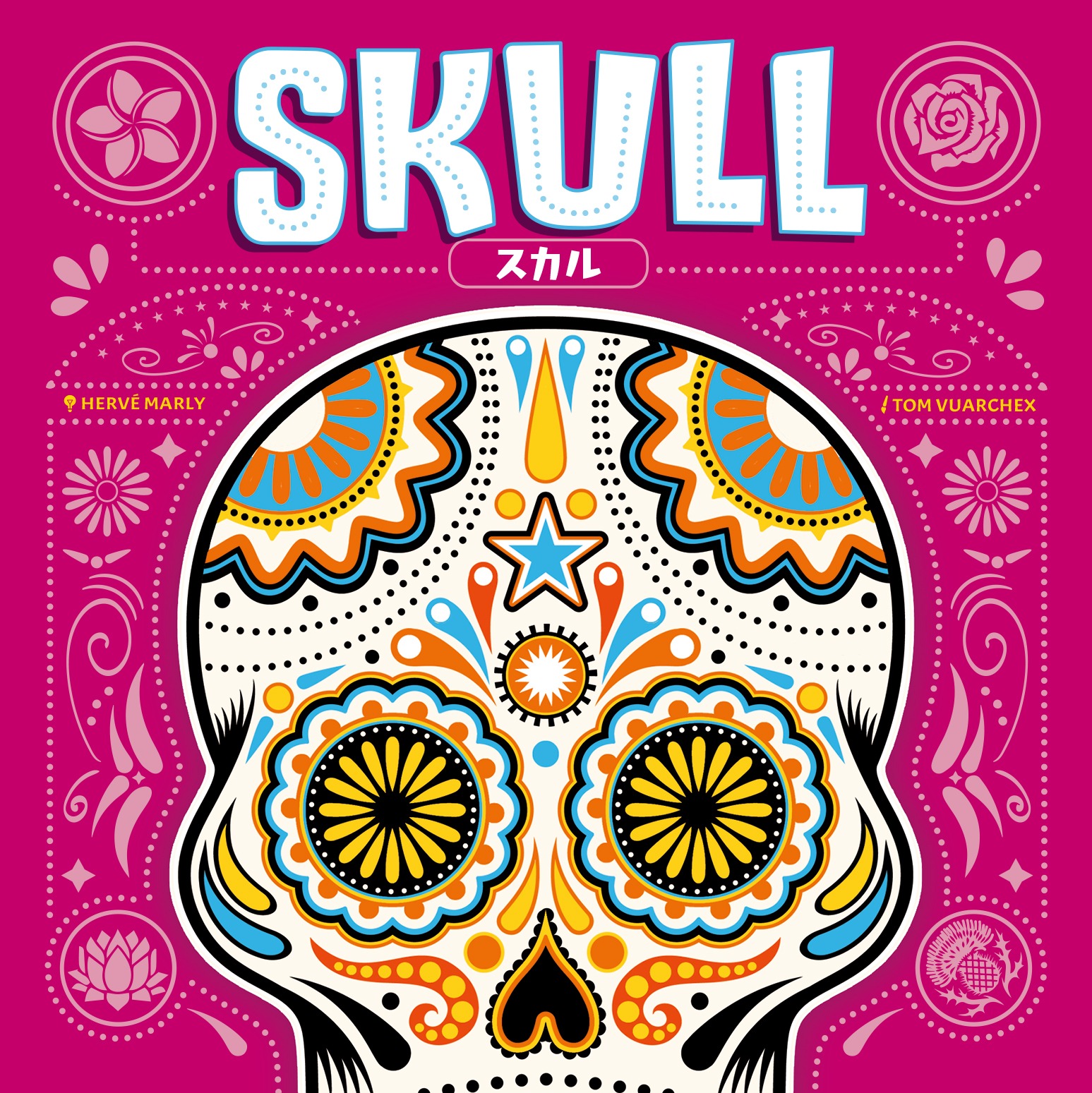
スカル | ANALOG GAME INDEX
傑作ブラフゲーム、待望の日本語版登場!シンプルなルールながら奥深い、度胸と駆け引きの華麗なる遊戯
hobbyjapan.gamesSpicy
Spicy splits from other bluffing games by making "half-true" declarations more powerful than outright lies. You can shade a card's real value or suit just a little — enough to be plausible — which means challengers can't just binary-read you. A confident declaration that slips through untested, followed by a cascade of unchallenged plays, and then a collapse: that chain is enormously satisfying. It handles cards in a way bluff games usually don't.
About 20 minutes, medium difficulty. Best at 5 players. For casual hangouts, bluff enthusiasts, and groups that want something a step beyond straightforward without getting complicated. Moderate conversation, strong psychological tension, moderate luck from hand distribution.
The weak point: it lacks the brand-name recognition of more established titles, which means a slight hesitation on first purchase. It also doesn't work if most players aren't willing to commit to bluffing. Among this list of twelve, it leans the most toward mid-level experience. Related articles: first board game purchase guide.
SCOUT
SCOUT is a climbing game with one brutal twist: you can never rearrange your hand. That single constraint turns what looks like a simple "play higher combinations" game into something that requires real hand management — when to play out, when to pick up cards, how to nurse a weak arrangement into something useful. Experienced players still find fresh problems every session because the starting hand changes every time.
2–5 players, about 15 minutes, ages 9+, medium difficulty. Best at 4–5 players. Works for groups that already know UNO and standard card games but want something with more texture. Low conversation volume, moderate tension, moderate luck in hand distribution, but skill differentials emerge clearly.
The weak point: the first game has a slightly unfamiliar feel that can catch people off guard. The explanation itself isn't long — the feel just takes one round to normalize. It's outstanding as the bridge between light games and medium-weight games. Related articles: first board game purchase guide, rules explanation tips.
SCOUT - オインクゲームズ
oinkgames.comLove Letter
Love Letter is the clearest example of fewer cards making the deduction sharper. Your turn is simple, but tracking discards and actions to narrow down "they're probably holding the Countess" is where the real game lives. At 5–10 minutes per round, you can theoretically run six to twelve rounds in an hour — which means the reading tension hits you repeatedly in a short session. Small box, short game, real bite.
2–4 players, 5–10 minutes, ages 10+, easy difficulty. Reference price: 1,850 yen (~$12 USD) at Arclight's official store. Works for small groups, gap time before dinner, between longer games. Low conversation volume, strong psychological tension, moderate luck. Shines brightest at lower player counts.
The weak point: not a game that carries a large group. It's a small-table game played repeatedly, not a centerpiece for six people. The compact box also makes it a natural gift. Related articles: gift guide, beginner board game guide.
ラブレター公式サイト
www.arclight.co.jpCockroach Poker
Cockroach Poker works because the goal is to avoid losing rather than to win — and nobody has any trouble getting into a villain mindset when the cards feature unloved insects instead of cute animals. Passing a card face-down with a confident declaration, watching it travel around the table, someone getting stuck with the wrong read — all of this happens fast and keeps the energy up throughout.
2–6 players, about 20 minutes, ages 8+, easy–medium difficulty. Reference price: 1,800 yen (~$12 USD) (per tanabotacafe.com). Best at 4–6 players in a casual hangout setting, once people are comfortable with each other. High conversation volume, strong tension, moderate luck. Rules explanation stays short.
The weak point: groups that hold back on banter produce a more cautious, subdued version of the game. The bug theme also divides opinions aesthetically. That said, the theme makes it extremely memorable, and it's one of the clearest entry points into bluffing games. Related articles: board game café guide, beginner board game guide.
Katakana-Shii
Katakana-Shii is a description game with a single, devastating constraint: no loanwords allowed. Since Japanese loanwords cover a huge range of everyday vocabulary, almost any topic immediately becomes impossible to explain normally — and the desperation is the comedy. "Smartphone" becomes "the flat rectangle thing you use to take pictures." The table melts.
3–8 players, about 15 minutes, ages 8+, easy difficulty. Reference price: 1,118 yen (~$7 USD) (per price comparison sites). Works for family nights, mixed groups, word-game fans. Very high conversation volume, low tension, luck comes from topic difficulty. Four or more players means the audience is also laughing along.
The weak point: a very uneven vocabulary group creates imbalance. Also not suited to quiet, strategy-focused sessions. For its price, the "get everyone talking" power is exceptional — one of those games that's always worth having in the bag. Related articles: beginner board game guide, gift guide.
ito
ito is one of the most reliably recommend-able cooperative games around. Each player holds a number they can't state directly, only describe through a shared theme — "which animal is strongest?" — and the gaps between people's mental models are where everything gets fun. When everyone lines up correctly, the cooperative payoff is real. When it falls apart, "wait, that was your seven?" keeps the conversation going.
2–10 players, about 30 minutes, ages 8+, easy–medium difficulty. Reference price: 2,200 yen (~$15 USD) at Arclight's official store. Two sessions fit into an hour, three into ninety minutes. Works for first-time groups, family nights, large-group trips, and icebreakers. Very high conversation volume, low tension, moderate luck.
The weak point: if the group isn't willing to engage with the "value gap" angle, rounds end quickly and flatly. In the right room, it has essentially infinite Replayability. Also one of the more accessible options for people who don't like number-heavy games. Related articles: first board game purchase guide, beginner board game guide.
ito - ArclightGames Official
ご購入はコチラから! ・ゲームデザイン :326(ナカムラミツル) ・イラスト:326(ナカムラミツル) どん
arclightgames.jpCodenames
Codenames packs all the joy of sharing a mental model with your teammates into a neat package. The rules aren't complicated, but the moment you have to link multiple target words with one clue, the layers appear instantly. The clue-giver's beautiful connection often lands completely differently on the receiving end — sometimes as laughter, sometimes as anguish.
2–8 players, about 15–20 minutes, ages 14+, medium difficulty. Best at 4–8 players in team format — that's when it's most natural. Works for word-game friends, groups that know each other reasonably well, larger game nights. Moderate to high conversation volume, moderate tension, luck in word layout.
The weak point: heavy language dependency means vocabulary gaps translate directly into difficulty gaps. It works better with people who share some context than with complete strangers. Light to explain, intellectually demanding to play — the perfect next step after UNO for groups who want to play with words. Related articles: board game café guide, first board game purchase guide.
Comparison Table
For anyone who wants a side-by-side overview, here's the full breakdown across specs and fit. Numbers reflect what's cited in the individual write-ups above.
| Game | Players | Time | Age | Difficulty | Reference Price | Best For | Weak Point | Conversation | Tension | Luck | Best Count | Explanation | Internal Links |
|---|---|---|---|---|---|---|---|---|---|---|---|---|---|
| Dobble | 2–8 | ~15 min | 7+ | Easy | ~2,200 yen (~$15 USD) at tanabotacafe.com | Family nights, travel, mixed-age groups | Too light for a thinking-focused group | Low | Low | Low | — | Short | First purchase guide, rules tips |
| Nyanjamonja | 2–6 | ~15 min | 4+ | Very easy | — | Family nights, strangers, kids+adults | Flat if the group is quiet | High | Low | Low | 4–5 | Short | Beginner guide, café guide |
| 6 Nimmt! | 2–10 | ~30 min | 8+ | Easy | — | Game nights, travel, family | Weak as a loud crowd-pleaser | Medium | Medium | Medium | — | Short | First purchase guide, rules tips |
| Hol's der Geier | 2–6 | ~10–20 min | 8+ | Low | — | Casual parties, family nights, opener | Looks plain before you play | Low | Medium | Medium | 5–6 | Short | Beginner guide, rules tips |
| Skull | 3–6 | 10–30 min | 10+ | Low–Medium | — | Casual hangouts, friend groups | Not for people averse to being read | Medium | High | Low | 5–6 | Short | Café guide, gift guide |
| Spicy | — | ~20 min | — | Medium | — | Casual hangouts, bluff fans | Flat when the group holds back | Medium | High | Medium | 5 | Short | First purchase guide |
| SCOUT | 2–5 | ~15 min | 9+ | Medium | — | Groups wanting more texture than UNO | First game feels unusual | Low | Medium | Medium | 4–5 | Short | First purchase guide, rules tips |
| Love Letter | 2–4 | 5–10 min | 10+ | Easy | 1,850 yen (~$12 USD) at Arclight | Small groups, gap time | Doesn't carry a large group | Low | High | Medium | — | Short | Gift guide, beginner guide |
| Cockroach Poker | 2–6 | ~20 min | 8+ | Easy–Medium | 1,800 yen (~$12 USD) at tanabotacafe.com | Casual hangouts, friends | Subdued when group holds back | High | High | Medium | — | Short | Café guide, beginner guide |
| Katakana-Shii | 3–8 | ~15 min | 8+ | Easy | 1,118 yen (~$7 USD) per price comparison sites | Family nights, strangers, word games | Vocabulary gaps create imbalance | High | Low | Medium | — | Short | Beginner guide, gift guide |
| ito | 2–10 | ~30 min | 8+ | Easy–Medium | 2,200 yen (~$15 USD) at Arclight | First-time groups, family, large trips | Flat if group disengages | Very High | Low | Medium | — | Short | First purchase guide, beginner guide |
| Codenames | 2–8 | ~15–20 min | 14+ | Medium | — | Word-game groups, larger game nights | Vocabulary gaps become difficulty gaps | Medium–High | Medium | Low | 4–8 | Short | Café guide, first purchase guide |
Dobble
Dobble is the go-to for starting a session with a burst of energy and noise. The core is simple: every pair of cards shares exactly one matching symbol, and you race to call it out first. The Rules explanation is practically zero, everyone joins simultaneously, and there's almost no downtime — which makes it one of the easier choices when you're not sure what to open with. It fits first-time groups, family nights, and that spare hour on a trip better than a thinking-heavy game night.
Specs: 2–8 players, ~15 minutes, ages 7+, easy. Reference price: 2,200 yen (~$15 USD) (per tanabotacafe.com). At four or more players, the "I see it!" energy that defines this game starts surfacing — multiple people calling out at once, voices overlapping. The rules take about thirty seconds to explain and the game is underway. Low conversation volume, low luck; wins come down to visual perception and reflexes.
The reason it works is that your brain reacts before your strategy does. No waiting for turns, no player advantage from position — kids and adults compete on genuinely even terms. At a family event, the "everyone shouts at the same time" moment tends to happen within the first few minutes, and the table temperature drops from formal to relaxed almost immediately. It's also compact enough to slip into a travel bag, which makes it a natural travel companion.
The flip side: the fun is built entirely on fast, noisy shared energy. Groups that want to talk things through, build strategy, or enjoy quiet deduction will find it light. But that lightness is exactly the point — if you want to add "short explanation, immediate laughs for everyone" to a standard-deck lineup, this is the reliable choice.
Nyanjamonja
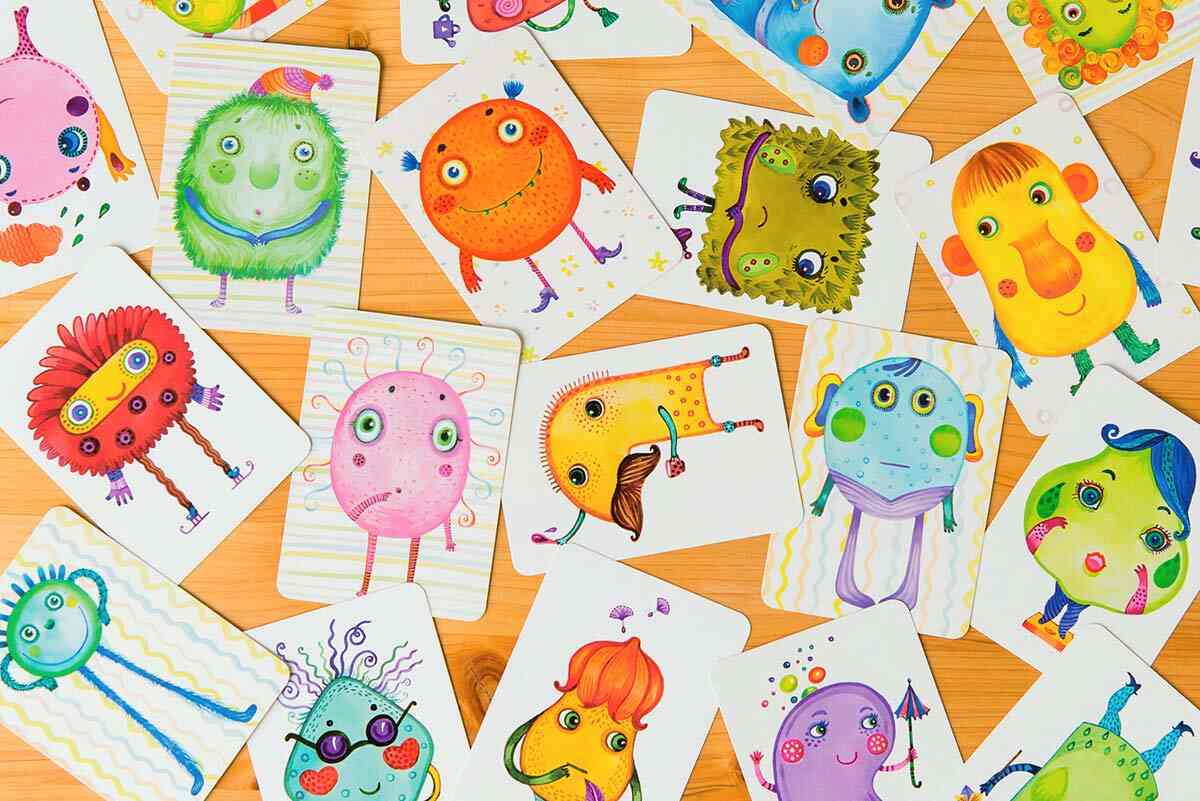
Nyanjamonja is a rare kind of card game: it turns naming something and then remembering the name into the entire experience. Bizarre little creatures appear; you give each one an improvised name on the spot; next time that creature shows up, whoever shouts the name first wins the card. The mechanic itself is simple, but "wait, why did you call it that?" creates a chain of conversation that keeps going well past the game. Kids and adults genuinely compete on the same footing. If you're looking to add something after a standard deck where table energy matters more than reflex, this fits.
Specs: 2–6 players, ~15 minutes, ages 4+, easy. Sweet spot is 4–5 players. Price wasn't confirmable from available data. The explanation takes almost no time, and the game works in mixed adult-and-child settings — though since the fun depends on wordplay and association, a completely quiet group won't get much from it. Strong fit for family nights, casual hangouts, and parent-child combinations. A group that's fully reserved can flatten it; one engaged person can flip it entirely.
The specific names people choose shape the whole experience. Stable, memorable names give the game a reliable rhythm; strange names create the moments where everyone collapses. In our experience, a young relative dubbed one creature "Karaage-kun" — a name that had nothing to do with what was on the card — and it became the table's private shorthand for the rest of the session and resurfaced in every subsequent game. The specific names your table creates are the actual lasting memory of the game, not the final score.
The inter-generational appeal is genuine and specific. No complex strategy, no long explanation, available to 4-year-olds — meaning younger kids can actually participate in the full game, not just a simplified version. Adults don't have an unfair advantage either. A child's leap of logic — "it looks like a cloud with arms, so it's Armscloud" — can own the table. When played with family, it functions less like a competition and more like a machine for generating conversation topics.
It's different from something like Dobble despite sharing the 15-minute runtime. Nyanjamonja warms the table through conversation, not speed. First-time groups distance closes quickly; casual hangouts that want laughs without confrontation work well. The drawback is that groups looking for quiet, strategic gameplay will find it unfocused — the payoff depends on everyone being at least a little bit in on the bit.
6 Nimmt!
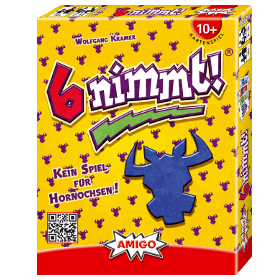
6 Nimmt! is the rare card game where number management and reading other players click together in a completely clean way. Everyone plays one card simultaneously, lowest-to-highest fills the rows — and the card you were sure was safe keeps landing exactly where it causes maximum damage. Entry is straightforward, but reading which numbers others will play and how the rows will develop has genuine depth. A newcomer understands why it's fun within one round; a regular player never quite gets comfortable. If you want to add "not pure luck, not pure strategy" to a standard-deck lineup, this is the reliable pick.
Specs: 2–10 players, ~30 minutes, ages 8+, easy. Original publisher: Amigo. Original title: 6 Nimmt! (1994). The dread and comedy of this game become most pronounced around 4–6 players. Two rounds fit cleanly into an hour. Rough feel: luck 70%, reading 30% — you think you've calculated it and someone else's card blows everything up, which is exactly the appeal.
What makes it interesting is that playing only for your own numbers is never the right strategy. Strong cards don't keep you safe; weak cards don't guarantee an easy exit. Because everyone reveals simultaneously, another player's decision can make your earlier card a losing proposition. The result is a game of short, repeated micro-decisions rather than long deliberation. It also doesn't require arithmetic — what you need is the ability to read where the rows are going, not calculation.
The moments our group remembers most vividly are the simultaneous reveals at 4–6 players. The card you thought was a safe pass contributes to a three-card pileup on your own row, and one person's pained sound and everyone else's laughter happen almost simultaneously — without anyone having done anything deliberately mean. That's distinctive: the chaos comes from everybody reading the situation differently, not from targeted aggression, so the social mood stays light. It's very easy to get a "one more round" after the first game ends.
Best for mixed beginner–experienced groups, family nights, trips, and first-game-of-the-evening slots. One person who knows the rules can get a table moving within minutes. Low-stakes in terms of social fallout — getting hit feels like being the punchline, not like being attacked. The opposite of what you want: a room where everybody talks and the social energy is the main event, or a pure cooperation setup. 6 Nimmt! is about a single card landing and making everyone react — a different pleasure from word-driven games.
Hol's der Geier (Raptor)
Hol's der Geier is one of those games where the simplicity of the mechanism is almost misleading — simultaneous bidding this compact shouldn't produce this much psychological richness. Everyone reveals a card, and whoever bid best takes the scoring card — except tied bids cancel each other out. So "play your highest card" is never safe. When to go big, when to hold back, when to play low specifically to dodge a minus card: these decisions cycle in ten to twenty minutes and each one resolves cleanly.
Specs: 2–6 players, ~10–20 minutes, ages 8+, low difficulty. Original publisher: Ravensburger. Original title: Hol's der Geier (1988). Our experience puts 5–6 players as the range where the overlap-reading is most lively and the game reveals itself best — though it plays well across the full 2–6 range. Two or three players makes it more about pure reading; four is balanced; five to six produces the "we all had the same idea" moments that get the most laughs.
The heart of the game is reading whether others will pile up or hold back on a given scoring card. High-value cards attract high bids — which means the moderate bid slips through. Negative cards attract timid bids — which creates the same overlap problem in reverse. The result is a structural advantage for whoever plays one step out of sync with consensus, and that principle communicates itself almost immediately to new players. It's a more elegant twist than it sounds on paper.
The recurring highlight in our sessions was the minus-5 point card scramble. Everyone thinks "safe play here," everyone plays low — one person reads the crowd and slides a slightly stronger card through clean. No big move, no flashy skill: just a read of "everyone's going to play cautious here." The resulting "oh, right there" from the whole table when the cards flip is the game's signature pleasure.
Works for family nights and groups that lean casual. Short explanation, clear victory condition, immediately accessible. The volume of actual table talk is moderate — not a conversation-driven game — but the post-card reveal reactions fill the gap. As an opener for the evening, it warms the table without demanding full attention. Where it doesn't fit: as the centerpiece for a large group. The six-player cap matters, and at max count, ties get more frequent and the luck-to-reading ratio shifts.
The contrast with 6 Nimmt! is useful: if 6 Nimmt! is about reading where numbers land in growing rows, Hol's der Geier is about reading other people's greed and caution. The rules are lighter still, and the psychological pressure is real. Games that end with "I would have played that completely differently" are games that get replayed — this one earns that a lot.
Skull
Skull is a bluffing game where almost no rules produce an atmosphere that keeps escalating. The mechanic is minimal: place discs face-down, bid on how many you can safely flip, try to win two rounds. What makes it remarkable is that there's no "strong hand to build" — the move is what you say out loud. Your announced bid against your actual position is the entire game. The experience is quite different from Love Letter or Cockroach Poker — this one goes head-on.
Specs: 3–6 players, 10–30 minutes, ages 10+, low–medium difficulty. Published in English as Skull (also known as Skull & Roses). The reading dynamic is sharpest at 5–6 players. Three to four also works — bluff logic is more traceable, which helps newcomers — but more players means the question "who's being serious vs. who's performing?" gets genuinely harder to answer, and the bid declarations carry more weight.
What makes Skull click is that low information forces expressions and timing to become data. Whether you've stacked flowers or hidden a skull is concealed, but every bid happens in front of everyone — which means "does this level of confidence mean something, or is it theater?" starts running continuously. On paper it looks like a light game. In play, it immediately becomes a psychological one. The processing stays light enough that round tempo is never sluggish.
The thing we keep coming back to about Skull is that the bid announcement is the actual performance. A table that's been quiet suddenly shifts when someone jumps two numbers. Everyone starts reading each other. A good bluff earns applause; a spectacular failure gets laughs — either way, the social temperature doesn't drop. The room gets louder through declarations, not through complicated processing.
ℹ️ Note
Treating the first round as a learning round pays off reliably. The first time around, most players don't know what a bid "should" feel like. One practice round fixes that. From round two onward, the bluffing and reading accelerates sharply.
Best for reading-oriented groups at a casual drinks party or friend gathering. Four to six players, with everyone at least a little interested in what others' reactions mean, is the sweet spot. Where it doesn't land: groups with young kids (the core pleasure doesn't translate), and large party formats where the table's attention can't stay on individual declarations. Skull needs the table watching — it's not a background game.
Compared to Cockroach Poker, which generates laughs through pass-the-card chaos, Skull is about who controls the room with a single sentence. By the end of a session, the table has usually developed models of individual players — "this person over-commits when they're bluffing," "silence here means danger." Short-play but character-revealing. That combination explains its staying power.
Spicy
Spicy adds a second axis of deception to the standard doubt-based bluffing game — not just "true or false," but "which part is false?" When you play a card, you declare a number and a suit; neither has to be accurate. Challengers have to think about whether you're lying on number, suit, or both. A flat true/false read isn't enough. Compared to Skull or Cockroach Poker, this is a more layered kind of bluffing — outwardly breezy, actually quite exacting.
Specs: ~20 minutes, medium difficulty. Published in Japanese by Kembal (2021). Plays well across a range, though 5 players tends to bring out the best dynamics. Works for casual hangouts, experienced bluffing fans, and groups that want something low-weight that still has edge.
The game works best with groups that are at least somewhat comfortable with bluffing. Three to five players, where "I think you're lying" doesn't create awkward tension — that's the sweet spot. When a read lands and multiple people react simultaneously, it creates a natural round of applause. In our sessions, the moments that got the most reaction were when a challenger called exactly which element was being faked. Groups where bluffing creates real discomfort will flatten the experience — hesitation makes declarations uniformly cautious and kills the double-read dynamic.
What's interesting is that being too obvious about where you're lying backfires. Leaning only on number embellishment, only on suit misrepresentation, or blending both gives opponents different reads. This is where Spicy diverges from conversation-driven games like Cockroach Poker — the weight is on which element you're falsifying, not on how much you say. By the end of a session, the table usually has reads on individual lying tendencies: "this person tweaks the number," "this person shifts the suit." That's what makes it want to replay.
💡 Tip
At the start, it helps to agree on what counts as a "suspicious" declaration before getting into it. Does the group focus on number or suit first? Having that shared baseline reduces confusion and makes challenges feel fair from the start.
Spicy is a game where ease of play depends heavily on whether the table's judgment instincts are calibrated the same way. That's also what makes it shine in a small, experienced bluffing group — every move carries weight, and the lightweight packaging keeps it from feeling heavy. Where Skull controls the room through declaration strength, Spicy is about dissecting the content of what was declared. Distinct niche, confidently held.
SCOUT
SCOUT marries the satisfying power of a climbing game with the strategic friction of never being able to rearrange your hand. You can see what makes a strong combination — the familiar "play higher beats lower" logic is there — but the order your cards arrived in is permanent. So "I drew a good hand" doesn't close the conversation; the question is how to read the sequence you actually have, when to break it up, and when to pick up someone else's played cards to extend your own.
Specs: 2–5 players, ~15 minutes, ages 9+, medium difficulty. Best at 4–5 players. Two players works, but the game's personality shifts with count. Head-to-head is precise and chess-adjacent; 3–5 players adds a combinatorial richness where your read of the table shapes not just what you play but whether playing is even right yet.
In practice, the "no rearranging" rule makes more drama than it sounds like it should. A normal climbing game rewards holding back until your hand is ready. SCOUT forces you to work with the hand you were dealt at the position you were dealt it — which means constraints become identity. Our sessions' biggest reactions came when someone nursed an apparently cramped hand for several turns, absorbed a key card, and then opened a large combination that cleared most of their hand. Everyone watching understood the path that led there, which made the moment land harder than a lucky topdeck ever could.
Good for 3–5 player game nights and friend gatherings. If you know UNO or standard card games and want one more gear of depth, this is the gap-filler. The rules aren't heavy, but from the first round you're deciding "play or scout?"— so it's not quite the right first game for a room full of complete beginners. Perfect for the person who's done light games and isn't ready for heavy ones.
ℹ️ Note
SCOUT is notably better on round two than round one. Once the constraint of not rearranging is felt in the body rather than just understood intellectually, "I have a weak arrangement" shifts to "I have an arrangement I haven't finished building yet."
If 6 Nimmt! is about reading where numbers land across shared rows, SCOUT is about developing your own hand's potential. Unlike Hol's der Geier's one-shot reads, here the groundwork accumulates across the round. Ends quickly, but winning rarely feels like pure luck — that balance is the hallmark of a genuinely good light-to-mid game.
Love Letter
Love Letter is the definitive example of fewer cards making the deduction sharper. The turn structure is simple, but tracking what your opponent has discarded and played to narrow down "they're probably holding the Princess" — that inference chain is the whole experience. The game isn't about combinations or board states; it's about "why are they playing that now" and "what are they protecting." Natural entry point from standard-deck games, natural step up from UNO if you want one gear of sharpness.
Specs: 2–4 players, 5–10 minutes, ages 10+, easy difficulty. Arclight official price: 1,850 yen (~$12 USD). Because rounds are so short, six to twelve rounds is realistic in an hour — and the short cycle means "I got read last time, so this time I'll..." feeds directly into the next round immediately.
The pleasure is specific to small player counts — being few people is what creates the pressure. Four players is fine, but the game doesn't scale up with more. As the group grows, the board opens and the precision becomes something lighter. Love Letter is a two-to-three-player game that technically accommodates four; it's not a group centerpiece. It shines hardest in the pre-dinner window, the gap between two longer games, or when two people arrive first and are waiting.
The moment we return to most in two-player games is landing an accurate "you're holding the General" read. The information base is thin — just discards and turn order — but at some point the opponent's options compress and you see the shot. A three-minute game, and the person who guessed right is fist-pumping. That small payoff repeating is why the "one more" is essentially automatic.
💡 Tip
Love Letter's elimination mechanic works best with a pace that never lets a single round stretch. Since turns are short, quick resets mean eliminated players are never out long enough for it to feel bad.
The elimination aspect is baked into the short-game design. In a long game, getting knocked out with thirty minutes left is brutal. In Love Letter, being out of a round that ends in three minutes barely registers — and the reset is fast enough that the reading memory ("they used the Guard on me, so maybe I try the Baron next time") lands in the very next round before the read fades.
SCOUT asks you to develop your hand; Love Letter asks you to read what's in your opponent's. Less confrontational than Skull or Spicy, not as conversation-driven as ito. Quiet-looking but temperature-high. Small box, short explanation, genuine reading texture — that's why it persists as a small-table standard.
Cockroach Poker
Cockroach Poker is one of the best entry points into bluffing games. The mechanic is minimal: pass a card face-down to someone, name an insect (which may or may not be what's actually on the card), and they decide to accept the claim, challenge it, or pass it along. That's the whole thing — but the moment pushing, passing, and getting caught layer on top of it, the table gets loud fast. The aggression is comic rather than strategic, so players without bluffing experience can still participate on roughly even terms.
Specs: 2–6 players, ~20 minutes, ages 8+, easy–medium difficulty. Published in Japanese by Mobius Games. Reference price: 1,800 yen (~$12 USD) (per tanabotacafe.com). Explanation is short, and prior card game experience doesn't create much advantage. More conversation-heavy than the specs suggest; for a 20-minute game, the table memory is surprisingly lasting.
What distinguishes this game is its "last to lose" structure rather than "first to win." When one person accumulates four of the same insect or any four of the losing condition, they're out. The absence of fine-point scoring keeps rounds light and social — nobody's comparing numbers, just dodging the bottom. That lightness also means the game ends without leaving a heavy aftertaste, which keeps the replay rate high.
The moment we find most entertaining is when the whole table becomes active the instant a card gets passed. Not just the receiver — everyone reads the passer's expression, their tone, the speed of the pass. When the receiver pushes it along again, the arrow of attention shifts and the observers start speculating too. Almost nobody is just watching. That everyone-as-participant quality is what makes Cockroach Poker so effective at a drinks gathering.
Works best for 4–6 friends in a casual hangout. A relationship comfortable enough for light ribbing is all you need; the declarations and bluffs become material in themselves. Where it doesn't land: groups where even light teasing creates tension or where someone will take losing to the joke personally. The game is designed for playful aggression — serious-competitive framing breaks it.
ℹ️ Note
Cockroach Poker doesn't reward polished lying — it rewards reading when to push carelessly. A slightly sloppy delivery of a false claim is often funnier and more effective than an elaborate bluff.
If Skull is about controlling a room through pure declaration strength, Cockroach Poker is about mischief and who you choose to target. Quieter than Love Letter's focused deduction, louder than SCOUT's strategic patience. When you want to add the pleasure of lying through laughter to a standard-deck evening, this is the most accessible way to do it.
Katakana-Shii
Katakana-Shii is a description game with one rule that's deceptively powerful: no loanwords allowed. In Japanese, loanwords (written in katakana script) cover huge swaths of everyday vocabulary — technology, food, fashion, basically anything modern. So the moment you try to explain something, the word you need is almost certainly off-limits. The result: everyone becomes immediately, helplessly roundabout, and the helplessness is the comedy.
Specs: 3–8 players, ~15 minutes, ages 8+, easy difficulty. Publisher: Gentosha. The game comes with 72 topic cards and 8 event cards — enough variety for a full session without repetition. Reference price: 1,118 yen (~$7 USD) (per price comparison sites). The explanation takes one run-through of an example and everyone gets it. The Replayability is strong for the price.
What separates this game from other description games is that you start laughing before anyone guesses correctly. The explanation is the content. At one of our sessions, someone needed to describe "smartphone" without saying smartphone, phone, or screen — and landed on "the flat board that isn't a tablet, it takes pictures" — and the table started applauding before the guess was even made. It's a different kind of shared moment from ito's value-alignment or Nyanjamonja's naming — more like a shared performance where the awkwardness is the punchline.
The best audience: native Japanese speakers who share everyday vocabulary. Workplace mixers, family reunions, friend hangouts — contexts where people's mental models of common objects align. The gap between "what I want to say" and "what I'm allowed to say" is where the humor lives, and that gap requires fluency to feel. Where vocabulary backgrounds diverge significantly, the game starts feeling like a word test rather than a comedy show.
💡 Tip
Starting with easy, concrete topics unlocks the game immediately. Appliances, foods, familiar places — things everyone can picture clearly. When the first few rounds produce "that weird workaround was actually really good," the table is warm and everything after goes better.
Difficulty calibration matters a lot here. Abstract vocabulary or recent slang at the start makes the game feel like a vocabulary competition — some people freeze, some dominate. Common objects at the start mean that even a clumsy explanation can land, and "that barely worked but it technically worked" is itself a laugh. Katakana-Shii is better run as everyone rides the wordplay together than as "watch someone clever destroy the prompt." That framing makes the first session much warmer from the start.
Compared to Cockroach Poker's confrontational push-and-pass, Katakana-Shii is about enjoying the scenic route together. Even the explainer's desperate tangents become the entertainment — there's very little dead time where you're just waiting. For family nights or workplace settings where you want to soften the room without confrontation, this is a reliably gentle and effective tool.
ito
ito is a cooperative game built around aligning your sense of scale through conversation rather than numbers. Each player holds a number from 1–100 that they can't state directly. Instead, using a shared theme — "which animals are strongest?" — everyone describes their number in terms of that theme. The goal is to line up in order from lowest to highest. Getting it right feels like genuine teamwork. Getting it wrong produces "wait, that was a seven??" which is almost as fun.
Specs: 2–10 players, ~30 minutes, ages 8+, easy–medium difficulty. Publisher: Arclight. Japanese release: August 8, 2019. Official price: 2,200 yen (~$15 USD). Two sessions fit into an hour; two sessions plus a third partial fits ninety minutes. Works well as an opener for a larger event — one game of ito early in the evening makes everyone noticeably more comfortable talking afterward.
One of ito's genuine strengths is that it doesn't reward only naturally talkative people. The theme cards are calibrated toward accessible topics — food, daily preferences, familiar scenarios — so even someone who doesn't think of themselves as chatty can engage with "which sushi topping is this number?" without needing to perform. The self-disclosure is light — "I feel like this is sort of special but not extreme" is more than enough. The topic variety also spans enough categories that a mixed-age or mixed-background group can usually find common ground within a round or two.
One session that stuck with us: a table of people with very different ages and interests playing "favorite sushi toppings." One person said "tamago feels reliable but not special, so not the bottom," another said "toro is rare and meaningful, so near the top" — and suddenly everyone's number made sense, and more than that, everyone's sense of value was briefly, specifically legible. ito aligns people not through logic but through revealing the shape of their preferences, which is why it's so effective as an icebreaker. The social payoff is real whether the group succeeds or fails at ordering correctly.
Works for large groups, social events, and family nights. The design distributes speaking time — everyone says a little rather than one person monologue-ing. For groups that like to think quietly and optimize per turn, it may feel too free-form. Games like SCOUT or Love Letter, where reading is precise and quiet, suit a different kind of player; ito is for the room where getting people comfortable with each other is the priority.
ℹ️ Note
ito isn't really a game for smart answers — it's a game for creating the atmosphere where "that makes so much sense for you" becomes a normal thing to say. The number-ordering is the vehicle; the conversation is the destination.
Katakana-Shii generates laughs through wordplay; ito generates closeness through shared value-reading. Less about linguistic cleverness, more about what the theme reveals about everyone's inner world. Accessible to non-gamers, scales gracefully up to ten players, and leaves a room noticeably warmer than when it started. For a first cooperative addition to a standard-deck shelf, it's one of the easiest recommendations to make.
Codenames
Codenames is the established benchmark for team-based word association games. One clue-giver per team gives a single-word clue with a number — "ocean, 2" — and the rest of the team tries to identify that many matching cards from a grid of 25 words. The rules are not complicated. The moment you sit in the clue-giver's chair and try to connect multiple targets with one word while avoiding the opposing team's words and the instant-loss assassin card, the layers become very apparent very quickly.
Specs: 2–8 players, ~15–20 minutes, ages 14+, medium difficulty. Original published: 2015. Japanese version: 2016 (Hobby Japan). Best at 4–8 players in team format. Below three players, the team dynamic doesn't form properly and the game's reason to exist mostly disappears.
The real spectacle isn't the correct guess — it's how the receiving team interprets the clue. "Ocean, 2" sends one person to "beach" and "fish" while someone else goes to "ship," "summer," "blue." The argument about whether those connections are safe or dangerous, whether the clue-giver meant this word or that one — that's the game. Individual brilliance doesn't win; negotiating the right coverage of a shared mental model does.
💡 Tip
Codenames is a game where the clue-giver's skill and burden drives the table's energy. A clue that lands cleanly is enormously satisfying to give — and the Spymaster role carries real responsibility.
The Spymaster burden is manageable once you expect it. The rules are simple, but the clue-giver sees the full board — friendly words, opposing words, and the assassin — and has to hold all of it while producing a single-word hint. "I have a lot to communicate and almost nothing to communicate with" is the right description of how it feels. That constraint is also what makes it memorable. Our experience suggests starting a few people on the guessing side first rather than rotating everyone into Spymaster immediately — understanding what receiving end feels like makes the giving end more intuitive.
Time-wise, 15–20 minutes per round slots well into the middle portion of a game night or social event. It's not quite in the "instant reflex" category like Dobble or Love Letter, but it's not a slow burn either — each round of deliberation builds table warmth incrementally. The sweet spot is six to ten players at a game night or team-building event. More bodies means more voices in the deliberation, and individual styles — "she always plays conservative," "he reaches for the riskiest connection" — become legible as the session progresses. Flip side: SCOUT's quiet hand management and Love Letter's precise small-group reading are different pleasures entirely.
If ito aligns people through value-sharing, Codenames builds shared understanding through strategy discussion rather than small talk. Both types of conversation deepen connection — they just do it differently. For an event where you want people talking and the structure of a game, Codenames is hard to beat.
Comparison Table
Looking at everything side by side makes one thing clear: player count fit and conversation volume are the most reliable filters. The next card game after a standard deck or UNO isn't about overall score — it's about "how many of us are there" and "do we want to think quietly or talk our way through it." The table below places all twelve games across both specs and table atmosphere. Prices are reference only, approximate at time of writing.
| Game | Players | Time | Age | Difficulty | Reference Price | Best Count | Explanation | Conversation | Tension | Luck |
|---|---|---|---|---|---|---|---|---|---|---|
| Dobble | 2–8 | ~15 min | 7+ | Beginner | 2,200 yen (~$15 USD) at tanabotacafe.com | — | — | Low | Low | Low |
| Nyanjamonja | 2–6 | ~15 min | 4+ | Beginner | — | 4–5 | — | High | Low | Low |
| 6 Nimmt! | 2–10 | ~30 min | 8+ | Beginner | — | — | — | Medium | Medium | Medium |
| Hol's der Geier | 2–6 | ~10–20 min | 8+ | Beginner | — | 5–6 | — | Low | Medium | Medium |
| Skull | 3–6 | 10–30 min | 10+ | Intermediate | — | 5–6 | — | Medium | High | Low |
| Spicy | — | ~20 min | — | Intermediate | — | 5 | — | Medium | High | Medium |
| SCOUT | 2–5 | ~15 min | 9+ | Intermediate | — | 4–5 | — | Low | Medium | Medium |
| Love Letter | 2–4 | 5–10 min | 10+ | Beginner | 1,850 yen (~$12 USD) at Arclight | — | — | Low | High | Medium |
| Cockroach Poker | 2–6 | ~20 min | 8+ | Beginner | 1,800 yen (~$12 USD) at tanabotacafe.com | — | — | High | High | Medium |
| Katakana-Shii | 3–8 | ~15 min | 8+ | Beginner | 1,118 yen (~$7 USD) per price comparison sites | — | — | High | Low | Medium |
| ito | 2–10 | ~30 min | 8+ | Beginner | 2,200 yen (~$15 USD) at Arclight | — | — | Very High | Low | Medium |
| Codenames | 2–8 | ~15–20 min | 14+ | Intermediate | — | 4–8 | — | Medium–High | Medium | Low |
When the table leaves you unsure, try grouping into three: fast and rotation-heavy → Dobble, Love Letter, SCOUT; one solid satisfying session → 6 Nimmt!, ito; atmosphere through bluffing or conversation → Skull, Cockroach Poker, Codenames. Love Letter at 5–10 minutes is particularly strong for gaps — you fit a lot of rounds into an hour. ito and 6 Nimmt! at about 30 minutes each deliver more stable per-session satisfaction.
ℹ️ Note
For 2–4 players, Love Letter and SCOUT; for 4–6 players, Skull and Cockroach Poker; for 6+, 6 Nimmt!, ito, and Codenames tend to stay in the running. Player count fit alone raises the success rate noticeably.
Price patterns hold up on inspection. Among confirmed prices: Katakana-Shii at 1,118 yen (~$7 USD), Cockroach Poker at 1,800 yen (~$12 USD), Love Letter at 1,850 yen (~$12 USD), Dobble and ito at 2,200 yen (~$15 USD). Word-driven and short-cycle games are strong at under 2,000 yen (~$13 USD) — value comes from plays per session more than shelf price. Prices for several games are unlisted, so treat those columns as directional, not comprehensive.
Difficulty labeling in this table deserves a note. Beginner here means "short explanation, can be played during the first round." Intermediate means "rules aren't heavy, but reading, association, or bluffing skill creates real experience gaps." Skull is straightforward on paper — but whether you can enjoy performing under pressure matters enormously to the experience. Codenames looks simple until you're the one giving clues.
Using this table to choose: family night → Nyanjamonja, Katakana-Shii, ito; casual drinks party → Skull, Cockroach Poker; next step beyond UNO with more texture → SCOUT, 6 Nimmt! Specs that look similar on paper diverge sharply when you add conversation volume and tension level — those two columns are the best predictors of whether the actual vibe fits your group.
Choosing by Player Count
When player count drives the decision, the structure is: 2 players → density of the read, 3–4 → balance of strategy and tempo, 5+ → whether conversation reaches everyone. The same game can feel like a quiet psychological duel at two players and a group energy generator at six. Here's each game repositioned by where it's actually best.
Best for 2: Love Letter / Spicy
Love Letter at two players creates a specific kind of tightness. Rounds are 5–10 minutes, so the weight of each decision is higher than in a full-table game. With fewer candidates, "what are they holding?" converges faster and the correct read hits harder. It resembles logic puzzle sharpness more than a loose game-night atmosphere. Two players is where this game is most itself. Scales to four — at which point it lightens and becomes breezier — but the two-player version is the version we recommend most.
Spicy at two players makes the bluffing structure extremely direct. At five players, the chain of challenges and passes creates complex group dynamics; at two, you're essentially analyzing one opponent's tells in real time. Which part of the declaration is false? Where does their confidence wobble? It becomes a precision instrument for reading one person rather than a crowd game. Same opponent across multiple sessions produces pattern-locking — which is either a feature or a bug depending on your preference.
Two-player games in general offer no downtime and constant relevance — every moment of the game is yours. The trade-off is that shared laughs and group energy are harder to generate. If quiet, sharp reading is what you're after, it's ideal; if you want the whole table on the same wave, you'll want more bodies.
Best for 3–4: SCOUT / Skull / 6 Nimmt!
SCOUT fits 3–4 players cleanly. Two players produces sharp but somewhat narrow dynamics; at 3–4, the interaction between hand management, play timing, and picking up cards reaches a good equilibrium. Four in particular hits the sweet spot — your turn comes around frequently enough to stay engaged, and the board changes meaningfully in the interim.
Skull at 3–4 is more traceable than at 5–6. Who's being bold, who's folding — the signals are clearer with fewer people, which helps newcomers parse what's happening. It loses some of the chaotic energy of a full table but gains clarity. "Rules easy, bluffing real" is the promise of Skull, and 3–4 is where that promise is most legible to first-timers.
6 Nimmt! at 3–4 gives players enough agency to feel that their card selection matters — the rows move slower, the patterns are more readable. At 5+, the accidents multiply and the chaos increases; at 3–4, the game has room for actual anticipation. It takes a full 30 minutes either way, so it's more "sitting down to play" than a quick opener.
This range is the most forgiving bracket overall. You can feel your own turn, and the wait between turns doesn't wear on anyone. Strategy-leaning and conversation-leaning games both work here. Most reliable bracket for your first step beyond UNO.
Best for 5+: Codenames / ito / Dobble / Cockroach Poker / Nyanjamonja
Five or more players changes what matters. The question becomes whether everyone gets to talk, whether the laughs are shared, whether the group energy never cuts out. That's why the top picks here are Codenames and ito.
Codenames is built for team play at 4–8, and the table deliberation gets richer as bodies fill in. Solo insight can contribute, but the negotiation of "is that connection safe?" is what generates the most energy — and more people in that conversation means more perspectives, more reasons to debate, more fun when the answer is revealed.
ito scales beautifully upward. Two to four players is a careful, deliberate cooperative game; at six or more, the variation in how people interpret a theme multiplies and the gap moments — "that was your 87??" — become more frequent and more enjoyable. Wide player-count range, conversation that genuinely reaches everyone, accessible to non-gamers: ito checks all the large-group boxes.
Dobble at five or more becomes a party game in the truest sense. Pure reflex, everyone in simultaneously, the table volume goes up as the card pile goes down. Not conversation-driven, but the shared excitement of the "oh I saw it!" moment happening to everyone at once is its own kind of group energy.
Cockroach Poker hits its best form at 5–6. The pass-and-push mechanic creates shifting relationships — who's targeting whom, who's being trusted — that only fully emerge with more players. Under five it works, but the web of suspicion doesn't get complex enough to feel truly layered.
Nyanjamonja at 4–6 builds a shared naming culture. More players means more names, more chances for an odd one to stick, more internal shorthand generated per session. The recommended range of 4–5 reflects the real sweet spot — at two or three, it's a valid memory game, but the explosive potential isn't there.
💡 Tip
For large groups: if everyone should talk, go Codenames or ito; if you want reflex-and-excitement energy, go Dobble or Nyanjamonja; if light teasing and chaos is the goal, go Cockroach Poker.
At five-plus, some downtime is unavoidable. The key is whether that wait becomes watching someone else fail entertainingly rather than sitting bored. Codenames and ito both pull observers into the deliberation; Dobble eliminates downtime through simultaneous play. What scales well with player count isn't just "supports more players" — it's games that convert extra people into more fun.
【全てわかる】ブラウザ版『コードネームオンライン』のルール・設定を徹底解説 | ぼくボド
このご時世で、オンライン飲み会をするようになりました。その合間によく遊ぶのが『コードネームオンライン』。登録不要&簡単でみんながスムーズに参加できるので、すごく重宝しています! そこで今回は、『コードネームオンライン(CODENAMES O
boku-boardgame.netMatching the Game to Your Group's Personality
Once player count narrows the field, the next question is "which of these actually fits the vibe?" Here's how to shortcut that decision by preference type. For a first session, one game from within a style category and one from a different axis tends to fail less. For a beginner table: Dobble or Nyanjamonja to establish early laughs, then Skull or SCOUT to shift toward reading. Looking for the games that reliably generate energy? The "who reacts to what" read is where that answer lives.
Beginner-Friendly (Rules in Under 3 Minutes): Dobble / Nyanjamonja / Hol's der Geier
If getting everyone playing immediately is the priority, these three are the most reliable. What they share: the explanation doesn't run long, and first-timers can participate before the rules have fully settled. In rooms where game experience varies widely, getting past the explanation hurdle is more than half the battle.
Dobble: the rules land and hands are already moving. Reflex and observation convert directly into fun — good for family nights, pre-dinner, mixed-age gatherings. Avoid if the room wants strategic thinking time. The pleasure is immediate and loud rather than slow and satisfying.
Nyanjamonja: the naming mechanic means shared in-jokes form before competitive instincts kick in. Particularly strong for first-time groups because "a weird name appeared" functions as an icebreaker without requiring anyone to "win" anything. Doesn't land as well in a quiet, reserved room — needs at least one person leaning in.
Hol's der Geier: of these three, has the lightest decision texture — just numbers, but with meaningful choices. Works for groups where "too cute" or "too childish" is a concern and where there's some appetite for thinking. Doesn't generate the loud laughs of the other two, but produces a more satisfying analytical pleasure.
This category is strongest when "we should just be playing" is the goal. From our experience, for mixed newcomer tables, Dobble and Nyanjamonja generate early laughs most reliably.
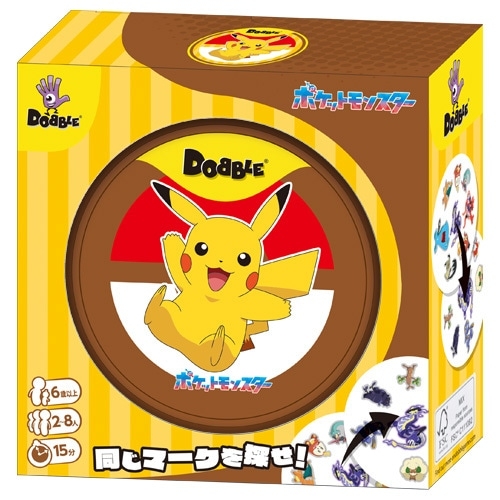
ドブル ポケットモンスター |【公式】ポケモンセンターオンライン
ドブル ポケットモンスターをご紹介。ポケモンセンターオンラインではポケモンセンターオリジナルグッズや最新ゲームソフト、ポケモンカードゲームなど、オフィシャルショップならではの最新情報をお届けします。
www.pokemoncenter-online.comHigh-Conversation Games: ito / Katakana-Shii / Codenames
If the goal is talking through the game, these three are the core picks. Winning and losing matter less than "how did you get to that?" which makes them particularly good for first-time groups and social events.
ito: the number constraint means personality and perspective surface naturally. What word does someone choose for their number? That reveal is the game's real content. Works well for first-time groups, family nights, six-plus players. Accessible for people who don't think of themselves as chatty. Avoid if the group wants to minimize talk and chase results — silence is not ito's friend.
Katakana-Shii: possibly the clearest explanation payoff of any description game. One rule, immediately playable, and the laughs start arriving within the first prompt. Works for family nights, word-game fans, settings where you want even observers laughing along. Vocabulary gaps can create imbalance — better for groups who share a common linguistic background.
Codenames: highest ceiling when it lands. A single connecting word for multiple targets means the guessing team's deliberation is the show. Works for four-plus in team format, word-game enthusiasts, groups who like thinking together. Not ideal for time-pressure settings or tables with young children. Light to explain, heavier to execute — especially for the clue-giver.
High-conversation games depend heavily on whether the group is in the mood to talk. For a first session, ito or Katakana-Shii if you want a soft entry; Codenames if you want something with more game-feel alongside the conversation.
Tension and Bluffing: Skull / Spicy / Cockroach Poker / Love Letter
For groups who enjoy reading faces and parsing language, this category delivers. What they share: rule complexity is lower than the table tension suggests. Adult-only groups tend to escalate fast once one of these is on the table.
Skull: the sharpest bluffing experience in the list. Simple to set up, immediate psychological weight. Works best at 4–6 with people who are interested in what others' micro-signals mean. Avoid if performance-under-pressure creates discomfort — the pressure is the game, and someone who opts out mentally takes something from the whole table.
Spicy: the layered declaration logic rewards people who enjoy bluffing already. Works at casual hangouts, experienced bluffing groups. Avoid for first-time-together groups where social caution is still high — the game needs everyone willing to push.
Cockroach Poker: the best balance of bluffing tension with comedy in this category. Works for 4–6 at casual drinks, groups who are comfortable ribbing each other. Avoid for groups where even light teasing can create friction — the game runs on exactly that kind of energy.
Love Letter: precise reading in short bursts, repeated across many rounds. Works for 2–4 players, in-between-games time, when you want competitive density without a long commitment. Avoid for large groups seeking group energy — its strength is intimate precision.
This category tends toward the thrill of reading correctly rather than the laugh of getting caught. For adult tables, the tension of Skull or the reading density of SCOUT tends to produce the highest energy in our experience.
Strategy-Oriented (Thoughtful Players): SCOUT / 6 Nimmt!
For players who want decisions that matter without a heavy rulebook, these two sit at the right midpoint. Neither is complex, but both give you something to think about every turn. Natural next step after UNO for groups developing game taste.
SCOUT: the hand-rearrangement ban is the feature, not a bug — it creates constraints that are different every session. Best at 3–5, especially 3–5. Avoid as the cold opener for a room full of complete first-timers — the "play or pick up?" decision starts on turn one, which requires a minimal game sense to enjoy. Works beautifully once that sense exists.
6 Nimmt!: strategic without being heavy, and the collapse moments are funny even when they hurt. Works for 4+ at a game night or trip. Avoid for table-shaking opener energy — the pleasure is in the read, not the volume.
For strategy-oriented players: SCOUT for hand-management texture, 6 Nimmt! for field-reading texture. If you're building out a first-session lineup, a loud opener (Dobble, ito) plus one of these tends to give both accessible energy and satisfying decision-making in the same evening.
Frequently Asked Questions
Which player count should I prioritize?
The most reliable filter: whatever count you actually gather most often. Two or three regularly → Love Letter or SCOUT hold up well in small groups. Four to five most of the time → Nyanjamonja, SCOUT, or Skull work cleanly. Five-plus regularly → 6 Nimmt! (flexible individual game), ito (conversation and cooperation), Codenames (team structure) all scale well.
Wide player-count support sounds appealing, but "supports X players" and "best at X players" are different. Nyanjamonja technically plays 2–6 but peaks at 4–5; Hol's der Geier and Skull both get richer with more people. If you regularly play with fewer players, prioritize does it work well at small count, not just does it technically support it.
Can kids play these?
Start from the recommended age for each game. Most accessible: Nyanjamonja (4+) and Dobble (7+) — both have actions that land immediately without needing explanation of strategic concepts. Nyanjamonja in particular works at family tables because the "name the creature" structure generates laughs without requiring competitive instincts.
Psychological tension games like Love Letter and Skull use simple rules but reward reading opponent intent — that mechanism doesn't work as well with young children. For family nights with a wide age range, Dobble, Nyanjamonja, and Katakana-Shii give the most inclusive experience. Having at least one game where younger players can join the full table is worth more than having the most sophisticated option.
ナンジャモンジャ・シロ&ミドリ | すごろくやのボードゲーム
すごろくやのボードゲーム『ナンジャモンジャ・シロ&ミドリ』の紹介
sugorokuya.jpDo these work for two players?
Two-player viability requires more than "minimum player count includes 2." The question is whether the game stays interesting without becoming repetitive. Love Letter is the strongest two-player pick in this list — short rounds, layered reading, and "best of many rounds" pacing. Five to ten minutes per round means an hour gives you a lot of games, and the reading memory builds across sessions naturally.
For more hand-management texture: SCOUT. For lighter decision-making: Hol's der Geier. For reflexes: Dobble. For number-reading: 6 Nimmt!. For bluffing: Spicy — though note that bluffing games generally intensify with more players. For two-player as a primary use case, Love Letter and SCOUT as anchors tends to keep satisfaction high without the "best player count" mismatch that wider games can carry.
Which games hold up over many plays?
Highest Replayability rate: 6 Nimmt!, SCOUT, and Skull. All three are short enough to run multiple times in a session, and the loss pattern changes every time — which means "one more round" happens naturally rather than being forced.
6 Nimmt! shifts safe-zone geography every game — same player rarely dominates repeatedly, and accidents are always funny. SCOUT's hand constraint means every arrangement is a new puzzle. Skull scales its psychological depth with familiarity — the better you know your opponents, the more interesting the bluffing gets. Short-cycle games that don't feel like the same game twice are the ones that keep coming back to the table.
Play 6 nimmt! online from your browser
Play 6 nimmt! online from your browser with the whole world!
en.boardgamearena.comWhat's a reasonable price to spend?
Market data for card games in the Japanese second-hand auction market puts the 30-day average sale price at around 4,208 yen (~$28 USD). But many of the most playable games in this list come in well below that. Strong options exist in the 2,000–3,000 yen (~$13–20 USD) range.
The more useful calculation: how many people, how many sessions. Arclight's ito at 2,200 yen (~$15 USD), Love Letter at 1,850 yen (~$12 USD), Dobble at ~2,200 yen (~$15 USD), Cockroach Poker at ~1,800 yen (~$12 USD), Katakana-Shii at 1,118 yen (~$7 USD). Love Letter at 5–10 minutes per round earns its purchase price through plays-per-session far more than through a single impressive session. Dobble and ito for 6–8 players per session push the per-person cost very low. Rather than comparing sticker prices, the better lens is: does the frequency and group size justify the spend? For most of these games, the answer is yes well below what the market average suggests.
カードゲームの価格をみる|売買データを調べるならオークファン
実売データからカードゲームの落札相場・平均価格を調査できます。Yahoo!オークション(旧ヤフオク!)・楽天・Amazonなどオークションやショッピングサイトの比較・検討をするならオークファン。
aucfan.comWrapping Up
When in doubt, start with 6 Nimmt! — it works across a wide player count, ends cleanly, and reliably generates a "one more round." For family nights, Nyanjamonja creates the right atmosphere; for a game night crowd, Codenames structures the conversation and competition in a way that matches the energy.
When choosing: use usual player count, how much time you want to spend per game, and whether the first-round explanation needs to be short as your three filters. Narrow to two or three candidates. For travel, Dobble or ito. For casual drinks with friends, Skull or Cockroach Poker. For family nights, Nyanjamonja earns its place fast. For more help narrowing down, see our first board game purchase guide and rules explanation tips.
Related Articles
7 Best Deck-Building Card Games|A Dominion-Style Beginner's Guide
Many newcomers to deck-building games wonder whether to start with the classic Dominion or try something more intuitive. This guide compares 7 titles—including Dominion itself—through practical lenses like player count, play time, and experience type, then recommends the right entry point for your table.
Affordable Card Games Ranked | Must-Try Classics Under ¥1,500 in Japan
Even in the ¥1,000–1,500 price range in Japan, you'll find card games that earn immediate praise the moment they hit the table. This guide breaks down classic small-box staples like [[Nimmt]], [[Nanja Monja]], [[Love Letter]], [[Coyote]], [[Penguin Party]], and [[Timeline: Inventions]] by more than just price—covering player count, play time, beginner-friendliness, and how the energy builds, so you can find exactly what fits your game night.
15 Card Games Adults Actually Get Hooked On
Adult card games stretch far beyond the usual suspects like playing cards or UNO — from tense bluffing sessions that wrap up in minutes to conversation-starters that warm up any room, to deep strategy games that demand real thought. This guide compares 15 titles across player count, playtime, and complexity so you can find the one that fits your group.
6 Must-Play Card Games That Get Everyone Pumped Up | Comparison Chart Included
Card games that get people excited come in different flavors—ones that trigger laughter, ones fueled by psychological bluffing, ones that naturally spark conversation. This guide compares six classics—UNO, Love Letter, Nimmt, ito, Cockroach Poker, and Nanjamonja—across player count, playtime, ease of teaching, and conversation flow.