
Best Board Games for 3 Players — Standout Titles Built for Bluffing and Negotiation
Best Board Games for 3 Players — Standout Titles Built for Bluffing and Negotiation
Finding the right board game for three players isn't just about headcount. Three-player games occupy a sweet spot — more tension than a two-player duel, tighter reads than a four-player free-for-all — where "who do I stop right now?" and "when do I swoop in for the win?" become genuine strategic questions.
Finding the right board game for three players isn't just about headcount. Three players hits a sweet spot — more lateral pressure than a two-player duel, a tighter board than a four-player free-for-all — where "who do I stop right now?" and "when do I swoop in for the kill?" become genuine strategic decisions. This article compares six games side by side — Chinatown, Zoo Vadis, Scout, Splendor, Azul, and Tutankhamun — covering tables that include a first-timer all the way up to three seasoned gamers. Whether you're looking for a 30–45 minute weeknight filler or a 60–90 minute negotiation session, the breakdown below should make it easy to land on the right pick for your particular three-player table.
Why Three Players Is the Sweet Spot for Mind Games
The Third Party Is Always an Option
The beauty of three-player games is that you're never locked into one target. In a two-player game, nearly every move goes directly at the one other person — the mind games are intense, but the structure is linear. In games of four or more, by the time you're ready to stop someone, the board has already moved. Three players keeps the table small enough to track while still leaving room for someone else to cut in.
That third-party dynamic isn't exclusive to negotiation games. Take Splendor — a 2–4 player classic, roughly 30 minutes, for ages 10 and up. With three players, when Player A races for a card and Player B moves to block them, Player C gets a genuine choice: extend their own engine down a different line, or slip in a reservation to spike the disputed path. Azul — 2–4 players, about 30–45 minutes, ages 8 and up — works the same way. Dumping unwanted tiles onto one player is entertaining on its own, but a third player who benefits from that dump adds a whole extra layer that turns simple spite into genuine strategy.
The "3 Recommended Board Games Exclusive to 3 Players" write-up frames it similarly: three players is the count where temporary alliances and interference arise most naturally. At our editorial game nights, the specific dynamic is this — everyone can see that Player A is pulling ahead, but whoever actually steps in to stop them pays a cost, while the person who hangs back and watches tends to gain. Just having that structure in place means the same open-information game generates more conversation and more loaded glances across the table.
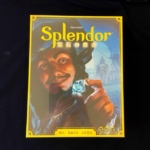
宝石の煌き 2024年新版 / Splendor - ボードゲーム&アロマ LITTLE FOREST online shop
発売10周年を記念してアートワークが一新された『宝石の煌き 2024年新版』 このゲームでは、プレイヤーは工芸
littleforest.shopTemporary Alliances — and Why They Collapse
Three-player games regularly produce short-term coalitions of convenience rather than locked-in alliances. Two players can briefly form a 2-vs-1 front, but that alignment almost never holds, which is exactly what makes it interesting. With four or more players, factions spread out and momentum scatters. With three, "let's both slow down Player A this round" or "I'll back your vote just this once" lands cleanly.
That dynamic is most visible in games the BGG Negotiation category describes as driven by deals, alliances, and betrayal. Chinatown — a 3–5 player negotiation game, roughly 90 minutes, listed at ¥8,400 + tax (~$58 USD) by Hobby Japan — is the clearest example. Players trade land plots, business tiles, and money, and with three at the table, proposals like "I'll give you this district now in exchange for you blocking Player C next round" actually have a fighting chance. But those promises aren't binding. The moment the math shifts, your deal partner from last turn becomes your biggest obstacle.
The same thing happens in voting games. Zoo Vadis (3–7 players, 20–40 minutes, ages 10+) layers in voting, majority decisions, and deals. With three players, a single vote can decide everything — which means Player B's choice of who to back becomes a negotiating asset in itself. Rather than attacking the leader directly, deciding who to vote for becomes a form of leverage. The Kyodai Board Game Workshop's point about "temporary cooperation layered with mutual interference" captures exactly this dynamic.
Playing the Waiting Game as a Winning Strategy
The third pillar of three-player tension is the opportunity to use a "spoils of war" approach as a genuine strategy. In a two-player game, stopping your opponent usually benefits you directly — the structure is relatively clean. In a three-player game, when Players A and B collide head-on, it's not unusual for Player C to quietly jump ahead in points, resources, or position without throwing a single punch.
This appears even in lighter games. Scout (2–5 players, ~15 minutes) sets it up nicely: Player A plays a big combination, Player B burns their hand trying to top it, and Player C — who held back a strong sequence — steps in to scoop up the reward. Tutankhamun (2–6 players, ~30 minutes, ages 8+) does the same with its acquisition timing: two players fight over the same row and exhaust each other, while a third cleanly picks up value elsewhere.
What matters in three-player games isn't that the bystander wins by accident — it's that the decision to wait is itself a strategic move with real value. What looks like a windfall is actually the result of a calculated choice: "don't strike back yet; let those two dig deeper into each other first." Sitting on your hands isn't passive — it's a clear winning line. Three-player games make this logic visible enough that even newcomers can understand why someone suddenly pulled ahead, and experienced players can build bluffs around it.
That's why good three-player games need more than just a compatible player count. Games where third-party intervention, temporary alliances, and opportunistic timing all fire together produce denser conversation from the same 30 minutes and make each single move read as something with multiple meanings at once. Three players is described as "just right" because that layered reading emerges naturally at this count.
SCOUT - オインクゲームズ
oinkgames.comChoosing the Right Game: Match the Type of Mind Game
Negotiation Games: Trading, Voting, and Alliance-Building
If you want conversation itself to be the core of the game, start with negotiation games. Three players sidesteps both of the usual pitfalls — the fixed opponent dynamic of two-player play and the scattered, unfocused chaos of five or more. Short-term partnerships and conditional deals actually function. Even with a newcomer at the table, the idea of "what do I give up and what do I get back?" tends to click intuitively, and watching the trades unfold is easy to follow even from the sidelines.
Chinatown is the clearest choice here. At 3–5 players with roughly 90 minutes of play time (¥8,400 + tax, ~$58 USD, per Hobby Japan), it runs on fully open negotiation using land, business tiles, and money. The question isn't just "is this trade fair?" but "is there any reason to let this person get stronger right now?" With three players, triangular deals emerge naturally — Player C cutting into an A-B negotiation with a counter-offer becomes a regular and entertaining occurrence. That kind of third-party interference isn't an interruption; it's what makes the negotiation feel alive.
That said, not everyone dives into deals immediately. A single player who sits on "I'll pass" for multiple rounds deflates the experience — not by ruining the game mechanically, but by stopping the engine that makes negotiation worth anything. For tables where open bartering feels like a barrier, vote-based or stance-based games sometimes work better as an entry point.
That's where Zoo Vadis comes in (3–7 players, 20–40 minutes, ages 10+). Rather than free-form deals, value here comes from whose proposal you back, and when you spend your vote. For mid-level players with a regular group, the difference is significant — it shifts the center of gravity from trade-term precision to the politics of positioning and vote placement. Lots of conversation, relatively clean processing: a good fit for three players who want intense reads without hour-long negotiations.
For a broader look at accessible starting points, the beginner board game guide and first purchase recommendations offer useful context on evaluating game weight for new players.
![[公式]横浜中華街の食べる・飲む・買う・楽しむが分かる!400店舗以上掲載!](https://www.chinatown.or.jp/wp-content/themes/china2/screenshot.jpg)
[公式]横浜中華街の食べる・飲む・買う・楽しむが分かる!400店舗以上掲載!
横浜中華街発展会が運営する横浜中華街のオフィシャルサイト。中華料理店の情報を中心にエリア内のショップ情報などを紹介しています。また、横浜中華街でのお祭りやイベントなどの催し物の情報も随時更新。横浜中華街の公式最新情報配信メディアです!
www.chinatown.or.jpAuction Games: The Courage to Walk Away
The appeal of auction games isn't about how aggressively you bid — it's that **knowing when not to* often decides the game. With three players, the moment one person overextends, the other two are positioned to benefit cleanly. That makes "I'll pass on this one" carry just as much strategic weight as "I'm going all in."
Tutankhamun captures this feeling well. At 2–6 players, roughly 30 minutes, and ages 8 and up, it delivers the tension of acquisition timing through a light ruleset. Even mixed-experience groups can track what's happening — "go strong now" or "hold back for later" plays out directly on the board, so when a decision backfires, the reason is obvious and easy to discuss. Unlike auction games that front-load calculation, Tutankhamun leads with instinct at the key moment, making it accessible without sacrificing the push-and-pull.
With three players, each auction carries extra weight. Playing aggressively early shrinks your options later; but skipping one round can hand back control of the board. The gap between "I let that go by" and "I won that fight" is more memorable at three players than at four or more — and the tighter wait time means a bad decision keeps applying pressure into the next turn.
For newcomers specifically, the best auction games are ones where gains and losses are visually obvious. The challenge isn't auction mechanics themselves — it's that when "what counts as good here?" is murky, the fun doesn't land on the first play. Light 30-minute auctions are built for back-to-back sessions: use the first game to calibrate, use the second to actually strategize. A strong fit for three players who want reads without a time commitment.
|https://tutankhamen.jp/wp-content/themes/tutankhamen/assets/img/OGP.jpg}}
Bluffing Games: What You Show, and When You Don't
In bluffing games, it's not about what cards you hold — it's about how you project strength and when you deliberately suppress it. With three players, even if one person reads you correctly, unsettling the other player's judgment is often enough. You get more room to mix truth and misdirection than in a two-player game, while still being able to track everyone's intentions — bluffing never degenerates into pure randomness.
Scout is the best short-session vehicle for this tension. At 2–5 players and roughly 15 minutes, the constraint that you can't reorder your hand means "play now or Scout and rebuild" is always the real question. With three players, Player A playing a powerful combination immediately reshapes what Players B and C can do — but what matters isn't just who has the best hand. It's the pressure of appearing to still have something better. One player's decision directly reshapes both others' calculus, producing a surprising density of psychological tension for a 15-minute game.
When playing bluffing games with newcomers, lightness of rules is critical — but the real bottleneck is whether "I got read" and "I baited them perfectly" translate clearly. Games where special abilities layer on top of each other bury those moments. Scout's clean processing keeps the bluffing itself center stage. Long rules explanations are the enemy: if players are mentally tired before the first card hits the table, the mind games never get off the ground.
For mid-level players, bluffing games can go deeper: who are you genuinely threatening, and who are you letting breathe on purpose? With three players, you don't have to send the same signal to everyone. "Look strong to this person, let that one underestimate me" is achievable in a way it rarely is at higher counts. 15–20 minute games reward repeated play, and learning the tendencies of two specific players across multiple sessions becomes part of the strategy.
Board Interference Games: Drafting, Blocking, and the Race for Tiles
If you want strategic friction without ever saying a word — reading what your opponents want and deciding what to force onto them — board interference games are the answer. Tile drafting and market racing let players who dislike open negotiation still feel the push and pull. The table doesn't have to be loud for the reads to be real; "you're taking that now?" and "you're leaving that color up?" are enough.
Azul and Splendor are the most reliable choices for three-player tables that include a newcomer. Azul runs 2–4 players, roughly 30–45 minutes, ages 8+. Splendor is 2–4 players, about 30 minutes, ages 10+. Both have accessible rules, but at three players the supply pressure lands in just the right zone — interference is visible without being overwhelming. In Azul, grabbing tiles you want simultaneously constrains what the other two can build and controls what spills into the center. In Splendor, reserving a card or claiming a gem color functions as quiet, clean obstruction.
What makes both games strong for newcomers is that conversation ability and processing clarity reinforce each other. You don't need to be good at deals to feel "I don't want to give up that color" or "I can't let them take that card." Three players keeps the board tight enough that it's never hard to see who blocked whom. The emphasis is less on heavy maneuvering and more on reading the intent behind each individual move.
Timing-wise, both fit weeknight sessions comfortably. Splendor with three tends to resolve around 27–36 minutes. Azul usually lands at 35–40 minutes, enough to feel complete without running long. The short play time also pairs well with back-to-back games — playing twice lets reads deepen in ways a single session with a negotiation game doesn't replicate.
For regular groups or more experienced players, the best board interference games are ones where the value of contested pieces goes beyond raw points. In Splendor, you're tracking not just card value but reservation pressure and color scarcity. In Azul, what looks like a tile-placing puzzle is really a political question about which opponent you're preventing from completing which row. Less verbal than negotiation, but the strategic depth in a three-player environment is entirely real.
AZUL BY MOUSSY(アズールバイマウジー)公式通販サイト
azul-m.comThe Six Best Three-Player Games for Meaningful Mind Games
Chinatown — The Gold Standard of Open Negotiation
If you're looking for a three-player game where the conversation is the game, Chinatown is non-negotiable. Hobby Japan lists it as 3–5 players, roughly 90 minutes, and JELLY JELLY CAFE rates its difficulty at ★★☆. With three players the negotiation engine runs cleanly — in practice, sessions often land closer to 60–80 minutes. The minimum age wasn't confirmed in the sources reviewed.
Difficulty sits at the mid-weight level. The rules themselves aren't demanding, but the real cognitive load is in the deals: "how low will I actually go?" and "is now the right moment to team up with this person?" The quality of negotiation here is the most direct and emotionally charged of the six games in this comparison. Land, businesses, and cash values shift every turn, so you're always weighing "is this trade profitable?" alongside "is it safe for the table if this person gets stronger?"
The reason this game excels at three is that three-way deal cycles flow naturally. Two players can stall out when a proposal is rejected and there's nowhere else to turn. Four or five players can scatter into side conversations that are hard to manage. Three players is the count where Player C jumping into an A-B negotiation with "I'll add cash to that business if you throw in one more plot" happens cleanly and often. That third-party intervention isn't a disruption — it's what creates the negotiation value. From an editorial standpoint, when one player starts pulling ahead, the remaining two find it easy to temporarily align, which gives political maneuvering a clear shape.
Best fit: groups that don't stop talking, people who can laugh at cutthroat math, anyone who'd rather read people than read a board. Not a great fit for tables shy about negotiating or players who prefer quietly optimizing a position. Hobby Japan lists the price at ¥8,400 + tax (~$58 USD). Current pricing on Amazon and Rakuten wasn't pinned down in our research — the publisher article figure is the most reliable reference. The domestic availability and edition labeling are worth checking directly before purchasing.
Zoo Vadis — Voting, Positioning, and Political Maneuvering
Zoo Vadis is the three-player game where negotiation means "votes" instead of "promises." Confirmed specs: 3–7 players, 20–40 minutes, ages 10+. Difficulty lands at mid-weight, leaning slightly lighter in terms of rule volume, though the political reads — who do I support, and where do I refrain from betraying? — carry real weight.
The negotiating texture differs from Chinatown's freeform bartering. Mechanically it weaves together voting, majority decisions, trading, and area control, and deciding whether to advance a rival or block them is itself a resource. The three-player case is clear: a third party's yes or no always carries outsized importance. Two players produce a direct standoff. Three players generates "I want to advance Player A and slow Player B" and "if I do Player B a favor now, will they return it next round?" — the kind of political reasoning that gives the game its texture.
What makes Zoo Vadis particularly good is that it's a negotiation game where the conversation doesn't drift into abstraction. The whole table can see when a specific vote has real value, so nobody is just making vague requests. When someone says "vote for me here and I'll back you next time," the question of whether that promise actually comes through — or whether it's just a stall — creates tension that persists throughout.
Best fit: players who prefer political positioning and deal-making over direct attacks. Works well for groups that want dense reads without Chinatown's extended price-haggling. Not a great match for players who want to optimize a board state without dealing with human politics. Official Japanese distribution pricing wasn't confirmed — if shopping on Amazon or Rakuten, verifying the edition and whether a Japanese rules translation is included is worth the extra step.

BUDDiiS OFFICIAL SITE
当サイトは、スターダストプロモーション所属の新人・若手俳優で構成された「EBiDAN」内のダンス&ボーカルグループ「BUDDiiS」のオフィシャルサイトとオフィシャルファンクラブ。
buddiis.comScout — A Short, Sharp Card Game Built on Timing
For a tight three-player read in a short window, Scout is in a class of its own. Oink Games lists it officially at 2–5 players, about 15 minutes, with ages 9+ based on retail listings. Difficulty is light-weight, with a BGG weight of roughly 1.35/5 — very accessible.
The strategic core is entirely about hand management and the read of when to commit. You can't reorder your hand, so having the strongest possible combination matters less than "do I play this now, or Scout and come back stronger?" With three players, one person making a big play immediately narrows what both others can do. The moment Player A drops a powerful sequence, Players B and C face a real fork: fight back and burn resources, Scout to set up next round, or hold back and wait for the two to exhaust each other. For a 15-minute game, the three-way standoff it produces is surprisingly dense.
Three-player Scout works because the balance of information and pressure hits its peak at this count. Two players flattens the reads into a back-and-forth. Four or five players means the board changes too fast — plans become irrelevant by your next turn. Three players lets you hold the previous two players' choices in working memory while making your own, which means reading patterns like "this person is sitting on a high run" or "they're looking to chain Scouts" actually pays off. A light game, but one that draws in genuine personality-reading.
Best fit: groups that want multiple short sessions in one sitting, tables with a newcomer, anyone who wants to skip the long rules explanation and get straight to the mind games. Not ideal for players looking for deep strategy through extended deliberation. Oink Games' Japanese edition is clearly available, making Scout one of the more reliable pickups in this list for domestic availability.
Splendor — Public Market Racing and Quiet Obstruction
Splendor delivers genuine three-player interference without a single word of negotiation. Confirmed specs: 2–4 players, roughly 30 minutes, ages 10+. Difficulty: light-to-mid-weight, BGG weight around 1.78–1.80/5.
The strategic texture comes from first-mover advantage in the public market and reservations as silent blocking. Everyone can see what gems and cards their opponents are chasing, which means interference intent gets shared naturally — you don't have to announce "I'm stopping you" for it to be obvious. At three players, gem supply pressure finds the right calibration: when a color starts running dry, the tension is real and immediate. Taking what you need also applies the brakes to both opponents simultaneously, which means tight reads emerge without anyone having to speak them aloud.
Three players works for Splendor because the market is neither too loose nor too crowded. Two players can sometimes feel like interference opportunities aren't quite landing. Four players can see a target card disappear in an instant, collapsing plans before they develop. Three keeps enough room to actually read and block a goal while still having the board feel contested. Session length typically falls around 27–36 minutes, making it a strong weeknight option.
Best fit: mixed-experience groups, tables that enjoy low-key cutthroat play without high verbal overhead, anyone wanting satisfying 30-minute sessions. Not suited to players craving direct deals or psychological head-games. Price records on price comparison sites have shown a retail figure around ¥4,973 (~$34 USD), though this reflects a snapshot and shouldn't be treated as an official MSRP. The 2024 revised edition with updated artwork is in circulation — when searching on Amazon or Rakuten, the edition artwork is worth checking.
Azul — Tile-Pushing Interference at Its Most Satisfying
Of all six games, Azul may be the one where the pleasure of pushing bad tiles onto opponents lands most clearly with a three-player group. Base specs: 2–4 players, roughly 30–45 minutes, ages 8+. Difficulty: light-to-mid-weight, BGG weight around 1.77–1.80/5.
The strategic texture lives in tile drafting and overflow management. Taking the tiles you want isn't enough — you have to watch what color gets pushed back into the center or left for others. Three players makes the supply cycle readable: "if I leave this color here, whoever sits next is going to profit" and "grabbing this many of this color sets up a disaster for someone in scoring" become clear lines of reasoning rather than vague hunches.
What really makes Azul shine at three is that the moment the push lands is visible and funny. Set up a situation where unwanted tiles of a single color flood into the one row an opponent is desperately trying to fill, and that entire row collapses into negative points. At three players, everyone can track the board closely enough that "oh that's brutal" and "I had no choice but to take those" happen spontaneously. At our editorial sessions, Azul with three consistently plays more like a direct interference game than a puzzle — even though nothing on the surface looks aggressive.
Best fit: family tables, groups with newcomers, anyone shopping for a game that looks good on the table and has a fast rules explanation. Not suited to players who want negotiation or verbal mind games. Three-player sessions tend to wrap up around 35–40 minutes — satisfying for a single-session experience. Retail pricing has been mentioned in the range of roughly ¥4,000–5,500 (~$28–38 USD), though specific retailer prices weren't confirmed in our research. When searching Amazon or Rakuten, confirming you're getting the base Azul and not a series variant is the main thing to check.
Tutankhamun — Light Tension, All About Timing
Tutankhamun is the right pick when you want a light push-and-pull feel without committing to a heavy rulebook. Confirmed specs: 2–6 players, roughly 30 minutes, ages 8+. Difficulty: light-weight, with the strategic core rooted in reading when to strike rather than how much to bid.
Every decision is a version of "do I take this now, or wait for something better?" Whether to secure a strong piece early or hold out for a more favorable spread is a question that turns over quickly, making it accessible even for players who get anxious around auction mechanics. With three players, when one person commits, the expected value for the other two shifts visibly — "if they just took that, then I can afford to wait on this other piece" becomes a readable sequence of reasoning rather than a guess.
Three-player Tutankhamun works because the board stays tight without dragging. Larger counts can muddy the reads; at three you can follow the full arc of play through to the end without losing the thread. It feels more like a fast-paced game of chicken than a proper auction — and when you misjudge ("I should have moved sooner" or "I got greedy and fell behind"), the lesson is clear and easy to share. No recriminations needed.
Best fit: 30-minute tables looking for a quick read, family groups and lighter players, anyone wanting a gentle introduction to auction-adjacent mechanics. Not suited to players who want long negotiations or multi-step combo building. A Japanese-language edition under Group SNE is findable on Amazon, though specific pricing wasn't confirmed in our research. A quietly reliable choice for a three-player session that doesn't want to go deep.
|https://tutankhamen.jp/wp-content/themes/tutankhamen/assets/img/OGP.jpg}}
Comparison Table (Heavier Three): Chinatown / Zoo Vadis / Splendor
Ranked from most conversationally intense to least: Chinatown carries the strongest negotiation energy, Zoo Vadis leans political, and Splendor operates through non-verbal obstruction. Seeing them side by side makes it easier to match the game to what your particular three-player group finds fun.
| Game | Players | Play Time | Age | Difficulty | Mind Game Type | Why It's Strong at 3 | Best Fit | Not a Fit |
|---|---|---|---|---|---|---|---|---|
| Chinatown | 3–5 | 60–90 min | Not specified | Mid-weight | Open negotiation & trading | Three-way deal cycles work naturally; third-party cut-ins carry real value | Chatty groups, negotiation fans, political game lovers | Tables that prefer quiet optimal play |
| Zoo Vadis | 3–7 | 20–40 min | 10+ | Mid, slightly lighter | Voting, deals & positioning | A third vote always swings the balance; promises and betrayals stay legible | Groups who enjoy political maneuvering | Players who want board-only decisions |
| Splendor | 2–4 | ~30 min | 10+ | Light-to-mid | Public market racing | Wants and colors are visible; interference clicks without words | Mixed groups, short-session players | Anyone craving direct negotiation intensity |
Comparison Table (Lighter Three): Azul / Scout / Tutankhamun
All three of these land within about 30 minutes and let you get into the mind games quickly. The way pressure is applied differs significantly, though: Azul is about pushing things onto the board, Scout is about the timing of your hand, and Tutankhamun is a battle over when to commit.
| Game | Players | Play Time | Age | Difficulty | Mind Game Type | Why It's Strong at 3 | Best Fit | Not a Fit |
|---|---|---|---|---|---|---|---|---|
| Azul | 2–4 | 30–45 min | 8+ | Light-to-mid | Tile drafting & push | Supply pressure calibrates well; who benefits from what you leave is readable | Family, newcomers, visual appeal seekers | Tables wanting verbal negotiation |
| Scout | 2–5 | ~15 min | 9+ | Light | Hand management & timing reads | One strong play narrows two others' options; a three-way standoff emerges naturally | Short multi-session tables, newcomers | Players seeking deep long-form strategy |
| Tutankhamun | 2–6 | ~30 min | 8+ | Light | Timing-based, light auction feel | One player committing changes the math for the other two instantly | Light groups, families, auction newcomers | Players wanting long negotiations or complex combos |
A Note on Data Sources and Unconfirmed Specs
The three-player suitability assessments in this comparison are consistent, but distribution data and some specs vary in reliability across titles. Zoo Vadis in particular — its official Japanese distributor and new retail pricing couldn't be confirmed; domestic exposure skews toward used copies and private listings. Chinatown has both a 60-minute and a ~90-minute play time figure in circulation; this article uses a range to reflect actual three-player experience.
For pricing, we prioritized figures confirmed across multiple sources. The clearest anchor is Hobby Japan's article citing Chinatown at ¥8,400 + tax (~$58 USD). Others had visible Amazon and Rakuten product pages but no stable price figure within our research window. When purchasing, the safest approach is to verify Japanese edition availability, edition variant, and whether a new edition or reprint is listed before committing, since the labeling across marketplaces doesn't always agree.
For three-player playability, all six games have a clear direction. Conversational pressure: Chinatown. Political maneuvering: Zoo Vadis. Short intense reads: Scout. Visible interference without words: Splendor. Push satisfaction: Azul. Tight timing battles: Tutankhamun. Matching the game to what your table actually wants to feel is what makes each one land differently.
Recommendations by Table Type
All Beginners: Start With Visible Mind Games
When one or more players are new, the two strongest starting points are Azul and Splendor. Both put most of the relevant information on the table in plain view — "what can I take that hurts them?" is a question the board answers without anyone having to explain strategy. Interference works without any verbal negotiation, which keeps the rules explanation manageable.
The editorial team's shorthand for mixed-experience groups: Azul is the game where you can see the annoyance you're causing, Splendor is the game where you can see the gains you're making. Azul runs 2–4 players, 30–45 minutes, ages 8+. Splendor is 2–4 players, roughly 30 minutes, ages 10+. Both land squarely in the accessible range — BGG complexity for Azul sits around 1.77–1.80, Splendor around 1.78–1.80. Neither is too light to feel substantive, neither asks more than a newcomer can absorb.
The clearest beginner moment in Splendor: a newcomer reserves a card they want, and the table immediately understands "they're blocking it before someone steals it" without needing a further explanation. In Azul, taking tiles you don't want simply because the alternative would push a nightmare color into your lines — and watching that choice register on everyone else's face — conveys the interference logic faster than words can.
If the plan is a board game cafe introduction, the first purchase guide and beginner recommendations are good companions to this section.
Groups Who Want Conversation: Turning Up the Temperature
For the table that wants to talk, negotiate, and destabilize each other, the two poles are Chinatown and Zoo Vadis. Chinatown runs on open trading; Zoo Vadis on voting and position play. Both games produce outcomes where conversation directly drives results — but the quality of that conversation is very different.
Chinatown puts deal-making at the center. Hobby Japan lists it at 3–5 players and roughly 90 minutes, with a price of ¥8,400 + tax (~$58 USD); Amazon shows 60 minutes in some listings, so treating it as a 60–90 minute game with three players is the most accurate framing. The three-player dynamic keeps negotiations focused — "I'll take that trade if you throw in another property" cycles cleanly without too many people pulling in different directions. High conversation volume means the table warms up fast.
Zoo Vadis tilts less toward commodity exchange and more toward "who do I advance and who do I slow down?" At 3–7 players, 20–40 minutes, ages 10+, it's a tighter tempo for a negotiation game. Third-party votes carry obvious weight, so the political reading is clear throughout. Less about assembling a satisfying deal, more about short-term alliance and table positioning — the kind of thing that feels like playing politics in real time.
The split is clean: want 60–90 minutes of haggling? Chinatown. Want 30 minutes of voting and maneuvering? Zoo Vadis. For a fixed group of three specifically looking for political depth, the editorial team puts Zoo Vadis as the top pick. Nobody can fully sit out — with three, "the remaining player" always means something. The negotiation engine stays active every turn, with no dead space.
Regular Groups: When Meta-Reading Develops Over Sessions
When you're playing with essentially the same three people every time, the games that grow are worth more than the games that are impressive on first contact. Zoo Vadis is the strongest choice here. On first play it reads as a game of in-the-moment deals and winning support. By the fifth or tenth session with the same group, you're tracking "this person always defects in the endgame" and "they'll trade short-term position for relationship stability" — layers that couldn't exist without the history.
That kind of depth can't be reduced to optimal play. The question of who to build goodwill with, how much to give up before a favor comes back, or whether to deliberately leave points on the table to preserve a relationship — all of that becomes richer when the same three people are in the room every time. The game rewards a kind of "table-cultivated strength" rather than just rule-cultivated strength, which makes it genuinely suited to repeated play.
For regular groups that prefer longer deal-making, Chinatown stays in the conversation. Its negotiation is built around exchange terms and board value, so the board variance drives fresh conversation every session. But Zoo Vadis, with board state, votes, and positioning all feeding into each other, deepens more noticeably as players accumulate shared history. For the "same three people, want something that grows" use case, Zoo Vadis edges ahead.
The Kyodai Board Game Workshop 3-player recommendations note that three-player tables naturally surface temporary cooperation and interference more clearly than other counts — and that fixed groups amplify this effect. Zoo Vadis is the purest expression of that, with votes and conversation as the vehicle.
【3人特化】3人で遊びたいおすすめボードゲーム6選!京大院生が教えます | 京大ボドゲ製作所 | Kyobo
「3人で遊べるボードゲームを探しているけど、ちょうどいいゲームが見つからない…」 3人だと、2人対戦のゲームでは物足りず、4人以上向けのゲームではバランスが崩れることもありますよね 。 そこで今回は、 3人で遊ぶのにピッタリなボードゲームを
kyodai-boardgame.comOne Game on a Weeknight: Maximizing 30–45 Minutes
When the goal is "just one game tonight, but let's actually think," the two strongest options are Scout and Tutankhamun. Both run short, both stay coherent at three players, and neither requires a lengthy rules explanation before you can start playing.
Scout at 2–5 players, ~15 minutes, ages 9+ has the sharpest edge in the short-session category. The fixed hand order means "play now vs. Scout to build strength" is always the core decision. With three players, one person's power move ripples directly to both others, producing a three-way dynamic in a game that takes less time than a coffee break. Sessions often land at 15–20 minutes, and playing multiple rounds deepens the reads substantially — high density per minute.
Tutankhamun at 2–6 players, roughly 30 minutes, ages 8+ is the right call when you want something that feels a bit more like a board game — with give-and-take over a shared space rather than a pure hand game. Who moves when shifts the values of what's left, so timing reads carry real stakes. The rules are light, but the psychological residue of a well-timed or poorly-timed grab lingers. Clean finish within 30 minutes, and newcomers rarely get stuck.
If you had to pick one game for the 30–45 minute window: Azul for mental satisfaction, Scout for time efficiency. Up to 45 minutes, Azul offers a complete single-session payoff. Under 30 minutes, Scout's sharpness is unmatched. For light psychological play without the commitment, Tutankhamun occupies a solid middle ground that's easy to underestimate.
How to Get the Most Out of a Three-Player Session
Rules Explanation: Win Condition First, Then One Turn, Then First-Move Advice
The most reliable thing you can do to start a three-player session well is keep the rules explanation short. Negotiation and interference games have a lot of moving parts worth explaining — but front-loading exceptions and edge cases tends to drain energy before the first card is drawn. The format that has worked best at our editorial sessions: state the win condition first, walk through one full turn as a demonstration, then add only the specific pitfalls that trip up first-timers.
With this structure, the rules explanation stays under seven minutes, and even with one newcomer at the table, you go from seated to playing without a dead stretch.
For Splendor: "You're trying to accumulate points through expensive cards. On your turn you either take gems, buy a card, or reserve one. Early on, rather than chasing the big point cards, grabbing cheap cards with permanent discounts helps you move faster." That covers enough to get the table moving. Azul: "Each round you draft tiles and build your wall to score points. On your turn you take all tiles of one color from one spot. Opening move: don't just grab what you want — pay attention to what pile you're leaving for the person after you." One round in, everyone understands what's happening.
For negotiation games, the same principle applies. Chinatown: "You're building the most valuable business clusters. You start with land and business tiles and negotiate to organize them. Opening move: rather than chasing a perfect monopoly, figure out what other people want — that's your trading leverage." Zoo Vadis: "You're moving your pieces forward and winning support to do it. Each turn you move, negotiate, and decide whether to advance someone or block them. Opening move: don't optimize in isolation — figure out who holds the next critical vote." This level of framing shifts the table from "understanding the rules" to understanding how to read the situation, which is where the fun actually lives.
Keeping early explanation lean isn't laziness — at three players, it's actively useful. Three is a count where everyone sees the board clearly enough that a single round of play brings all players to roughly the same understanding. The approach maps well onto what the existing "board game rules explanation technique" article describes as frontloading the core frame.
Managing Negotiation Time
One of the clearest splits between three-player sessions that soar and ones that drag is how well negotiation time is managed. The more conversation a game rewards, the more likely it is that, left unchecked, players start restating the same proposal in slightly different words. A simple frame that helps: 30 seconds per proposal, 3 minutes per negotiation phase. Not a hard cutoff enforced with a penalty — just a shared understanding that longer isn't stronger, which naturally tightens the quality of what gets said.
This matters most in Chinatown. With land, businesses, and cash all on the table, the deal space is wide — but that width can produce sprawl. Keeping proposals short ("I want this, I can offer that") focuses the exchange. At our editorial sessions, simply placing a sand timer on the table for players who tend to run long eliminated most of the meandering repetition. Constrained, the quality of proposals actually went up.
In Zoo Vadis, where the value of a single vote is often the whole negotiation, time limits land even better. Prolonged persuasion is less effective than a clean "if you vote for me here, here's what you get." Three-player politics work because the third person is never a spectator — they're the tipping point. The sharper the conditions, the more the real psychological weight of that vote comes through.
Even in Splendor and Azul — which aren't negotiation games — putting light pressure on "thinking out loud" keeps the tempo up. When all three players drift into shared extended contemplation about a public board, the sharpness that makes three-player games great starts to fade. At this count, a slightly rough-around-the-edges fast decision usually produces better play experiences than a perfectly optimal slow one.
💡 Tip
For tables where negotiation tends to run over: when time expires, default to "accept the current proposal or drop it." Removing the option to re-negotiate indefinitely creates natural decision pressure.
Aligning on What Information Is Public
One underrated setup step for good three-player reads: making sure everyone shares the same model of what's visible and what isn't. When this is misaligned, one player reasons from "everyone can see this," another thinks "that's private information," and the negotiation frames stop matching up.
Splendor and Azul are clear examples where shared visibility is strong. The market and tile supply are public, so everyone can see the immediate threats — but what each player prioritizes next is internal. The useful baseline here is reasoning from visible facts: "if you take that color, Player C completes that row" or "reserving this card slows down the other two for at least two turns." Reasoning backward from what's visible to figure out where the compromise line sits keeps the interference fair and legible to everyone.
Scout is the inversion: hidden hand information is the point, but the value of what's face-up on the table intensifies as a result. Three players means the moment one person plays strong, the remaining two each face a concrete visible situation. The right anchor here is committing to reads based on what the board shows, rather than trying to deduce the exact contents of hidden hands. When decisions are grounded in visible information, the outcome feels deserved rather than lucky.
In Chinatown, most positions and intentions are readable, but willingness to deal is hidden. The useful two-layer frame: "what this person wants is obvious; what they'll accept is still a question." Zoo Vadis mirrors this — who wants to advance where is visible; where they'll break a promise is not. For three-player sessions, being able to name the line between "readable from the board" and "unknown until someone acts" sharpens every conversation, even if nobody makes the distinction explicitly.
Choosing Games That Minimize Kingmaker Problems
One of the more frustrating things a three-player session can produce is the kingmaker dynamic — where a player who can no longer win decides the outcome for the other two. The games that avoid this tend to share two traits the editorial team looks for: multiple paths to points, and enough remaining counterplay late in the game that no single move instantly delivers victory to one player.
Single-track games are the most vulnerable: once an also-ran controls the one meaningful resource, the endgame tips into "who does this person decide to help?" rather than a genuine contest.
Splendor is relatively resistant to this. Yes, the public market is contested — but scoring through gem engines, card discounts, reservations, and noble bonuses gives players enough different lines that being blocked on one track doesn't collapse the whole game. Azul is similarly resistant: no direct negotiation means emotional allegiances are less likely to form, and the three separate scoring systems (complete rows, color sets, minimizing negatives) leave multiple ways to close a gap in the final rounds.
In the short-session category, Scout handles it well too. At roughly 15 minutes, round-by-round scoring doesn't create a single concentration of outcome. One player making a strong play affects the table, but doesn't hand a win directly to a specific opponent — both remaining players still have response options, making it more of an "optimize your response in the moment" game than one where position is locked in early.
Zoo Vadis and Chinatown — as negotiation games — inherently can't eliminate the kingmaker dynamic, because "who do you back?" is the literal game. The important quality to look for isn't its absence, but whether deals and votes can tip without being single-point decisive. Zoo Vadis runs 20–40 minutes with fast-cycling interests, so late-game political alignments rarely calcify. Chinatown's multi-asset trade structure means even a late deal has several moving parts — it's hard to reduce it to a single act of "I'm choosing your winner."
When picking games for a three-player table, the checklist is: more than one way to score, remaining flexibility in the late game, no single action that directly delivers a win to one specific player. Even when one late vote or trade is the decisive moment, if the broader game before it involved meaningful decisions that held weight, the table experiences it as drama rather than injustice.
Frequently Asked Questions
Can three beginners play together?
Yes. With all three players new, the games that run smoothest are ones where every action is easy to read — you can see what's being blocked and what everyone wants just by looking at the board. The two best entry points are Azul and Splendor.
Azul is literally "take tiles, place them" — the rules explanation stays short, and with three players the supply crunch is visible enough that "oh, you took that color" gets shared naturally. Nobody has to force conversation; watching the board produces reactions like "that was a strong pick" or "that space is going to fill up fast" on its own. Splendor works the same way — the cards everyone wants and the gems everyone is missing are all face-up, so even newcomers can feel their plans and their interference landing.
The real thing to avoid with three beginners isn't a complicated rulebook — it's long silences that freeze the atmosphere. At our editorial game nights, simply agreeing upfront on something like "are we OK talking through moves?" gives everyone a hook to start speaking. Even without playing a negotiation game, setting the expectation that the table can talk openly makes a three-player session dramatically more comfortable.
What's the difference between a 3-player-only game and one that's "great with 3"?
The difference is where the design focus lands. A game built exclusively for three players has its turn order, information flow, and board density calibrated precisely for that count — no wasted space, no balance distortions. Nobody ends up sitting idle.
Most of the games in this article aren't 3-player-only — they're games where three players makes them shine. The key question when choosing this second type is whether a third party's presence actually generates value. Chinatown, for example, tends toward a simple two-way trade between two players — but the moment a third player cuts into that deal, the negotiation itself becomes the entertainment. Zoo Vadis works the same way: a third voter's stance, or even deliberate abstention, becomes a form of political currency.
So: a 3-player-only game is appealing because it's optimized for three. A game that's "great with 3" is appealing because having that third person adds a whole extra layer of reading and misdirection. Both bokuBodo's roundup of 3–4 player classics and KimamaniBodyLife's 24 fun 3-player games tend to highlight titles where this third-party value shows up clearly.
3人・4人でできるボードゲームのおすすめ30選(軽量級~重量級) | ぼくボド
僕が3~4人で集まった時によく遊ぶ『3人・4人でできるおすすめボードゲーム&カードゲーム』を紹介。プレイ時間別に3タイプ(軽量級・中量級・重量級)に分けてまとめています。
boku-boardgame.netWhat's best for a short session?
For a short session, Scout is the top pick. Oink Games officially lists it at about 15 minutes, and it doesn't lose momentum with three players — playing multiple rounds in a row deepens the reads quickly. The first game is a warm-up; by the second, everyone is thinking ahead.
For something in the 30-minute range, Azul and Tutankhamun are both reliable. Azul runs about 30–45 minutes, balancing visual clarity with visible blocking. Tutankhamun plays 2–6 players in roughly 30 minutes; its light auction timing generates enough tension to fill that window without overstaying its welcome. Both produce the kind of "wait, are you actually going for that right now?" reactions that warm up a three-player table quickly.
What if we want something heavier?
For a heavier game, Chinatown is the first recommendation. It plays 3–5 and Hobby Japan lists it at roughly 90 minutes, with a price of ¥8,400 + tax (~$58 USD). With three players, negotiating partners are clearly defined and the back-and-forth of proposals stays organized — so even at that length it rarely drags. Since open negotiation drives everything, cleverness in conversation and the ability to construct good concessions matter more than reading a board position.
If you want something tilted more toward political maneuvering, Zoo Vadis is a fascinating alternative. Bitewing Games lists Zoo Vadis at 3–7 players and 20–40 minutes — but in practice the rules are light while the voting and trading decisions pack real weight. The heaviness comes not from procedural complexity, but from the human-reading involved in "who do I let through here?" and "how far do I honor this promise?" Play it repeatedly with the same three people and the table starts developing its own patterns around deal-making and betrayal — exactly the kind of depth that makes three-player play feel distinct.
Wrapping Up
What makes three-player sessions special is that third-party intervention, temporary alliances, and opportunistic timing all emerge naturally at this count. The fastest path to the right game isn't prestige or complexity — it's matching the game to the kind of mind game your table actually wants to play. As a starting point: Chinatown for conversation-heavy sessions, Azul or Splendor for a broadly accessible pick, Scout for short sessions, Tutankhamun for a light read, and Zoo Vadis for a regular group that wants to grow a political game over time. At our editorial sessions, running two light-to-mid games back to back on weeknights tends to work well — the first game warms the table up, and the second is where the real reads happen.
For further reading, the beginner board game guide and first purchase recommendations will help narrow down the options, and if you're looking to expand toward party-scale play, the board game gift guide covers a wider range.
Related Articles
7 Essential Worker Placement Games for Beginners|How to Choose Your First Game
The appeal of worker placement lies in how shared action spaces and turn order create a natural mind-reading game between players. When you play Stone Age with three people on a weekday evening and someone claims the timber spot you wanted, forcing you to pivot toward hunting and dice rolls—that mix of 'frustration at being blocked' and 'the joy of finding an alternative' is the core of this mechanic.
15 Best Two-Player Board Games | Compared by Type
When it comes to two-player board games, you'll have better luck starting with games designed specifically for two rather than picking whatever's popular. That said, there are multi-player games like Azul and Splendor Duel that genuinely shine as two-player experiences.
10 Best Solo Board Games | How to Choose & How Deep You'll Get
Whether you want a quick 15-30 minute game on a weeknight or a solid 90-minute deep dive on the weekend, solo board games get easier to choose once you narrow things down by whether the game is solo-only or has a solo mode, and then filter by play time, weight, and format. This article breaks down 10 titles — including Onirim, Under Falling Skies, and Coffee Roaster — in a clear, side-by-side way.
What Are Legacy Games? How to Choose, Compare, and Evaluate Before You Buy
Playing Pandemic Legacy once a month with my regular group, I was struck by how even a one-hour session left a vivid sense of consequence—every past decision shaping what came next.