
10 Best Solo Board Games | How to Choose & How Deep You'll Get
10 Best Solo Board Games | How to Choose & How Deep You'll Get
Whether you want a quick 15-30 minute game on a weeknight or a solid 90-minute deep dive on the weekend, solo board games get easier to choose once you narrow things down by whether the game is solo-only or has a solo mode, and then filter by play time, weight, and format. This article breaks down 10 titles — including Onirim, Under Falling Skies, and Coffee Roaster — in a clear, side-by-side way.
Whether you have 15-30 minutes on a weeknight or a full 90 minutes to burn on a weekend, solo board games become much easier to choose once you know what you're after. The first split: is the game solo-only, or is it a multi-player game with a solo mode tacked on? From there, play time, weight, and format do the rest of the filtering. This article covers 10 titles — including Onirim, Under Falling Skies, and Coffee Roaster — arranged so the differences jump out at you.
Player counts, play times, and recommended ages are listed based on what we could verify from official sources and specialist media. We've also included who each game suits, who it won't click for, availability notes, and a rough sense of pricing — because "I thought it'd be different" is exactly the kind of post-purchase regret we want to help you avoid. At our editorial desk, we split our time between short solo games on weeknights and heavier solo-mode titles on weekends. The benchmark wasn't impressive specs — it was whether we could actually sink into a game, including the time spent agonizing over decisions.
What Makes Solo Board Gaming Worth It — and How Not to Pick the Wrong Game
The first thing to sort out when choosing a solo board game is whether you want a dedicated solo design or a multiplayer game with a solo mode. Dedicated solo games are built from the ground up for one player, which means leaner setup, more intuitive turn flow, and an experience that fits naturally into a short evening. Under Falling Skies, for instance, plays essentially as a solo-only game — you get 20-40 minutes of tense dice-placement decisions, making it a great fit for nights when you want to think hard but not play all night.
Multiplayer-with-solo-mode games have a different appeal: you can learn them alone and then pull them out with family or friends later. Onirim: The First Journey and Seven Books, listed by Hobby Japan as a 1-2 player, 15-minute card game, works just as well solo as it does cooperatively for two. If your plan is "learn it myself, then show it to others," this kind of game is a natural fit. We often run short solo-only titles during the week and break out heavier solo-mode games on weekends — and the context genuinely changes how satisfying the experience feels.
Three axes matter when choosing. First, play time: 15-30 minutes makes single-session play easy; 30-60 minutes balances depth with accessibility; 60 minutes and up rewards full commitment, including time spent learning and managing the board. Second, weight: light games are easy to remember, medium-weight games create fresh puzzles every session, and heavy games pack so much into one sitting that the density itself becomes the reward. Third, how you want to engage: puzzle-solvers who love optimizing procedures, story-seekers who want to sink into a theme, or engine-builders who enjoy watching a tableau grow stronger turn by turn — these preferences map cleanly onto different game types.
Four Solo Formats, Mapped Out
Solo formats can be broken down in many ways, but four categories cover the most important ground for a first pass.
Score attack games ask you to push your score or performance as high as possible, with no opponent to manage. The tempo is fast, retries are easy, and the satisfaction comes from refining your process. You'll find yourself thinking "I want to tighten up that sequence this time" on your third play. We tend to reach for this type on weeknights — even in under 30 minutes, a single run delivers a real sense of accomplishment.
Automa games (AI-opponent formats) simulate an opponent through cards or dedicated rules, which means you still feel the pressure of being overtaken or having your plans disrupted — even solo. There's more overhead, but the tradeoff is a clearer win/loss dynamic and a tension that straight solitaire can't quite replicate. When we play heavier solo titles on weekends and use a tablet for reference, this format tends to produce the highest satisfaction.
Mission-based games give you a clear objective: finish within a turn limit, survive a specific threat, meet a set of conditions. Under Falling Skies fits squarely here — each die placement determines whether your defense holds, which creates urgency on every single turn. The 10-campaign structure means it works equally well as a standalone puzzle or as an ongoing narrative you follow across sessions.
The fourth format is playing a cooperative game solo. You take one or multiple roles in a game designed for a group, building combos and managing roles entirely on your own. Spirit Island is the most-cited example of this type and attracts devoted fans who love its density. The management overhead is real, but so is the feeling that every shift in the board state came directly from your decisions. It's a particularly compelling format for puzzle-lovers who also want drama — not just a score to chase.
Once you know which format you're after, navigation gets easier. For a light card puzzle, Onirim is the answer. For a dense, short defensive challenge, Under Falling Skies. For a game where theme and tactile feel are perfectly aligned, Coffee Roaster European Edition by Saashi & Saashi is a standout. Coffee Roaster is a solo bag-building game that comes with 22 coffee varieties, 103 bean chips, and 16 flavor chips — and the roasting mechanic maps cleanly onto every decision you make. Working backward from the experience you want makes the shortlist almost obvious.
/picture_556f4be7-c67f-4f00-9d79-a7bf5d4696ff.jpg?2026-03-14-18)
アンダー・フォーリング・スカイ / Under Falling Skies
ボードゲームの総合情報サイト「ボドゲーマ」では、会員が投稿したアンダー・フォーリング・スカイ(Under Falling Skies)のボードゲーム紹介文・レビュー・リプレイ日記・戦略・商品情報等を見ることができます。
bodoge.hoobby.netWhat Good Value Actually Looks Like
Judging value by price alone misses the point. The better question is how many times will you actually want to play this? Recent 30-day auction data from Aukfan put the average sale price of "board game" listings at 4,271 yen (~$28 USD) — that's a used-market average, not a new-price benchmark, but it gives a useful frame of reference. With that as a rough anchor, a light game you play a few times and shelve will feel expensive, while a game you return to repeatedly feels like a bargain regardless of sticker price.
New prices move with print runs and restock cycles, so value is better read through Replayability than through what's in the box. Onirim, for instance, packs the base game plus seven expansion modules into a small box — even at 15 minutes per play, each module changes the decision space enough to stay fresh over dozens of sessions. Heavier games, by contrast, deliver high per-session satisfaction but can start to feel like a heavy investment if setup time means they stay on the shelf.
💡 Tip
Our general pattern: lightweight puzzles and score attack games during the week (under 30 minutes), solo automa or heavier titles on weekends when we have time to stretch out. How often you'll actually play something matters more than its specs — and that frequency is what justifies the price.
Availability is part of the value equation too. Games with a stable Japanese-language print run are easier to restock and often have an expanding line of expansions and related titles. Popular games in thin supply can flip the question from "is the price right?" to "can I even get it when I want it?" Sites like Boku Bodo's new-and-restock release schedule help track these patterns. The domestic market itself has grown — Table Games in the World reported Japan's 2023 board game market at 7.54 billion yen (~$49 million USD) — which means more options, but also more noise to cut through. Starting from time slot, weight, and format before filtering by price tends to produce fewer regrets.
If you're buying your first game and still unsure, the thinking here overlaps a lot with general first-purchase guidance for board game beginners.
【2026年3月更新】新作・再販ボードゲームの発売予定一覧 | ぼくボド
【2026年最新】新作ボードゲームの発売予定日一覧を掲載しています。また、今後再販が予定されているボードゲームもまとめています。
boku-boardgame.net10 Solo Games Worth Getting Lost In
Onirim
Onirim: The First Journey and Seven Books is the go-to example of a short solo game that still demands full attention. Hobby Japan lists it as 1-2 players, 15 minutes, ages 10+ — a card game that functions solo as a lightweight puzzle of hand management and deck luck. Genre-wise it's a card-driven puzzle, and the solo format is a closed hand-optimization loop. It technically plays cooperatively for two, but the real character of this game comes through when you're running it solo at pace.
The short take: light, but not something you can sleepwalk through. Chasing the right color runs while draws and event cards knock your plan sideways creates a friction that's just right. At 15 minutes, "one more game" happens naturally. And as Hobby Japan's listing for Onirim: The First Journey and Seven Books makes clear, the base game comes with seven expansion modules — so the small box offers more variation than you'd expect from the footprint.
It suits people who want a single game on a weeknight, enjoy the satisfaction of shuffling and hand management, and want Replayability without a big ruleset. It won't click as well for people looking for a growing tableau or heavy combo-building. One thing to watch: the card luck is part of the fun, so if you want a deterministic puzzle with a clean solution, this pulls in a different direction.
Pricing: in domestic Japanese distribution (Amazon and Rakuten), it typically lands in the small-box price range. Availability is relatively stable but can shift around reprint cycles.
Search: "オニリム 日本語版" on Amazon, "オニリム 最初の旅と七つの書 日本語版" on Rakuten.
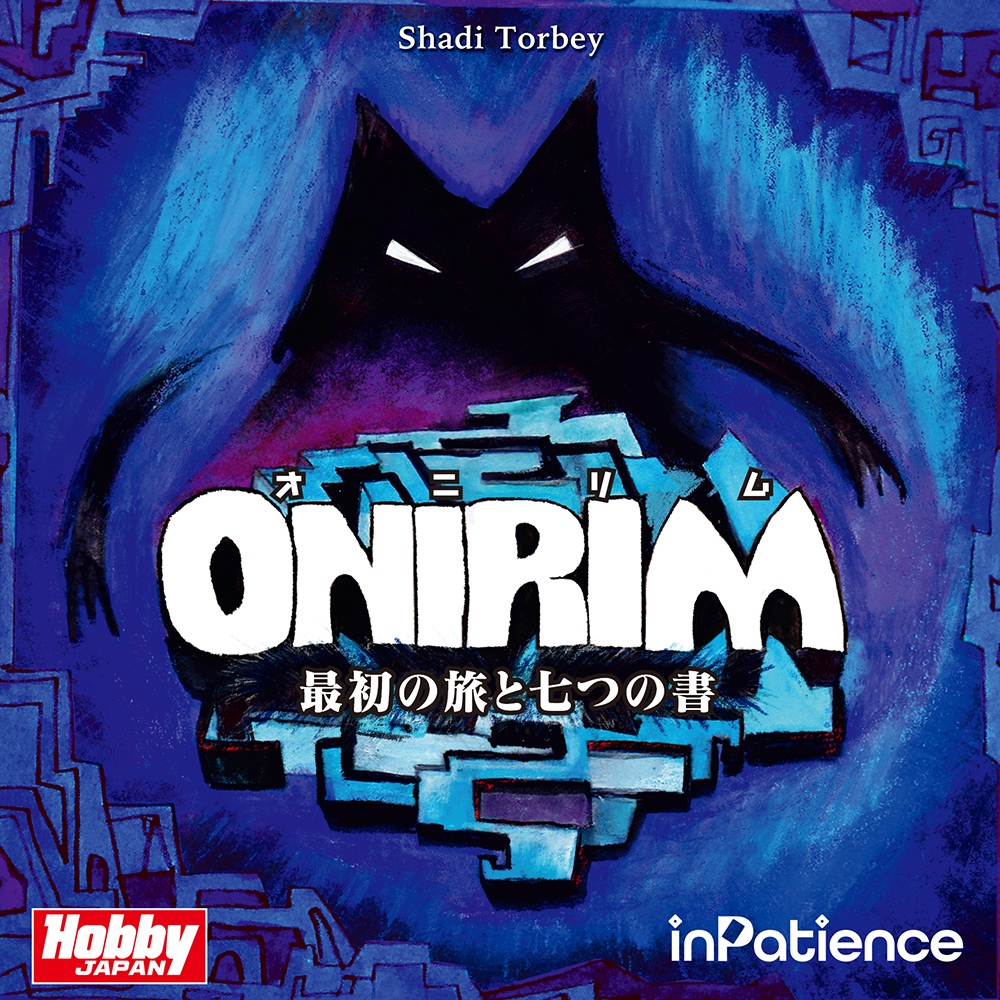
オニリム:最初の旅と七つの書 | ANALOG GAME INDEX
夢幻の世界から脱出せよ。夢魔に立ち向かい、夢の扉を見つけ出せ!
hobbyjapan.gamesUnder Falling Skies
Under Falling Skies is a defense puzzle built specifically for solo play with no compromises. What we could confirm: 1+ players, 20-40 minutes, ages 12+ — though in practice it's effectively a dedicated solo game. It's a dice-placement defense title, and the solo format is a mission/scenario completion type.
One sentence: every single turn hurts in exactly the right way. Placing a die to take a strong action also sends the UFO in that column crashing down faster — the harder you push, the more pressure you create. That structure is obvious to understand and relentlessly demanding to play. Even as a standalone game it's complete, but as noted in Boku Bodo's write-up, the 10-campaign structure means each time you beat it, the next scenario finds a new way to break you.
It suits people who want 20-40 minutes of serious thinking, crave turn-to-turn tension, and care about the earned feeling of a win. It's a poor match for people who prefer growing a board slowly or who want long-term engine building over constraint-based decisions. Fair warning: if you come in expecting a light game because it uses dice, the difficulty will surprise you. The decisions are genuinely heavy even if the processing isn't.
Pricing: typically falls in the medium-box solo game range on Amazon and Rakuten. Availability is restock-dependent — among popular solo titles, this one tends to go out of stock and generate buzz about supply.
Search: "アンダー フォーリング スカイ 日本語版" on Amazon, "アンダー・フォーリング・スカイ 日本語版" on Rakuten.
Coffee Roaster European Edition
Coffee Roaster European Edition (Japanese version) is a solo bag-builder where theme and mechanics feel like they were designed together from the start. Saashi & Saashi describe it as 1 player — a bag-building, score-attack optimization puzzle.
The short take: you're just pulling beans from a bag, and yet it feels remarkably like actually roasting coffee. The loop of nudging bean states toward a target roast level is clean and purposeful, asking "how far do I push this?" on every turn. The official listing shows 22 coffee varieties, 103 bean chips, and 16 flavor chips — each coffee has a distinct profile, and that variety is what drives Replayability. Saashi & Saashi's own page for Coffee Roaster European Edition makes clear that the game is built around roasting adjustment as gameplay, not just as flavor dressing.
Best for solo players who want quiet, absorbed focus; prefer theme immersion over abstract puzzles; and are drawn to games that feel good to handle. People looking for opponent pressure or dramatic board swings might find it a bit sedate. The key thing to know: the appeal here is tactile accumulation rather than flashy events. If that sounds dull, you won't connect with it.
Availability is tied to the Japanese-language print run — relatively accessible, but it can thin out between reprints.
Search: "コーヒーロースター 欧州エディション 日本語版" on Amazon and Rakuten.

コーヒーロースター 欧州エディション日本語版 | Saashi & Saashi
『コーヒーロースター』は1人用のボードゲームです。「コク・酸味・香り」という3種のフレーバーチップや、ボード上の特殊効果を駆使して焙煎を進め、狙った焙煎度のコーヒー豆に仕上げることが目的です。でも注意しましょう。豆を煎り過ぎて焦がしてしまう
saashiandsaashi.comArkham Noir
Arkham Noir is well known as a solo card game that captures the unsettling atmosphere of Lovecraftian horror.
It sits somewhere between detective fiction and card puzzle — the short take is that it pulls you forward through atmosphere while still making the mechanics do real work. The feeling of chasing a case and the challenge of reading card sequences coexist without fighting each other. The experience isn't about a flashy board — it's about a slow, creeping sense of closing in, one card at a time.
Best for people who want to inhabit a world while playing solo, enjoy horror-adjacent themes, and want a card-focused game. It won't suit people who prefer lighter themes or value component production. One caution: there's meaningful uncertainty around the specific specs and which edition is easiest to find, so treat availability information as a starting point.
Availability depends heavily on whether you're targeting the Japanese or English version.
Search: "アーカム・ノワール 日本語版", "Arkham Noir" on Amazon; "アーカム・ノワール ボードゲーム" on Rakuten.
Warp's Edge
Warp's Edge is one of those SF solo titles that comes up reliably in discussions about games with serious solo depth. It has a clear identity in any shortlist of "solo games worth playing hard."
The take: you sharpen your flight path by throwing yourself at the same enemy over and over. There's genuine SF-combat momentum, but the real pull isn't flash — it's the way good draws and good decisions align to build a winning line. If you're the type who enjoys optimizing a run across multiple plays, this one hits that itch well.
Best for people who like space combat, looping structures, and enjoying the satisfaction of per-turn efficiency. Less ideal for people who want story-forward progression or like setting up a large physical tableau. Availability note: domestic distribution can be patchy.
Search: "Warp's Edge 日本語版", "ワープス・エッジ" on Amazon; "ワープス・エッジ ボードゲーム" on Rakuten.
Cartographers
Cartographers is a roll-and-write title that comes up consistently in best-of solo lists, and for good reason.
It's a pen-and-paper style game in the score-attack camp. The short version: it plays quieter than it looks, but the placement decisions run hot. How you fill one section completely changes your options in the endgame — play it casually and your score stalls, play it precisely and the board starts to sing.
Best for people who enjoy writing on sheets, like reading scoring combinations, and want minimal setup. Not a great fit for people who want to push physical pieces around or care about direct conflict. One note: the pen-and-paper format can read as "calm" from the outside, but the score-optimization core is where the real game lives.
Availability: popular enough that finding it isn't always difficult, but editions and language versions can fragment the search.
Search: "カートグラファー 日本語版" on Amazon; "カートグラファー ボードゲーム 日本語版" on Rakuten.
Wingspan
Wingspan is one of the most widely recognized engine-building games around — you're filling three habitat rows with bird cards and watching the combos gradually connect. It's cited as a strong solo mid-weight game because even alone, the feeling of a growing tableau is genuinely satisfying.
The take: lovely to look at, and deeply satisfying to run. Bird card ability chains get cleaner as your turns improve, and solo play surfaces the "if I move in this order, everything connects" feeling more clearly than multiplayer sometimes does.
Best for people who enjoy thematic mid-weight games, care about component quality and card art, and want to feel the payoff of engine growth. Not ideal for people who need strong interaction or combat. Note: there's real processing involved even solo — it's heavier than a light game.
Availability: high profile means it's searchable, but Japanese-language versions and expansion bundles have stock swings.
Search: "ウイングスパン 日本語版" on Amazon; "ウイングスパン ボードゲーム 日本語版" on Rakuten.
Everdell
Everdell is a Worker placement and card-play game built around a forest setting, readable solo as a cozy-feeling mid-weight with genuine depth underneath.
The take: the presentation is charming, but the turn management inside is serious. Chaining resources, cards, and board spaces into a smooth sequence is deeply satisfying, and playing solo means you can focus entirely on building your own town without anyone else's pace affecting yours. It looks like a game about atmosphere — it's really a game about sequencing and efficiency.
Best for people who care about aesthetics alongside mechanics, enjoy tableau-building and card synergy, and want to sink into a world while playing solo. Not ideal for people who prioritize fast setup or short, sharp games. The aesthetic warmth is real, but this isn't a light game.
Availability tends to have waves, and Japanese-language stock in particular varies by season.
Search: "エバーデール 日本語版" on Amazon; "エバーデール ボードゲーム 日本語版" on Rakuten.
Terraforming Mars
Terraforming Mars is the standard example of a "heavy solo experience" — a long-view engine-building game where you're assembling a planetary development plan on your own. Based on what we could confirm, it's generally listed as 1-5 players, with play times in the 90-120 minute range, though solo challenge specifics vary between official and community rulesets and should be confirmed against primary sources.
The take: building a civilization from card combinations, with the dense absorption that implies. Resource management and engine construction sit at the center, and solo play strips away the competitor noise so you can focus entirely on how far you can extend your own production line.
Best for people who don't mind longer sessions, want to dig into card synergy and resource management, and are actively looking for a heavy game with significant payoff. Not suited for people who want games that wrap up in 15-30 minutes. There's real ruleset and decision density here — this isn't a casual single-session pick.
Availability: high name recognition, extensive lineup of expansions — how far you go with the full range affects how you search.
Search: "テラフォーミング・マーズ 日本語版" on Amazon; "テラフォーミング・マーズ ボードゲーム 日本語版" on Rakuten.
Spirit Island
Spirit Island is one of the most consistently praised solo games in recent years — cited repeatedly as the high-water mark of the cooperative-game-played-solo format.
The take: the rush when multiple roles click together is unlike anything in other solo games, even when you're the only one at the table. Each spirit has a distinct profile and growth path, so runs look genuinely different from each other. Solo play can focus on one spirit or go deeper with multiple — both approaches are well-supported.
Best for people who want immersive heavy play, are chasing both strong theme and high difficulty, and enjoy learning from failure and retrying. Not ideal for people who want a quick setup or a simple scoring game. Among the 10 titles in this article, this sits firmly at the heavy end — sustained concentration required.
Availability: subject to the tension between popularity and restock timing.
Search: "スピリット・アイランド 日本語版" on Amazon; "スピリット・アイランド ボードゲーム 日本語版" on Rakuten.
Onirim
Onirim is a card puzzle that punches well above its runtime for solo players looking for something short. The listing for Onirim: The First Journey and Seven Books breaks down to 1-2 players, 15 minutes, ages 10+, with 76 base game cards + 93 expansion cards and 7 expansion modules included. It technically plays cooperatively with a second person, but the tension at the core — how do you respond to what you draw, and what do you hold? — is quintessentially solo.
The single-sentence take: 15 minutes, and you'll want another round anyway. You want to build the right hand, but the deck doesn't cooperate, and yet somehow the next run looks like it'll come together better. We've started it as a single "wind-down" play on a weeknight and ended up running two games before stopping. The pull toward seeing the whole deck through, toward tightening up the procedure — that's where this game lives.
What makes it work isn't pure luck or pure skill, but the combination. The draw variance is real, but so is the impact of when you play a card, which ones you hold, and which you're willing to cut. It's not a heavy-rules game, and yet the decisions carry genuine tension on every turn. Light from the outside, concentrated in the playing.
It clicks most for people who want real mental engagement in a short window and people who want to start playing with minimal setup time. Card-based means it's up and running fast — perfect for nights when 30 minutes is already optimistic. On the other side, people bothered by draw variance or who want to spend turns on layered strategy will find it too light. If you need to attribute every outcome to your own play, the luck factor will frustrate.
The expansion content is worth noting separately: once you have the feel of the base game, you can introduce variation gradually, which extends the freshness of a 15-minute format well beyond what you'd expect. Light games often feel "solved" after a few plays — Onirim resists that because the room for variation is baked into the box.
Availability: mass-market distribution exists, but restock timing causes gaps. Search difficulty varies. Amazon: "オニリム 日本語版"; Rakuten: "オニリム ボードゲーム 日本語版."
Under Falling Skies
Under Falling Skies is a tight match for anyone hunting a short solo game that doesn't let up. Specialist media list it as effectively solo-only, 20-40 minutes, ages 12+, with a 10-campaign structure layered on top of the standalone puzzle. The mechanism: dice go into columns to trigger your base's actions, while managing the alien invasion pressing down from above. What you're actually doing is fairly easy to grasp — but where each die lands shifts the pressure across the whole board in ways that feel heavier than they look.
The thing that makes this game work is that rolling high is great, except that it isn't always. You want the strong actions, but those go in the columns where the UFOs accelerate fastest. Push hard and the enemy closes in faster. Every turn carries a faint smell of productive self-destruction — and for a 30-minute game, the density is remarkable.
The play feel isn't the lightness of a simple puzzle. It's closer to the pressure of a mid-weight game compressed into a tight runtime. Every turn presents the same sandwich: "I want to advance research, I need more power, but that column's already in trouble." The dice introduce randomness as the input, but the real question is always how do you absorb that constraint across the board. This isn't a game where too many options leave you aimless — it's one where clear constraints force the thinking to sharpen.
Best for people who want to genuinely think in a 30-minute window and for people who appreciate campaign progression that expands the experience session by session. If the dice-constrains-your-actions format creates frustration rather than interesting problems, this one will feel more claustrophobic than fun. It's designed for people who enjoy finding the best move within tight constraints, not people who want to execute their ideal plan every time.
Japanese-language versions exist, but availability is restock-dependent. Evaluated solo games with strong reputations tend to have gaps between visible and invisible periods in stock.
For understanding the ruleset and play feel, the Bodoge introduction for Under Falling Skies is useful — it articulates why a game of this length rewards repeat plays. FAQ resources help with the specific processing questions that tend to trip people up.
Under Falling Skies
Placing a 5 or 6 in the column you want most also sends the UFO in that column lurching downward. The feeling is "the stronger the move, the scarier the consequence" — and that's the precise tension that makes this game satisfying to lose to. At our table, we've placed dice and felt good about it for a few seconds, then looked at the board and gone quiet. A lot of information in a short game. A full, solid play session in under an hour.
Coffee Roaster European Edition
Coffee Roaster European Edition is a solo game where theme and gameplay texture lock together unusually cleanly. Saashi & Saashi's listing specifies the Japanese version includes 103 bean chips, 16 flavor chips, and 22 coffee varieties. The experience matches the presentation: this isn't a game that slaps a coffee aesthetic on an abstract system and calls it thematic. The decisions involved in adjusting a roast are the actual game.
The mechanism: bag-building where you're refining the contents toward each coffee's roast target. Every draw asks you to reduce the noise (unripe, scorched, smoky chips) and edge toward your target profile. It's clear what you're doing. What's not easy is that you can't just pull the chips you want on demand — working with randomness, gradually reshaping the bag's contents, is the whole point.
The game feels good because you're not eliminating randomness — you're calibrating it. Early pulls feel scattered. As you process turns, intention starts to show up in what comes out of the bag. When the roast level lands exactly where you aimed, the satisfaction isn't "high score" — it's "I actually roasted that correctly." The kind of game where you want to keep your score sheet nearby, not as a record of numbers but as a log of your roasting attempts.
It resonates most with people who want quiet, absorbed solo focus and people who enjoy the process of steering randomness rather than eliminating it. The appeal is careful, incremental precision — not dramatic reversals. If fine-grained management feels tedious rather than satisfying, the game's strengths won't translate.
ℹ️ Note
Among solo games, this one sits in the category of "the procedure itself is the fun," not just the win or loss. The rhythm of shaping the coffee bean state is the gameplay loop, and it's a good one.
Domestic distribution is available; the game is generally accessible. The box design differs between editions, so the version you encounter affects the visual impression. For reference, Saashi & Saashi's spec listing — 103 bean chips, 16 flavor chips, 22 coffee varieties — makes clear this is designed for replay, not a one-and-done. A distinctive, quietly absorbing solo game.
Arkham Noir
Arkham Noir occupies a specific niche: a "heads-down" card puzzle for solo players who want to sit with a dark, unsettling atmosphere. Based on what was publicly available, we couldn't pin down exact player count, play time, or age rating — but the play feel centers on working through missions by matching hand and tableau, one careful inference at a time. This isn't a game that pushes you forward with spectacle. The atmosphere is heavy and foreboding, and progress comes from threading clues together, piece by piece.
What makes it work is that the theme doesn't just sit on top of the mechanics — the world seeps into your thinking time. Following the Lovecraftian terminology, reading the cards with their uncanny names and iconography, processing the situation in front of you — it feels nothing like a bright, breezy puzzle. Quiet, but tense. The time you spend studying the board is the experience.
The tactical texture comes from asking how far you can construct a logical thread with the hand you currently hold. The card you want won't always be available, so the work is in reading what's in play, figuring out what each element can contribute, and deciding which move now sets up the best continuation. When it clicks and scattered information suddenly forms a single line — that's the hit. And losing still leaves you thinking, "the next case, I'll connect it better."
The difficulty is real. The challenge isn't so much the volume of rules as the sustained cognitive load of translating icons and terms while searching for the optimal move. It's a hard game that takes work to beat, so players expecting a smooth first win will struggle. The upside: failure is rarely attributed to pure bad luck. "That order was wrong," "I held that card too long" — the postmortem is usually constructive. People who like a game that pushes back tend to find the reason to retry.
Suits players who want deep thematic immersion and people who want a genuine card-management puzzle with bite. On the other side, players who prioritize visual clarity or intuitive card parsing may hit friction before the enjoyment kicks in. The iconography and specialized vocabulary are real barriers if you're not ready to sit with them. Whether you can embrace the world as part of the game determines a lot.
💡 Tip
When the board snaps into place, the feeling isn't a combo going off — it's the sensation of scattered evidence suddenly connecting into a single line of investigation. Losing and wanting to chase one more case is a direct result of how strong that feeling is.
Availability: edition-dependent stock gaps are common here. We couldn't confirm the Japanese-language distribution status or publisher details from publicly available information. This is a title that has a reputation but tends to have visible and invisible periods in the supply cycle.
Arkham Noir
When the card placement finally clicks and a line runs through, there's a distinct "something just connected" feeling. The difficulty doesn't make you want to quit — it makes you want to look back at the board and immediately start the next case. The runs we didn't win left the strongest impressions, replaying the decision chain in our heads afterward.
Warp's Edge
Warp's Edge stands out among solo bag-builders for the clean way it binds draw luck to meaningful construction. Based on public information, we couldn't confirm exact player count, play time, or age rating — but the experiential core is a space-combat bag-building mission game. The combat framing might suggest something reactive and flashy, but the actual depth is in how you develop your bag across the arc of a run.
What makes the game feel good is that the painful constraints of the early game turn into the payoffs of the mid and late game. At the start, your options feel thin and the enemy bears down. Add useful chips gradually, and the range of outcomes you can draw into expands. The critical distinction: you're not just adding strong things. Going attack-heavy versus defense-heavy versus resource-acquisition-focused produces fundamentally different play feels each run. A short game where your build philosophy shows up clearly in how the game feels to play — that's not something every solo title achieves.
The draw moment itself is where the drama lives. You've stacked the bag with what you want, but there's no guarantee it shows up when you need it most. That frustration is exactly why it feels electric when the shield chip lands on the turn you needed it. Bag-building games often feel like "probability management" — Warp's Edge is one of the cleaner examples of that sensation, and the highs of the board position syncing with the draw you needed are genuinely memorable.
⚠️ Warning
Once you start thinking not just about what chips to add, but which chips you don't want to pull right now, the game opens up fast. It reads as luck-driven on the surface, but careful risk management accumulates into real strategic control.
The combat setting works in its favor: pushing through a tough enemy with a developed build delivers clear, earned satisfaction. Some solo games are fun as puzzles but don't generate memorable climax moments. Warp's Edge builds deliberately toward "cultivate, then break through" — each game tends to have a clear high point, and that memory of "I pushed through at that one moment" sticks around after the session ends.
Best for players who want a game where their build decisions show up clearly during play, even in a short format. If you enjoy deck-building or bag-building and like runs that feel a little different each time, this clicks. The flip side: if space combat as a theme doesn't light you up, the system's strengths may not fully translate. Engagement with "depleting the enemy" and "surviving attacks" as framing is part of what makes the mechanics feel exciting.
Availability: the pattern seems to have some wave-like behavior, but public information wasn't specific enough for us to confirm restock timing, new edition status, or expansions. For this game, the practical thing is to note its identity as a solo-oriented builder with a specific weight: not too light, not too heavy, and a different build configuration every time.
There are moments where you pull from the bag and just think "please, give me the shield right now." And when that exact chip comes up — it doesn't feel like luck. It feels like the bag you built finally paid off. The draw tension and the construction payoff arrive simultaneously. That combination was memorable.
Cartographers
Cartographers is a roll-and-write title that consistently appears in solo game discussions. Public information didn't give us confirmed player count, play time, or age rating, but as a solo experience it's cleanest to understand as a score-attack game where you're filling a map grid toward defined scoring objectives. The appeal isn't dramatic events or opponent conflict — it's the concentrated pleasure of fitting limited shapes into a space as well as possible.
Playing it feels good because a single diagonal line can suddenly make a scattered terrain layout feel like an actual map. The game looks like "shade in boxes," but what you're actually doing is constant: where do the forests go, what do I leave open, what shape am I setting up for the next card? The turn-by-turn management is light, but the decisions are dense. The result is a play session that feels shorter than 30 minutes in the moment but leaves you feeling like you genuinely worked through something, not just passed time.
The strength of this game is that the pleasure of drawing and the pleasure of optimizing sit side by side. You feel like you're creating freely, and technically you are — but scoring objectives mean you're actually laying lines down according to a deliberate plan. Art-adjacent in feel, puzzle-core in practice. We came in expecting something calm and open, and found ourselves completely quiet within a few turns, thinking through the next shape, the one after that, and how the endgame would fill. The silence of full concentration is comfortable here.
💡 Tip
The core skill in Cartographers isn't filling as much space as possible — it's preserving the right empty spaces so you can absorb whatever shape comes next. When you start thinking about the board as future capacity rather than current gaps, the depth appears.
Works best for players who like optimization puzzles but want minimal table footprint. If you'd rather play something you can start quickly without spreading out a lot of components, this fits cleanly. It's also a strong match for solo players who specifically want "quiet concentration" — not thematic drama, but the honest satisfaction of a well-made map. On the other side, players who need strong narrative arcs or interactive tension will find it muted. The achievement here is a completed board that makes sense, not a defeated enemy.
Availability: base set and expansions can have different stock situations. Japanese-language version is typically the right starting point given the reading-dependent nature of scoring cards.
Cartographers
A single line drawn almost casually, and suddenly the blank space had a shape. That feeling — wanting the next one to be even cleaner, even more efficient — is what keeps the session going. Nothing dramatic. Just a map, and a kind of quiet absorption.
Wingspan
Wingspan is the defining engine-builder of this era — you're populating three habitat rows with bird cards and watching the ability chains gradually come to life. For 1-5 players at a mid-weight level, it includes an official solo mode (the Automa) that holds up well.
The pull of this game is that each bird placed doesn't just score — it shapes every turn that follows. Early on, "lay eggs," "get food," "draw cards" feel like separate activities. As the board fills, a single action starts triggering multiple effects in sequence. The moment the three-row synergy clicks, the game changes character.
Visual richness is part of the experience rather than decoration. More bird cards mean a more alive-looking tableau, and the sense of having built a particular ecosystem today — not just a high-scoring one — creates a satisfaction separate from optimization. This is for players who want to feel they built something, not just scored efficiently.
Solo Format
Solo play centers on competing against the Automa as described above. The feeling isn't "quiet puzzle," it's closer to a race with a score-efficient opponent running alongside you. Your side of the table is calm and deliberate, but the Automa's progress is real — if you're too slow to build, you'll fall behind. That tension keeps the solo game from feeling untethered.
The design here is smart: the Automa doesn't try to replicate opponent tactics. Instead, it preserves what's enjoyable about Wingspan while tightening the pace. No aggressive interference to deal with, but you still have to make real decisions about which row to grow, when to shift toward scoring, and how to use your turns. The solo version doesn't feel like a reduced experience.
ℹ️ Note
The satisfying moment in solo Wingspan isn't when you play a single strong bird — it's when the row you set up two turns ago starts chaining through your current action. Food, eggs, and draws lining up cleanly makes the board feel like it's running itself.
Best for players who want to use the same box alone or with others. The ruleset sits in the mid-weight band — heavier than filler, lighter than a full complex game — which is a sweet spot for a lot of players. Players who need direct attack or table-talk tactics will find it relatively gentle. The satisfaction here is less about outmaneuvering an opponent and more about watching your own engine hit its stride.
Availability: Japanese-language version is generally in circulation, though expansion stock has swings. The base game alone is a complete, distinctive experience.
Wingspan
ウイングスパン 完全日本語版 - ArclightGames Official
ご購入はコチラから! ゲームデザイン:Elizabeth Hargrave タイトル原題:Wingspan オ
arclightgames.jpEverdell
Everdell is a Worker placement and card-management game built around a forest setting. Generally listed as 1-4 players in the mid-weight range, it has a community-created Automa (referenced in discussions as an implementation like "Rugwort"), though whether implementations like that are official or community-made should be confirmed against primary sources before citing as official specifications.
The appeal of this game is that the underlying flow — collect resources, play cards — is standard enough to be immediately readable, yet every single turn delivers a clean "I got slightly ahead" feeling. Each new building or critter expands your options a little. And that expansion doesn't feel like a generic efficiency bump — it feels like your particular town developing its own character. This is a game that leaves memorable boards, not just memorable point totals.
What tends to stick in memory is the moment a single new card makes you want to rebuild your whole plan. You were prioritizing one direction, then a well-timed card changes what your resources are worth, what actions you want, and what your town becomes. That volatility keeps turns from feeling routine. Playing solo, you're not just calculating — it feels like the cards are proposing what kind of town this session could be.
Solo Format
Solo centers on competing against the Automa while running your own engine-build and set collection, as described above. The feel is less "score attack against yourself" and more an efficiency race to complete a town you care about, within a finite run of turns. Limits and flow matter, not just point maximization.
What makes Everdell's solo mode hold up is that it doesn't sand away what's enjoyable. Finding card connections, deciding "this resident belongs in that building," thinking about what sequence creates the cleanest continuation — all of that survives the solo format intact. The Automa doesn't play aggressively, which makes it accessible to players who find confrontational Automas friction-heavy.
That said, players who want crystal-clear winning conditions visible on the board may find it slightly loose. Everdell doesn't reward tracing one optimal path — it rewards redrawing the town plan in response to what you drew, what space is available. That's where the fun is, which means players who prefer feeling something grow rather than finding the right answer will connect with it most.
💡 Tip
The high point in Everdell solo isn't a big scoring turn — it's the moment one new building or critter makes the whole town suddenly fit together better. "That one card made everything after it easier" is exactly the feeling the game is built around.
Best for players who want to inhabit the world, not just score it. The aesthetic isn't just surface — the act of building cards into a tableau that looks like a town reinforces the theme. Also strong for players who want long-term engagement with a single box: once you love the base experience, there's a natural pull to go deeper. Availability follows the pattern of stock waves; the Japanese-language version tends to be the more practical choice.
Everdell
There's a moment when you look at a card coming into your hand and immediately want to scrap your current plan. Solo, that plan revision doesn't feel like a setback — it feels like the cards are suggesting a better town. "How about we build this kind of neighborhood this time?" That feeling is what makes repeat sessions interesting.
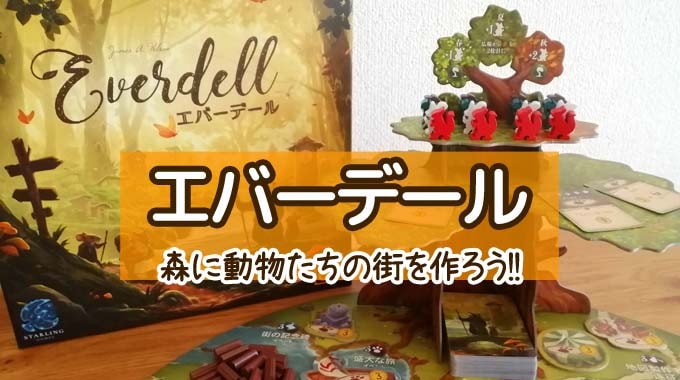
エバーデールのルール&レビュー|動物たちの街作りボードゲーム | ぼくボど
エバーデールは「森の小動物たちが街を作る」という、ワーカープレイスメント系のボードゲームです。日本語版は「2020年1月9日」に発売しました。 今回は『エバーデール(Everdell)』のルール&レビューを紹介します。「エバーデールってどん
boku-boardgame.netTerraforming Mars
Terraforming Mars is the standard bearer for engine-building games as a heavier solo experience — a long-arc, card-driven terraforming campaign that you run entirely on your own terms. Public information didn't allow us to confirm the specific solo challenge ruleset, though it's generally described as 1-5 players with play times around 90-120 minutes. Solo challenge rules vary between official and community versions, so verify against a primary source before relying on specifics.
Solo Format
Solo centers on a mission-type format: achieve the required conditions within a set number of generations. Rather than chasing an opponent's score, the question is how cleanly you can get your engine running before the clock runs out. The tension is closer to project management than score racing.
This format works well for Terraforming Mars because the game resists pure card-luck solutions. Draw quality matters, but solo pushes the "what do I sacrifice, what do I grow?" question to the front. Resources, production, tags, board placement — a lot of elements, but not arbitrary complexity. Build a weak foundation early and you struggle through the mid-game; chase early points and your goal drifts out of reach. Your plan quality shows up clearly.
ℹ️ Note
The payoff in solo Terraforming Mars isn't the high-value card you draw — it's when the production boost you committed to several generations ago suddenly floods the late game with resources. "That restraint paid off" is a feeling the game delivers precisely, in numbers.
Best for players who want engine-building at its most concentrated. Individual turns carry weight, and early investment creates late-game momentum — this rewards patience and planning over quick reactions. If you want a game that gives back what you put in, thematically and mechanically, this delivers. On the other side, players who want fast setup or minimal cleanup will find the overhead heavy.
Availability: widely recognized, with an extensive expansion line. How far you extend into expansions affects how you search. The base game alone provides plenty of decision density and strong solo play.
Terraforming Mars
There are moments where you hold a card and genuinely agonize: "leave it this generation, or spend the money now — and risk it never coming back?" Solo play lets you sit with that question as long as you need. Win or lose, the Mars you terraformed was entirely your judgment call — and that stays with you.
テラフォーミング・マーズ 完全日本語版 - ArclightGames Official
ご購入はコチラから! メーカー:FryxGames デザイナー:Jacob Fryxelius 原題:Terr
arclightgames.jpSpirit Island
Spirit Island is a cooperative game you can run fully solo, and one of the heaviest options in this list. At 1-4 players, 90-120 minutes, high difficulty, it's less "a relaxing game you play alone" and more a strategic puzzle about interrupting invasion chains — the kind that rewards being planned well in advance.
The core appeal: things don't resolve in isolation. Whether you defend a given land isn't just about that land — whether that defense reduces future damage or just redirects the pressure to another region is part of every decision. Reacting to the immediate threat isn't enough. You need to read the wave several moves ahead. When that reads pays off and a threat chain collapses, it's one of the most satisfying feelings in solo gaming — and it's why, despite the difficulty, players come back.
Solo Format
Solo uses a full cooperative control format — you're not playing against an Automa that simulates an opponent, you're managing all the decisions that a group would normally distribute. Reading each spirit's role and specialty, deciding where to hold, what to sacrifice, and in what order to use your powers — the game is dense with this.
The difficulty isn't just information volume. There's a constant need to triage: what damage must be stopped now versus what losses can be recovered later. When the right move appears, you tend to feel it before you see it. The achievement feels outsized for a solo experience because you generated it entirely from fragmented information, on your own.
💡 Tip
What sticks in memory from Spirit Island isn't the big power play — it's the moment you realize several rounds earlier you preemptively prevented a cascade that would have collapsed the board. "That decision saved everything" is confirmed by the full-board state, not just one square.
Best for players who want heavy immersion and are prepared to earn it. Density holds up for solo and multiplayer alike — the more you put in, the clearer the board becomes. If you want challenge without compromising depth in cooperative play, this is the answer. On the other side, players who want to minimize exception processing and effect tracking may feel the overhead. Whether you enjoy working through board state, ability timing, and simultaneous problem triage determines a lot about how the game lands.
A brief note on availability: the Japanese-language version has a reputation for going out of stock due to demand. This game earns players through weight, not accessibility — and those players drive stock tight. Among solo games, it's one where the memory of clearing a hard scenario stays with you.
Spirit Island
There's a moment where the framing shifts — from "defend this territory" to "break the invasion chain here, before it reaches the territories I can't afford to lose." When that plan executes and the damage suddenly contracts, the feeling is something else entirely. Arriving at that outcome solo, through your own reasoning, is a particular kind of satisfaction.
一人ソロプレイボードゲームの最高傑作!「スピリットアイランド」ゲーム紹介とレビュー | TEENOのボードゲームレビュー
ameblo.jpBeginners, Short Sessions, and Heavy Hitters — Choosing by Context
After going through the full list, the most common follow-up question is: "Which angle actually leads to the right pick for me?" Rather than comparing games to each other, here's a re-sort by player experience, available time, and whether you want multiplayer flexibility. Whether you're fitting in one weeknight game or settling in for a weekend session shapes the answer significantly.
3 Good Starting Points for New Solo Players
The three clearest first-buy options are Onirim, Cartographers, and Coffee Roaster European Edition. What they share: none of them buries the enjoyable part under a pile of setup or exception management. The game's core pleasure surfaces quickly.
Onirim concentrates card tension and hand management into a short window. The base game (76 cards) comes with 93 expansion cards and 7 modules, so you start simple and add variation as you get comfortable. It's the type of game that generates natural "one more run" momentum — as a solo entry point, it's hard to beat.
Cartographers has an approachable information curve — the board fills as you play, and your scoring intuition develops through doing rather than reading. No single turn is overwhelming, which keeps the game moving. It also works as a low-stakes "practice" game for players who usually play multiplayer and want a solo analog.
Coffee Roaster European Edition is the pick when thematic immersion matters from the start. The roasting mechanic and the gameplay loop are well-aligned, 103 bean chips, 16 flavor chips, and 22 coffee varieties deliver more variety than the format suggests, and the focus is quiet and pleasant. Pure rules-lightness goes to Onirim, but for newcomers who specifically want to feel what absorbed solo play is like, Coffee Roaster gets there early too.
3 Good Options for 30-Minute Sessions
The strongest options for sessions where time is genuinely limited: Onirim, Under Falling Skies, and Cartographers. The relevant question isn't just "is it short?" but whether the density holds for the full runtime.
Onirim at 15 minutes is the most insertable game on this list. The draw-versus-hand-management tension doesn't thin out just because the game is short. You walk away feeling like you actually played something.
Under Falling Skies at 20-40 minutes delivers more concentrated thinking per minute than most games in this time slot. Every dice placement has real consequences. The 10-campaign structure means some sessions are standalone, others are chapters in a longer run. For weeknights when "light" feels insufficient, this slots in well.
Cartographers at roughly 30 minutes sits between the two — less explosive than Onirim, less urgent than Under Falling Skies. It's the right pick for evenings when you want to think, but don't want the pressure to spike.
ℹ️ Note
Our internal pattern: Onirim or Under Falling Skies during the week, heavier titles on weekends when the time block is real. Keeping a short game and a long game in rotation makes it easy to match the game to the energy you actually have.
Options for 60+ Minute Deep Dives
For sessions where you want to commit: Terraforming Mars, Spirit Island, and either Wingspan or Everdell. The distinction within this group is about what kind of heavy.
Terraforming Mars rewards sustained resource management and long-view card selection. Individual turns compound. The more time you invest, the more the payoff matches your planning. If stacking numbers into a growing board is your thing, this is the long-session anchor.
Spirit Island is where long-game thinking delivers its clearest returns. You need to see ahead — not just the immediate threat but how addressing it reshapes the next wave. This is a game to set aside a dedicated day for. It's not an extension of a busy week; it's a session with its own purpose.
Wingspan and Everdell are mid-to-heavy rather than outright heavy, but they build genuine 60+ minute sessions. Wingspan leads with engine-building satisfaction; Everdell leads with tableau growth and card synergy. Both serve players who find pure light games unsatisfying but aren't quite ready for the full weight of the top two.
Multiplayer-Flexible Solo Titles
If you want the same box to work for solo and for group play: Wingspan, Everdell, Terraforming Mars, and Spirit Island all qualify. The strength here isn't "they have a solo mode bolted on" — it's that the core game is good enough that the solo density doesn't collapse.
Wingspan and Everdell are both accessible to non-gamers and game-familiar players alike, which makes them easy to alternate between solo sessions and social ones. Terraforming Mars and Spirit Island go harder — the first rewards building your personal optimization problem, the second rewards the full cooperative experience whether you're alone or with others. Before expanding a solo-only collection, using one strong multi-use box for both contexts is often the more practical path.
Re-sorted: for weeknight shortest path, Onirim or Under Falling Skies; for weekend depth, Spirit Island or Terraforming Mars; for new players, Onirim, Cartographers, and Coffee Roaster European Edition; for multiplayer flexibility, Wingspan and Everdell.
Common Questions About Solo Board Games
The questions that tend to come up before a purchase: "Do I need a solo-only game?", "Is the Automa annoying to run?", "Can I start with a heavy game?" These are worth addressing directly rather than just calling them preference questions — they hinge on what you're actually prioritizing.
Does It Have to Be Solo-Only?
Even if you're mostly playing alone, a solo-only game isn't always the better choice. If there's any chance you'll want to play with family or friends later, a multiplayer game with strong solo support gives you better return on investment. Wingspan and Everdell, for instance, work well across solo and social contexts — fewer boxes owned, wider range of occasions covered.
That said, if quick setup or "this is my time alone and I want to get right to it" is the priority, games designed solo-first like Coffee Roaster European Edition or Under Falling Skies have a clear edge. No simulated opponent to track, no setup overhead for a mode — you're into the game faster. At our table, the time from box to first turn has a real effect on how often a game actually gets played on weeknights.
Is the Automa Annoying to Manage?
Honestly — yes, at first, and then usually not. The first session is the hardest: you're managing your own turns while learning a new procedure for the simulated opponent. Multiplayer games adapted to solo often require understanding "how did they simplify the thing a human would normally do?" before it feels natural.
By the second or third session, the flow becomes procedural. Once it's in your hands, the Automa's processing becomes a known routine rather than an unknown rule, and what was friction becomes just part of the session. After that, you can experiment with difficulty levels and adapt your strategy to the opponent's patterns. The upfront cost is real, but the trade is increased Replayability — and that trade tends to be worth it.
Can I Start With a Heavy Game?
If you're drawn to heavy games, starting there is fine. In fact, if the theme or system genuinely hooks you, jumping in is often more sustainable than forcing yourself through a light "starter game" you don't care about. Genuine interest is what keeps a box in rotation.
The actual friction isn't difficulty — it's time and processing load. Trying to absorb everything in one session is exhausting, and ending a run with "I was drained before I got to enjoy it" is a common first-play pitfall. Our experience: when playing heavy games, running a light solo game in parallel helps. A 15-minute Onirim session between heavy game attempts gives the brain a reset without breaking the habit. Keeping both a "main project" and a "recovery game" is a practical pattern.
💡 Tip
If a heavy game is calling you, don't make it the only game you play. A short solo game you can finish in one sitting alongside it means you don't lose the habit of playing when the heavy game needs more than you have that evening.
How's Availability for Japanese-Language Versions?
Japanese-language versions of popular games don't stay in stock consistently — there are restock waves. If a title is out of stock right now, that doesn't mean it's been discontinued. Sites that track new releases and restocks — like the New and Restock Release Schedule — are more useful for catching these windows than checking individual listings at random.
Used market searches need more care than price alone. Card condition, missing components, and whether translation inserts are included all affect the experience in ways photos don't always capture. Solo games in particular tend to get heavy use — high shuffle counts, frequent reference — so wear shows up in play feel more than you'd expect. When new copies are scarce, check the condition details carefully.
Is the Price Justified?
Value comes from how often the experience repeats, not from box size or production quality. Aukfan's data (average sale price of around 4,271 yen, ~$28 USD) gives a frame for the used market, but for solo games the more relevant lens is Replayability stacked on top. Onirim's 76 base cards plus 93 expansion cards and 7 modules mean a 15-minute game generates variation well past what the footprint suggests. That configuration makes price easier to justify.
Conversely, even a high-satisfaction single session can feel expensive if the setup friction keeps the game on the shelf. Under Falling Skies at 20-40 minutes with a 10-campaign arc is designed to accumulate value across sessions, not peak on the first play. Coffee Roaster European Edition, with 103 bean chips, 16 flavor chips, and 22 coffee varieties, offers enough configuration variation to keep the roasting experience fresh across many plays.
The wider market context: Table Games in the World reported Japan's 2023 board game market at 7.54 billion yen (~$49 million USD), which means more options and more noise. The practical filter: does the game suit your actual time slot, will you want to replay it, does it have campaign or expansion depth for the long term? Whether something is popular or has impressive components matters less than those three questions.
2025-2026 Trends and Availability Notes
The conversation around solo board games in 2025-2026 has split into two clear directions. One is games built from the ground up for solo play — Under Falling Skies is the most-cited example: fast to start, dense per minute, no compromise for multiplayer. The other is high-difficulty cooperative games played solo — Spirit Island is the center of this conversation, where the depth is the point whether you're alone or with a group. What's shifted is less "can it be played solo?" and more "what does it do best when played solo?"
This shift shows up in rankings. Summaries like Solo Game Trends — 2025 Rankings increasingly show solo-dedicated titles and dense cooperative games being discussed side by side. Worth noting: BGG rankings and weight scores are living numbers — they shift with new votes and participation. Any reference to them should be anchored to "as of 2025" or a similar time marker. The solo category in particular moves quickly; the mood can shift meaningfully within a few months as new titles arrive and older ones get reassessed.
Availability continues to be difficult to predict for popular titles. A game in conversation gets a restock, floods the market briefly, then goes thin again. As mentioned earlier, tracking restock schedules through dedicated sites — and using in-stock alerts for titles you've decided on — is the most practical approach. Waiting and expecting things to be available when you're ready can easily mean missing a window.
The real-life version: right after a restock, a game often feels surprisingly easy to find. A few months later, the options narrow. Solo games often spread through word-of-mouth rather than launch momentum — a title can spike in demand well after its initial release, once reviews accumulate and communities form around it. Under Falling Skies and games like it move fast when they hit a popular conversation thread; Spirit Island and heavier titles tend to stock-out as the "I want one serious solo game" buyer finds them.
ℹ️ Note
Solo game availability is more about catching the right restock window than about how popular a title is. Japanese-language versions in particular tend to have wide gaps between easy-to-find and hard-to-find periods.
One more thing worth tracking: the evaluation criteria have multiplied. "A great game to play alone" used to be sufficient. Now the conversation distinguishes between short-run, high-density decision games, Automa systems that feel fluid, configurations that make you want to replay immediately, and high-difficulty games worth returning to after a loss. Same high rating, very different reasons. Onirim (light, high Replayability), Coffee Roaster European Edition (thematic absorption), and Spirit Island (heavyweight strategic depth) all get strong recommendations — but for reasons that don't overlap much. After 2025, you need to read why something is rated well, not just that it is.
Wrapping Up: Your First Game, and Where to Go Next
The safest starting choice is a lightweight game you can pull out on a weeknight without special setup that still leaves you feeling like you played something. For a foothold in solo gaming, Onirim is the answer if you want to start learning win conditions; Under Falling Skies if you want genuine thinking in a short window. From there: Coffee Roaster for thematic depth, Wingspan for the pleasure of building your own tableau, Spirit Island or Terraforming Mars when you're ready to go heavy.
When you're ready for the next purchase, think in order: decide on the time slot you're filling, choose between solo-dedicated and multiplayer-compatible, check Japanese-language availability, then weigh price against how often you'll realistically play. Our own rotation — Onirim or Under Falling Skies on weeknights, Spirit Island or Terraforming Mars on weekends — holds up because it matches game weight to available energy. For general board game buying guidance before your first solo purchase, first-buy recommendations and gift guides are useful references.
Related Articles
7 Essential Worker Placement Games for Beginners|How to Choose Your First Game
The appeal of worker placement lies in how shared action spaces and turn order create a natural mind-reading game between players. When you play Stone Age with three people on a weekday evening and someone claims the timber spot you wanted, forcing you to pivot toward hunting and dice rolls—that mix of 'frustration at being blocked' and 'the joy of finding an alternative' is the core of this mechanic.
15 Best Two-Player Board Games | Compared by Type
When it comes to two-player board games, you'll have better luck starting with games designed specifically for two rather than picking whatever's popular. That said, there are multi-player games like Azul and Splendor Duel that genuinely shine as two-player experiences.
Best Board Games for 3 Players — Standout Titles Built for Bluffing and Negotiation
Finding the right board game for three players isn't just about headcount. Three-player games occupy a sweet spot — more tension than a two-player duel, tighter reads than a four-player free-for-all — where "who do I stop right now?" and "when do I swoop in for the win?" become genuine strategic questions.
What Are Legacy Games? How to Choose, Compare, and Evaluate Before You Buy
Playing Pandemic Legacy once a month with my regular group, I was struck by how even a one-hour session left a vivid sense of consequence—every past decision shaping what came next.