
What Are Legacy Games? How to Choose, Compare, and Evaluate Before You Buy
What Are Legacy Games? How to Choose, Compare, and Evaluate Before You Buy
Playing Pandemic Legacy once a month with my regular group, I was struck by how even a one-hour session left a vivid sense of consequence—every past decision shaping what came next.
Playing Pandemic Legacy once a month with my regular group, I was struck by how even a one-hour session left a vivid sense of consequence—every past decision shaping what came next. That's the core of the legacy format: stickers placed, things written, sealed envelopes opened—irreversible changes that layer into the next session and the one after that. The story and your choices become the table's shared memory.
This article untangles what legacy games actually are, clears up the common misconception that you can only play them "once," and walks through how they differ from puzzle games and standard campaign games. You'll also get a checklist of things to consider before buying, plus a breakdown of who Pandemic Legacy, Machi Koro Legacy, and My City are each right for. The first-time experience may be unrepeatable—but that's precisely what gives it value. For the right group, a legacy game isn't something you consume; it's a long story you build together at the table.
What Are Legacy Games, and Why Are They Called "One-Time" Experiences?
The simplest definition: legacy games are board games that rewrite themselves as you play. That rewriting isn't a metaphor—it's physical. You write names on cards, stick stickers on the board, open specified envelopes or small boxes. These aren't optional; they happen. The Legacy System | Board Game Mechanics Feature also identifies this core idea: irreversible changes that carry forward into future sessions.
Three elements hold the format together. First is irreversibility—a sticker stays put, and an opened envelope can't be unsealed. Second is continuity: the results of last session (wins, losses, choices made, rules added, map sections altered) form the starting conditions of the next. Third is uniqueness of experience: even if two groups play the same title, the sequence in which they unlock things, the decisions they accumulate, and the outcomes they generate create a history that belongs only to their table.
The frequent misconception—"you can only play a legacy game once"—misses the point. It doesn't end after a single sitting. What's true is that the experience of playing through the full campaign for the first time can only happen once. Take Pandemic Legacy: Season 1, a standalone game for 2–4 players, roughly 60 minutes per session, ages 14+. It covers 12 in-game months, each of which can be attempted up to twice. That means 12 to 24 total sessions—nothing like a one-and-done game. What you can't repeat is the experience of running through all 12 months without knowing what's coming. Lose that nuance and the whole appeal of the format becomes hard to convey.
Describing the atmosphere without spoilers: legacy games have a feeling of opening the next chapter with your own hands. Hit a condition, open an envelope; pull something new out of the box; watch a rule you never had before suddenly activate; place a sticker on the board and watch the territory mean something different. It's close to the excitement of adding an expansion to a regular game—except it's permanent. This isn't "let's try this and see." It's "this is now carved into our table's history." That's why the air in the room changes the moment you open an envelope.
"Legacy" Means Something Left Behind
The word legacy here isn't about age or tradition. Read it as a history that accumulates into something permanent. Last session's decisions become this session's constraints—or assets—which in turn shape the next round of choices. It's similar to how a TRPG campaign's past sessions define the table's atmosphere, except in legacy games that history also lives in the rules and the physical state of the board. The components themselves become a medium for memory.
This is why legacy games are typically distinguished from mystery/puzzle games and escape room experiences, even when those also feel like "one-shot" affairs. In puzzle and escape formats, Replayability drops because you've seen the solution. In legacy games, the traces of your choices remain as physical objects and become the conditions for the next play. The What Is a Board Game Legacy? article also frames this "once-ness" not as single-use consumption but as the irreproducible nature of a continuous experience.
Looking at who legacy games really resonate with, there's a clear pattern: people who care not just about winning or losing, but about what happened at their table. A single sticker on the board, a name written on a card—seeing it later brings back the whole conversation from that night. That's why legacy games are simultaneously a mechanical system and a physical archive of shared play. Their staying power is entirely different from a regular game's Replayability, and this is exactly why.
この記事では、レガシーの仕組みや面白さ、魅力、注意点を解説し、おすすめのレガシー系ゲームを紹介します。
|https://i0.wp.com/kujiraction.com/wp-content/uploads/2020/05/baf6902136096826b7d1c1775dd950f1.jpg?fit=1280%2C783&ssl=1}}
How Do Legacy Games Differ from Campaign Games and Puzzle Games?
A Comparison That Makes the Differences Obvious
Legacy, campaign, and puzzle/escape games all share a "what happens next?" pull and a sense of limited repeatability. But "the story continues" is very different from "an irreversible record accumulates in the game itself." Separating those two ideas makes everything clearer.
| Genre | Core experience | Physical/permanent changes | Can you return to the initial state? | Common classification |
|---|---|---|---|---|
| Legacy game | A long-form experience where choices and outcomes accumulate into future sessions | Yes. Writing, stickers, opening envelopes—all common | Usually difficult or impossible | Classified as a legacy system |
| Campaign game | Continuing story or character growth, scenario progression | Often none. Many manage state without altering components | Many are designed to reset | Sometimes distinguished from legacy |
| Puzzle/escape game | Discovery of solutions, one-time immediacy | Some titles have alterations, but generally not the core | Many can be reset by rearranging contents | Not usually called a legacy game, even if one-time |
Pandemic Legacy: Season 1 is the classic example: a 12-month campaign where the situation evolves and the consequences of your choices persist into every future session. The "continuing story" matters, of course—but what defines it as a legacy game is that the game's state itself carries the table's history forward.
A campaign game, by contrast, can feel like a serialized drama without being a legacy game. Characters level up, scenarios progress, past victories carry over—but if all of that is tracked like a save file while the board and cards themselves remain unaltered, it sits in "campaign-adjacent" territory rather than legacy proper. The continuity is there; the permanent rewriting of the physical game isn't.
Puzzle and escape games cause the same confusion for different reasons. Yes, once you know the answer the original surprise is gone—high one-time-ness, objectively. But they're generally treated as a separate category. The reason is simple: what they involve is the consumption of a solution, not a structure where your play history layers into the rules and board state of the next session. The "no spoilers" atmosphere is similar; the design philosophy is not.
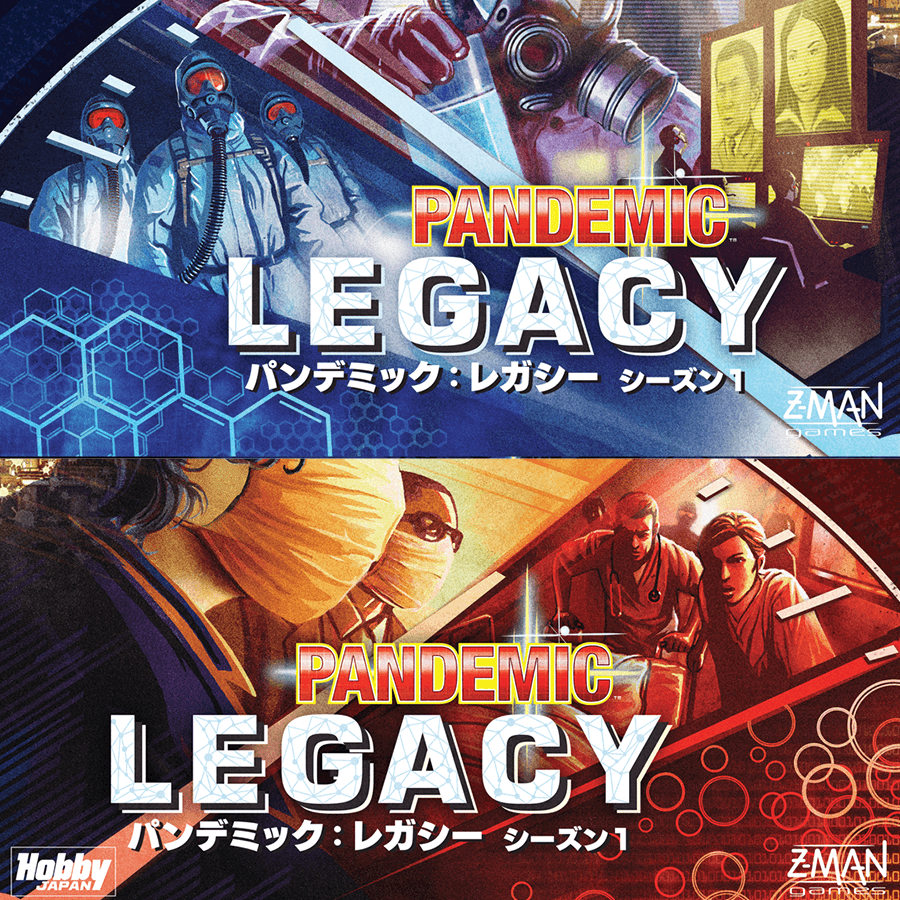
パンデミック:レガシー シーズン1 | ANALOG GAME INDEX
本当の危機には、やり直しなんてきかない。「レガシーシステム」搭載の『パンデミック:レガシー』日本語版、シーズン1がいよいよ開幕!
hobbyjapan.gamesWhy "Irreversible Changes" Is the Right Dividing Line
When distinguishing these three, the most practical test is: does irreversible alteration of the components happen? The Legacy System | Board Game Mechanics Feature places exactly this—writing on components, applying stickers, changes that can't be undone—at the center of what makes something a legacy game. It's a more reliable axis than whether the story continues.
Put intuitively: could you sort the box contents and return everything to its starting state? A venue-based escape room or booklet-style puzzle game has first-time experiential value, but structurally it's "solve it and done." You can't re-experience it because you've seen the answer—not because the game's history has been physically locked into it as new play conditions. That's the difference from legacy.
A legacy game's box, once played, is already a box that holds the history of that table. Machi Koro Legacy's ability to keep playing after all 10 campaign rounds—with every unlocked element reflected in the game state—is a clear illustration. Overlooking this continuity means missing something you can't get back. The key point is that you're not at the initial state anymore. The history remains, and the game continues from there.
My City works the same way. Eight chapters, three episodes each, 24 total—and as you play, the board and conditions change. The fact that there's a post-campaign mode doesn't make it "not a legacy game." Whether something is a legacy game isn't determined by whether it can be replayed; it's determined by how centrally permanent change is placed at the heart of the experience.
This distinction matters because it keeps you from missing what readers actually want. Someone chasing a long narrative may want a campaign game. Someone after a single burst of insight may be better served by a puzzle game. But if what you want is the feeling of your choices staying in the box—not the story continuing, not a one-time limitation, but your table's history being inscribed in a form you can't go back from—that's legacy.
「レガシーシステム」の人気ボードゲーム TOP20
コンポーネントに不可逆な変化を加え、グループごとに異なるゲームとなる
bodoge.hoobby.netWhat Makes Legacy Games Great—and Who They're Not For
The appeal of legacy games isn't simply that you get a serialized game to play. What's powerful is that a story emerges that could only have happened at your table. Even playing the same title, the exact timing of decisions, who made which call, where things went wrong, what random outcomes landed—all of it changes both the contents of the box and the memories of the conversations. In TRPG terms: you're not just tracing a prepared scenario. Your group's decisions leave permanent marks on the world. That specific texture is what legacy games offer.
And the changes are often unpredictable. Opening an envelope, adding a new rule, watching a strategy that felt foundational suddenly stop working—there's a kind of excitement in that which standard board games rarely deliver. Pandemic Legacy-style serial drama titles do this especially well; sessions run about 60 minutes, but "what happens next?" pulls your attention forward so hard the time feels shorter. It's not just the story ahead you can't predict—it's how your own past decisions will come back at you. This is not scenario grinding.
The other big strength is the density of shared experience built with a fixed group. Standalone classics are plentiful, but legacy games have an unmatched ability to cultivate context that only the people at that table understand. The moment a single move changed everything, the card that saved the session, the bold call that echoed through the whole campaign—these become campaign-wide memories, not just inside jokes. Machi Koro Legacy, spanning 10 rounds, is a good entry point for this kind of intensity. At 30 minutes per session it never feels too heavy, but playing it through leaves "the history of our town" genuinely intact.
That density, though, is also what makes legacy games selective about who they suit. The biggest friction point is maintaining a fixed group. Even for a 2–4 player game, satisfaction depends heavily on having roughly the same people show up every time. New players can join mid-campaign, but without shared context from past sessions the core of the experience starts to hollow out. Pandemic Legacy: Season 1's 12-month structure—up to 24 sessions total—demands that you think about scheduling before you even start playing.
Dropout risk is easy to underestimate. In a regular board game, "let's try a different group next time" is trivial. In a legacy game it isn't. One person dropping out can stall the whole thing, and bringing in someone new means explaining not just the rules but every significant thing that's happened—a significant load. It's less like a game being difficult and more like trying to keep up with a serialized show, as a group, indefinitely.
No spoilers, ever is another legacy-specific challenge. The rule changes, the box contents, the surprise twists—these are the product. That makes casual conversation about the game genuinely risky. In the age of easy search, even looking up the game's name can expose you to the core of the experience. With a regular board game you don't usually worry much about this. With legacy games, the distance you keep from information is much more important.
Price is also a real factor—but not just in the way you'd think. The question isn't the sticker price alone; it's whether the cost feels right when divided by total sessions. Machi Koro Legacy retails at 5,800 yen (~$38 USD; Amazon listings showed approximately 5,771 yen (~$38 USD) tax-included). At 10 rounds of 30 minutes each, it fits into a relatively short window and the experience density feels high for the box size. But a group that keeps stalling midway will feel the weight of "we're barely halfway through." My City's 24 episodes offer the pleasure of accumulating something gradually, though the total span naturally runs longer.
The Pace You Set Shapes the Quality of the Experience
With legacy games, designing your play schedule matters as much as choosing the right title. Weekly, biweekly, or monthly sessions each create a different feeling. Closer together builds momentum. More time between sessions lets last session's choices ferment—"was that really the right call?"—and the aftertaste lingers pleasantly.
For this reason, even though some puzzle/escape games share a "one-time" quality, they're usually kept in a separate category. If you want to sort out your overall approach to board game selection first, a beginner's guide can help clarify the difference between games you return to repeatedly and games built for a single occasion.
Getting the group's expectations aligned before you start is one of the easiest ways to improve your completion rate. Legacy games succeed or fail not just on the quality of the game itself, but on whether it fits your group's life rhythms. Running through these five questions keeps you from making a choice you'll regret once you're past the point of no return:
- [ ] Can you lock in a consistent group?
- [ ] Does one session fit comfortably into your schedule?
- [ ] Does everyone understand the total number of sessions?
- [ ] Is the base ruleset appropriate for everyone at the table?
- [ ] Is there something to do after the campaign ends?
- Can you lock in a consistent group?
Most legacy games are designed for 2–4 players, and the Pandemic Legacy series is no exception. Those numbers suggest flexibility, but in practice the experience gets richer the more consistent your lineup. Groups with frequent turnover end up spending more time re-explaining "what's happened so far" than playing the game. A group that already has a regular table dynamic, on the other hand, will get exactly the payoff this format promises.
- Does one session fit into your evening?
Session length varies a lot across the format. Machi Koro Legacy at 30 minutes fits easily into a weeknight. Pandemic Legacy: Season 1 runs about 60 minutes; Clank! Legacy 45–90—both workable after dinner. The Gloomhaven family, though, stretches to 1–3 hours per scenario, which shifts the mindset from "let's get a session in tonight" to "we're setting aside the whole evening for this game." The gap between 30–60 minutes and 1–3 hours is a real one in terms of which titles fit your life.
- Does everyone understand the total session count?
Starting without this shared understanding is a reliable path to "I didn't realize it was this long." Pandemic Legacy: Season 1 spans 12 months at up to 2 attempts each: 12–24 sessions. Machi Koro Legacy is 10. My City is 24 episodes across 8 chapters. The implied commitment is very different. Ten rounds feels like a short serial; 24 episodes is a longer run you chip away at over time. In my own group, just agreeing on "one chapter every Friday night" made an enormous difference in how consistently we kept going. Shared expectations about scope matter more than any amount of rules knowledge.
- Which base ruleset fits everyone at the table?
Legacy games get attention for their narrative, but underneath they're still board games. Want cooperative planning? The Pandemic Legacy family. Looking for something lighter that families can play too? Machi Koro Legacy. Prefer building your own position over direct confrontation? My City is the clearest answer. Heavier still, the Gloomhaven family puts tactical combat and character growth front and center. BGG's Weight rating is a useful shorthand, but for mixed-experience groups, the more practical question is: cooperative, competitive, or puzzle-focused? That distinction tracks better to what the table will actually feel like.
- Is there something to do after the campaign ends?
Thinking through these five points, the right legacy game for your situation becomes a question of conditions rather than gut feeling. For newcomers especially, prioritizing how easy it is to keep the group consistent and how clear the total session count is will save a lot of frustration. If you want a broader framework for board game selection, a beginner's buying guide can help you sort "games you keep coming back to" from "games built for a single occasion."
Comparing the Leading Legacy Games: Which One First?
Choosing your first legacy game isn't really about which one is most acclaimed—it's about which kind of demands you'll actually enjoy. Every legacy game is designed to make you want to keep going, but how they pull you forward is different. Royal cooperative drama? Lighthearted box-that-grows? Quiet puzzle accumulation? Here are five titles beginners to intermediate players will most likely consider, mapped across player count, session time, total play volume, complexity, and who they suit best.
A quick overview:
| Title | Players | Session length | Total scope | Complexity | Best for |
|---|---|---|---|---|---|
| Pandemic Legacy: Season 1 | 2–4 | ~60 min | 12 months, 12–24 sessions | Medium-heavy | Cooperative game fans who want the classic experience |
| Machi Koro Legacy | 2–4 | 30 min | 10 rounds | Light | Beginners, families, groups of 4 who want a relaxed pace |
| My City | Check rulebook for exact count | ~20 min | 24 episodes | Light–medium, puzzle-oriented | Players who prefer building their own board over direct conflict |
| Clank! Legacy | 2–4 | 45–90 min | Chapter count not publicly confirmed | Medium-heavy+ | Players who want adventure feel and deck-building combined |
| Gloomhaven family | 1–4 | 1–3 hrs per scenario in practice | ~95 scenarios | Heavy | Players who want tactical combat and long-term character growth as the main event |
Of these, "cooperative drama," "family-light," "puzzle-oriented," "heavy long-haul," and "still playable after the campaign" map cleanly onto Pandemic Legacy: Season 1, Machi Koro Legacy, My City, Gloomhaven, and Clank! Legacy respectively. For a group of four including beginners, my go-to recommendation is to start with Machi Koro Legacy to get a feel for how a legacy game evolves, then move to Pandemic Legacy once that appetite is established.
Pandemic Legacy: Season 1
If there's one canonical starting point, it's this one. Pandemic Legacy: Season 1 is for 2–4 players, runs about 60 minutes per session, and carries a 12-month campaign structure in which each month can be attempted up to twice—giving a total range of 12 to 24 sessions. As a legacy game it's practically a textbook case, the clearest demonstration of how last session's decisions cast shadows into the next one.
It suits cooperative tables that enjoy talking through decisions together. One shared crisis, divided roles, every failure and success accumulating as group memory—there's a team cohesion here close to a TRPG campaign table. The complexity isn't extreme, but what weighs on you isn't rules; it's the ongoing psychological responsibility of choices that don't close. The question isn't just whether you win this session—it's what state you're leaving the world in for next time.
This makes it slightly misaligned with casual game nights where you want to laugh it off and pack up. It leads with intensity, not lightness. Strong first choice overall, but if your group is new to campaign-style games, spending some time with a shorter title first will make the entry smoother.
Machi Koro Legacy
Asked "which legacy game first?" and prioritizing accessibility, ***Machi Koro Legacy* is hard to beat**. Two to four players, 30 minutes per session, 10 total rounds. The numbers alone suggest good handling: the full campaign runs roughly 300 minutes on paper—about 5 hours—and with families or mixed-experience groups, that's a manageable total. The format doesn't demand you brace yourself.
What this game does well is delivering the legacy feeling—the box growing to match your group's history—through lightweight rules. The lower per-session cost means the changes are actually visible. Rather than chasing a world narrative, it's built around feeling the rules and the town shift shape, little by little. That's its real texture.
The audience is beginners, families, groups of four who want something lively and low-pressure. The age rating is 10+, making it the easiest entry point for anyone who's intimidated by the word "legacy." After the 10-round campaign ends, the unlocked elements carry forward and the game keeps going from session 11 onward—good news for anyone anxious about "consuming" a game they just bought.
For a first fixed group trying the format, this is a safe choice. Especially with four players, everyone tends to receive the evolution of the game at the same temperature—no one person carries the weight of the rules for everyone else.
街コロレガシー 完全日本語版 - ArclightGames Official
メーカー:Pandasaurus Games ゲームデザイン:Rob Daviau & JR Hone
arclightgames.jpMy City
My City is the legacy game for people who want legacy mechanics delivered as a competitive puzzle. Eight chapters, three episodes each, 24 total episodes. Each runs about 20 minutes, so this is about accumulating small changes repeatedly rather than immersing yourself in long stretches. Note that the official page's publicly available excerpts don't always clearly state the recommended player count—check the rulebook for exactness. Most published reviews describe it as a 4-player game using individual boards.
マイシティ 完全日本語版 - ArclightGames Official
オリジナル版メーカー:KOSMOS ゲームデザイナー:Dr. Reiner Knizia タイトル原題:M
arclightgames.jpClank! Legacy
Clank! Legacy stands out among legacy games for combining adventure-style feel with strong post-campaign Replayability. Officially Clank! Legacy: Acquisitions Incorporated. Amazon listings describe it as 2–4 players, 45–90 minutes, ages 14+. The total chapter count isn't confirmed in publicly available official materials (as of March 2026). User reports consistently note that components unlocked during the campaign can be incorporated into standard play afterward—so the box tends to stay usable well past completion.
/picture_326ccbfa-00b9-41b4-9b59-a2de0fa60783.png?2026-03-14-18)
クランク!レガシィ:アキュイジッション・インコーポレイテッド / Clank! Legacy: Acquisitions Incorporated
ボードゲームの総合情報サイト「ボドゲーマ」では、会員が投稿したクランク!レガシィ:アキュイジッション・インコーポレイテッド(Clank! Legacy: Acquisitions Incorporated)のボードゲーム紹介文・レビュー・リ
bodoge.hoobby.netGloomhaven Family
Gloomhaven shifts the conversation about legacy and campaign games into entirely different territory. The arclightgames listing covers 1–4 players, ages 14+, with a stated play time of "30 minutes × number of players per scenario"—but in practice sessions run 1–3 hours, and the total scenario count is commonly cited in the 100-range. Multiple review sources treat this family as the standard reference for long-duration, high-volume play.
That scope is hard to convey with the word "epic" alone. If the roughly 95 main scenarios average 2 hours each, you're looking at something like 190 total hours. Even meeting weekly and playing seriously, finishing the campaign is a long journey. Where Pandemic Legacy is a dense serialized drama, Gloomhaven is a tactical RPG you gradually work through at the table.
グルームヘイヴン 完全日本語版 - ArclightGames Official
メーカー:Cephalofair Games ゲームデザイン:Isaac Childres 原題:Gloomh
arclightgames.jpPandemic Legacy: Season 1 — A Closer Look
Pandemic Legacy: Season 1 is the title that comes up first whenever the format is discussed—the canonical entry. Two to four players, roughly 60 minutes per session, ages 14+. Twelve in-game months, each attackable up to twice, for a total range of 12 to 24 sessions. The Hobby Japan product page and blog lay this out plainly, and it tells you a lot: this isn't a series of short stories. It's a game where you chase one year's worth of crises, at the same table, together.
Anyone who already likes the base Pandemic will find the bones here immediately familiar—disease management, city control, role specialization, hand sharing—but every session's outcome stays open. Last month's decisions reshape this month's map and atmosphere. In TRPG terms: you started thinking this was a one-shot, and somewhere along the way it became a continuous campaign. Not just whether you won or lost, but "what did we sacrifice? what did we preserve?"—those become the premises of the next session, which is why this game lodges itself in memory so effectively.
Where this game really shines is with a consistent group. Twelve months is a clear framework, but the actual play experience is closer to a 12-episode drama series. Roster changes create temperature gaps. With the same 2–4 players throughout, though, every failure and every success becomes shared capital. A difficult call made in month three comes back up naturally at the month-five table. That accumulation is why the game's satisfaction ceiling is highest for cooperative game veterans playing with a fixed group.
Sixty-minute sessions are also a genuine asset. Among long-campaign games this one sits in the middle—heavy enough to matter each time, light enough to fit into a normal evening. The total scope of 12–24 sessions is a longer commitment than light games, but it doesn't consume your life the way Gloomhaven can. The feeling of "we're playing a long story" and the reality of "we can actually get a session in tonight" are well balanced.
💡 Tip
The appeal of Pandemic Legacy: Season 1 isn't just that surprising things happen. It's that cooperative game fundamentals gain narrative weight through sustained play. The more your group already plays Pandemic or other cooperative titles, the more distinctly that shift registers.
Compared to Machi Koro Legacy or My City, this is clearly the title with the highest weight on drama and crisis management. Where Machi Koro Legacy leans toward cheerful growth and My City toward the satisfaction of board optimization, this game is fundamentally about a group absorbing and managing a world's worth of damage together. The legacy system here isn't a surprise delivery mechanism—it's an amplifier for cooperative tension.
That clarity of focus also makes the ideal audience clear. Legacy newcomers can play it, but the people it genuinely clicks for are groups that already know the rhythm of cooperative play—who covers which role, how to share hand value, when to absorb risk. When those skills are already at the table, Pandemic Legacy: Season 1 stops being "just a famous game" and becomes the experience that shows you exactly why it's considered the gold standard.
Machi Koro Legacy — A Closer Look
Among legacy titles, Machi Koro Legacy has one of the lowest barriers to entry. Published by Pandasaurus Games, with the Japanese edition handled by Arclight Games. Two to four players, 30 minutes per session, ages 10+, 10 total rounds—a design that sits in deliberate contrast to the heavy serial drama format. Where Pandemic Legacy: Season 1 asks you to confront the same world's ongoing crisis, this game offers something different: the light, lively pleasure of watching your town grow a little, session by session.
What makes it work for skeptics of the word "legacy" is how easily you can feel the format's logic. Underneath is the familiar Machi Koro feel—grow your income, build more buildings, shape the town. But each session's results don't close on themselves; they carry into the next play. New elements appear from the box, which is exciting—but what lands more quietly, and more durably, is that the town you built last time is simply the normal now. In TRPG terms, it's less about world-reveal than about the moment players start feeling genuine attachment to their base.
Ten rounds is also a well-judged length. At 30 minutes per session, the full campaign fits into roughly 300 minutes on paper—about five hours. Real play runs a bit longer once you factor in rule additions and opening things, but the overall feel is a short mini-series, not a major campaign commitment. A group playing weekly at home can see the finish line from the start, which helps.
Multiple beginner guides list this title for players who want to try a legacy experience without a long runway. The full overview is in the beginner's guide to board games.
Short, but Genuinely Sequential
Light games sometimes feel thin session to session—impressions don't accumulate. Machi Koro Legacy is an exception. Because each session is short, the changes are actually easy to see. Buildings and rules that weren't there before now are, and the same town-building game reads differently as a result. And because the learning curve doesn't spike, players new to the hobby or families don't get left behind.
The Board Games in Daily Life article listed this as a 10-round title, and that count hits a specific gap: people interested in legacy games but not ready to sign on for dozens of sessions. It's not as life-filling as Gloomhaven, not as tense as Pandemic Legacy—but every time you open the box, the town's history has grown another floor. That feeling is genuinely legacy.
ℹ️ Note
The appeal of Machi Koro Legacy is less about reading a story and more about watching your town accumulate a history that belongs to your group. This isn't a table that holds its breath over difficult decisions—it's a table that notices "this town got a little busier than last time" and feels good about it.
Post-campaign, the unlocked elements carry over and the game continues from session 11 onward. That's a thoughtful design touch for an entry-level title: it doesn't become a one-time artifact. Whether official reset instructions exist wasn't confirmed in research (as of March 2026).
Situationally, it sits between the narrative stakes of Pandemic Legacy: Season 1 and the quiet board-change feel of My City. A table that wants town growth over cooperative urgency, or wants to absorb changes through play rather than front-loading rules explanations, will find Machi Koro Legacy does something specific and valuable: it makes the legacy format feel approachable rather than intimidating.
My City — A Closer Look
My City occupies a rare niche in legacy gaming—a title where the pleasure of optimizing your own board is more prominent than branching narrative or strong conflict. Published by KOSMOS, Japanese edition by Arclight Games. Eight chapters, three episodes per chapter, 24 total episodes. Each runs about 20 minutes; the full arc runs roughly 8 hours in total, or more like 6–10 hours once you account for reveals and rule additions—a meaningful context shift for how the experience lands.
The feel is distinct from the heat of Pandemic Legacy's shared crisis-management, and from the cheerful communal energy of Machi Koro Legacy. What My City centers is the quiet question of which shape goes where, and in what order. Not the satisfaction of disrupting someone else—the satisfaction of watching a cramped arrangement slowly click into place. In TRPG terms, it's less the drama of a combat log and more the post-session pleasure of looking at the map and realizing exactly when things came together.
As noted in the My City coverage on the Legacy System feature, this game ties its legacy elements to the evolution of a tile-placement puzzle. The draw isn't just "what drama unfolds next?" but "what new wrinkle gets added to this puzzle?" That's a subtle but important shift. If you're drawn to legacy games but prefer methodical optimization over dense storytelling or high-stakes negotiation, this one is well-matched.
24 Episodes Build a Board History, Not Just a Story
Changes here don't flip the world dramatically in one session. Instead, the grammar of placement shifts a little each time. What used to fit cleanly no longer does; leaving this space open now means something. Because sessions are short, the difference from last time is easy to spot, and playing consecutively lets you see your own progress in sharp relief.
That kind of diff-accumulation across 24 episodes is My City's real strength. It's not an anthology—it's the sense that many small adjustments have stacked up until the game you're playing looks completely different from where you started. In story-heavy legacy games, what you remember is events and choices. In My City, the quirks of your own board become the memory—that run where the early game clicked, that shape that caused trouble every single time, the way the value of territory kept shifting as the endgame approached.
The Competition Bites Without Being Brutal
This game suits people who are more comfortable refining their own position than reading and countering an opponent's. Scoring is competitive, but the source of in-play tension is "my pieces aren't fitting together well," not "someone just wrecked what I was building." That makes losses feel fair and wins feel earned through good placement rather than someone else's misfortune.
The table atmosphere stays relatively relaxed as a result. It's not a high-conversation game, but silence never gets heavy. Everyone's focused on their own city plan, yet natural reactions emerge—"oh, that's a clean fit," "that entry is strong"—without anyone engineering interaction. It suits tables that enjoy parallel engagement, where the pleasure comes from running alongside each other rather than collision.
💡 Tip
The legacy feel in My City comes not from dramatic events but from the board's optimization logic gradually becoming something entirely different. It's strongest for players who want to feel their city improving session by session, rather than experience the tension of direct confrontation.
Post-campaign Replayability is built in. That fits the game's personality well: valuing the unique experience of a campaign while not treating the puzzle itself as disposable. Some legacy games are primarily about reaching the end; My City is one where, after finishing, you're likely to feel that you actually enjoyed the placement game the whole time.
Relative to its neighbors in the format: less dialogue than Machi Koro Legacy, less tension than Pandemic Legacy. But deeper in the game the few moves ahead, and richer in the texture of how the game changes every session. For anyone who wants legacy as a puzzle in continuous evolution rather than a drama, My City is a sharp choice.
Clank! Legacy — A Closer Look
Clank! Legacy stands apart from the other games here for how strongly the feeling of adventure and the satisfaction of deck-building are fused together. Full title: Clank! Legacy: Acquisitions Incorporated. Amazon product listings describe it as 2–4 players, 45–90 minutes, ages 14+. Where Pandemic Legacy has you chasing a shared crisis in cooperation, and My City has you focused inward on your own board, this game puts each player's greedy forward momentum at the front.
A Finished Campaign Leaves a Fully Evolved Box to Play With
One of the reasons this game gets recommended with enthusiasm is that the campaign's completed state carries forward naturally into standard play. Discussion threads on Reddit—particularly around legacy game selection for groups of four mid-experience players—frequently surface Clank! Legacy in response to "does the box die when the campaign ends?" The answer tends to be: not really.
Conceptually it's less "discarding a finished campaign" and more receiving a completed board as the reward for a long adventure. User experience suggests that cards and map elements added during the campaign can be mixed into post-campaign standard play as if they were an expansion. For players hesitant about the one-time nature of legacy games, the "you consume the whole thing" feeling is somewhat reduced here.
Reddit - The heart of the internet
www.reddit.comThe Deck Is as Much a Memory as the Story
Clank!'s particular texture is that what stays with you isn't only the narrative—it's what your deck looked like and how it moved through that adventure. Acquire the right cards and movement that used to feel stuck suddenly flows; exploration that was costly becomes effortless a few sessions later. When that evolution lines up with the legacy elements, you end up with two overlapping memories: "that's when the world changed" and "that's when my deck changed." They reinforce each other.
In TRPG terms: it's not just the event log that feels like a character record—the growth section of the character sheet itself becomes a keepsake. Because Clank! Legacy updates both narrative and gameplay feel simultaneously, table conversation naturally extends beyond "what happened" into "how am I building this next time." Both as adventure and as game, it stays with you.
CLUNK
clunk.jpChoose This One Based on Taste, Not Specs
The article doesn't commit to the exact chapter count or total session number—that information wasn't available in confirmed official sources at time of writing. But the direction is clear: if you want the thrill of exploration combined with the satisfaction of deck growth, this belongs near the top of your list.
One caveat: a domestic Japanese-language edition hasn't been confirmed. That aside, this game has a specific ideal player: someone who finds pure narrative insufficient but isn't ready to commit fully to tactical heavy combat. When the campaign is done, Clank! Legacy shows you the box still has life in it—an adventure record that doubles as a playground.
ℹ️ Note
Clank! Legacy treats legacy elements not as one-time spectacle, but as terrain that remains playable long after the story ends. It's well-suited for players who want both narrative experience and deck-building growth in the same box.
The Gloomhaven Family — A Closer Look
Once Gloomhaven enters the picture, the legacy/campaign conversation shifts into a different register entirely. The Arclight Games product page covers 1–4 players, ages 14+, "30 minutes × number of players per scenario"—but in practice sessions run 1–3 hours, and the scenario count is commonly cited approaching 100. Multiple reviews and beginner guides treat this family as the definitive reference for high-hour, high-volume play.
The scale is hard to process with a word like "big." Roughly 95 main scenarios at an average of 2 hours each comes out to something like 190 total hours. Even a disciplined weekly group will be at this for a long time. Where Pandemic Legacy is a dense serialized drama, Gloomhaven is a tactical RPG you work through slowly, at the table, over many sessions.
Tactics Drive the Story, Not the Other Way Around
Gloomhaven's appeal starts with combat density. Every scenario asks "how do I play this turn?"—and the answer isn't just finding the strongest move. Hand depletion, team synergy, everything feeds into the decision. In TRPG terms, it's a table where resource management becomes the drama itself, not just the backdrop for it.
On top of that, a long campaign makes the story land differently. Rather than events hitting you dramatically session to session, what accumulates is your party's fighting style, character development, and the division of roles—until "this is the journey this group has been on" emerges organically. The story doesn't cascade at you; it seeps out from the accumulation of tactics.
The Experience Gets Richer the Longer You Stay With the Same Group
This type rewards people who value the experience of going deep with the same friends over quick, fresh variety. Understanding of characters, coordination instincts, decision-making under pressure—all of these become shared assets as sessions stack up. That's why a consistent group at a dedicated table gets more out of it than a rotating cast.
Time commitment isn't optional. Unlike Machi Koro Legacy or My City, where "just one session tonight" works naturally, Gloomhaven demands you hand over the whole evening—setup, planning, combat, cleanup. The payoff when a scenario clicks into place is substantial. It's less leisure and more a hobby that builds its own table history, session by session.
💡 Tip
The Gloomhaven family suits players who want both dense tactics and long-term story in the same experience. Its real value emerges not from any single satisfying session, but from the accumulated weight of dozens of hours together. Frame it that way and its place in the landscape becomes clear.
The Arclight Games product page lists a price of 9,900 yen (~$65 USD) including tax. But the cost is almost beside the point—what you're committing to is the resolve to keep showing up, more than any sticker price. Each scenario is heavy; the full run is heavier still. If that sounds like an appeal rather than a warning, Gloomhaven isn't an extension of legacy gaming—it's a destination: a long-form fantasy campaign you happen to play at a board game table.
The scale has been noted in multiple reviews and beginner guides as the reference example for long-duration, high-scenario-count play. For an accessible overview of the format, a beginner's board game guide is a good starting point.
How to Actually Enjoy a Legacy Game
The biggest variable in legacy game satisfaction isn't rule complexity—it's how well you manage the logistics. Especially in games like Pandemic Legacy, where accumulated decisions shape the mood of future sessions, how you run the table matters as much as what's inside the box. Like a TRPG long campaign, a group that spends five minutes getting oriented at the start of each session stays more immersed, every time.
That said, long campaigns shouldn't assume full attendance every session. Having a stand-in rule agreed on in advance is one of the most practical things you can do: who covers an absent player's character, whether major decisions get made without them or held until they're back. Sorting this out before it comes up removes most of the friction when it inevitably does.
Another thing that makes a real difference: a dedicated record-keeper. One person holding the chapter-by-chapter notes means far less fumbling at the start of each session. Who acquired what, which choice was made at which fork, which rules are active and since when—these feel obvious immediately after a session and blurry two weeks later.
Personally, a quick photo of the board state before packing up does most of the heavy lifting. It cuts the "wait, who had that? is that ability available yet?" slowdowns that break flow at session starts. Notes for specifics, photos for the physical state—splitting it that way keeps both manageable without requiring a lot of effort from anyone.
Rules explanations work better as delta updates than full reviews. Spend three minutes on whatever new rules the chapter introduced, then fill in base rules only if a question comes up. Running a full re-explanation every session breaks the rhythm of a serialized experience. The approach is similar to how good board game Rules explanations work in general—lead with what changed, not with everything.
ℹ️ Note
A record-keeper who keeps chapter notes plus an end-of-session photo of the box makes session starts dramatically shorter. In a legacy game, shaving those few minutes of confusion directly feeds into immersion.
Spoilers Happen More in Conversation Than on Social Media
The tricky thing about avoiding spoilers in legacy games is that the risk isn't just strangers online. It's friends in the same hobby, or people who plan to play the game eventually, in the middle of a casual conversation. "Things get rough after that month" or "wait until you open that envelope" don't quote anything specific—but they sketch the shape of what's coming, which is still a spoiler.
For social media, simple is safer: box photo only. Keep the caption to something like "got a session in today" and skip anything that conveys progress or reaction. No board photos, no opened contents, nothing that suggests a specific development.
The same principle applies offline. The conversation energy you generate at the table doesn't need to travel further than the people who were there. Since a large part of what legacy games offer is the surprise of encountering something for the first time, a little restraint in sharing actually protects the next person's experience.
Open Only When Instructed. Store by Chapter.
Legacy boxes have their own etiquette. Envelopes and small boxes stay sealed until a card or rule tells you to open them—not as a courtesy but as a structural necessity. Knowing what's inside before the game tells you to look strips away both the staging and the weight of the decision that precedes the reveal. Groups with curious players benefit from naming this expectation explicitly at the start.
For storage: organize by chapter using small bags. Cards added to play, unused stickers, anything "do not touch until next session"—mix them back into the box carelessly and the next session starts with an archaeology project. Label bags "currently in play," "hold until next session," "sealed/do not open," and the setup and teardown stabilizes immediately. Add a photo record and you're tracking both the physical state and the memory of it.
This works even for finely-segmented games like My City. Short-session games especially can't afford friction in setup—prep overhead on a 20-minute game is disproportionate. At the other end, Gloomhaven's volume means disorganization compounds painfully over time. Keeping the box tidy isn't really about tidiness; it's about protecting the mood you'll bring to the next session.
Legacy games are ultimately shaped less by rules complexity than by how thoughtfully you design the experience of continuing. Consistent group, record-keeper, spoiler awareness, opening discipline, organized storage—when these five things click together, the campaign stops feeling like "picking up where we left off" and starts feeling like a coherent story. It's a dynamic similar to what makes any regular game night run well, but in legacy games the effect is magnified.
Frequently Asked Questions
The most common anxiety before buying a legacy game is some version of "is there a way to do this without making a mistake?" Here are the questions that actually trip people up, addressed without getting into territory that would spoil anything.
Is It OK to Buy Used?
Buying used isn't inherently wrong. But in legacy games, whether the copy is unplayed is most of the value. Specifically: are the envelopes and small boxes still sealed? Are the stickers unused? Is there any writing on the record sheets? If any of these have been opened or used, you can't start from "we don't know what's coming"—which is where the format lives.
Played copies can sometimes still be enjoyed in other ways, but a partially or fully progressed copy is essentially a replay artifact rather than a fresh experience. Even games like Machi Koro Legacy that continue beyond the campaign in a post-legacy mode can't give you back the experience of tracing the story from the initial state. In the used market, for legacy games specifically, the thing to scrutinize isn't the price discount—it's the play state.
Some titles do accommodate mid-campaign entry or session absences with grace. But "possible" and "satisfying" are different things. Without shared context from past decisions, new or returning players find the continuity and emotional accumulation thin. Setting expectations in advance—who covers an absent player's role, whether major decisions wait or get made in their absence—reliably reduces re-entry friction.
How Many Times Can You Play It?
The phrase "you can only play it once" creates more confusion than it resolves. More accurately: different legacy games have different intended session counts.
Pandemic Legacy: Season 1 spans 12 in-game months at up to 2 attempts each, for a total of 12–24 sessions. The What Kind of Game Is Pandemic Legacy? writeup and the official Season 1 spec make clear that this is designed as a full-length work, not a short consumption experience. Machi Koro Legacy runs a clean 10 rounds. My City has 24 episodes across 8 chapters, built for accumulation in small increments. The Gloomhaven family stretches further still—the legacy-style continuity there starts to feel less like a legacy game and more like "long-form campaign" territory proper.
Are There Any Options for Kids?
Yes—though "games with a lower entry point" is more accurate than "games for kids." Machi Koro Legacy is 2–4 players, 30 minutes, ages 10+, and light enough for families to progress through comfortably. Ten total rounds means the commitment isn't open-ended. Played weekly, it stays manageable.
If the preference is more puzzle-oriented, My City is also accessible. It's built around building your own board rather than direct conflict, which works well for players who find competitive pressure off-putting. Age ratings vary by title, so check them individually—but for a first family legacy game, lighter titles like these are clearly the stronger starting point.
💡 Tip
When playing with kids, the questions that matter most aren't difficulty ratings. They're: is each session short? is it easy to pick back up next time? will the kids remember what happened? In legacy games, continuability is easy to underestimate, and missing it leads to regret.
What Happens When You're Done?
This varies a lot by title. Some campaigns end and that's the box's role fulfilled. Others let you keep playing in the final evolved state. Machi Koro Legacy continues from session 11 onward with all unlocked elements in place. My City has a post-campaign Replayability mode built in. Clank! Legacy is widely described as a game where campaign-unlocked components carry forward naturally into standard play.
Legacy games are often assumed to be fully consumed on completion, but many of them finish as stories while continuing as games. The better question isn't "can I reset to the initial state?" but "will I want to reach back into this box after the campaign is over?" That's where the design intention actually lives.
Wrapping Up: Legacy Games Are About Building One Complete Experience Together
A legacy game isn't about repeatedly consuming the same box—it's about layering decisions and memories with the same group until you have one coherent thing. That's why it suits people with a consistent table who enjoy narrative change and the enforced surprise of "no spoilers." It doesn't suit groups where the roster rotates frequently, or play styles that favor a different game every session.
For your first title: Machi Koro Legacy for a light entry, Pandemic Legacy for the cooperative deep end, My City for puzzle-forward players, and the Gloomhaven family for anyone ready to commit to the long haul.
Three things to check before you commit:
- Can you build a 2–4 player group that stays consistent?
- Have you shared with everyone how long a session runs and how many there are total?
- Have you checked availability and whether a localized edition exists?
For a broad survey of options, the Bodoge-ma legacy game list (61 titles) is useful. If you want to build out your general selection framework first, a beginner's board game guide or a first purchase guide will help you sort what you're actually looking for.
A scenario writer with 18 years of TRPG experience and 15 years as a game master. With over 5,000 cumulative downloads of his original scenarios, he conveys the magic of narrative experiences through games.
Related Articles
7 Essential Worker Placement Games for Beginners|How to Choose Your First Game
The appeal of worker placement lies in how shared action spaces and turn order create a natural mind-reading game between players. When you play Stone Age with three people on a weekday evening and someone claims the timber spot you wanted, forcing you to pivot toward hunting and dice rolls—that mix of 'frustration at being blocked' and 'the joy of finding an alternative' is the core of this mechanic.
15 Best Two-Player Board Games | Compared by Type
When it comes to two-player board games, you'll have better luck starting with games designed specifically for two rather than picking whatever's popular. That said, there are multi-player games like Azul and Splendor Duel that genuinely shine as two-player experiences.
10 Best Solo Board Games | How to Choose & How Deep You'll Get
Whether you want a quick 15-30 minute game on a weeknight or a solid 90-minute deep dive on the weekend, solo board games get easier to choose once you narrow things down by whether the game is solo-only or has a solo mode, and then filter by play time, weight, and format. This article breaks down 10 titles — including Onirim, Under Falling Skies, and Coffee Roaster — in a clear, side-by-side way.
Best Board Games for 3 Players — Standout Titles Built for Bluffing and Negotiation
Finding the right board game for three players isn't just about headcount. Three-player games occupy a sweet spot — more tension than a two-player duel, tighter reads than a four-player free-for-all — where "who do I stop right now?" and "when do I swoop in for the win?" become genuine strategic questions.