
15 Best Two-Player Board Games | Compared by Type
15 Best Two-Player Board Games | Compared by Type
When it comes to two-player board games, you'll have better luck starting with games designed specifically for two rather than picking whatever's popular. That said, there are multi-player games like Azul and Splendor Duel that genuinely shine as two-player experiences.
When it comes to two-player board games, you'll have better luck starting with games designed specifically for two rather than just grabbing whatever's popular. That said, there are multi-player games like Azul and Splendor Duel that genuinely hold up as excellent two-player experiences. This article uses Lost Cities, Splendor Duel, Targi, and Sky Team as reference points to compare 15 games across play time, difficulty, cooperative vs. competitive, and approximate price — so you can narrow your options down to three titles that actually fit your situation. Whether you're a pair looking for a quick 30-minute game on a weeknight or two people who want an hour of deep strategy on the weekend, this guide covers it all: the difference between two-player-only and multi-player games, how to read BGG Weight, and what to expect in the ¥3,000–4,000 (~$20–27 USD) range — so you won't buy something and discover it's not for you.
How to Choose a Two-Player Board Game | Start by Deciding: "Two-Player Only" vs. "Multi-Player That Works with Two"
5 Axes for Choosing
Rather than picking by popularity alone, it pays to look at where compatibility breaks down before you commit. When narrowing down candidates, we find five axes most practical: play time, difficulty, cooperative vs. competitive, price, and portability. With two players, if either person can't get on board with any one of these factors, it tends to drag down the whole experience.
Play time is the biggest factor. For a single weeknight game, something in the 30-minute range like Lost Cities is easy to manage — and leaves room for a rematch. The approximate price at Ryusei Games is ¥2,982 (~$20 USD), and with "2-player only, 30 minutes, ages 10+" clearly spelled out, it's easy to picture as a first game. If you want more substance, something in the 60-minute range like Targi starts to make sense. Quick games win on tempo, but mid-length games let you feel the weight of each decision as the reading match builds through the mid-game.
Difficulty is worth watching too. BGG Weight is useful here, but it's just a proxy for complexity. Cooperative vs. competitive is another axis that catches people off guard. Competitive games like Battle Line and 7 Wonders Duel put the joy of reading your opponent front and center. If you'd rather enjoy conversation and shared problem-solving over winning and losing, cooperative games like Codenames: Duet or Sky Team are a better fit. Codenames: Duet wraps up in about 15 minutes, so it's easy to pull out even on nights when you're not up for something heavy — and "oh, that's what you meant by that clue!" conversations tend to follow naturally.
For price, the sweet spot for first purchases is the ¥3,000–4,000 range (~$20–27 USD), where you'll find a lot of strong titles: Splendor Duel at ¥3,327 (~$22 USD) at Ryusei Games, Raptor at ¥3,850 (~$26 USD), and Battle Line at ¥2,970 (~$20 USD) on boardgame-jp.com. Two-player-only games sometimes have fewer components than multi-player versions, so anything over ¥4,000 (~$27 USD) can start to feel steep. Still, factor in how many times you'll actually play it — games you can replay in short sessions tend to offer better value over time.
Portability is easy to overlook but has a direct impact on how often a game actually hits the table. Small boxes that don't need much table space work well at a kitchen table or a smaller café table. Conversely, large boxes or games that spread out a lot tend to stay on the shelf, even when they're good. Especially for two-player games, being easy to set up is itself a strength — the balance between box size and play time matters more than you'd expect.
The Strengths and Design Logic of Two-Player-Only Games
If you know you're playing with exactly two people, start with two-player-only games — that's the default for a reason. It's simple: these games are built from the ground up with "there's always exactly one opponent," "turns alternate," and "all the tension is between the two of you" baked in. Turn balance, paths to victory, and downtime are all optimized around that premise, so the density of meaningful decisions stays high from the opening move to the finish.
This difference is clearest in 7 Wonders Duel and Splendor Duel. Both preserve what made the original multi-player versions appealing, while rebuilding around the first-mover advantages and direct two-player dynamics that emerge in head-to-head play. Splendor Duel — 30 minutes, ages 10+, approximately ¥3,327 (~$22 USD) — surfaces the tension of two-player competition more readily than the original. These aren't stripped-down editions; they're redesigned to be genuinely fun with two. Miss that distinction and every decision you make about them will be slightly off.
Classic two-player staples like Battle Line, Lost Cities, and Mandala make their two-player-ness just as clear. Each turn is short to resolve, but "do I play this card now or hold it back?" shifts the whole board in ways that compound. Battle Line runs about 30 minutes — officially 15–30 minutes, and with experience you can finish a sharp game in under 20. Short without being lightweight; the psychological tension is dense from move one. That's the core strength of two-player-only games: while you're playing, you're focused on nothing but your opponent.
Even among our team, when chasing the same kind of fun, two-player-only games tend to have higher decision density than a multi-player game played with two. Patchwork is a perfect example — the rules are clean, but the combination of tile-taking order and the time track creates a quietly aggressive reading match that goes well beyond its gentle appearance. First-timers can usually finish within 40 minutes including the rules explanation, and experienced players often come in under 30. If you're looking for a two-player game that's short but not thin, that's its strength.
Two-player-only games aren't just for pairs who play often. If anything, newer players benefit from the simpler structure — "whose turn is it?", "who does this interference affect?" has a cleaner answer when there are only two of you. It's not about fewer rules; it's about sharper focus, which makes it more accessible.
💡 Tip
Instead of thinking of two-player-only games as "limited to fewer players," think of them as "designed to make two-player time more intense." The high satisfaction even from short sessions comes directly from that density.
What to Watch for When Playing Multi-Player Games with Two
Just because a game lists two as a minimum player count doesn't mean two is the ideal count. The real question is whether the two-player experience was genuinely developed, or just included as a floor. Two-player rules in multi-player games can often feel like an afterthought — with fewer players, the frequency of board state changes and random events drops, and the game's core flavor can thin out.
There are two things to look for. First: how much adjustment was put into the two-player rules. Did they add a neutral player, tweak the card market, or change the draft size to bring it closer to a true two-player experience? Second: does the core tension play out entirely between the two of you? Games that depend on three or more players boxing each other in — where kingmaking and third-party interference are the real mechanic — can become strangely flat when you remove that dynamic.
That said, there are exceptions. Azul is the clearest example. It supports 2–4 players, 30–45 minutes, ages 8+, but with two players the tile supply becomes more predictable, and pushing bad tiles onto your opponent becomes vividly legible. Fewer players doesn't thin the tension at all — it sharpens the reading match. The game looks accessible but plays aggressive.
Dominion: 2nd Edition is another — 2–4 players, about 30 minutes, ages 14+. It works well with two because the core engine isn't built around multi-player negotiation; it's a race of construction speed and direct pressure. What your opponent buys creates immediate pressure on you, so the tension holds even head-to-head. A rare multi-player game that doesn't fall apart at two.
On the flip side, some games lose their interactivity with fewer players — especially those built around rapid cascading turns where the board state shifts dramatically between actions. With fewer players, board updates slow down, and the variety of each turn drops even as wait time shrinks. Our team's consistent experience: for the same title, two-player-only games tend to keep you engaged in reading your opponent from the first move to the last. Two-player mode on a multi-player game is convenient, but it's not always the optimal experience.
For a broader look at market trends, resources like ボドゲーマ's two-player ranking, Kyodai Board Game Club's two-player picks, and SAKIDORI's roundup show two-player-only games dominating the top spots, with exceptions like Azul and Dominion consistently appearing. Rather than just reading the rankings, understanding why those exceptions earn their spots will sharpen your own selection instincts.
Prices listed throughout this article are reference prices at the time of writing. Actual prices vary by retailer and whether tax is included or excluded — always confirm the current price on the retailer's page before purchasing.
For rough budgeting purposes: Lost Cities and Battle Line at around ¥3,000 (~$20 USD), Splendor Duel in the low ¥3,000s (~$22 USD), Raptor and Patchwork just under ¥4,000 (~$26 USD). If you want broader framing on how to approach board game purchases in general, the "weight vs. frequency on the table" framework discussed in our beginner guides maps cleanly onto these categories.
/og_default_image.png)
友人・カップル・夫婦など2人で遊ぶ!おすすめボードゲーム 人気ランキング トップ50
ボドゲーマ会員が「お気に入り」にしている、2人用のおすすめボードゲーム(アナログゲーム)のトップ50ランキングです。
bodoge.hoobby.net15 Best Two-Player Board Games [With Comparison Table]
When choosing among two-player board games side by side, separating quick 30-minute games from meatier 45–60-minute sessions is the clearest first cut. In this list, games in the 30-minute range are marked blue, while 45–60-minute games are marked red. The list skews competitive, but cooperative titles appear in the second half — so pairs not in the mood for head-to-head have options too.
Comparison Table
| Game | Time | Players | Age | Difficulty | Type | Approx. Price | One-Line Take |
|---|---|---|---|---|---|---|---|
| Battle Line | blue 15–30 min | 2 | — | Intermediate (BGG Weight—) | 2-player only · competitive · card area control | ¥2,970 (~$20 USD) on boardgame-jp.com | Extremely dense reading match for its length |
| Lost Cities | blue 30 min | 2 | 10+ | Beginner–Intermediate (BGG Weight—) | 2-player only · competitive · card game | ¥2,982 (~$20 USD) at Ryusei Games | Every move — play or discard? — keeps you guessing |
| Mandala | blue 20 min | 2 | 7+ | Beginner–Intermediate (BGG Weight—) | 2-player only · competitive · card game | — | The beauty of color competition and timing the score |
| Splendor Duel | blue 30 min | 2 | 10+ | Beginner–Intermediate (BGG Weight—) | 2-player only · competitive · engine building | ¥3,327 (~$22 USD) at Ryusei Games | The original's satisfaction, sharpened for two |
| 7 Wonders Duel | blue 30 min | 2 | 10+ | Intermediate (BGG Weight—) | 2-player only · competitive · civilization | — | Multiple victory conditions keep the mid-game tense |
| Patchwork | blue 30 min | 1–2 | 8+ | Beginner–Intermediate (BGG Weight—) | 2-player-friendly · competitive · tile placement | ¥3,800 (~$26 USD) +tax (Hobby Japan) | Looks adorable, plays cutthroat |
| Great Plains | blue 20–30 min | 2 | 10+ | Beginner–Intermediate (BGG Weight—) | 2-player only · competitive · area control | — | Tension far beyond what a 20-minute game should have |
| Targi | red 60 min | 2 | 12–13+ | Intermediate (BGG Weight—) | 2-player only · competitive · Worker placement | — | The definitive two-player Worker placement game |
| Raptor | blue 30 min | 2 | 12+ | Intermediate (BGG Weight—) | 2-player only · competitive · asymmetric | ¥3,850 (~$26 USD) at Ryusei Games | Vivid asymmetric ability read |
| Azul | blue 30–45 min | 2–4 | 8+ | Beginner–Intermediate (BGG Weight—) | Multi-player but excellent with 2 · competitive · tile placement | ~¥5,400 (~$37 USD)+ | Two players makes the interference razor-sharp |
| Dominion: 2nd Edition | blue 30 min | 2–4 | 14+ | Intermediate (BGG Weight—) | Multi-player but excellent with 2 · competitive · deck building | ¥5,500 (~$37 USD) incl. tax | The construction race stays sharp with two |
| Codenames: Duet | blue 15 min | 2+ | 11+ | Beginner (BGG Weight—) | Cooperative · word game | — | Your communication chemistry becomes the game |
| Sky Team | blue 15–20 min | 2 | 12+ | Beginner–Intermediate (BGG Weight—) | Cooperative · dice placement | ¥5,620 (~$38 USD) at Sugorokuya | Wordless coordination tension unlike anything else |
| Dorfromantik: The Board Game | red 30–60 min | 1–6 | 8+ | Beginner–Intermediate (BGG Weight—) | Cooperative · tile placement | ¥6,000–8,000 (~$41–54 USD) | A collaborative landscape-building experience |
| Agricola: All Creatures Big and Small | blue 30 min | 2 | — | Intermediate (BGG Weight—) | 2-player-friendly · competitive · sandbox building | — | A small box that fully satisfies the sandbox itch |
The comparison table gives you direction, but the real clarity comes from knowing which pair each game is built for. Here's a look at all 15, one by one.
Battle Line — Peak Tension in Minimum Time
Battle Line is a two-player-only competitive card game where you build formations at each flag to claim territory. It looks simple, but once you're playing, the question of "should I commit to this flag, or bait my opponent into it and break through somewhere else?" never lets up. A first game takes about 30 minutes; experienced players often wrap up in under 20. The kind of game you can pull out right before bed and still feel satisfied.
What makes it strong is that it reads deep despite playing short. The formation structure clicks immediately, but once public information and hand-reading start intersecting, every card you place changes what the board means. It borrows poker-style hand building but plays more like a board game. Card-game lightness with genuine strategic density.
Best for: pairs who want an intense head-to-head in a short window, couples who find chess or Go too heavy but still want a real reading match. Approximate price: ¥2,970 (~$20 USD) on boardgame-jp.com.
Lost Cities — The Two-Player Game Where Every Step Is a Commitment
Lost Cities is a two-player-only card game where you play cards into expedition columns to score points. Cards you play are essentially locked in — and since starting an expedition costs you points before you gain any, every turn carries the weight of "do I really want to commit to this?" The ruleset is slim, but the emotional swings are real.
The core appeal is that hand management and what you reveal to your opponent happen simultaneously. Hold on too long chasing high scores and you fall behind; commit too early and your opponent might benefit from what you discard. It appears on beginner lists often because the balance between "easy to explain" and "genuinely agonizing" is just right. It looks like you're just arranging numbers — but in practice it's delightfully nasty.
Best for: pairs looking for their first two-player game, couples who want light rules but heavy decisions. Approximate price: ¥2,982 (~$20 USD) at Ryusei Games.
Mandala — Two-Player Competition with Beautiful Color Logic
Mandala is a two-player card game where you distribute six colors across two shared areas, simultaneously changing the value of each color as you go. The artwork is calm, but what's happening underneath is strategic. Which colors you nurture in each area, and the order in which you convert them into your own scoring — that's where wins and losses are decided.
What makes this game linger is its dual structure: the same color that creates value in the shared area directly converts into scoring efficiency in your hand. A color that's powerful right now can become your opponent's asset in the next moment. At 20 minutes it looks casual, but a full game packs in genuine swings. The gap between the peaceful aesthetic and the sharp gameplay is what makes it memorable.
Best for: pairs who enjoy abstract-style reading games, players who want to appreciate not just the outcome but the elegance of how territory is claimed.
Splendor Duel — Engine Building Optimized for Two
Splendor Duel is a two-player-only game where you collect gem tokens to purchase cards and grow your engine. It preserves the satisfying feel of the original Splendor while adding board competition, special powers, and multiple scoring routes — raising the density for two-player play.
Playing it feels good because each turn's growth is clear while pressure on your opponent is constant. Building your resource base is never just internal — "if they take that gem row I'm in trouble" and "I need to grab this card first" happen every single turn. Knowing the original helps you appreciate the direction of the changes, but it stands completely on its own as an independent game.
Best for: pairs who love engine building but also want meaningful interference, players looking for 30-minute games with real depth. Approximate price: ¥3,327 (~$22 USD) at Ryusei Games.
7 Wonders Duel — High Satisfaction Civilization Game with Multiple Win Conditions
7 Wonders Duel is a two-player-only game where you develop a civilization and compete across military, science, and points-based victory routes. The card layout itself imposes acquisition restrictions, so just stockpiling the strongest cards isn't enough — you need to read which cards to let your opponent take, and which you're willing to reveal.
Its strength is that the branching win conditions mean you're always making a different call about what to stop. Even when ahead on points, the constant threat of a sudden military or science victory keeps you from coasting. For a 30-minute game, the satisfaction level is high — which explains why it consistently appears on "two-player favorites" lists.
Best for: pairs who enjoy card drafting, players who prefer multi-route tension over a single optimal path.
Patchwork — Looks Cozy, Plays Ruthless
Patchwork is a 1–2 player tile placement game where you buy fabric tiles and fill your personal board. It looks like a puzzle game, but it's actually a tense competition where you're managing money and time simultaneously. Taking the easiest-to-place pieces won't get you far — you need to consider what shape you're leaving for your opponent.
It tends to wrap up in about 30 minutes, and first-timers can usually complete a game within that window even with the rules explanation. Once you're comfortable, the gap between "should I force this piece now?" and "should I set up better turns ahead?" becomes a huge factor. The cute exterior is deceptive — this turns into a genuine contest.
Best for: pairs who want an approachable look but a real decision challenge, players who enjoy both puzzle-like satisfaction and blocking your opponent. Price per Hobby Japan: ¥3,800 (~$26 USD) +tax.
Great Plains — Decided in 20 Minutes, Sharp Throughout
Great Plains is a two-player-only game where you place animal tokens to contest area control. The rules are lean enough that the shape of the game is clear on first glance, but the board competition is sharp. If you're searching for a short two-player-only game, this is a strong candidate.
The appeal is that each move carries weight without slowing the pace. Games wrapping up in about 20 minutes can sometimes feel too breezy, but Great Plains leaves you with a real sense of contest. Short enough to rematch easily — the "apply what I just learned immediately" loop works well with this one.
Best for: pairs who want to avoid long think-times but still get real tension, players who want a 20-minute competitive game for a weeknight.
Targi — The Definitive Two-Player Worker Placement Game, 60 Minutes of Tension
Targi is a two-player-only Worker placement game where you place workers on the outer ring and take actions at the intersections. Unlike typical Worker placement, your opponent's placements directly narrow your own options. The resource-gather → card-acquire → score loop is familiar, but the enclosed tension of two-player-only competition gives it a quality all its own.
The stated 60-minute play time is honest — the gap opens gradually through accumulated decisions. In practice it runs 45–75 minutes depending on how thoughtfully both players engage, and with two deep thinkers it reliably hits the hour mark. The payoff when the board clicks into place in the late game makes up for every minute of it. If you're naming one mid-weight two-player game, it's hard to leave this one off the list.
Best for: pairs who find 30-minute games a little unsatisfying, players who want to savor Worker placement as a two-player experience. Age rating varies slightly by edition (12–13+).
Raptor — Asymmetric Two-Player Combat with Hot Ability Reads
Raptor splits players into the mother raptor side and the researchers side, with completely different objectives and abilities — the board looks completely different depending on which role you're playing. For an asymmetric game, it stays manageable at around 30 minutes without losing any of its competitive intensity.
The excitement comes from the moments when you read your opponent's hand and launch an ability challenge. Just watching the board isn't enough — "in this situation, will they play a strong card or hold it back?" is always part of the calculus. The theme is intuitive and rules stick in memory well, making it a solid entry point into asymmetric games.
Best for: pairs who prefer differentiated roles over even-footing competition, players who love the clash of special abilities. Approximate price: ¥3,850 (~$26 USD) at Ryusei Games.
Azul — The Aesthetics of Aggressive Tile-Taking with Two
Azul is technically a 2–4 player game, but two players shifts what you're actually doing. What looks like a pretty tile-collecting game is really about "forcing excess tiles onto your opponent," "snatching the color they need right before them," and reading the supply with sniper-level precision — which two players makes sharper than ever.
For 30–45 minutes, beauty and brutality coexist. The rules are relatively accessible, so it's easy to bring out with a less experienced partner — but play it with two skilled players and it becomes merciless. As an answer to "what's a successful example of a multi-player game at two?", Azul is one of the clearest.
Best for: pairs who like attractive games but don't want them to be soft, players looking for a game that scales from 2 to 4. Approximate price: ¥5,400 (~$37 USD)+.
Dominion: 2nd Edition — Deck Building That Stays Sharp at Two
Dominion: 2nd Edition is the defining deck-building game. It supports 2–4 players, but two players doesn't just work — in some ways the race dynamic is clearest with two, because your opponent's growth is directly readable and the pressure of falling behind in construction is immediately visible.
Games usually clock in at around 30 minutes, but the combination of Kingdom cards changes the whole shape of the game every time. One rules explanation is never the end of the learning curve — "is this setup money-heavy, compression-focused, or action-chain?" becomes an ongoing experiment. An excellent choice for two players who want to sink into deck building.
Best for: pairs who enjoy researching card combinations, players looking for a game that reveals new depth through repeated play. Price: approximately ¥5,500 (~$37 USD) including tax.
Codenames: Duet — Cooperative Word Game Built on Shared Language
Codenames: Duet is a cooperative word game where you use one-word clues to identify the right words. It's not exclusively for two, but it's particularly well-suited to two players sitting across from each other — it wraps up in about 15 minutes and generates conversation density that's hard to match. Easy to slot in before or after a heavier game.
What's unique about it is that you learn less about whether you gave a good clue and more about how your partner's mind works. When a clue lands perfectly it's satisfying; when it misses, "oh, you went there from that word?" starts a conversation anyway. Two-player cooperative games don't appear as often as competitive ones, so it's telling that this has remained the standard.
Best for: pairs who'd rather face the same direction than face each other, players looking for a short cooperative game.
Sky Team — Two Seats in the Cockpit, Wordless Coordination
Sky Team is a two-player-only cooperative game where a captain and first officer work together to land a passenger plane. You roll dice and place them on role-specific panels, but the key is that there are moments where you can't freely discuss what you've rolled. The tension of communicating just enough — not too much, not too little — while reading your partner's intent is unlike any other cooperative game.
At 15–20 minutes per play, the intensity before landing is remarkably concentrated. Rather than sharing the optimal play completely, each of you is solving your own panel while hoping the pieces fit together. It expresses the two-player experience in a direction completely different from high-communication cooperative games.
Best for: pairs who enjoy role-based cooperation, players who want to experience the tension of "syncing without speaking" rather than competing. Price: ¥5,620 (~$38 USD) at Sugorokuya.
ℹ️ Note
For a single weeknight game, anything from the blue column will land cleanly. Lost Cities, Battle Line, Patchwork, and Sky Team all fall in the "short but satisfying per session" category and make it easy to immediately start another round. For a relaxed weekend session, red column options like Targi or Dorfromantik are worth considering.
Dorfromantik: The Board Game — Relaxed Collaborative Landscape Building
Dorfromantik: The Board Game is a cooperative tile-placement game where you connect terrain tiles to grow a beautiful landscape together. It works for 1–6 players, but at two the discussion tempo is natural and the feeling of building something together comes through most clearly. Not a game where you push against each other, so it's easy to pull out even on tired evenings.
The appeal is that puzzle-like efficiency and the joy of watching a landscape grow coexist. Where tile-placement games can become tense when competitive, this one naturally steers toward "I want to connect forest over here" and "let's place this before extending the river" — forward-looking collaboration rather than adversarial calculation. Play time spans 30–60 minutes, but the quality of that time is consistently gentle.
Best for: pairs who don't want to exhaust each other with competition, players looking for a cooperative experience centered on building something together. Approximate price: ¥6,000–8,000 (~$41–54 USD).
Agricola: All Creatures Big and Small — The Joy of Sandbox Building for Two
Agricola: All Creatures Big and Small is a two-player spinoff — nicknamed "Futarikola" in Japan — where you expand a farm and grow your animal population. It repackages the appeal of full Agricola into a more compact format. It usually wraps up in about 30 minutes, but the sandbox feeling of fencing pastures and housing livestock is fully intact.
Its strength is in the way resource scarcity and board growth mesh at exactly the right ratio. There's never enough room to do everything, so which animals you develop and where you spend your turns reveals something about you. Wait times are short in two-player play, and your opponent's desired actions are legible — accessible as far as sandbox games go.
Best for: pairs who enjoy farm themes and sandbox building, players who want meaningful development within a manageable weight. Strong ongoing reputation as a mid-weight two-player title.
Two-Player Board Games for Beginners
The safest beginner picks are games where the rules explanation is brief and the goal is immediately clear. Two-player-only games, or multi-player games designed cleanly for two, reduce the initial awkwardness of learning. Measured by "easy to pull out on a weeknight as a first game," these four titles sit especially well. They're the kind where "oh, so that's how it works" clicks within the first five minutes, and the impulse to play again emerges naturally after the first session.
For a broader view of entry points into board gaming generally, our beginner guides and tips on teaching games cover frameworks that pair well with these titles.
The Perfect First Game: Patchwork
Patchwork is a two-player tile-placement game where you choose fabric pieces and arrange them on your personal board, filling it like a quilt. The look is gentle and the actions — "take," "place," "advance" — are easy to organize, so new players can step right in. Per Hobby Japan's product info: 1–2 players, approximately 30 minutes, ages 8+. A design that sits squarely in the entry-level range.
Why it works for beginners: you can start on instinct, but by your second move you're already agonizing. Wanting to take a large tile but watching the time cost climb; settling for smaller tiles and watching your board get cramped — that tension surfaces almost immediately. The conflict between "I want to fill this neatly" and "I need to think ahead" emerges naturally from the first tile pick, which means the game starts feeling like a real game quickly.
The real cleverness is the time track. When you're behind your opponent on the track, you take extra turns — so the concept of "whose turn is it?" works differently from most card or dice games. The moment you notice this, what looked like a cute puzzle reveals itself as a game where you're actively taking advantage of the distance between you and your opponent. The rules explanation is short, yet "I did better this time" comes right after the second game. That's exactly why it appears on so many first-game recommendation lists.
Learning Risk Management: Lost Cities
Lost Cities is a two-player-only card game where you play numbered cards in ascending order to advance expeditions. Play time is 30 minutes, ages 10+, approximately ¥2,982 (~$20 USD) at Ryusei Games. The box is relatively minimal, but the question of "should I extend this now, or wait and see?" on every single card keeps the game feeling substantial even in a short session.
Why it's easy to recommend to beginners: each turn is clear. Basically you either play a card or discard one, then draw. That's the whole loop — rules explanations don't drag on. Yet the scoring system is distinctive, and committing too early tends to punish you. So you get to experience that core board-game tension of "go big or stay safe?" without needing a heavy ruleset.
As you play, you'll find that even holding strong cards, bad timing stings. And conversely, unglamorous conservative play can quietly do real damage. That balance where overreaching hurts proportionally is finely tuned, and it produces real tension even between total newcomers. There's a blended quality — neither pure luck nor pure reads. Even after losing, "next time I won't push as hard there" sticks with you. A genuinely teachable game for two players just starting out with cards.
Abstract Elegance: Quarto
Quarto is an abstract game where you look at pieces' color, height, and shape, then try to complete a row — horizontal, vertical, or diagonal — of pieces sharing at least one attribute. The visual information maps directly onto the rules, so rather than memorizing written conditions, you learn by looking at the board: "oh, if that goes there it's dangerous." Abstract games tend not to lean on theme knowledge, which makes experience gaps smaller and the game easier to explain to someone who barely plays.
What makes it especially approachable for beginners: the pieces explain themselves visually. Round, square, tall, short, hollow, solid. The information is physical and concrete — no text effects to misread. And the game has a twist: you don't just choose where to place a piece; you choose which piece to hand your opponent. That distinction makes it feel immediately, unmistakably more than tic-tac-toe.
It looks quiet, but a few moves in, the board pressure escalates fast. "I don't want to hand this piece over, but the alternative hands them something worse" compounds quickly. Short games here still leave you with a strong sense of having engaged your brain. If you're looking for a game where you think visually and directly — more shapes than text — this is a clean entry-point option.
Conversation as Gameplay: Codenames: Duet
Codenames: Duet is a cooperative word game where each player uses single-word clues to guide the other toward the right cards. Per Hobby Japan's product info: 2+ players, approximately 15 minutes, ages 11+. It's the shortest of the four listed here, but that brevity is exactly what makes it easiest to introduce — even with partners who aren't comfortable with board games, it warms the room quickly.
Why it resonates with beginners: the fun of the conversation comes before any rules comprehension. Give a word as a clue, your partner associates from it — just that back-and-forth generates engagement. The banter of "you pointed at that from that clue?" will be more memorable than sitting through an explanation, which makes it approachable even for people who are a little intimidated by board game conventions.
There's also value in the moments when things don't connect. A 15-minute session tends to generate "oh, I associate that word with something completely different" and "ah, that was your reasoning?" naturally after the game ends. Softer than competitive games where win/loss is the primary feeling — two people's communication itself becomes the play. If you want board games to serve as a catalyst for connection, this is a strong choice.
ℹ️ Note
For two complete beginners picking their first box, prioritizing two-player-only games makes teaching and rematching both significantly easier. Patchwork and Lost Cities are prime examples — short rules, and the "feel" of the game reveals itself while you're playing.
For Competitive Pairs | Games with Heat in the Reading Match
When choosing competitive two-player games, "intense reading match" can describe very different things. Battle Line where pressure builds within minutes of the first card; 7 Wonders Duel with parallel paths to victory running simultaneously; Splendor Duel where the act of taking resources is itself an attack; Azul where blunt interference hides beneath beautiful tiles; and Targi with its suffocating turn-by-turn squeeze. If you're looking for games where skill differences show up, choosing by "what exactly are you reading?" tends to produce a better match.
Short-Form Reading Match at Its Peak: Battle Line
Battle Line is a two-player-only area control card game. Play time is approximately 30 minutes; approximately ¥2,970 (~$20 USD) on boardgame-jp.com. With experienced players it often comes in under 20 minutes, leaving a solid sense of competition even from a pre-sleep game.
The game's strength is that each turn looks light but isn't. The structure of building formations at each flag clicks immediately, but in practice "is this flag worth committing to, or am I just showing a bluff?" and "should I write off this column?" are constant. It uses poker-style hand building while feeling more like a series of localized battles.
What's especially good: it resists being solved by memorized openings. The combination of drawn cards and early placement shifts the whole character of a session — the air is set by your very first card. In the short-game category, Lost Cities is also strong, but where Lost Cities is about managing risk on how far to push, Battle Line is about directly reading where your opponent plans to apply pressure next. Short, with wins and losses that make immediate sense.
30-Minute Multi-Path Strategy: 7 Wonders Duel
7 Wonders Duel is a civilization development game rebuilt for two. Two players, 30 minutes, ages 10+. Card competition is the engine, but the real appeal is that your path to victory is never locked in.
The heat comes from developing your own track while reading your opponent's plan. Pure points competition is never the whole story — military and science pressure are always present on the board, which means "the card I want now" and "the card I can't let them have" are perpetually in tension. Efficiently building resources alone is never enough. Reading what might be revealed from the visible card rows — what comes next — is part of the game.
Intermediate players tend to get hooked here because committing to a direction feels satisfying. Are you pushing your opponent back militarily? Threatening a science set to force a reaction? Or going all-in on points? It looks like a 30-minute game, but the strategy you choose shifts what your opponent does, which changes what the whole board is worth. The moment your military track advances, or your opponent's expression changes when your science symbols start aligning — that pressure building is unique to this game.
Resource Competition Optimized for Two: Splendor Duel
Splendor Duel is a two-player-only engine-building game. 30 minutes, ages 10+, approximately ¥3,327 (~$22 USD) at Ryusei Games. It preserves the feel of the original Splendor while foregrounding the two-player friction.
What's interesting is that the act of collecting resources is itself the interaction. Taking gems you want is also draining the colors your opponent needs — so every turn is simultaneously accelerating you and braking them. Despite being an engine builder, it never feels solo. "I was building my engine while my opponent somehow got ahead anyway" is hard to let happen here.
Compared to 7 Wonders Duel, the difference is clear: where 7 Wonders Duel unsettles with branching victory paths, Splendor Duel throttles through resource market competition. Both are 30-minute intermediate games, but Splendor Duel makes the direct pain of "they took that token and now my plan slips a turn" more immediately readable. The two-player optimization is very well executed — people familiar with the original tend to quickly feel "this isn't just a smaller-count version."
ℹ️ Note
Among 30-minute games where skill shows up: Battle Line is about reading localized skirmishes, 7 Wonders Duel is about pressure from multiple victory conditions, and Splendor Duel is about competing for resources. They're reading different things. Choosing by what you want to contest — not just by play time — tends to result in a better fit.
Beautiful Aggression: Azul
Azul is a 2–4 player tile drafting game that holds up exceptionally well at two. 30–45 minutes, ages 8+, approximately ¥5,400 (~$37 USD)+ based on market pricing. It looks elegant, but it plays aggressively.
The reason two-player Azul works so well: legible tile supply means interference lands harder. What looks like a game about building your own beautiful wall is really about "forcing excessive tiles onto your opponent," "snagging the color they need right before them," and "deliberately disrupting a row they're close to completing." The more beautiful the board, the more transparent your opponent's plans become — and that transparency is fuel for aggression.
It's not as heavy as Targi, and not as abstract as Battle Line, but the level of nastiness achievable through purely visual information is Azul's signature. The reading match is genuinely punishing while the game always looks gorgeous. Play it competitively with two and you'll regularly spot moves that are clearly not about your own board — they're coming for yours. It suits players who want to feel competitive pressure through the board itself rather than through numbers and text.
60 Minutes of Tension: Targi
Targi is a two-player-only Worker placement game. Approximately 60 minutes, ages 12–13+. Unlike short-form games, early decisions here echo through the mid and late game. As a sustained two-player competitive experience, it's in a dense category.
The core of this game is the intersection mechanic: actions are determined by where your workers' paths cross on the outer ring. This means your choice of placement is never just about what you want — what you're denying your opponent carries equal weight at every moment. Claiming a key card, eliminating an intersection, shifting future acquisition options sideways — all of these feed into each other, which means "if they place there it actually hurts" is a constant feeling.
If Azul is visually sharp and crisp in its competition, Targi is stickier. It's not that individual moves are devastating; the game squeezes across multiple turns at once. The stated 60-minute runtime is earned — actual sessions run 45–75 minutes, but it doesn't feel long so much as dense. Targi remains a consistent answer when someone asks for the best two-player Worker placement game, not just because it's substantial, but because few games make your opponent's single move cut this deeply into your own options.
For Pairs Who Want to Play Together | Cooperative Games That Generate Conversation
Connected Through Words: Codenames: Duet
If you'd rather not have any tension in the room, Codenames: Duet is the first thing to reach for. Playable with more than two, but the face-to-face pair format is where it shines most — approximately 15 minutes, ages 11+. A short collaborative task packed with conversational warmth.
What makes it work is that the process of calibrating the distance between your mental worlds is as fun as getting the right answer. The same word means something different to different people — "does that word make you think of the ocean, travel, or a color?" When a clue connects, "you understood me" is satisfying. When it doesn't, "oh, you read it that way" turns directly into conversation.
Fifteen-minute games tend to generate more discussion after they end than during — "what were you aiming at with that clue?", "why didn't I see that word as dangerous?" flows naturally. Less about the win/loss result and more about slowly discovering how the other person thinks — which is why it tends to land softly even with couples, married pairs, and families. If you're looking for a game with high conversation output, this is an unambiguous choice. Sky Team works through productive silence; Codenames: Duet makes the act of expressing and receiving words the center of play.
Sweaty-Palmed Silent Cooperation: Sky Team
If you enjoy high-conversation games but also want to explore the feeling of snapping into alignment with minimal words, Sky Team is the stronger choice. Two-player-only cooperative game, approximately 15–20 minutes, ages 12+. Captain and first officer split up to attempt a landing — the role differentiation already makes the game interesting before you've started.
What makes this game special is that you can't just consult freely about everything. Within constrained communication, you're advancing while reading what your partner is carrying — which makes every turn feel loaded. Rather than talking through the optimal play, "I'm pretty sure they're covering that" and trusting the match to work out is how one-mindedness forms.
The final landing sequence is particularly symbolic — both players staring at the board, holding their breath at the same moment. Sticking the landing is genuinely satisfying; falling short creates "so close — I just want to fix that one move" rather than any bad feeling. Failure lands cleanly, and the desire to go again emerges naturally from the tension. Price: ¥5,620 (~$38 USD) at Sugorokuya — on the higher end for this list, but the density of experience justifies it.
Where Codenames: Duet connects through verbal catch-and-toss, Sky Team syncs through silence. It works fine for talkative pairs, but it shines especially for relationships where "we don't need to narrate everything to focus together."
💡 Tip
Cooperative games all get lumped together, but they feel very different in practice. Codenames: Duet if you want conversation at the center; Sky Team if you want tension and shared intensity; Dorfromantik if you want relaxed co-creation — splitting them this way makes it easier to match what you're both in the mood for.
Growing a Landscape Together: Dorfromantik: The Board Game
If you want the feeling of building something beautiful together — no competition, no pressure — Dorfromantik: The Board Game is the answer. Cooperative tile-placement for 1–6, 30–60 minutes, ages 8+. With two players, the back-and-forth of planning feels natural, and the board grows in a way that feels genuinely shared.
This game is smart enough that the enjoyment isn't just aesthetic — puzzle-like efficiency and the pleasure of watching a landscape develop coexist. Unlike competitive tile-placement games that can turn tense, the conversation here naturally flows forward: "I want to connect forest over there," "let's place this before we extend the river." Disagreements are about design, not conflict.
The game doesn't let it become purely decorative either. Placing tiles involves real tradeoffs, and "I want it to connect beautifully" clashes productively with "I need to prioritize the scoring condition." But that tension doesn't become heavy. When a tile doesn't connect the way you hoped, you don't stop at "that didn't work" — the conversation moves to "let's make this the receiving end next time." One of the better cooperative games for keeping the atmosphere good even after mistakes.
Approximate price: ¥6,000–8,000 (~$41–54 USD) — not the cheapest option, but it works for two players and larger groups alike, and the experience centers on building together rather than who won. A natural match for calm table time.
For Pairs Who Want to Play Longer | 60+ Minute Options
The Pinnacle of Mid-Weight Two-Player Games: Targi
When it comes to 60+ minute sessions with genuine two-player-only polish, Targi is the first name that comes up. Two players, approximately 60 minutes, ages 12–13+. The distinctive Worker placement mechanic — where actions are determined by the intersections of workers placed on the outer ring — means you're not just thinking about what you want. Denying your opponent key positions carries equal weight every single move.
What makes it satisfying is that it's not too heavy, but it's not shallow either. Resource management, the sequence of card acquisition, and turn-timing based on reading your opponent's progress all fit cleanly within the hour. Not as rule-dense as true heavy games, but not something you can play on autopilot either. A genuine high point for mid-weight two-player games.
In practice, the 60-minute estimate is honest. First-timers don't necessarily hit exactly an hour — experienced players can come in under 45 minutes, and deep thinkers may run longer. Play two sessions in a weekend and you'll use your time, but that second game where your read lines shift is addictive. A standard opening broken by a single surprising placement can make the whole game branch in a completely different direction.
Ryotaro's Board Game Blog frames 60+ minutes as its own kind of "playing with intention," and Targi is one of the cleanest entry points into that territory. Heavy games are generally easier to learn with two than with a full group — fewer people to keep in sync, and the depth compounds through repeated play against the same opponent.
The selection criteria here are clear: not about rule complexity, but for pairs who want strategic depth in their reading match. A natural next step for intermediate players who've found 30-minute games a little thin.
/picture_8314b6d0-ad31-404f-a1ca-5029e5e8486b.jpg?2026-03-14-18)
タルギ / Targi
ボードゲームの総合情報サイト「ボドゲーマ」では、会員が投稿したタルギ(Targi)のボードゲーム紹介文・レビュー・リプレイ日記・戦略・商品情報等を見ることができます。
bodoge.hoobby.netSandbox Satisfaction in Two-Player Competition: Agricola: All Creatures Big and Small
For a competitive game that leaves you with a strong sense of "look what we built" at the end, Agricola: All Creatures Big and Small is excellent. A two-player spinoff clocking in at approximately 30 minutes — short on paper, but the experience is substantial enough that it belongs in the longer-session candidate pile.
The appeal is in how each move concretely develops your farm. The arc of building fences, constructing buildings, and growing your herds is legible and satisfying — at the end, you've unambiguously made something. The win/loss outcome matters, but the completeness of the board itself is part of the fun, giving it a softer texture than straight-competition reading matches.
The weight is well-calibrated. Not a campaign-dependent heavy game — each session stands alone with decisions at every turn. Hobby Japan's product info positions it as medium to medium-heavy, a notch above lighter sandbox games. And yet, what you're doing shows up directly on the board, which makes it more intuitive than its complexity might suggest.
Two-player games of this type tend to have shorter wait times and more visible opponent growth, so the balance between interference and development comes through cleanly. You're trying to tidy up your farm while some actions you desperately need are getting taken by your opponent — that friction doesn't end in mere frustration, it converts into a rich board by the end. Sandbox-building joy and two-player competitive tension coexist in a way that's genuinely rare.
The real question here isn't about price — it's about what kind of "weight" you're after. Where Targi satisfies through reading match density and turn management, Agricola: All Creatures Big and Small makes a long session feel earned through the growth of your board. A game where you leave saying "that was a good farm" — not just "I won" — is more valuable than it sounds.
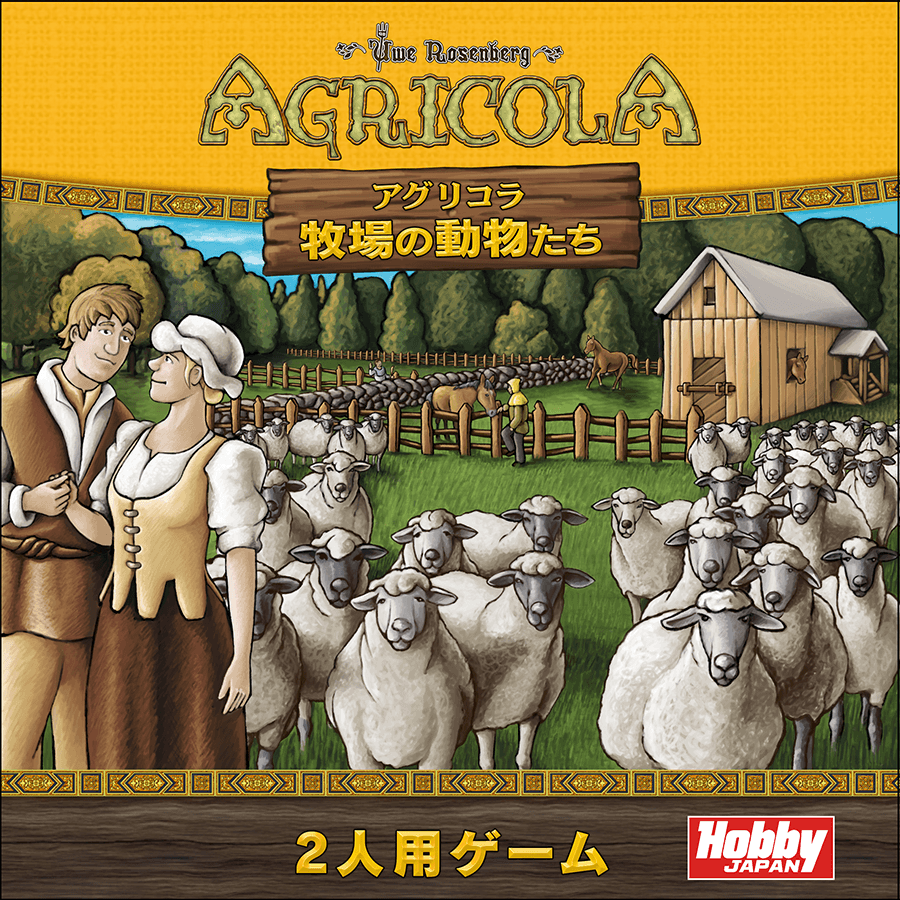
アグリコラ:牧場の動物たち | ANALOG GAME INDEX
『アグリコラ』に独立2人用タイトルが登場。木製のかわいい動物コマがいっぱい!
hobbyjapan.gamesA Note on the Very Long End: Gloomhaven
Go further toward the heavy end and games like Gloomhaven are technically playable with two. It's cooperative, scenario-driven, and the satisfaction it delivers is completely unlike any single-session competitive game. But the character here is fundamentally different. That a game can be played with two does not mean it's a good first option.
As noted on Bodolog, Gloomhaven is known for its long play time and high price point. Add substantial rules volume and physical box weight, and you get a game where everything is heavy: time, price, rules, and the box itself. The game is genuinely good, but approaching it as "let me try a heavy game once" is likely to produce a rough experience.
The campaign-forward design is another thing to keep in mind. It's not a single-session complete experience — its real value emerges from the same pair progressing through it incrementally. That's also what makes it a strong choice for experienced players who already have an established, committed gaming partnership. If you're at the stage of wanting to try 60-minute games first, starting with something like Targi gives you a better sense of what kind of weight you actually enjoy.
The general principle that heavy games are more accessible starting from two players is real. More players means longer explanations, longer wait times, and uneven rates of skill development. In that sense, a committed pair working through something demanding together is genuinely sensible. But once you're at the Gloomhaven level, "accessible with two" shifts closer to "requires the right mindset with two" — less of a gentle step up and more of a major project.
The three games in this section all represent different versions of "playing longer." Targi condenses a reading match into one hour as a mid-weight two-player game; Agricola: All Creatures Big and Small makes board growth the main event; Gloomhaven is an ultra-heavy campaign experience. Longer does not mean better — matching the kind of weight you enjoy to the game you choose is what keeps your two-player sessions on track.
【エラッタ】グルームヘイヴン - ArclightGames Official
最新のエラッタをまとめたページを公開いたしました。 Gloomhavenエラッタまとめページ 【最終更新】20
arclightgames.jpDeeper Dives by Type
Two-Player Strategy Showdowns: Comparing the Best Head-to-Head Games
This article has covered the full landscape, but if "I want a serious reading match for two" is the core criterion, the list narrows quickly. The main contenders: Battle Line, 7 Wonders Duel, Targi, and Raptor. All competitive, but the kind of fun they deliver is distinct.
Battle Line runs about 30 minutes, approximately ¥2,970 (~$20 USD) on boardgame-jp.com. Short-form but intense on every move, easy to rematch in the sub-20-minute range with experience. Not a heavy game — sharp and brief brain combat. Targi, on the other hand, runs about 60 minutes — same two-player-only format but a medium-weight game where the gap widens gradually. "The card I should take now" and "the position I can't let them have" interlock across every turn, and it gets denser toward the end.
7 Wonders Duel is a 30-minute game where the satisfaction of civilization development coexists with direct confrontation. Military, science, and points give you multiple paths to victory — you have to keep the full board in view while tracking your opponent's direction. Raptor is 30 minutes, ages 12+, approximately ¥3,850 (~$26 USD) at Ryusei Games. Asymmetric play means the same board looks completely different from each side. Not an even-footing fight — the enjoyment is in mastering what your specific set of abilities can do.
For deeper comparisons, check our board game first purchase guide.
Two-Player Cooperative Board Games | Enjoying Them Without a Winner
For pairs who want to face the same direction and talk through the game together, cooperative games are the right fit. The full comparison includes Codenames: Duet, Sky Team, and at the heavier end, Gloomhaven — but the actual play experiences are quite different.
Codenames: Duet is approximately 15 minutes, ages 11+. Short, but conversationally dense — "oh, that's what you meant by that clue!" flows naturally after each play. Before results matter, the associations in each other's heads become visible, which is the game's real draw. Short per session means it's easy to run several rounds at increasing difficulty.
Sky Team is two-player-only cooperative, approximately 15–20 minutes, ages 12+. Approximately ¥5,620 (~$38 USD) at Sugorokuya. Less about word-game conversation and more about wordless-adjacent coordination. Captain and first officer split roles toward the same landing, facing different challenges from their seats — the feeling of aligning those gaps is the core experience. Even short sessions tend to leave a strong sense of "we got through that together."
For more on this distinction, see our beginner's guide to board games.
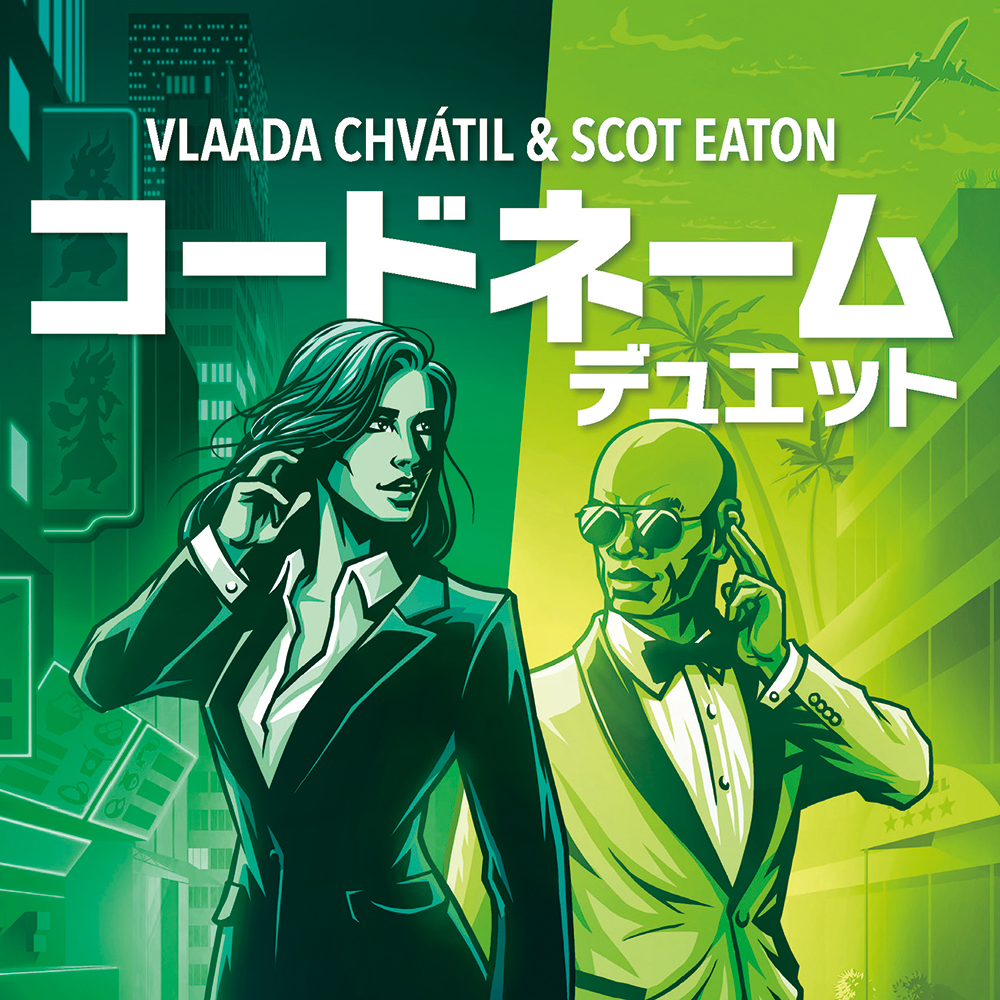
コードネーム:デュエット | ANALOG GAME INDEX
今度の『コードネーム』が2人用協力型ゲームに! 大人気ワードゲームの姉妹作!
hobbyjapan.gamesBoard Games for Couples: New Classics for a Night In
For couples, the priority isn't just who wins — it's whether the game improves the mood in the room. By that measure, Patchwork, Codenames: Duet, and Lost Cities are the most consistently reliable options. None of them require a long rules explanation, and all leave room for natural fun while playing.
Patchwork is 1–2 players, approximately 30 minutes, ages 8+, approximately ¥3,800 (~$26 USD) +tax per Hobby Japan. The gap between its cheerful look and sharp gameplay is exactly right. First-timers can usually finish within 40 minutes, and experienced players come in under 30. The ongoing tension between "take the tile you want" and "optimize your board efficiency" provides just the right level of seriousness — not too light, not too heavy.
For more conversation-forward play, Codenames: Duet is strong. Mismatched associations become natural laugh moments rather than friction — and neither winning nor losing tends to create awkwardness. For competitive but light play, Lost Cities fits well too. 30 minutes, approximately ¥2,982 (~$20 USD) at Ryusei Games. The decision of whether to play or discard is genuinely agonizing throughout — you get quiet-contemplation time and "wait, you're discarding that?!" moments in the same game.
For more detail on that breakdown, see our beginner's guide to board games.
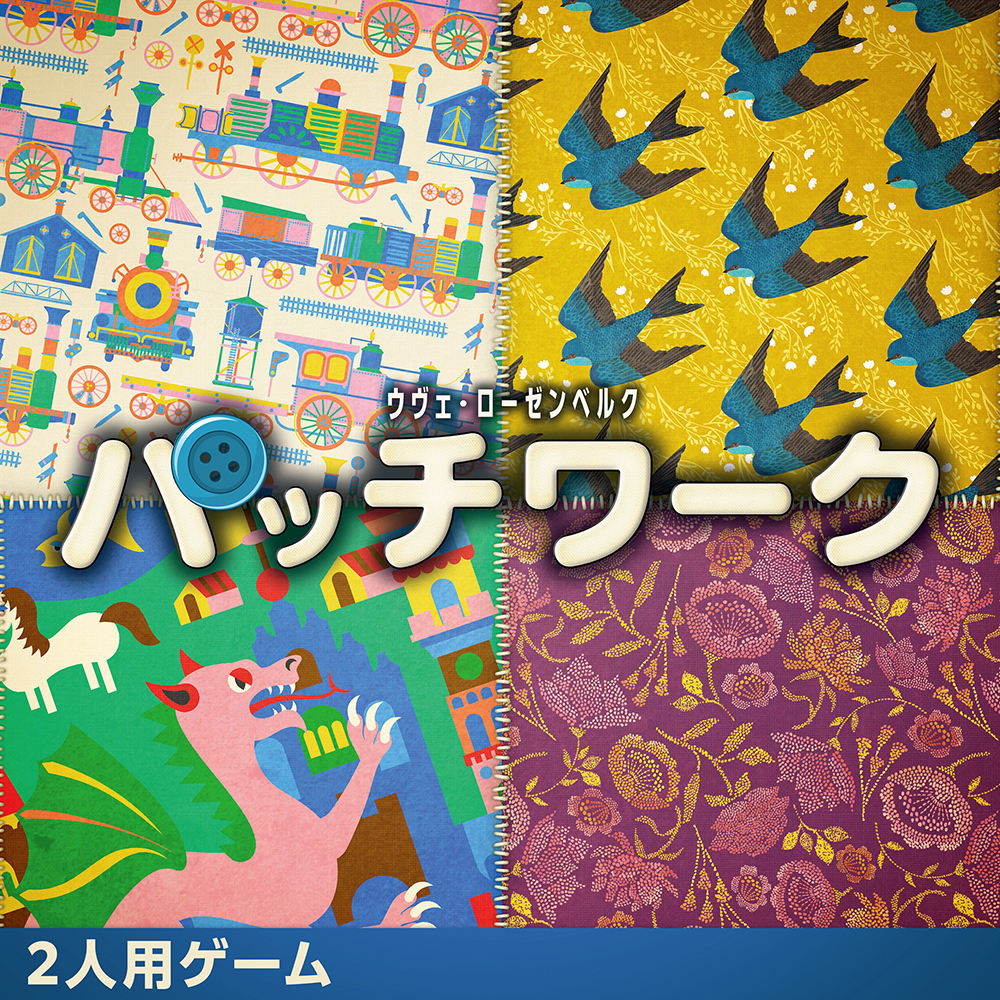
パッチワーク | ANALOG GAME INDEX
極上のパッチワークキルトを作り上げましょう!手軽で駆け引きも面白い、見た目も鮮やかな2人用ゲーム。
hobbyjapan.gamesBoard Games for Married Couples: Comparing the Reliable Staples
For married couples, reliability matters a bit more than for dating couples — not just "great for a special occasion," but "can we actually get this to the table on a Tuesday night or a lazy Sunday?" By that standard, the staples are Patchwork, Azul, Codenames: Duet, and Sky Team.
Azul is 2–4 players, 30–45 minutes, ages 8+, approximately ¥5,400 (~$37 USD)+. It's a multi-player game, but two players makes the tile competition more readable and turns into a fast, concentrated contest. Play it together regularly and you start reading which rows your partner is developing, which colors they hate — which produces competitive games that feel quietly heated rather than openly aggressive.
For pairs where competition creates tension, Codenames: Duet and Sky Team as cooperative options are more stable. The former: 15-minute word catch-and-toss sessions; the latter: 15–20 minutes of intense role-based coordination. Both work well on "I don't feel like a long session, but I want to play something" evenings.
See our guide on teaching board games for more specific comparisons on this front.
Light Two-Player Board Games | Quick Games That Wrap Up in 15 Minutes
For days when you just want one easy game, 15–20-minute light games are the answer. This category isn't shallow just because it's short — it tends to be where you find games that compress decision density into a short window. The clearest representatives: Codenames: Duet, Great Plains, and Mandala.
Codenames: Duet at approximately 15 minutes is the standard for short cooperative games. Conversation emerges naturally, blurring the line between the game and chatting — which is a feature. Great Plains is two-player-only, approximately 20–30 minutes, ages 10+. Area control with clear rules and high per-move value — short sessions still feel like real contests. Light but not purely luck-based is its selling point.
Mandala at approximately 20 minutes, ages 7+, is built on color value that shifts by position — more agonizing than it looks. Not flashy component-wise, but memorable for its ruleset's elegance. Short-form games often get used as "filler," but these three stand on their own as complete experiences.
For more detail, see our beginner's board game guide.
Two-Player Card Games | Great Options Beyond a Standard Deck
Among two-player board games, card games have a particularly low barrier to entry. Relatively compact boxes, low setup and teardown time, and ready to play the moment you feel like it — that's the core appeal. The most commonly recommended names: Lost Cities, Battle Line, Mandala, and at the heavier end, 7 Wonders Duel.
Lost Cities — 30 minutes, ages 10+, approximately ¥2,982 (~$20 USD) at Ryusei Games — stands out for how accessible it is. The decision of "extend this expedition or cut losses and discard" runs throughout the whole game, with disproportionate depth relative to the rule count. Battle Line is also about 30 minutes but leads with poker-style hand building and area control — reading how far your opponent's plan extends is front and center.
Mandala at about 20 minutes has that distinctive quality where color value shifts by context. No dramatic direct attacks, but you're always watching what your opponent is setting up — a good fit for pairs who like quiet card games. Add 7 Wonders Duel and the card-game space expands considerably: civilization development and branching victory conditions give it a thickness that's genuinely different from straight hand competition.
For a collected view of the best card-centered two-player games, see our board game first purchase guide.
Play Lost Cities online from your browser
Play Lost Cities online from your browser with the whole world!
en.boardgamearena.comTwo-Player Board Game FAQ
The Best First Game for Beginners
For a first game, the safest path is a two-player-only game that runs about 30 minutes and has a brief rules explanation. If learning rules takes too long, "how much I had to memorize" sticks in memory more than the game itself. Concretely: Patchwork, Lost Cities, and Codenames: Duet are the reliable starting points.
Patchwork is 1–2 players, approximately 30 minutes, ages 8+ — gentle in appearance but real in its decision-making. The explanation is short and the session rarely stalls, so the "this is what a board game decision feels like" moment comes through cleanly. Lost Cities is 2-player, 30 minutes, ages 10+, approximately ¥2,982 (~$20 USD) at Ryusei Games. Play-or-discard decisions generate genuine competition throughout — take it to a café and play three rounds and you'll still feel like the hour was well spent. One of those games that hits the table more often than its price would suggest.
If generating conversation matters more than competition, Codenames: Duet is another approachable entry. Sessions wrap up in about 15 minutes, and "how did you get all that from that one word?" reactions are nearly guaranteed — even with pairs who don't usually play games, the atmosphere stays warm. For beginners, the benchmark is: can the rules explanation stay under 10 minutes, and can you immediately start another round after the first?
Cooperative vs. Competitive: How to Choose
Cooperative and competitive aren't better or worse than each other — satisfaction depends entirely on whether the mode matches what both of you are in the mood for. If wins and losses tend to create tension, cooperative games will be more consistent. Conversely, if reading each other and outmaneuvering is the fun, competitive games will give you a stronger sense of "we actually played."
For cooperative: Codenames: Duet or Sky Team. Codenames: Duet runs about 15 minutes — short collaborative sessions with conversation that extends naturally after. Sky Team is two-player, 15–20 minutes, built around role differentiation toward a landing goal — strong sense of "we got through it together." Better for pairs who find competition draining, or who want to start with warmth before anything competitive.
For competitive: Lost Cities, Patchwork, Splendor Duel are the more approachable picks. All short enough that "let's go again" is easy after any result. Splendor Duel especially — 2-player, 30 minutes, ages 10+, approximately ¥3,327 (~$22 USD) at Ryusei Games. Preserves the original's satisfaction while bringing two-player tension to the front — the reading-match enjoyment is clear.
The single most important thing in choosing: before you look at game titles, agree on whether you're in cooperative mode or competitive mode right now. That alignment alone reduces mismatched-game disappointment significantly.
Two-Player-Only vs. Multi-Player: What's the Value?
From a pure cost perspective, games that scale to more players look like better value. But if you play mostly as a pair, actual satisfaction tends to be higher with two-player-only games. Nearly zero downtime, rules optimized for two — the result is the box comes out more often, which is where the real value lives.
Games like Lost Cities and Patchwork are easy to pull out spontaneously and wrap up in about 30 minutes. They don't have the versatility of "play with any number," but their two-player completeness is high — they don't sit on the shelf collecting dust. Two-player-only games sacrifice player count flexibility, but high play rate is where the value is in this category.
On the other hand, if you want a game that also works with 3–4 people, Azul and Dominion: 2nd Edition are strong multi-player picks. Azul scales 2–4, 30–45 minutes, ages 8+, and plays aggressively even at two. Dominion: 2nd Edition handles 2–4 players, approximately 30 minutes, ages 14+ — as your group grows, it grows with you. Prioritizing two-player quality vs. prioritizing versatility of use cases is where the value judgment actually sits.
What Are the Best Games in the ¥3,000 Range?
There are strong options at the ¥3,000 (~$20 USD) level. This price band is actually where the balance of accessibility and satisfaction is most reliable — and the depth of the catalog here is genuine. Top picks: Lost Cities, Splendor Duel, and Raptor.
Lost Cities at approximately ¥2,982 (~$20 USD) at Ryusei Games is the flagship of this range. Short sessions, sharpness that makes you want to rematch — it delivers well above its price point. Splendor Duel at approximately ¥3,327 (~$22 USD) at Ryusei Games offers engine-building satisfaction and two-player competitive pressure in one cleanly packaged game. Raptor at approximately ¥3,850 (~$26 USD) at Ryusei Games stays within the ¥3,000 range and gives asymmetric-game fans a compelling option.
シティーズン (Citizens) is also approximately ¥3,000 (~$20 USD), a well-positioned 30-minute two-player game in this budget. The appeal of the ¥3,000 tier isn't that you're compromising — it's that you have legitimate access to titles that hold up as classics. Games above ¥4,000 (~$27 USD) can offer more component volume or denser experiences, but in the "building your first few games" phase, this price band alone gives you plenty to work with.
Conclusion | The Right Game for Your Situation Right Now
If you're playing as a pair regularly, picking one game by matching your current mood to one of five axes — short, beginner-friendly, competitive, cooperative, or longer — matters more than it sounds. For a weeknight: Lost Cities, Patchwork, or Great Plains. For accessibility: Patchwork or Codenames: Duet. For serious competition: Battle Line, 7 Wonders Duel, or Targi. For cooperation: Sky Team, Codenames: Duet, or Dorfromantik: The Board Game. For a longer sit-down session: Targi or Agricola: All Creatures Big and Small. And while Gloomhaven-tier games technically fit in the "very long" category, they're not the right entry point.
Keep a shelf where "tonight we're tired, let's do 30 minutes" and "tonight we want to go deep for an hour" are both easy to grab from — and your board game time as a pair will run itself.
Related Articles
7 Essential Worker Placement Games for Beginners|How to Choose Your First Game
The appeal of worker placement lies in how shared action spaces and turn order create a natural mind-reading game between players. When you play Stone Age with three people on a weekday evening and someone claims the timber spot you wanted, forcing you to pivot toward hunting and dice rolls—that mix of 'frustration at being blocked' and 'the joy of finding an alternative' is the core of this mechanic.
10 Best Solo Board Games | How to Choose & How Deep You'll Get
Whether you want a quick 15-30 minute game on a weeknight or a solid 90-minute deep dive on the weekend, solo board games get easier to choose once you narrow things down by whether the game is solo-only or has a solo mode, and then filter by play time, weight, and format. This article breaks down 10 titles — including Onirim, Under Falling Skies, and Coffee Roaster — in a clear, side-by-side way.
Best Board Games for 3 Players — Standout Titles Built for Bluffing and Negotiation
Finding the right board game for three players isn't just about headcount. Three-player games occupy a sweet spot — more tension than a two-player duel, tighter reads than a four-player free-for-all — where "who do I stop right now?" and "when do I swoop in for the win?" become genuine strategic questions.
What Are Legacy Games? How to Choose, Compare, and Evaluate Before You Buy
Playing Pandemic Legacy once a month with my regular group, I was struck by how even a one-hour session left a vivid sense of consequence—every past decision shaping what came next.