
Best 2-Player Strategy Board Games | Compared by 30-Minute, 60-Minute, and Heavy Weight
Best 2-Player Strategy Board Games | Compared by 30-Minute, 60-Minute, and Heavy Weight
If you're hunting for a 2-player strategy game that actually makes you think, the real question isn't which title is most popular — it's how long you want the fight to last. Battle Line delivers sharp reads in 30 minutes, 7 Wonders Duel wraps up a satisfying weeknight session in about 40, and Twilight Struggle is the kind of game you clear your weekend calendar for.
If you're hunting for a 2-player strategy game that actually makes you think, the real question isn't which title is most popular — it's how long you want the fight to last. Battle Line delivers sharp reads in 30 minutes, 7 Wonders Duel wraps up a satisfying weeknight session in about 40, and Twilight Struggle is the kind of game you clear your weekend calendar for. Call them all "classics" and you're technically right, but pick the wrong one for a Tuesday night and it'll sit on the shelf.
This guide is for couples and friends who want direct head-to-head combat — the kind where every move matters. We'll use playtime as the primary axis, layering in complexity, beginner-friendliness, and Replayability, so you can narrow down to three candidates before you even finish reading the comparison table. The argument here is simple: 7 Wonders Duel fits cleanly into a weeknight at around 40 minutes, while Twilight Struggle earns its keep on a day when a 3-hour battle is the point.
3 Things to Look at When Choosing a 2-Player Strategy Game
Start with how many minutes you actually want to spend fighting. The single biggest factor in satisfaction isn't which game is objectively better — it's whether the game fits the time you have that day. In the 30-minute bracket you get games like Battle Line and Jaipur: quick to play, easy to run two or three rounds back-to-back. Around 60 minutes, Watergate and Targi occupy the sweet spot — weighty enough to matter, short enough for a school night. Once you're eyeing the 120–180-minute range, titles like Twilight Struggle and Gaia Project enter the picture — and those aren't chosen based on whether you can play them, but whether you're ready to fully commit to them tonight.
From experience running these games: 2-player matches are surprisingly draining. There's zero Downtime — no waiting for three other people — so a 60-minute 2-player game often hits harder than a 90-minute 4-player session. Hive finishes in about 20 minutes, but play three rounds back-to-back and you'll feel it. Targi clocks in around 60 minutes on the box, and with setup and cleanup, one solid weeknight game is exactly what you get. Matching the game to the time slot is the single easiest way to avoid the "great game, never played it" trap.
Next, look at rules complexity and how long the Rules explanation takes. For new players, a useful benchmark is: can someone be off and running in 10 minutes? Games with a compact ruleset let players focus on the actual decisions rather than constantly checking what's allowed — and that "one more game" feeling comes much easier. Hive and Jaipur clear this bar nicely; there's not much to memorize, but the mind games are real. 7 Wonders Duel is a different story — 40 minutes to play, but the three-age card reveals, military tracks, and instant-win science conditions mean the first game isn't truly Light/filler. Still, it's nowhere near Heavy game territory, and it slots well into an evening where you want something with a bit of weight.
At the heavy end, raw playtime matters less than learning cost. Twilight Struggle doesn't click until you understand not just the board, but how cards interact with historical events. That kind of game needs to be evaluated across three stages: the initial Rules explanation, the first trial run, and what happens once both players actually get it. If your opponent isn't experienced with strategy games, Watergate is the better table pick even at the same 60-minute runtime — whereas if you both enjoy the process of learning a complex system, the upfront investment in a heavy title will absolutely pay off.
The third axis — and you can't skip it — is the ratio of luck to skill. Two things to watch: how much card draw variance swings outcomes, and how much information is visible to both players. A bit of luck helps absorb skill gaps, which means mismatched players can still have fun. Jaipur has market randomness baked in, so every game unfolds differently. If you'd rather have pure reads, Hive is almost entirely open information — the more visible the board state, the more you're thinking about what your opponent is planning, and defeats feel earned rather than arbitrary.
7 Wonders Duel sits in the middle. You can read the open card row and plan ahead, but the tension lives in what gets flipped and taken. The dual instant-win paths for military and science mean it never collapses into a pure points race — CNET's coverage of the game specifically calls out how its structure makes blocking and trapping meaningful even in a fast-paced game. Whether you prefer chess-like open information or the drama of hidden draws is something you'll know before you finish your first session.
💡 Tip
Decide upfront: do you want reads with minimal luck, or do you want the swings that come from variance? That one choice cuts your options in half immediately.
One more distinction worth flagging: 2-player-only vs. 2-player-capable. Games designed exclusively for two tend to be more consistent precisely because every balance decision was made with that player count in mind — board size, tempo, the reach of attacks. Why 2-player-only games tend to be tighter covers this well. Looking at Top 33 2-Player Board Games, the upper tier is stacked with 2-player-exclusive titles. Battle Line, 7 Wonders Duel, Watergate, and Hive are strong not because they happen to work with two — they were built for it.
That said, playing a 2–4 player game with two people has its own appeal. No Downtime means combat is more direct than the designer might have intended. Terra Forming Mars with two lets you focus on your engine, but the pressure dynamics shift noticeably from higher player counts. In Worker placement games, some titles feel sparse with two players while others — Targi being the best example — were tuned specifically for two, so every Worker placement decision immediately collides with your opponent. When evaluating a multi-player game for two, ask whether the meta gets too linear or whether the conflict thins out too much.
If you're still at the "first purchase" stage, the frameworks in Board Game First-Purchase Guide and Beginner's Recommendation Guide pair well with how we're approaching the rulebook question here.
The Bottom Line: Best 2-Player Strategy Games Compared
If you're going straight to the table, start by picking a time bracket. Here's the full comparison at a glance.
| Category | Title | Players | Time | Age | Weight | Direct Combat | Luck vs Skill | Replayability |
|---|---|---|---|---|---|---|---|---|
| Under 60 min | Battle Line | 2 | ~30 min | 8+ | Light–Med | Very high | Skill-leaning | Very high |
| Under 60 min | 7 Wonders Duel | 2 | ~40 min | — | Medium | High | Balanced | High |
| Around 1 hour | Watergate | 2 | ~60 min | — | Medium | Very high | Skill-leaning | High |
| Heavy | Twilight Struggle | 2 | ~180 min+ | — | Heavy | Very high | Skill-leaning | High |
| Under 60 min | Lost Cities | 2 | ~30 min | — | Light | Medium | Balanced | High |
| Under 60 min | Splendor | 2–4 | 30 min | 10+ | Light–Med | Medium | Skill-leaning | High |
| Under 60 min | Dominion (2nd Ed.) | 2–4 | 30 min | 14+ | Medium | Medium | Balanced | Very high |
The two things to check first: how direct is the conflict, and does the game fit your evening? Twilight Struggle with only 30 minutes on the clock is a disaster waiting to happen. And if you're ready to throw down but reach for Splendor's engine-building, you'll finish the game feeling like something was missing. These mismatches hit hardest when you're picking blind from a comparison table.
ℹ️ Note
Weeknight? Start with "Under 60 min." Weekend 1-game session? "Around 1 hour." Making the game the main event? "Heavy."
To call it quickly by player type: first game, go Battle Line. Want more breadth and development, go 7 Wonders Duel. Crave a thematic tug-of-war, go Watergate. Happy to invest a day into mastering something, go Twilight Struggle. The supporting three fill specific niches: Lost Cities for pure hand-management tension, Splendor as the best multi-player-count game that still works great with two, and Dominion 2nd Edition when you want to grow through repeated play.
Battle Line — 2 Players / ~30 Min / Ages 8+ | Sharp reads, compact rules
Battle Line is the first name that comes up when someone asks for a short 2-player classic — and deservedly so. The skeleton of the rules is clean, but once you're at the table, the decisions get dense fast: which flags to push, which to sacrifice, what hand shape you're letting your opponent read. It ends in 30 minutes, but it never plays like a throwaway.
Our take: it hits hardest for pairs who want the Rules explanation short but the competition deep. The balance between open board information and hand management is well-tuned — when a read lands, it's satisfying; when the draws don't cooperate, figuring out how to compensate is its own puzzle. Games with few rules often skew toward beginners, but Battle Line has staying power well beyond that. Multiple reviews treating it as the definitive short 2-player game agree on the basics: around 30 minutes, ages 8+.
7 Wonders Duel — 2 Players / ~40 Min | Civilization Building + Instant Military & Science Wins
If you need something that fits neatly between "too short" and "too heavy," 7 Wonders Duel is the answer. Building a civilization sounds leisurely, but this game never lets you settle into a pure points race — military and science instant wins mean you can't ignore what your opponent is building. Every turn carries low-level pressure, and the whole thing wraps up in about 40 minutes while still delivering the sense of progression you'd want from a civ game.
What makes it work is the ratio of reactive play to engine-building. The face-up card row means you're always reading which cards might flip open when you take one — small forks every single turn. It's not as rigid as a pure abstract, but it's not luck-driven either. Specs and win conditions are confirmed by Hobby Japan's official listing, Board Game Arena's game panel, and an independent review — it's solidly a 40-minute, 2-player-only game.
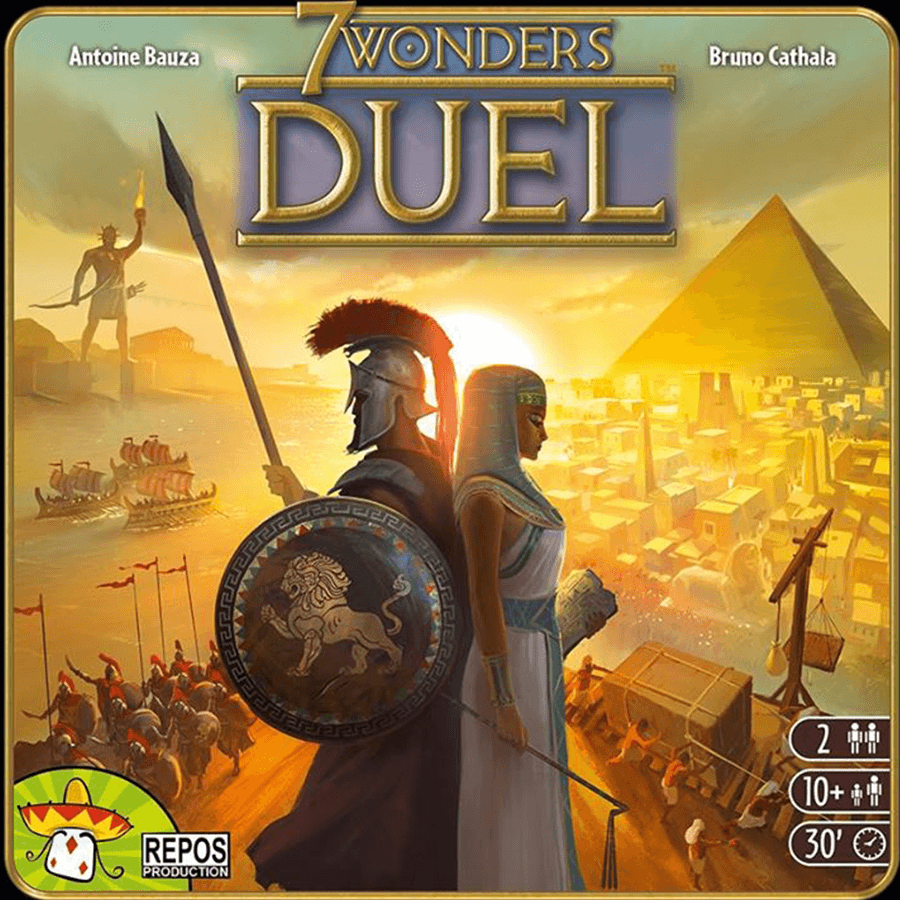
世界の七不思議:デュエル / DUEL | ANALOG GAME INDEX
『世界の七不思議』に独立型二人用タイトルが登場!3つの時代を駆け抜けて文明を発展させよう!
hobbyjapan.gamesWatergate — 2 Players / ~60 Min | Asymmetric Card-Driven Tug-of-War
For an hour-long session where you want the intensity turned all the way up, Watergate delivers. One player pursues journalists uncovering evidence; the other plays the Nixon administration trying to bury it. The asymmetric setup means you're looking at the same board with completely opposite goals, and the card-driven mechanics compress "which effect, in what order, against which target" into under an hour.
It's also a credible on-ramp for people curious about Twilight Struggle but not ready to commit to 180 minutes. Same historical flavor, same card-event interplay, but contained. Every time one side pushes, the other digs in — the board state swings back and forth constantly, which makes it ideal for anyone who specifically wants that tug-of-war feeling. Confirmed as a 2-player, asymmetric, sub-hour game via Watergate game overview and Watergate review.

【公式】ホテル ウォーターゲート 札幌 - 北海道札幌市のレジャーホテル
すすきの駅より徒歩6分のレジャーホテル ウォーターゲート 札幌。無料ウエルカムケーキ・ドリンク・アメニティどれも地域NO1!休憩・宿泊に使用できるお得なクーポン多数ございます。上質な癒しのひとときをお愉しみください。
www.napo-ing.comTwilight Struggle — 2 Players / ~180 Min+ | Cold War Heavyweight
When two people want the full strategic experience — and are prepared to make that game the centerpiece of their day — Twilight Struggle is in a class of its own. This card-driven Cold War game isn't just about controlling territory; it's about learning when to absorb an event, how to read regional pressure, and how to time your moves for maximum effect. Playing it feels less like a "game" and more like running a massive strategic system together with another person.
That comes with a cost. Three hours is already a lot, but the real weight comes from the density of decisions and the consequence of each one. That's exactly why it's extraordinary when both players are equally committed. One game per weekend session, or revisiting the same opponent to deepen your understanding — that's where this title finds its best form. Design notes and difficulty assessments confirmed via Twilight Struggle rules breakdown and Twilight Struggle mobile version review.
/picture_72104e44-09b6-4df7-8d81-809c3bfbfff3.jpg?2026-03-14-18)
トワイライト・ストラグル / Twilight Struggle
ボードゲームの総合情報サイト「ボドゲーマ」では、会員が投稿したトワイライト・ストラグル(Twilight Struggle)のボードゲーム紹介文・レビュー・リプレイ日記・戦略・商品情報等を見ることができます。
bodoge.hoobby.netLost Cities — 2 Players / ~30 Min | The Tension of Hand Management
Lost Cities isn't about sweeping board battles — the fight is entirely in managing numbers and knowing when to commit. Which color to extend, whether to hold or play now, what giving up a card means for your opponent — these decisions run the whole game. It finishes in about 30 minutes, but one bad call echoes through to the end.
Where Battle Line is a head-on confrontation, Lost Cities is more internal — watching your opponent's pace while calibrating your own expected value. The direct combat feeling is quieter, but the quiet pressure is absolutely there. A strong pick for players who like wrestling with number cards, or who want short games where "I overextended" and "I pulled the trigger too early" land with clarity.
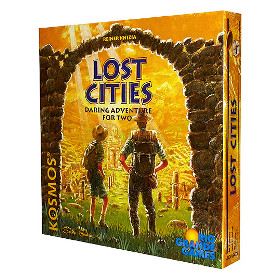
Play Lost Cities online from your browser
Play Lost Cities online from your browser with the whole world!
en.boardgamearena.comSplendor — 2–4 Players / 30 Min / Ages 10+ | Engine Building That Holds Up With Two
Splendor isn't a 2-player exclusive, but it runs fast with two people and doesn't lose much — it's the standout multi-player-count game in this bracket. Collecting gem tokens to buy cards, which gradually let you access stronger cards — the progression is transparent, and every play builds on the last in visible ways. It doesn't hit as hard as Battle Line or Watergate in direct combat terms, but card reservation and racing for key purchases land cleanly.
This one suits players who enjoy growing their own engine more than reading the opponent's mind. Quick playtime means it comes out often, and it onboards new players smoothly. Confirmed 2-player option in multiple introductory guides; basic specs are 30 minutes, ages 10+.
宝石の煌き 2024年新版 / Splendor - ボードゲーム&アロマ LITTLE FOREST online shop
発売10周年を記念してアートワークが一新された『宝石の煌き 2024年新版』 このゲームでは、プレイヤーは工芸
littleforest.shopDominion 2nd Edition — 2–4 Players / 30 Min / Ages 14+ | Best Deck-Builder Entry Point for Two
Dominion 2nd Edition gives you the pure deck-building experience with two players — and the two-player format actually highlights the design's strengths. The Kingdom card combination changes every game, so the same ruleset produces different stories. It's not a direct attack game at its core; the fun is in deciding which cards to buy and how far ahead to plan, which keeps Replayability high.
Two players means faster turns and a clearer sense of your deck getting stronger. You can build disruptive or efficiency-focused — the table dynamic shifts with every game. The rules explanation is a bit involved for newcomers, but as an entry point into the deck-building genre, Dominion still holds up. Specs confirmed as 30 minutes, 2–4 players, ages 14+.
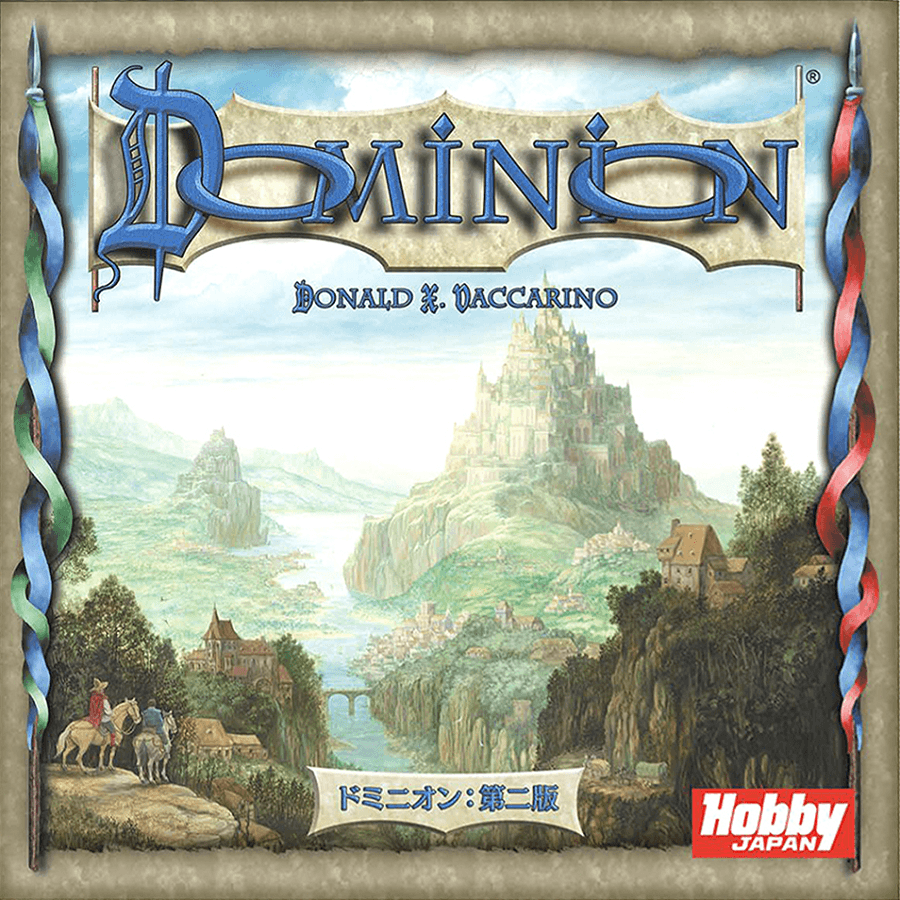
ドミニオン:第二版 | ANALOG GAME INDEX
『ドミニオン』が新しくなって新登場!これが新しい基本セットだ!
hobbyjapan.gamesBest Games for Playing Multiple Short Rounds
Getting a game to the table on a weeknight isn't just about play speed. It's also about whether the loss makes sense — whether "let's fix that" leads naturally to another game. Short games have a structural advantage here: the losing player can realistically say "one more and I can turn this around," and that agreement happens quickly. Battle Line, 7 Wonders Duel, Lost Cities, Splendor, and Jaipur all belong in the "weeknight round → one more round" category. But the reason each one generates rematches is different.
Battle Line: Strengths and What to Watch
Battle Line's strengths lie in how the reads deepen as the board fills. What looks like hand management at the start sharpens into real strategic tension by mid-game: if my opponent extends this flag, which one do I lock down? If I play this card now, does it collapse a read on another flag? The game ends in about 30 minutes, but the shape of the contest is never blurry.
Replayability is high partly because the losses are legible. It's rarely "I didn't build a strong formation" — it's more specifically "which flag should I have written off earlier" or "I wasn't reading the open information fast enough." That specificity is what makes it easy to run it back. Reviewed as a standard 2-player weeknight pick for being neither too light nor too heavy — the 30-minute, ages-8-plus placement is well-earned.
One warning: don't bring it out expecting a light game just because it's short. Luck won't carry you — card order and knowing when to cut your losses both matter. It plays closer to a medium-weight read-heavy game wearing light clothing. But unlike Watergate or Twilight Struggle, there's no rulebook baggage. Short, but sharp — that's the value.
Jaipur is a useful contrast. Also fast (30-minute box claim, reportedly around 12 minutes on BGA), but the core tension is market competition and hand efficiency. Battle Line's open board creates a chess-like staredown; Jaipur is more about trading tempo and explosive turns. For direct confrontational reads in a short window, Battle Line has the edge.
ゴジラスマートフォン向けゲームアプリ「ゴジラ バトルライン(GODZILLA BATTLE LINE)」 公式サイト | 東宝
ゴジラシリーズの人気怪獣&兵器が勢揃い!自分だけの最強怪獣チームを組んで、全世界のプレイヤーとリアルタイム対戦!かんたんなのに奥深い3分間の白熱バトルへ!
godzillagames.jp7 Wonders Duel: Why the Instant-Win Conditions Keep You Coming Back
7 Wonders Duel packs the pleasure of building a civilization and the nastiness of 2-player tactical play into about 40 minutes. Three ages of card drafting, where visible and hidden cards gradually reveal themselves — every turn produces a dilemma: "what opens up for my opponent if I take this?" Board Game Arena's game panel confirms this is a 2-player-only game that progresses through three ages, and the basic structure is clean.
The biggest driver of Replayability is the instant-win tension. If military or science pushes too far, the game ends before any point counting — which means you can't optimize purely for points efficiency. And because those threats are always visible on the board, defeats have clear causes: "I saw it and still couldn't stop it" or "I cheaped out on the one blocking move." That clarity directly motivates the next game.
For improving your pace: the most important habit is looking at both your gain and what you're opening for your opponent on the same turn. Chasing your best move alone is how you hand your opponent a powerful card. The second habit is not ignoring instant-win pressure. Even in a points-focused position, a little attention to military and science lanes reduces the ugly surprises. Once this becomes automatic, 40 minutes starts to feel tight and focused.
The difference from Battle Line comes down to where the mind work happens. Battle Line is about reading flag-by-flag outcomes from open information; 7 Wonders Duel is about how taking a card actively reshapes your opponent's options. Comebacks work differently too — in Battle Line you reclaim flags through the tug-of-war; in 7 Wonders Duel, whoever spots the instant-win path first can flip the whole game in moments. A great weeknight single-game, and one where "I gave them too many open cards" translates directly into the next round.
7 Wonders Duel Official Website| Strategic 2-Player Board Game | Repos Production
sevenwondersduel.comLost Cities vs. Splendor: Replayability Comparison
Both finish in about 30 minutes, but the reason you want to play again differs sharply. Lost Cities is a game of hand management and timing calls — "do I extend this color? hold longer? discard now and risk giving it to them?" — running the entire game. Drama doesn't come from big reversals; it comes from decisions that quietly compound and hit you at the end. "I overextended" and "I bailed too early" are always the clear culprits, and that clarity is what makes it easy to rematch. Specs vary slightly by edition, but it's reliably a 30-minute 2-player staple.
Splendor works the opposite way. The pleasure of growing an engine from visible options drives the next game. Fast turns with two players, goals you can see across the table — "one move earlier and I'd have had it" and "I used my reserves wrong" become automatic lessons. Because different color priorities create different games each time, losing never leaves you feeling trapped. When your combo path is visible, you finish every game wanting to run it cleaner next time.
Putting them side by side: Lost Cities is inward-facing optimization; Splendor is outward-facing growth-curve optimization. Lost Cities is most fun when the hand is painful, and quiet loss-prevention is the skill. Splendor has abundant shared information, making it easy for even new players to understand what happened — a structural advantage for beginners playing together.
Add Jaipur and the picture gets sharper. Jaipur runs on trading tempo and spikes of burst value, with camel mechanics and market draws mixed in. Less cautious than Lost Cities, shorter development arc than Splendor — the game's rhythm is lighter, and "traded too late" or "missed the high-value goods" are clean takeaways. Strong rematch material for short-session play.
💡 Tip
For weeknight Replayability, roughly ranked: Battle Line for the deepest reads, 7 Wonders Duel for the most dilemmas per turn, Lost Cities for quiet hand management, Splendor for the satisfaction of watching your engine grow, Jaipur for the lightest back-and-forth.
Looking at "does losing make you want to immediately play again," Battle Line and 7 Wonders Duel leave a strong impression of the opponent's specific move; Lost Cities and Jaipur make you want to correct your own judgment; Splendor makes you want to rebuild the ideal combo. All short-session games, but the reasons to hit the rematch button are meaningfully different.
Best Games for a Full Hour of Deep Strategic Play
Watergate's Mind Games
If "one solid game tonight" is the goal and you have an hour, Watergate belongs at the top of the list. The appeal is in the asymmetric card-driven evidence-line mechanic. One side connects evidence toward Nixon; the other cuts those connections. Same board, completely opposite agendas — the asymmetry means you're not just finding the efficient move, you're constantly asking what one move is most painful for your opponent right now.
The hottest moments revolve around the initiative token. Beyond raw card power, the order in which pressure is applied matters — by the endgame, individual cards spike enormously in value. The board is visual enough that conversation drops off naturally; both players end up reading only the lines and the timing. That "endgame pressure you can see but can't stop" is a notch deeper than anything in the 30-minute category.
If 7 Wonders Duel is about designing your opponent's options through how you draft, Watergate is about a single card shifting who controls the board's momentum. You're not just absorbing strong moves — you're engineering the order your opponent has to respond to them. Interaction intensity is high for the medium-weight tier. The cold-war tug-of-war texture noted in nicobodo's overview and TBGL's review is accurate — not too heavy, but every move lands with weight.
Targi's Spatial Puzzle (Intersection Management) — Note: Check current Japanese edition pricing
Targi is the Worker placement 2-player-exclusive that earns its reputation. The Japanese edition lists 60 minutes and ages 13+ — fits cleanly into a single weeknight battle. First game with explanation runs longer, but once you're comfortable, two games in an evening is realistic.
What makes Targi unusual is that strong-spot Worker placement barely scratches the surface here. Workers placed on the outer border determine which interior action becomes available at the intersection — so claiming what you want simultaneously makes your intentions readable. You can also place purely to collapse your opponent's intersection, so the blocking pressure is much stronger than the quiet board suggests. It looks peaceful. It plays aggressively.
The intersection-management feel appeals to players who enjoy the race dynamics in something like Splendor Duel — but where that game is intuitive open-information racing, Targi is about pushing the constraint of placement onto your opponent. Interaction climbs to medium-high and stays there, because you're always solving a dual problem: eliminate their best option while not abandoning your own point engine.
The Japanese edition is distributed by Group SNE / Cosaic. A price example found on price.com's Amazon.co.jp listing was 2,664 yen (~$18 USD, tax included; as of 2026-03-14, approximate, subject to change).
ℹ️ Note
Ranking 60-minute games by interaction intensity: Watergate is high, Targi is medium-to-high, Dominion is medium. All three draw you into the board rather than conversation — but Watergate is where direct confrontation feels most raw, and Targi is where positional squeezing is the main weapon.
/picture_8314b6d0-ad31-404f-a1ca-5029e5e8486b.jpg?2026-03-14-18)
タルギ / Targi
ボードゲームの総合情報サイト「ボドゲーマ」では、会員が投稿したタルギ(Targi)のボードゲーム紹介文・レビュー・リプレイ日記・戦略・商品情報等を見ることができます。
bodoge.hoobby.netDominion 2-Player: What to Watch
Dominion 2nd Edition is rated 2–4 players, 30 minutes, ages 14+ — but play it with two and its real strengths become clear. Less Downtime, your opponent's buying patterns are easier to read, and the "neck-and-neck race to pull ahead" feeling that defines deck-building comes through more cleanly than in bigger groups.
It's not the overt blocking game that Watergate or Targi is, but 2-player Dominion isn't Multiplayer solitaire either. Every turn you're reading whether to race your opponent on the same strategy or cut to a different line. When to start buying Provinces, whether to compress first or go for raw money, how you enter the end-game race — these small differences show up in the last few turns as points. That "optimizing against a shared market" quality makes it accessible even to newer players.
The interaction is also distinctive. It's not about removing pieces or stealing turns — the pressure is getting your engine finished one cycle ahead. Reads are quiet, not shallow. "I kept dead cards too long," "I bought one turn late," "I misjudged the Province race" — all stay specific, and improvements are visible in the next game.
Where Splendor is about growing an engine from visible cards, Dominion is about forging the deck itself. Moderate opponent interaction, but your improvement curve directly translates to win margin — it never feels like you got unlucky. Mapping the 60-minute tier: Watergate is a direct head-on brawl, Targi is a spatial squeezing puzzle, Dominion is a parallel race toward a finish line one step ahead of your opponent. All satisfying in the medium-weight way — but you feel Watergate's card pressure most acutely, Targi's slow squeeze most viscerally, and Dominion's score gap most cleanly.
Serious 2-Player Games for When You Want Your Brain Thoroughly Worked Over
The Core of Twilight Struggle
Everything shifts here. Twilight Struggle isn't a game you run multiple times in an evening — it's the kind where two people use several hours to build one historical drama together. Every turn's decisions feed directly into regional control, military actions, victory points, and DEFCON tension. The "this move will sting" of lighter games is replaced by moves that show up on the board thirty minutes later.
The central puzzle is that no card does just one thing. You might desperately need a card for your own strategy — but it carries your opponent's event, so playing it advances your plan while giving them something too. You're planting influence while watching the scoring region timer, stirring the pot with coups, but dropping DEFCON too low tightens the noose around your own neck. This simultaneous "what I want to do" and "what I can't do" design is what experienced players find irresistible.
Time investment is part of the value, not a downside. Standard runtime is around 180 minutes — the iPhoneAC write-up notes that even the app version takes close to two hours to finish, and the physical game can stretch to five. With players still learning, rule lookups and event processing add more time. The right framing isn't "a long game" — it's a game you schedule time for. Spend half a day, finish one battle, then talk about which turn flipped the momentum. That density is the point.
As the Minor Game rules explanation makes clear, the weight isn't just memorization. It's the delayed consequence of strategic decisions — which region to abandon, whether to absorb an event for tempo, where to plant seeds now that you'll need in the endgame. Sometimes you finish a three-hour game and realize a throwaway early placement was actually the root of the outcome. If that kind of revelation is appealing, Twilight Struggle is one of the definitive 2-player experiences.
Choosing a Heavy 2-Player Euro
Not everyone wants direct Cold War confrontation — some players prefer dense board optimization and engine-building over the same long playtime. That's where Terra Forming Mars, Viticulture, and Gaia Project-tier Heavy games enter the picture. All are playable with two and maintain enough depth to make it worthwhile, but choosing well means understanding the type of weight, not just the quantity.
Terra Forming Mars is the flagship for rich card management and engine-building with two. Japanese edition is 1–5 players, 90–120 minutes — realistically plan for two-plus hours including setup and explanation. The appeal is how much your hand composition shifts your growth trajectory alongside the open board competition. Rather than winning through direct attacks, how quickly you spin up your economic engine determines the outcome, and with two players, your opponent's progress is sharply visible.
Gaia Project demands a heavier investment. Rated 1–4 players at 120 minutes, but with two it runs genuinely long. Budget three-plus hours including explanation, potentially more depending on the matchup. At this tier, the key question is whether the board stays interesting with fewer players — does tech advancement, area control, and expansion competition remain meaningful? Does your opponent's existence genuinely warp your plans? If it collapses into a solo optimization puzzle, the time investment loses its justification.
When choosing a Heavy euro for two, look past total playtime to what actually happens during those hours. Twilight Struggle builds narrative and political dilemmas layer by layer. Terra Forming Mars is about card engines slowly diverging. Gaia Project demands structural understanding and long-horizon planning precision. All are Heavy — but the reason your brain gets cooked is different in each case.
💡 Tip
Heavy 2-player games become fully satisfying only when you include the debrief after finishing — the fun completes then, not at the last card. Whether you have a partner who matches your intensity, and whether you can protect enough time to see it through, matters more than anything else.
Viticulture: What to Watch When Playing With Two
Viticulture sits on the friendlier end of the Heavy tier. Rated 1–6 players, 45–90 minutes, wine-making as the theme. But play it with two and you quickly discover it's a game about turn order and action competition that runs far hotter than it looks. Peaceful winery management on the surface — in practice, "they took that spot this season and my whole plan slides a full year" is a real feeling.
The heart of it is the seasonal action structure. Wake order in spring, Workers in summer and winter, Visitor cards in fall — and who moves first in each season shapes the economic tempo of the whole game. With two, the board isn't as crowded as with larger groups, but opponent intentions are more readable, so the meaning of a blocking move is sharper. Which vine, harvest, crush, age, or order delivery gets blocked by a single slow move is visible, and quiet reads happen inside a gentle theme.
For players who find Terra Forming Mars or Gaia Project information-overwhelming, Viticulture can serve as a productive on-ramp. Rules directions are intuitive and theme-connected, which makes it easier to track board meaning despite the weight. Still, playing with two means not just optimizing, but making the call to outpace your opponent season by season — it doesn't collapse into solo puzzling. The right player is someone who wants a Heavy game that "isn't pure combat, but still has an opponent in the way."
Timing-wise, it bridges the gap perfectly for weekend play between the 30–60-minute tier and the full Twilight Struggle commitment. Not quite ready for 180 minutes, but the short games feel too thin? Viticulture's 45–90-minute window is manageable, and the content holds up with two. For players who want long-form satisfaction through management efficiency and action-turn compression rather than Cold War narrative, this is a strong option.
ワイナリーの四季 完全日本語版 - ArclightGames Official
ご購入はコチラから! メーカー:Stonemaier Games デザイナー:Morten Monrad Pe
arclightgames.jpQuick Reference by Player Type
Best Single Pick by Profile
Choosing a 2-player game works best when you start from the mood you want to be in, not rankings. For new player pairs especially, if setup and early decisions consume too long before the game actually starts, people get tired before the fun lands — which kills momentum. Games that click within a few turns and feel absorbed by the end of round one are the ones that create the habit.
For beginners, our top pick is Battle Line. About 30 minutes, light rule load, and the fun of reading formation strength communicates immediately. You don't need conversation to fill turns — the silent focus on the board is enjoyable on its own. If you want more "building something" or a bit more drama, 7 Wonders Duel is a strong alternative. Rules explanation doesn't drag, and the 40-minute runtime reliably delivers satisfaction — structurally great for a first positive experience.
For experienced players after deep reads, Watergate and Targi are the top candidates. Watergate's asymmetric tug-of-war is legible — the whole game is about how far ahead you can read your hand-play against the opponent's intentions. A natural social game because the question "why did you play that now?" arises organically. Targi is a pure 2-player Worker placement where desired placement spots and don't-let-them-have-it spots collide constantly — for players who prefer move pressure to spectacle, this is the medium-weight answer.
For competitive play, Twilight Struggle stands alone. Around 180 minutes of serious 2-player combat where early calls echo through the endgame. Not a game to run multiple times in one sitting — it's one game as an event. Players who want divergence through long-form accumulation rather than quick decisive moments will find this hits closest to home.
For a game with a lot of talking: best is Watergate. The asymmetry makes your opponent's actions carry visible intent — "what are you trying to push through? what did you give up?" comes out naturally, producing real psychological back-and-forth. For something lighter where discussing strategy and making mistakes together is the point, Dominion 2nd Edition works well too. Once both players' buying directions become visible, strategy becomes the conversation.
Conversely, for silent focused play: Battle Line or 7 Wonders Duel. Both reward reading hands and open information to find optimal responses. The fun isn't social energy — it's the weight of each turn in silence. For couples, splitting between "chatty game" days and "quiet competition" days and selecting accordingly keeps satisfaction consistent.
Best by Time Slot
30–40 minutes is the most practical weeknight bracket. Best pick for reads: Battle Line. Want development and changing dynamics: 7 Wonders Duel. Neither feels "short so lightweight" — both deliver a full competitive experience. Even first-time players can reach the core fun quickly.
With around 1 hour, Watergate pulls ahead. Deeper intent reads than the 30-minute games, without the Heavy game intimidation — the balance is excellent. For experienced players who want to savor spatial board competition, Targi delivers strong satisfaction in this bracket too. Two hours on a weeknight allows one or two games with a familiar partner, and applying round-one lessons in round two is one of its strengths.
At the 3-hour level, Twilight Struggle is the answer. This bracket demands not just "long but intense" — it demands long because intense. Early positioning, mid-game swings, and endgame precision all form a single connected arc. The case for playing Heavy is explicit here. A high-completion weekend 2-player session.
For couples, matching the time bracket to pre-game energy is pragmatic. Casual chatting with a quick game: 30 minutes. Proper competition tonight: around 1 hour. Making the game the event: 3 hours. Especially for the first game together, titles that complete in 30–40 minutes without exhausting the Rules explanation tend to stick better.
ℹ️ Note
The key for beginner pairs isn't first-game mastery — it's a game where round one ends with "now I get how it works." Short, rematch-friendly games like Battle Line and 7 Wonders Duel are structurally advantaged for that.
Box Size and Portability: Mini Comparison
For portability, start with Battle Line and Lost Cities. Both are compact, finish fast, and support "one game and done" at a friend's place, travel destination, or café meetup. If you're fitting one 2-player game in a bag, this is the tier.
7 Wonders Duel is portable relative to its depth, but the card spread and table footprint are a step up from Battle Line. Worth it if you want to balance portability with game weight. Watergate and Targi are more deliberate choices — you're packing them because you've committed to the game, not as spontaneous additions.
Twilight Struggle has crossed into a different category: you plan the session around the game, not the other way around. It doesn't make sense to evaluate its portability. So the hierarchy is: Battle Line or Lost Cities for easy carry, 7 Wonders Duel if you want the value-to-size trade-off, Watergate or Targi for committed game sessions, Twilight Struggle for a full-day combat plan.
This also maps to the beginner-friendliness question. Portable, low-setup games naturally get played more often. More plays means more learning. In 2-player games, which one ends up on the table most often matters as much as which one is objectively best — especially for that first purchase.
Frequently Asked Questions About 2-Player Strategy Games
2-Player Only vs. 2-Player Compatible: Real Examples
Q. What's actually different between a 2-player-only game and one that supports 2? A. The biggest difference is whether the game was optimized for exactly two players from the start. Dedicated 2-player games are tuned — board scale, information density, Downtime reduction — around two people sitting across from each other. That's why each move lands with more weight, and reading your opponent becomes the game's center.
Hive, Jaipur, and Targi are all 2-player only. Hive resolves in about 20 minutes with near-constant tension — essentially trading blows one move at a time. Jaipur runs 20–30 minutes in practice, short but with clear back-and-forth trading. Targi's whole game is built around "do I take this spot, or block theirs?" — the Worker placement core only works because it was designed for two.
By contrast, 2-player compatible means the game was designed for three or more, with two being a supported count. Splendor, Dominion 2nd Edition, and Terra Forming Mars fall here. All are genuinely fun with two, but they don't always hit the "I'm staring at only one opponent" intensity of a dedicated design — because the designer was also thinking about five players at the same table.
Bottom line: maximum direct combat → 2-player only. Want flexibility across player counts → 2-player compatible. Players who prioritize read density and minimal Downtime will feel the difference most sharply.
株式会社ハイブ | 店舗、商業施設、住宅のデザイン・設計・施工
東京・等々力の株式会社HIVE(ハイブ)では、住宅、店舗、商業施設のデザイン・設計・施工などを行っております。
www.hive.jpn.comFirst Game for New Player Pairs
Q. Can beginners actually enjoy these? A. Absolutely. The safest starting point is a game in the 30–40-minute bracket where the core rules are visible quickly. Specifically, something like Battle Line or 7 Wonders Duel balances engaging decision-making with low fatigue.
The thing that trips up new player pairs isn't "a difficult game" per se — it's one game that runs so long they're exhausted before it gets interesting. Short games allow an immediate rematch, structuring things naturally as: "game one is for learning the rules, game two is for actual play." 7 Wonders Duel in particular is about 40 minutes, balancing the pleasure of civ-building with instant-win tension. Not too short, not too long — a structurally good first game.
Q. On a weeknight, what playtime actually hits right? A. In our experience, 40–60 minutes is the most reliable sweet spot. Long enough for a real competitive sense of resolution, short enough that "one more game?" stays plausible afterward. The 30-minute bracket is great as an introduction; around 60 minutes adds a layer of strategic depth. Twilight Struggle at ~180 minutes is rich, but it needs dedicated planning as a regular weeknight option.
Q. Is luck necessary? A. Pure skill games are appealing if that's your preference, but a little variance tends to make things more playable. With zero luck, early mistakes can lock in before new players understand what to fix — which is discouraging. A moderate luck element lets people engage with reads without being punished too harshly, and creates different situations to learn from every game.
Games in the "skill matters but draws still vary" zone work best for a first purchase. Battle Line and 7 Wonders Duel both have real decision depth, but games don't calcify into the same patterns — which is exactly why they keep people coming back.
ℹ️ Note
For new player pairs, a game where round one ends with "now I get it" sticks better than one that takes three plays to understand. Short, rematch-friendly games have a structural advantage there.
Pricing, Availability, and Checking for Translated Editions
Q. What's the rough price range? A. For 2-player strategy games, small-to-mid box titles tend to fall in the $20–35 USD range; Heavy games push higher. Concrete examples: Targi (full localized edition) ~2,664 yen (~$18 USD; as of 2026-03-14, approximate), Jaipur ~3,300 yen (~$22 USD, approximate), Hive ~4,950 yen (~$33 USD, tax included per retailer listing), Terra Forming Mars (Arclight distribution) ~7,700 yen (~$51 USD; all prices subject to change, verify at time of purchase).
The more useful lens than price is what you're paying for. A small-box 2-player-only title often packs more design precision per dollar than its price suggests — cheaper doesn't mean worse. Heavy games command higher prices because you're buying playtime depth and the thickness that holds up to repeated sessions.
Q. Where should I check for availability and localized editions? A. The localized edition situation materially changes how easy a game is to learn. Targi has a Group SNE / Cosaic Japanese edition; Jaipur has a Hobby Japan domestic page; Terra Forming Mars has an Arclight full-localized edition. Gaia Project, on the other hand, tends to surface gray-market imports in searches — a higher barrier for a first 2-player experience.
Stock and price fluctuate in this category, so beyond price tracking: is a localized rulebook consistently available? For new player pairs especially, struggling with the rulebook before the game even starts is demotivating. The experience from box opening to first turn matters as much as the game's actual design.
Pre-Purchase Checklist and Next Steps
For Beginners
Start with how many minutes would make a rematch feel good — not difficulty level. Decide first: 30 minutes, 60 minutes, or 180 minutes? Then ask: "do we want to clash directly on the board?" vs. "do we also want to build and develop cards?" That narrows three candidates fast from the comparison table.
For first-timers, the two best landing spots are Battle Line and 7 Wonders Duel. Battle Line is in the 30-minute zone — the game plan is legible, but the reads run deep. A short runtime means "game one for feel, game two for reading the opponent's tells" flows naturally. 7 Wonders Duel is about 40 minutes: build your civilization across three ages while military and science win conditions stay visible throughout. If you want more than pure combat, this one offers more layered satisfaction.
If historical themes or asymmetric tension sounds interesting, Watergate fits cleanly as a third option. Under an hour, with card-driven tug-of-war that's clearly distinct from what Battle Line or 7 Wonders Duel offers. Do you want symmetric play, or roles that play differently? — that's the cleaner question for picking between them.
Our honest suggestion: don't finalize the choice in your head. Narrow to three titles, then compare the physical boxes. Pre-purchase attention goes to rules and playtime, but seeing real box size and art often clarifies "quick weeknight grab" vs. "weekend anchor game" faster than any spec. Comparison table first, then the actual product.
ℹ️ Note
If you're still undecided: Battle Line at 30 minutes with high Replayability, 7 Wonders Duel at 40 minutes with extra depth, Watergate at under an hour with asymmetric roles — work through that sequence and your preference will surface.
If Long Sessions Are Fine
If you can carve out a full day for two-player gaming, Twilight Struggle deserves separate consideration. At ~180 minutes, your selection process is completely different from a weeknight-pick. Historical theme, card-driven weight, enjoyment of sustained concentration — these are direct inputs to your satisfaction, not secondary considerations.
This game isn't just long — it's one where Cold War thematic understanding and per-move consequence form the experience itself. The depth of reads available in 60-minute games doesn't compare; early decisions carry into the late game in a way that only becomes clear hours later. Perfect for pairs who love deep deliberation, but incompatible with a "quick rematch" mindset. If you're sure about the long-session commitment, the comparison bracket naturally becomes Watergate → Targi → Twilight Struggle, showing the staircase of weight within "medium-heavy and above."
Pre-purchase information also expands for Heavy games. Price, stock, and localized edition availability should all be confirmed from the same retailer at once — and the localization situation affects the experience significantly at this tier. Also worth noting: BGG Weight and Best Players are user-voted metrics that shift over time; if you cite them, note the reference date. "BGG Weight: [value as of date]" and "Best Players: [vote result as of date]" stops numbers from floating out of context. Most titles covered here are 2-player-focused, but the felt weight often diverges from the numeric value — read the comparison table alongside any rating.
- Purchase link examples (fill in external URLs at editorial stage — note "Standard Edition / Expansion / Localized Edition" distinction):
- Battle Line Standard Edition: Amazon / Rakuten (if linking externally, label as "Standard Edition")
- 7 Wonders Duel Standard Edition: Amazon / Rakuten
- 7 Wonders Duel Expansion: Amazon / Rakuten (note: keep Expansion and Standard Edition distinct)
- Watergate Standard Edition: Amazon / Rakuten
- Twilight Struggle Standard Edition: Amazon / Rakuten
- Targi Full Localized Edition: Amazon / Rakuten
(Note: External retailer pages change specs and pricing over time — label link text with "Standard Edition / Expansion / Localized Edition" and add a reference date to any price you list.)
Narrowing to three finalists before visiting a product page reduces the noise significantly. Even if two games look nearly identical in the comparison table, seeing them in person — box presence, art direction — makes "this is the one we'd want on our table" click faster than any spec sheet.
References and Sources
7 Wonders Duel Official (Hobby Japan) / BGA Game Panel
For the core specs on 7 Wonders Duel, the Hobby Japan domestic listing and Board Game Arena's game panel together give you a solid picture. The former lets you understand the title in Japanese publishing context; the latter, through its implementation-based presentation, makes clear that this is a 2-player-only game, progresses through three ages, and begins with an initial distribution from 12 Wonder cards. Playtime estimates are often vague in product listings alone — the BGA panel fills in that gap.
What this game is not is "a 2-player adaptation of a civilization game." The simultaneous military, science, and points pressure running throughout the whole session is the design's core strength. The official listing and BGA panel together make it easy to understand how the engine-building satisfaction and instant-win tension coexist in the same 40-minute window — which matches our read that "it's short but no single move feels lightweight."
Twilight Struggle Explanations (minorgame.com, iPhoneAC)
Twilight Struggle is a game where a rules summary alone doesn't reveal what the weight actually feels like. The useful sources are ones that go deeper — covering card-driven flow, regional scoring pressure, and how harsh event processing can be. Breakdowns like the one on minorgame.com help you understand the structure of difficulty, not just its volume, which is genuinely useful for a first-time reader facing "a lot of information."
The iPhoneAC play-feel coverage is also good material for understanding what this game actually is. The note that even the app version takes a seated commitment to finish — and the board version runs longer — aligns with how we've framed it here: not a "long game," but a "the early card decisions return as late-game board pressure" cumulative-weight experience.
Trends in 2-Player Classic Lists (Bokubo, Bodolog)
Looking across multiple 2-player classic lists, a clear split emerges between short-session rematch titles and medium-heavy read-heavy titles. Aggregator write-ups like Bokubo and Bodolog show that selection is driven not just by 2-player-only status, but by short with genuine depth vs. high per-session satisfaction weight. Battle Line, 7 Wonders Duel, and Targi keep appearing because that balance is explicit and replicable.
At the same time, "2-player classics" aren't exclusively 2-player-only games. Splendor and Dominion 2nd Edition appear despite supporting more players; Twilight Struggle appears despite its weight-based appeal. Seeing them together confirms that popularity rankings are less useful than organizing by the 30-minute / 60-minute / heavy tier when you're actually making a purchase decision.
For 7 Wonders Duel external references, Hobby Japan's listing then Board Game Arena's game panel is the best combination — the former for domestic publishing context, the latter for the play structure. Theme understanding and accurate play image are unlikely to diverge with that pairing.
Watergate fits naturally as a companion reference. Domestic and international reviews consistently highlight strong hand management tension despite the sub-hour runtime, evaluated as an asymmetric tug-of-war. In the "solid weeknight game" frame this article uses, comparing it to 7 Wonders Duel surfaces the choice clearly: symmetric expansion vs. role-differentiated political combat.
For Twilight Struggle, the most useful explanations handle both the historical theme's weight and the card selection dilemma simultaneously. Surface-level introductions make it seem merely daunting, but framing it as "a game that embeds Cold War structure into the game's progression" shifts the read from "complicated" to "thematic design."
Putting Battle Line next to it shows how different two 2-player-only games can be. Battle Line is short, board-read-focused, and accessible at ages 8+ and 30 minutes. Twilight Struggle is expensive in time and comprehension. Both are classics — but the kind of intensity each delivers is entirely different, and that's the honest comparison.
As supporting references for 2-player classic trends, multi-player-count titles like Splendor and Dominion 2nd Edition are useful too. Splendor: 2–4 players, 30 minutes, ages 10+. Dominion 2nd Edition: 2–4 players, 30 minutes, ages 14+. Both are short, both build through accumulated choices, both are genre standards.
Within this article's primary framing — 2-player head-to-head combat — these titles sit in a slightly different position from Battle Line or 7 Wonders Duel. The reads are there, but the raw confrontational pressure comes through more fully in dedicated 2-player designs. Seeing that distinction is exactly why cross-referencing classic lists is useful.
For Worker placement-leaning 2-player options, Targi Full Localized Edition is a useful reference point. Group SNE / Cosaic distributes the Japanese edition; product specs are 2 players, 60 minutes, ages 13+. As covered in the main article, it's a tightly designed 2-player Worker placement where the collision between desired actions and actions you can't let your opponent have runs throughout.
Adding lighter 2-player-only titles like Jaipur and Hive shows the full breadth of the 2-player format. Jaipur has a Hobby Japan product page; box runtime is around 30 minutes, shorter on BGA. Hive is about 20 minutes, a chess-adjacent abstract read in a small package. Same "2-player game," but whether the appeal is resource management, board tactics, or instant positional pressure determines which one actually hits for you.
Conclusion
Three Games to Start With
The decision framework: first how much time do you have tonight, then how heavy a decision do you want, then how direct do you want the combat. For fast answers: short and sharp, Battle Line. Add a bit of depth, 7 Wonders Duel. Want one full serious match, Watergate. Ready to invest in something genuinely heavy, Twilight Struggle is in its own category. Once you're down to three from the comparison table, the last choice is just which one fits tonight. Find the game where the time and the read depth align, and two-player sessions start happening regularly on their own.
→ Related: Beginner's Board Game Guide
If you want to browse beyond direct combat games, comparing 2-player options that include cooperative and semi-cooperative formats will sharpen your sense of what you're actually looking for.
→ For tips on explaining rules and running your first session, "How to Explain Board Game Rules Clearly: Prep to Script Templates" is worth reading too.
And if beating each other matters less than solving something together — cooperative 2-player titles are a serious option for those days.
Related Articles
Scythe Review | The True Power of Economic Management
Scythe may look like a combat game due to its imposing mechs, but the real heart of competition lies in resource management, engine building, and board control—making it one of the finest economic racing games in tabletop gaming.
10 Best Heavy Board Games for Intermediate Players Ready to Level Up
If you're curious about heavy board games but can't decide where to start — too many acclaimed titles, too little guidance — this guide cuts through the noise. We rank 10 heavyweights including Terraforming Mars, Power Grid, and Istanbul Big Box across three practical axes: ease of entry, learning curve, and player count fit.