
12 Best 2-Player Cooperative Board Games in Japan | How to Choose Without Winners or Losers
12 Best 2-Player Cooperative Board Games in Japan | How to Choose Without Winners or Losers
Looking for a 2-player board game but worried competitive play will create tension? Cooperative games where you work toward the same goal through conversation are perfect. This article breaks down three types—fully cooperative, high-score update, and one-time experience games—and covers titles like Codenames: Duet, EXIT: The Game, and more.
Looking for a 2-player board game but nervous that competitive play will create awkward tension? Cooperative games—where you pursue the same goal through shared conversation—are the answer. In Japan's thriving board game community, these titles let two people bond through problem-solving rather than head-to-head rivalry.
This article breaks down fully cooperative, high-score-chase, and one-time-experience categories, covering concrete titles like Codenames: Duet, EXIT: The Game series, and Aeon's End. From our editorial experience, weeknight 2-player sessions with 30-minute games tend to spark 2–3 replays in an evening, creating natural conversation rhythm, while 60-minute games leave a singular sense of accomplishment. What we're sharing here reflects our subjective impressions without precise play counts or controlled conditions—treat these as reference points for your own preferences.
Since we've aligned player count, time, age range, difficulty, and ideal playmates across each title, couples, spouses, and friends should find their "first game" without hesitation.
Three Core Criteria for Choosing 2-Player Cooperative Games
Criterion 1: Time and Weight Compatibility
2-player cooperative satisfaction hinges less on raw fun than on whether the game length and rule weight match your evening. For weeknight play, start with 30-minute, light-to-medium games. Even if one round fails, the low commitment means you can immediately retry, letting conversation flow naturally. From our testing, 30-minute titles let you try "next time, let's do this" on the spot, making group temperature more consistent.
Concretely, The Crew is a 2–5 player, 30-minute cooperative card game where short playtime doesn't sacrifice replay appetite. HANABI also runs 2–5 players, 30 minutes—deceptively light yet deep in consultation, letting you taste "breathing together" in short order. For weekend sessions, 60–90 minute games open up. Legends of Andor (Revised) spans 1–4 players over 60–90 minutes, featuring narrative climaxes that leave lingering satisfaction.
This "weight" isn't just rules—it's thinking load, board-state reading, and consultation density. Codenames: Duet, famous as the 2-player cooperative standard, doesn't sprawl in rules yet demands unique clue-crafting cognition. Conversely, Spirit Island's heavyweight architecture brings hardcore strategy fans deep satisfaction, but requires "today we play this" commitment rather than casual pickup. Pairing heavy games with low-energy evenings risks misattribution—"this was hard" when you actually meant "I'm exhausted."
Price and box footprint connect here too. Lightweight games center on small boxes priced around 2,000–4,000 yen ($13–27 USD). HANABI runs ¥1,391 ($9 USD) on Amazon, Rietburg Siege ¥2,982 ($20 USD), Pandemic: New Challenges ¥4,400 ($30 USD). Mid-size+ pushes past 10,000 yen ($68+), and Gloomhaven hits ¥76,906 ($520 USD)—here, storage and replay frequency demand front-and-center planning.
Criterion 2: Conversation Volume and Hint Restrictions
Cooperative games aren't "the more talk, the better." What matters is the mix of how much you can discuss versus how much information you're allowed to share, which dramatically shifts consultation texture.
Take Codenames: Duet: limited clues form the core. You don't freely explain everything; scarcity forces reading "what did they pour into that one word?" The Game similarly can't state explicit numbers, building conversation around restricted language. Richness emerges from restraint, not word volume.
Conversely, when board info is mostly public and discussion unrestricted, strategy meetings dominate. Aeon's End (cooperative deck-building) sparks talk about "who defends this turn?" and "which card to develop?"—high volume, but strategic rather than casual. Spirit Island mirrors this: abundant dialogue, yet firmly strategy-focused. If one partner dominates, the other risks "executing orders" rather than co-piloting.
This introduces the alpha player problem: dominant decision-makers leave the other player as an executor. Board Game Meister's 'Cooperative Play Deep-Dive' notes this risk is real since the genre itself demands shared goals—yet conversation design makes or breaks the experience. Non-public information, simultaneous resolution, and clear role splits preserve two-player balance. HANABI's hint scarcity and Aeon's End's distinct responsibilities both maintain role integrity.
💡 Tip
Choose based on "Do we want free-flowing dialogue or connection through restrictions?" rather than "Do we want a chatty game?" You'll sidestep mismatches.
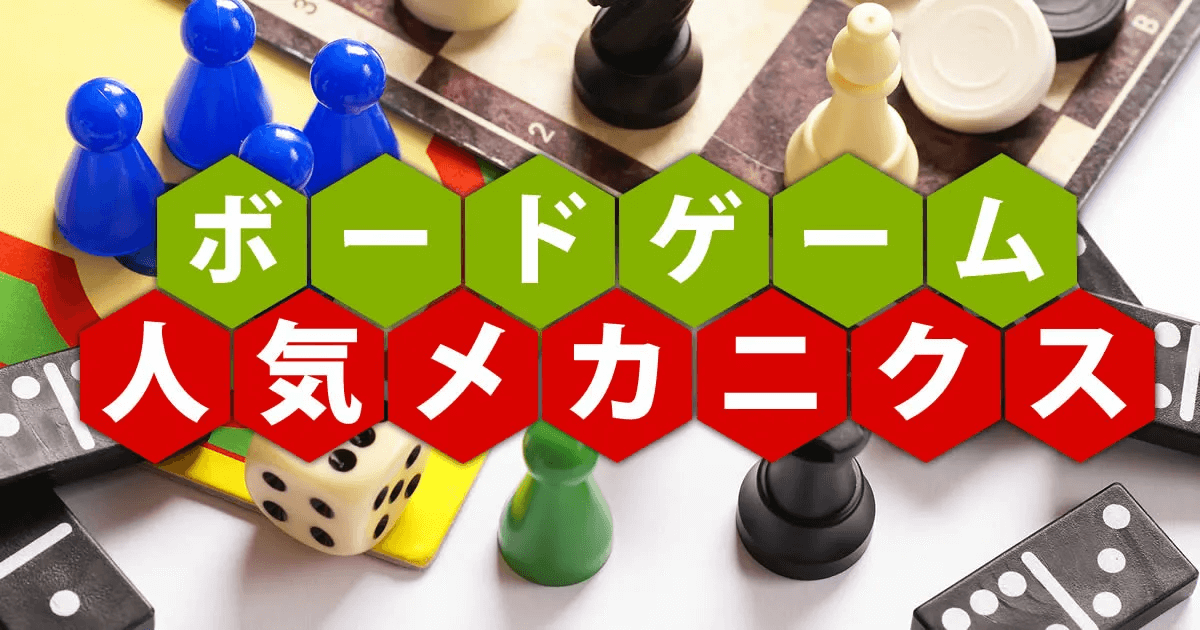
Top 20 "Cooperative Play" Board Games
Players support or divide roles to clear shared goals
bodoge.hoobby.netCriterion 3: Fully Cooperative, High-Score, and One-Time Experience Variants
"Play without winning/losing" actually masks two concepts: fully cooperative win/loss clarity and open-ended high-score chasing. Splitting these sharpens your choices.
Fully cooperative is the intuitive model. Codenames: Duet, Pandemic: New Challenges, Aeon's End, Spirit Island all yield clear success or failure. Joint triumph energizes; failure prompts "next attempt" rather than blame. Aeon's End adds growth satisfaction; Spirit Island deepens via strategy. Both amplify replays.
High-score variants suit duos wanting softer air. No "you lost" mechanics—just "beat last time?" This gentler result-framing pairs with relaxed talk. Dorfromantik: The Board Game exemplifies this, building landscape while chasing incremental wins. The cooperative feel persists without competitive sting.
One-time experience stands apart: EXIT: The Game series. Immersion is high but writing/cutting means essentially one playthrough. Not a flaw—think "buying a concentrated memory." Unlike replayable card games, these prize "that night's singular focus" and "moment of solving," fully justifying the choice.
2-player vs. broad compatibility matters here. 'ぼくボドの2人用ボードゲーム特集' consistently emphasizes 2-player specialists or high-rated 2-player versions. Games designed for larger groups can feel rushed at 2; conversely, 2-player-optimized titles lock in info-sharing cleanly and satisfy. Repeats favor defined-play types, one-night thrills favor experience types, and tension-free repeated sessions favor high-score types.
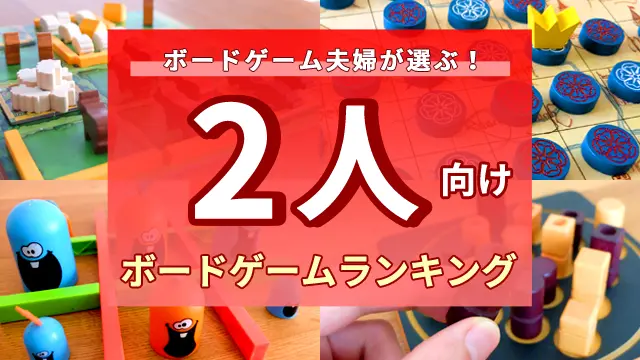
Best 2-Player Board Games: 33 Picks by Board Game Couple | Board Game Husband
Recommendations for couples and spouses. Husband-and-wife team with 400+ board game reviews have ranked and scored their picks.
boku-boardgame.netRecommended 2-Player Cooperative Games: Full Lineup
This section showcases light word/card co-ops through narrative mid-to-heavy hitters and one-shot puzzle experiences. Fully cooperative titles (clear win/loss) mix with high-score and open-ended variants, each tagged for type. Where data exists, we've included it; prices are time-sensitive references.
Codenames: Duet
Codenames: Duet tops 2-player cooperative recommendations as an association game where you decode partner clues.
Player count: 2 (2-player design), Time: ~15–30 min, Age: 11+, Difficulty: Low–Medium, Type: Word-association, hint-restricted, fully cooperative, Best for: Couples or friends seeking "connection through words" without heavy rules. Price: Varies by inventory; check vendor listings.
HANABI (Revised Edition)
HANABI: The Card Game hinges on a clever mechanic: you see everyone's hand but your own.
Player count: 2–5, Time: 30 min, Age: 10+, Difficulty: Low–Medium, Type: Information-restriction cooperative, Best for: Duos craving brief, dense coordination. Price: ~¥1,391 ($9 USD) on Amazon.
2-player fit comes from consistent 2–5, 30-min listing across sources and tight-knit role balance. At 2, reading the opponent's intent tightens; each clue's weight multiplies. High consultation density without devolving into instruction-following keeps alpha-play at bay. Short turns, satisfying color chains—genuinely pleasurable. Wallet-friendly, placing it squarely as a first-game contender.
Dorfromantik: The Board Game
Dorfromantik builds landscapes by interlocking tiles, chasing incremental goals and points without fierce win/loss.
Appeal for 2-player sessions: satisfaction shifts from competition to "that connection looked great" and "we managed better this time." Talk flows—but relaxed: "Expand the river or close the city?"—not tense war-gaming. Short turns, growing board focus, gentle air. Suits duos wanting tension-free iteration.
The Crew
The Crew is a cooperative trick-taking card game structured around sequential missions.
Player count: 2–5, Time: ~30 min, Age: Not specified, Difficulty: Medium, Type: Mission-chaining cooperative card, Best for: Card experience + short back-to-back challenges. Price: Not specified.
2-player edge: consistent 2–5, ~30-min references plus established representative status. Per-mission brevity means failure doesn't sour mood—real advantage. Talk density runs high without total transparency, so coordination feels delicate. Wins accumulate rhythm; "one more" happens easily on weeknights.
Pandemic: New Challenges
Pandemic is the archetypal cooperative— 2–4 players halting spreading crises via role division.
Player count: 2–4, Time: Not specified, Age: Not specified, Difficulty: Medium, Type: Role-divided fully cooperative, Best for: Duos wanting iconic co-op grounding. Price: ~¥4,400 ($30 USD) on Amazon.
2-player fit stems from stable 2–4 listing and long-standing status. Talk clears; role splits sharpen. All-info-public risks one player steering—unless both enjoy deep board analysis. Cascading crisis moments spike consultation; last-second containment delivers real payoff. Iconic, enduring satisfaction.
Aeon's End
Aeon's End is cooperative deck-building's landmark title.
Player count: 1–4, Time: 60 min, Age: 14+, Difficulty: Medium–High, Type: Deck-building, role-divided fully cooperative, Best for: Mid-level players wanting growth-arc card play. Price: Not specified.
2-player ideal from "2 or 3 recommended" notes across sources. With 2, each turn carries weight; power vs. defense vs. support splits clearly. Dense consultation, but balancing hand draw and future buys keeps it from pure "optimal math"—co-growth texture. Mid-tier downtime; opponent's turn doubles as board-read. Grinding down a tough enemy carries accumulated-effort payoff heavy games offer.
Spirit Island
Spirit Island ranks among heavy cooperative's pillars.
Player count: 1–4, Time: ~90–120 min, Age: 14+, Difficulty: High, Type: Strategy-intensive fully cooperative, Best for: Heavy-game duo with calm planning. Note: Time and player specs vary by edition/expansion; check official materials.
Gloomhaven (Complete Japanese Edition)
Gloomhaven is a sprawling campaign—scenario resolution interwoven with character growth over months.
Player count: 1–4, Time: 30–120 min, Age: 14+, Difficulty: High, Type: Campaign tactical cooperation, Best for: Fixed-partner commitment through heavy play. Price: ~¥76,906 ($520 USD) on Amazon.
2-player draw: fixed teams navigate expansive campaigns effortlessly. Talk runs deep; unrevealed hand assignments balance board sharing vs. individual judgment. Downtime varies by scenario; duos generally keep tempo. One-session payoff feels modest; character arc satisfaction grows across campaign. For duos accepting large boxes and extended commitment, it becomes a co-project with singular depth.
EXIT: The Game (Series)
EXIT: The Game titles drop you into puzzle immersion—one-night-only experiences via writing and cutting components.
Player count: ~1–4 (varies per title), Time: ~45–90 min per title, Age: Per title, Difficulty: Medium, Type: One-play puzzle-solve cooperative, Best for: Duos wanting single-night deep focus. Note: Check product pages for exact specs.
Legends of Andor (Revised Edition)
Legends of Andor blends quests with fantasy world immersion—narrative-heavy cooperative.
Player count: 1–4, Time: 60–90 min, Age: 10+, Difficulty: Medium, Type: Scenario-driven fully cooperative, Best for: Duos seeking world-based adventure. Price: Not specified.
2-player fit confirmed across sources as stable candidate; per-player load rises, each move mattering. Consultation runs high and narrative—"how shall we advance this story?" shapes talk, not just tactics. Short downtime, intelligible climax moments. Strategy + quest-flavor blend.
Andor: Rietburg Siege
Andor: Rietburg Siege adapts the Andor feel into leaner, friendlier form.
Player count: 2–4, Time: 40 min, Age: 10+, Difficulty: Low–Medium, Type: Family-leaning fully cooperative, Best for: Andor's spirit minus peak complexity. Price: ~¥2,982 ($20 USD) on Amazon.
2-player design, 40-min gate—lighter than the full game. Consultation required yet no fatigue; weeknight-friendly. Short turns, quick "I'll cover this flank" rhythm. Eases teams into cooperative habit while keeping Andor's vibe.
The Game
The Game asks you to cooperatively discard numbered cards under growing restrictions.
Variants exist across editions/languages with varied player counts and times; check seller specs. Generally short, low-to-medium difficulty, Type: Information-restricted high-score-leaning card game, Best for: Duos reading subtle air rather than explicit dialogue.
Beauty lives in the unsayable: you can't shout exact numbers, only hints. With 2, vagueness sharpens; "touch that pile?" and "not yet, wait" replace full talk. High consultation through restraint—each player's intuition matters. Turns fly; rhythm locks fast. No grand narrative, but quiet satisfying flow—for duos valuing conversational pauses.
💡 Tip
Light start: Codenames: Duet or HANABI, gradual depth: Aeon's End or Spirit Island, memory-first: EXIT: The Game series. This lineup spans your journey clearly.
Best First Pick: Three Finalists
Narrowing to three eases choice significantly. We've selected Codenames: Duet, HANABI, and Dorfromantik as weeknight-ready lightweights with markedly different flavors. Editorial experience showed Duet got most reach for conversation-heavy nights; Dorfromantik suited tired evenings beautifully.
Quick Comparison Chart
Priority over rule weight: tonight's desired vibe. Both 'Board Game Couple's 33 Picks' and broader roundups confirm 2-player satisfaction turns on "how you want to spend time," not raw mechanics. Three titles illuminate this starkly.
| Title | Talk | Teaching | Setup Ease | Replay | Time | Price | Best For |
|---|---|---|---|---|---|---|---|
| Codenames: Duet | High | Quick | Trivial | High | Not specified | Not specified | Word-play bonding |
| HANABI | Medium–High | Quick | Trivial | High | 30 min | ~¥1,391 | Quiet sync + deduction |
| Dorfromantik | High | Quick | Trivial | High | Not specified | Not specified | Peaceful co-building |
Codenames: Duet foregrounded word-riff conversation. One word carries bridges between minds; misreads become fun. Laughs emerge; bonds deepen. Silence never dominates; linguistic tennis drives the night.
HANABI shifts tone. Same cooperation, yet information scarcity tilts tone inward. Talk thickens thoughtfully. Payoff comes from reading between lines—quiet satisfaction. 30-min framing = "one game fits" easily. Boxes light; reach-grab friction nearly zero.
Dorfromantik softens atmosphere. No sting in failure. Tile-plop + landscape-gaze replace combat. "Bridge this river?" emerges as natural rhythm. Bonding happens through shared scenery, not word-clash. Tired-evening magic.
Which Fits You?
Split by conversational momentum, inference depth, peace-of-mind calm.
Craving upbeat word-play: Codenames: Duet. Single words ferry intent; misalignment delights. Couples laughing aloud, memories sticky. Talk momentum carries the night.
Seeking quiet sync + deduction: HANABI. Restraint breeds intimacy. 30 min containment means "just one tonight" holds. Subtle-hint reading suits introspective 2-player magic.
Wanting zero tension, pure co-creation: Dorfromantik. Editorial observation: tired-night go-to. Tile placement + landscape admiration = shared peace. Conversation happens yet feels unhurried.
💡 Tip
Chat + laughter → Duet, Quiet deduction → HANABI, Peaceful building → Dorfromantik. Simplest clarity.
Three all shine as entry gates, yet personality splits sharply. First-game magic locks in when your conversation style matches the design. Rule simplicity matters less than "does this grow our bond the way we bond?"
Why 2-Player Cooperative Hits Different
2-player co-op magic exceeds "no winners/losers" framing. Conversation deepens measurably. With one partner, you skip turn-waiting; "why hint now?" and "push risk here?" become your shared labor. Success compounds privately—solved together, endured together—imprints sharply.
Consultation flows naturally. 3+ players risk group bottlenecks; 2 sidesteps them. Proposals, seconds, moves slide fast. Aeon's End's role clarity lets one absorb enemy pressure while the other preps deck—natural division, tangible synergy. Heavy games become strategic duets rather than instruction-following.
Downtime collapses. Cooperative games demand board-watching; non-turn partners remain engaged. The Crew's tight turns mean both stay warm. No dead minutes; shared urgency never breaks.
Losses land softly yet insightfully. Not defeat—missed strategy clarifies immediately. "That clue we misread" or "turn order swapped" surfaces fixably, sparking "next attempt" rather than sting. 2 consecutive losses spike "one more!" urges—failure becomes fuel. Groups often drown in lengthy post-mortems; 2 players pivot to action.
This magic breaks when one player dominates—the alpha player trap—but 2-player-vetted titles engineer guards. HANABI hides info; Codenames: Duet restricts revelation; The Crew mandates live-check outcomes. Dual agency survives by design.
Cooperative itch: When both sit silent then say the same insight, 2-player resonance peaks.
Query top community lists: frame-counts confirm 2-player cooperative satisfaction tracks "did we think deeply together?" and "did failure teach, not sting?" and "did quiet moments feel present?"—not board grandeur. Memory sticks to your conversation's texture, not production values.
Scene-by-Scene Picks
Weeknight 30-Minute Session
Seek natural conversation cadence + clean satisfaction arc, fitting before sleep. Box removal friction and downtime must stay near-zero. Editorial practice: 30-min boxes clear psych hurdles; weeknight repeats flow.
HANABI, The Crew, The Game, Codenames: Duet slot this window cleanly. HANABI packs hint-pondering + card-play density into 30; one game saturates thoroughly. The Crew chains short missions; 30 min closes a chapter, or chains next quest naturally. The Game invokes hand-wrestling brevity. Codenames: Duet builds word-riff momentum peak-then-lands, leaving talk-warmth.
Sweet-spot edit: Codenames: Duet. Single-round payoff without "what was the strategy?" lingering makes it 30-min weeknight gold. Win or lose, conversation remains the night's asset.
Weekend Sessions With Time
Lean on role clarity + growth feedback, deeper engagement. 60–90 min opens room for plotting, not rushing.
Pandemic: New Challenges anchors solid foundations: clear roles, relatable crisis, familiar satisfaction arc. 2-player info-sharing tightens strategy; "cover Europe while I develop cure" splits cleanly. Imminent collapse boosts consultation; narrow wins cement team pride.
Narrative lift: Legends of Andor spans 60–90 with quest-flavor underpinning. Not pure tactics—story propels talk. "Now we reach the ambush—how prepare?" feels less "math puzzle," more "epic moment." Downtime stays short; one game leaves emotional residue.
Strategy depths: Aeon's End or Dorfromantik. Aeon's End (60 min) scaffolds deck-growth; each wave tightens synergy. Dorfromantik (varies, relaxed) gifts endless "one more round?" appeal without fatigue.
Max commitment: Spirit Island or Gloomhaven. Both demand planning beforehand; both reward hours of focused play. Repeated sessions build mastery and memory—rare weekend treasure.
Couples' First Cooperative Experience
Prioritize frictionless communication + joy-over-pressure. Shared win feels better than "teaching moment." Avoid games where one player grasps optimization while the other feels behind.
Codenames: Duet lands smoothly: word-play sidesteps experience gap. "That's how you thought?" sparks discovery, not criticism. Giggles outnumber groans. Win/loss feels less loaded; conversation is the event.
Dorfromantik brings softness: mutual landscape-building has zero sting. Duos who've avoided competitive games taste "together without tension" here. Relaxed rhythm lets newcomers breathe.
HANABI walks a middle road: some grit (deduction), some grace (no blame). Quiet wins reward attunement.
Avoid broad-group designs; pick 2-player vetted titles. "Is this for couples starting out?" = lean toward Duet, Dorfromantik, HANABI. Curated fit beats generic appeal.
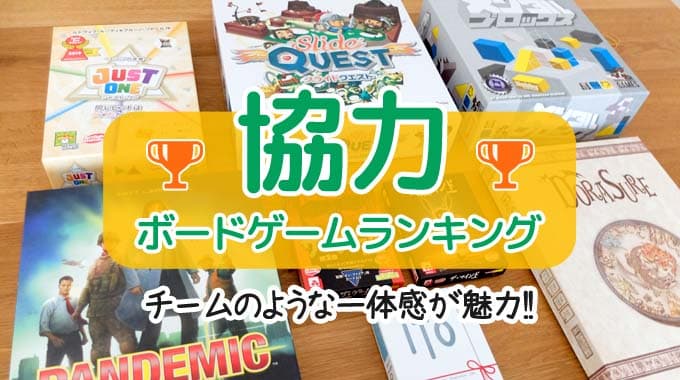
Top 22 Cooperative Board Game Picks | Board Game Husband
Cooperative games unite people in shared success or failure, building team bond. Yet diverse cooperative structures exist. Some demand silent focus, others flow via table chat. This overview details 22 standouts.
boku-boardgame.netPuzzle/Mystery: One-Night Immersion
Prioritize focal intensity over replay, film-like completion. EXIT: The Game series reigns.
Structure: 2-person table, clues scattered, 45–90 min near-total focus. Writing/cutting mechanics = single playthrough law. Not flaw—concentrated memory. Movie vs. novel: quick, vivid, done.
2-player synergy shines: both reach for clues, ideas bounce, "aha!" belongs jointly. Larger groups disperse focus; pairs lock in.
Ideal for milestone nights (anniversary, after-travel wind-down) where memory density matters over replayability. Recall that this night happens once; EXIT honors that wish.

True Cooperative Gems: 34 Board Games Where All Players Unite
Board games needn't pit players against each other. 34 titles where teams share victory, defeat, and the joy of collaboration.
broad.tokyoHeavy-Game Enthusiasts
Lightweight won't satisfy; aim strategy depth + durable replay draw.
Spirit Island reigns: vastly different games per spirit pairing; strategy forest spans infinite terrain. Hard game, yet engagement intensifies per replay. Payoff: "this combo worked" lands with earned weight.
Gloomhaven offers alternate lure: campaign arc, character arcs, per-scenario freshness. Not one-off depth—stretched satisfaction. 90-min sessions, months of shelf time, gear-up ritual.
Both: expect genuine consulting—not "execute this"—mixed with occasional heavy silence (everyone thinks). That's the price of engagement; both deliver on it.
Frequently Asked Questions
Where does 2-player appeal emerge?
"Don't cooperative games work better with more players?" sounds intuitive but misleads. 2-player-focused designs actually deepen conversation density. One partner means no turn-order queues, so "why reveal that clue?" becomes shared micro-decision. Success doesn't splinter across table—both felt it, both earned it.
For newcomer pairs: sub-10-minute teaching + 30-min play beats complexity. Codenames: Duet = words become shared language. HANABI = scarce hints trigger intuitive reading. Want gentler air? Dorfromantik landscape co-building = natural collaboration.
Separately: one-shot is valid. EXIT: The Game series: puzzle immersion locks you into single-use. Not drawback—compressed experience. Unlike repeat-friendly card games, these prize "that night alone" + "solve-moment memory" equally. Sufficient reason to pick them.
💡 Tip
Replay-heavy? Duet/HANABI. One-night-dense? EXIT series. Quick frame clarifies choice.
Pricing, Availability, and Storage Wisdom
Range widens significantly. Small boxes: ¥1,000–3,000 (~$7–20 USD); mid boxes: ¥4,000–8,000 (~$27–54 USD); heavy/large: ¥10,000+ ($68+ USD).
Concrete examples (Ryusei Games pricing): HANABI ¥1,391 (~$9); Rietburg ¥2,982 (~$20); Pandemic ¥4,400 (~$30). Gloomhaven ¥76,906 (~$520)—campaign scope justifies.
Price = box footprint, component count, ongoing-play assumption—not raw fun.
Japanese editions: HANABI/Pandemic widely stocked; heavier/niche titles face supply waves. Sudden vanishing = distribution timing, not demand. JELLY JELLY CAFE's cooperative roundup anchors safe-bet picking—early-buy confidence.
Storage: weigh play frequency vs. box size. 30-min small boxes =
Wrap-Up
Choosing a cooperative game gets easier when you filter by time, then conversation volume, then experience type. When in doubt, start with Dorfromantik: The Board Game. For word-driven interaction, Codenames: Duet. For deep replayability, Aeon's End or Spirit Island. On our editorial team, the "first pick" most often landed on Codenames: Duet, while Dorfromantik and Spirit Island delivered the longest-lasting satisfaction.
If you need to decide tonight, the fastest path is choosing 30 minutes or 60 minutes first. Two beginners should grab a lightweight title; if a one-time puzzle experience sounds appealing, EXIT: The Game is also a candidate. To ramp up weight, the natural ladder runs Pandemic: A New Challenge to Aeon's End to Spirit Island.
Before buying, align on player count, play time, age rating, price, and BGG's best player count and weight at the same point in time. Checking Japanese-edition availability at the same time turns your shortlist directly into action. For related selection guidance, our guides on Buying Your First Board Game and Board Game Beginner Recommendations are also useful.
Related Articles
10 Board Games for Three Generations in Japan | Selection Guide and Comparison
During holiday visits or weekend family gatherings in Japan, kids might enjoy a game while grandparents find it hard to join, or the opposite—adult-focused games bore the children. Picking the right three-generation board game is surprisingly tricky. This guide compares 10 titles based on player count, playtime, and age suitability, from games that flow smoothly even at 6-player tables to 30-minute classics.
12 Best Board Games for Elementary School Kids | By Grade Level
Choosing board games for elementary schoolers gets tricky when everything is lumped together as "for kids." The truth is, younger kids need games with quick rules and short playtimes, while older kids want depth and strategic challenge — and satisfaction levels vary a lot depending on which you pick.
Top 10 New Year's Board Games for Family Fun in Japan | How to Choose Games That Get Everyone Excited
For New Year's family game nights in Japan, what matters most isn't whether a game is a classic—it's whether everyone can jump in immediately and the atmosphere stays positive even when someone loses. When grandparents, parents, and children gather at the same table, celebrated titles like Catan (a trading and resource management game) are reliable, but they can sometimes feel a bit heavy for a first pick.
20 Best Board Games for Beginners — Sorted by Player Count and Play Time
A curated list of 20 beginner-friendly board games with player counts, play times, complexity ratings, rules explanation times, and reference prices — ranked from easiest to introduce.