
How to Choose a Board Game as a Gift — By Recipient, Player Count, and Budget
How to Choose a Board Game as a Gift — By Recipient, Player Count, and Budget
Picking the right board game to give someone sounds simple, but finding "the one box that fits" is trickier than it looks. The best answer changes completely depending on whether you're buying for family, a couple, or a beginner — and if you miss on player count, difficulty, or price range, even a critically acclaimed game can end up unplayed.
Picking the right board game to give someone sounds simple, but finding "the one box that fits" is trickier than it looks. The best answer changes completely depending on whether you're buying for family, a couple, or a beginner — and if you miss on player count, difficulty, or price range, even a critically acclaimed game can end up unplayed.
This article is a practical guide for anyone considering a board game for a birthday or seasonal gift. Drawing on the editorial team's observations, it cuts through the noise so you can narrow down a category of candidates in about three minutes.
The domestic Japanese tabletop game market grew to ¥7.54 billion (~$50 million USD) in fiscal 2023, and both the broader gift market and e-gift segment continue to expand. Today it's worth thinking beyond just what to give — whether to give a physical copy or an e-gift — and there are really only five things worth checking before you buy.
5 Criteria to Check First When Choosing a Board Game Gift
The 5-Point Checklist
Choosing a highly rated game isn't enough on its own when buying for someone else. The questions that matter most upfront are who you're giving it to and what kind of situation they'll actually play it in. For family, a 3–4 player design that parents and kids can enjoy together is the strongest fit. For a partner, you want something two people can play immediately, with no waiting around. For a group of friends, flexibility in player count and how quickly newcomers can jump in makes or breaks the night. In other words, "your relationship with the recipient" and "how many people usually play together" are the first two filters that narrow the field dramatically.
Layer on top of those: recommended age, rule complexity, budget, and whether a localized version is available. Even at the editorial team's own game nights, titles chosen for their box art or reputation consistently underperform compared to games that fit the exact player count, explain in minutes, and can be played right away — both in first-play rate and how often they come back to the table. With gifts especially, "we could play this today or soon" beats "someday we'll get to it." Games that take more than ten minutes to explain rarely hit the table on the day they're unwrapped. Light-to-medium games that anyone can pick up in under ten minutes and finish in roughly thirty are the ones that survive the mixed-experience crowd.
There's a structural reason beginner-friendly titles are more accessible than ever: the market itself has grown. According to Yano Research Institute's analog game survey, Japan's domestic tabletop game market reached ¥7.54 billion (~$50 million USD) in fiscal 2023, up 5.0% year-over-year. Specialist media like Table Games in the World also tracks a clear trend toward more options across both the classics and beginner segments. With so many solid "first box" candidates now available, sticking to a few criteria makes it much harder to go wrong.
Here's the checklist. Check them in this order and you won't need anything else.
- Player count
How many people does the recipient usually play with? Couples need something designed for two — either 2-player only or well-regarded in head-to-head play. Families need something that works comfortably at 3–4. Game-night groups do best with titles that scale from 3 to 6.
- Recommended age
This is less about difficulty and more about cognitive accessibility — processing speed, reading level, handling a loss gracefully. For parent-child gifts, getting this wrong means the game stops before it starts.
- Rule complexity
Are you looking at a light game or a gateway medium-weight? For gifts, losing sight of "will the first session actually happen?" skews every other judgment.
- Price
As a general benchmark, the ¥3,000–¥5,000 (~$20–$33 USD) range tends to feel appropriately generous without being excessive — though this varies by region and distribution. Treat it as a rough ballpark rather than a hard rule. Foreign titles can look beautiful on the shelf, but if the cards or reference text are text-heavy and no localized version exists, that gap in accessibility is significant. Checking stock and reprint status alongside language availability sharpens the shortlist considerably.
For the underlying logic of choosing a first game — before the "gift" angle comes in — the frameworks in our [first board game buying guide] and [beginner board game recommendations] apply equally here. The gift-specific layer is simply asking: "Will they be able to play it the same day they open it?"
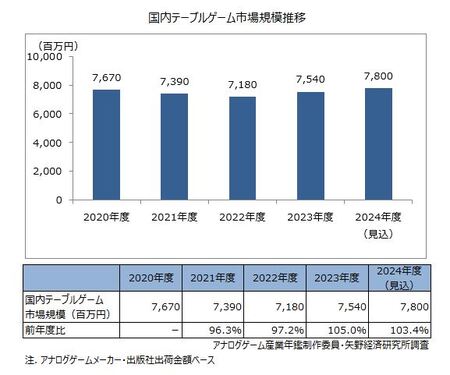
2023年の国内ボードゲーム市場は75億4千万円、矢野経済研究所 - Table Games in the World
矢野経済研究所は、アナログゲームミュージアム運営委員会と共同で発刊した『アナログゲーム産業年鑑2024』より、2023年度の国内「テーブルゲーム」市場は出荷金額ベースで75億4千万円だったことを発表した。前年比5%増で、2024年は更に増加
tgiw.infoHow to Actually Read the Recommended Age
One of the most common misreads when shopping for a board game is the age rating on the box. The number there is primarily a guide to cognitive accessibility, not a difficulty rating. "Ages 10+" does not mean the game is heavy or complex. Conversely, a game with a low age rating can still have plenty of interesting decisions for adults — that's far from unusual.
The confusion happens because recommended age isn't determined by rule logic alone. It also accounts for things like whether players can follow sequential steps, read card text, handle losing without frustration, and wait patiently for their turn. Read correctly, the age rating helps you avoid two common parent-child gift pitfalls: "too simple for adults to stay engaged" and "cute-looking box, surprisingly fiddly mechanics."
Rule complexity is a separate axis entirely. Light/filler games explain fast and play fast — they're the lowest-risk gift category. Gateway medium-weight games add a layer of meaningful decisions, but whether that's a plus or minus depends entirely on how much the recipient already plays. Heavy games resonate deeply with the right person, but as gifts they require knowing that person well. From the editorial team's experience, with mixed-experience tables it's almost always "length of the rules explanation" and "does the fun reveal itself in the first few turns?" that determine whether everyone leaves satisfied — not the age rating.
💡 Tip
The recommended age tells you "who can likely play this." The complexity rating tells you "how much thinking is required." Both live on the same box, but they're answering different questions.
What to prioritize also shifts by relationship. For parents and kids, age suitability and short play time come first. For couples, the density and pacing of a 2-player experience matters most. For groups of friends, player count flexibility and how well first-timers can keep up are the things that quietly determine whether the night flows. The principle that 2-player-specific designs are more reliable for couples than "plays at 2" designs follows directly from this.
Checking Availability: Localized Version, Stock, and Reprints
For gifts, whether a localized version exists and whether you can actually get it matter about as much as the game's reputation. Foreign titles often look spectacular and make impressive presents, but if the cards or reference sheets carry significant text, the presence or absence of a localized edition dramatically changes whether the game gets played. Language-light titles can sometimes work in their original edition, but for a gift, the localized version is the safer bet by a wide margin.
The process is straightforward. Start with the product name to confirm whether it's a localized or multi-language edition. Then check the component description for card or tile text — the heavier the text, the more localization matters. From there, look at retailer stock. If it's sold out, check whether a reprint is on the way. Popular games can sit on a reprint waitlist long enough to blow past a birthday or event — and when that happens, the whole gift plan falls apart.
Availability tends to be most stable for beginner-friendly classics, while import-only titles or anything that just had a viral moment can be volatile. For gifts, "can I actually get it in time?" ranks higher than "is it acclaimed?" A well-stocked classic beats a hard-to-find masterpiece. If you're shipping physically, also think about gift wrapping and whether the price shows up on the packing slip — details that matter in practice. For recipients who are far away or whose address you don't have, an e-gift or catalog-style gift may be a cleaner solution. That's not a fallback option; as e-gift usage continues to grow, it's a genuinely practical choice.
When narrowing down candidates for a gift, the cleanest approach is to use the five criteria — player count, recommended age, complexity, price, and localization — to set the broad parameters, then layer in stock and reprint outlook for whatever's still standing. Ranking-based selection alone leads to games that look great and sit unopened. Imagining the actual play scenario before you buy makes for a much more durable choice.
By Recipient: Gifts for Family and Parent-Child Play
Ages 4–6: Action, Memory, and Co-op That Get Laughs Immediately
For families with young kids, the most reliable axis is the child's age and whether parents can engage at the same pace. At 4–6 years old, the kind of play that lands isn't about winning and losing — it's immediate visual feedback and physical participation. Matching colors or shapes, spotting identical items, remembering and guessing, working toward a shared goal together: these elements let play begin before the explanation is even finished.
At this age, 10–15 minutes per game is a comfortable session length, and something that can be explained in about 5 minutes is the target. Parents often worry about games being too simple to hold their interest, but action and memory games have a way of pulling adults in anyway — and they tend to give kids moments to shine. At the editorial team's own year-end gatherings, running three short games in a row with a 7-year-old, a 9-year-old, and adults in the mix, the shorter games consistently distributed the winning feeling more evenly and kept the energy up. Bring out something heavier that only works for adults and the kids are checked out within a couple of turns.
The sweet spot at 4–6 is games with small victories built into every turn — flipping a card and getting a match, being the first to spot something, placing a piece just right, completing a mission together. Games where "I just did that" is visible and immediate tend not to derail when someone loses, and "one more time" follows naturally. As a family gift, a box that turns dinner-table time into laughter the same night it's opened beats a more impressive-looking one every time.
Ages 7–9: Team Play and Co-op That Put Everyone on Equal Footing
By 7–9, you can keep the quick, energetic feel while introducing a little more decision-making. What works well here is team and cooperative play, or light set collection — structures where players can see what they're working toward and feel like their choices matter. Kids get to make real decisions; parents can be supportive partners or genuine opponents without it becoming unbalanced.
The comfortable range for this age group is 15–20 minutes per game with 5–8 minutes of rules explanation — enough space to play several rounds in an evening as a family. Even when the rules get slightly more involved, games where the objective fits in one sentence keep parents and kids moving together. "Collect the most of one type." "Help everyone avoid failure." "Be the team to meet the condition first." When both generations are pointed in the same direction, neither one feels left behind.
At this stage, whether the game creates space for consultation matters a great deal. Games where a parent just hands out correct answers get stale fast; games where "which one do you think?" and "nice idea" happen naturally tend to leave stronger impressions after the session. The best family gifts at this age give kids winning moments without boring the adults — 7–9 year-olds are the sweet spot for that balance, and they're also a natural entry point into light strategy.
ℹ️ Note
For ages 7–9, "short and clear" plus "room to talk it over" and "meaningful choices" closes the gap between parent and child engagement much more reliably.
Ages 10+: Light-to-Medium, Rules Explanation Under 10 Minutes
Past 10, the candidate pool opens up considerably — kids at this age can enjoy building a score or thinking through their turn. That said, for gift reliability, jumping straight to heavy games isn't the move. Light-to-medium titles that explain in under 10 minutes are still the most dependable choice. A play time around 30 minutes keeps everyone at the table, and games with enough Replayability to make you want to try a different approach next time have real staying power as gifts.
What also matters more at this age is whether parents can genuinely enjoy the game too. Skew too far toward the child and adults find it flat; skew too far toward adults and the explanation becomes a wall. The middle ground is games where each turn has a clear action while still rewarding planning — building points from cards or tiles, selecting from a shared pool to develop your own tableau. Parents get something to engage with; kids understand what's happening.
Even at 10+, short play time remains important for family settings. From the editorial team's experience, a mixed parent-child table almost always enjoys "two 30-minute games" more than "one long one." For gifts, frequency of play beats depth of a single session — and light-to-medium titles with good Replayability tend to earn their spot on the shelf.
Genre Recommendations and Specific Titles
By genre: action, memory, and co-op for ages 4–6; team play, co-op, and light set collection for ages 7–9; light-to-medium engine builders and scoring games for ages 10+. For specific names, family tables consistently do well with Dobble (Spot It!), Ghost Blitz, The Rainbow Snake, and Cloud 9 Unicorns — the "see it, play it immediately" category. These generate small victories quickly, get laughs fast, and age well with younger players.
For 7–9 year-olds, NMBR 9, LLAMA, Sushi Go!, and Glittering Treasures are good fits — games where decisions happen but no single move feels too heavy. They're easy enough for kids to follow the same rules as adults without either side feeling bored or lost. For a broader look at family-friendly options, resources like Boku to Board Game's collection of 40 family-playable games and seasonal gift guides are worth browsing.
At 10+, Cascadia, Kingdomino, and Azul are the kinds of titles that introduce real planning without overstaying their welcome. Each communicates "what kind of game this is" fairly clearly, and adults find genuine depth in them. The beginner board game guide framework applies here too, but for family gifts the added question is: can both parents and kids be the main character at the same time? That one lens tends to sharpen the decision significantly.
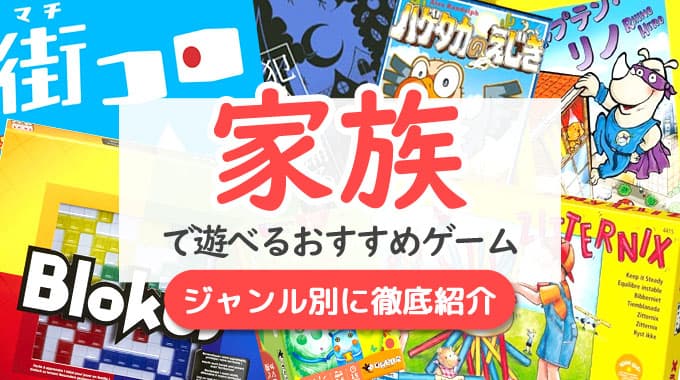
親子で楽しめる!家族で遊べるゲーム40選を徹底紹介 | ぼくボド
家族で遊べるゲームのおすすめ徹底紹介。親子で楽しめるゲームを5ジャンル(スピード・アクション・戦略・心理戦・協力)に分けて紹介しています。
boku-boardgame.netBy Recipient: Gifts for Couples and Partners
Why 2-Player-Only Designs Are Worth It
For couples or spouses, the first thing to anchor on is a design built for two people. Games made for 3+ played as a two-player tend to feel diluted — the board stretches too far, turns fly by without tension, and the experience becomes "technically playable, not actually satisfying." A true 2-player design eliminates that problem from the start: no Downtime waiting for others, denser decisions every turn, and balance that holds up game after game. That pattern shows up clearly in rankings like Bodogema's top 2-player games, where the titles that stick with couples are almost always designed with exactly two players in mind.
As a gift, that design difference shows up immediately. A game that "supports 2 players" but really shines with four requires recruiting someone else every time — which quietly kills how often the box comes off the shelf. A true 2-player game can start whenever one of you feels like it: a Tuesday night, a rainy afternoon, an evening at home. From the editorial team's perspective, what matters most with this kind of gift isn't "how deep does it go?" — it's how easy is it to actually put on the table.
15–30 minutes, light-to-medium weight is the most gift-friendly design for couples. It fits into an evening naturally — one game over tea, another after dinner. Too short and the mood evaporates before it forms; too long and when one person's focus drops, the heaviness is all that's left. The middle range just works.
/og_default_image.png)
友人・カップル・夫婦など2人で遊ぶ!おすすめボードゲーム 人気ランキング トップ50
ボドゲーマ会員が「お気に入り」にしている、2人用のおすすめボードゲーム(アナログゲーム)のトップ50ランキングです。
bodoge.hoobby.netCo-op vs. Competitive vs. Conversation-Driven
Even within the 2-player space, co-op, competitive, and conversation-heavy play very differently — and picking the right one meaningfully improves your hit rate.
Co-op is the most reliably safe choice for home date nights. You're consulting rather than competing, which keeps the atmosphere from getting edgy. There's a "solve it together" and "get through it together" quality that emerges naturally. One person being newer to games isn't a problem; experience gaps don't sour the mood. It works just as well for a tired evening or a couple who'd rather unwind than battle.
For couples who enjoy a little friendly competition, competitive games can be great too — just aim for ones where the rivalry stays warm. Skip anything where direct attacks dominate; instead, look for games where getting blocked means "okay, what's my next move?" rather than actual frustration. Tile-laying, card drafting, shared resource racing — the kind of design where the game outcome is clear but the process stays enjoyable. Being willing to lose matters more when you're playing against someone you live with.
If the goal is more conversation, 2-player adaptations of word association or social deduction games are worth considering. These genres generate natural dialogue — "why did you pick that?" "what were you thinking with that clue?" — which makes the game feel less like a game and more like getting to know each other better. The caveat: many social deduction games turn mean-spirited or repetitive at exactly two players, so look specifically for versions tuned for two that remove the paranoia and keep it light. Specialty game bar blogs like Game Bar Shinsaibashi's couples' picks have solid roundups of that narrower slice.
💡 Tip
For couples, the better question isn't "will someone win?" — it's "will we want another round after?" That lens tends to point toward co-op or low-aggression competitive designs.
恋人・カップルにおすすめ!2人で遊べるボードゲームまとめ | ボードゲームバーPeeGee大阪心斎橋店
gamebarshinsaibashi.comGenre Recommendations and Specific Titles
For 2-player competitive, the usual go-tos are Patchwork, 7 Wonders Duel, and Jaipur. Patchwork has a light, back-and-forth rhythm where watching your opponent's board sparks small moments of commentary. 7 Wonders Duel is denser — better suited for couples or spouses who are both already into games. Jaipur's exchange-and-sell decision loop is simple to follow but leaves you feeling like you genuinely competed, even in a short session.
For friendly competitive, Azul and Kingdomino fit well here too — the spirit is more "who builds the prettier pattern" than "who attacks whom." Neither is strictly 2-player-only, but both hold up at two without feeling stretched, and they look good enough to work as gifts. The competitive outcome is real, but the atmosphere while playing stays pleasant.
For co-op, something like The Game — where you're working out how to play your hand without tipping off the other player — puts the focus squarely on thinking together rather than competing. It absorbs experience gaps naturally through conversation, and it fits into a slow evening comfortably.
For conversation-first, Codenames Duet is a natural pick. The process of negotiating what a clue was meant to convey — where your word association overlaps and where it diverges — is the fun. It doesn't carry the paranoia of larger social deduction games, and it scales perfectly to two.
All of these work with the beginner framework at their core, but for couples and partners the decisive additional condition is whether the game sustains itself naturally for two people over multiple plays. Games that fit into the rhythm of an evening — two 15-minute rounds or one 30-minute session — are the ones that stay out on the shelf instead of being pushed to the back.
By Recipient: Gifts for Friend Groups and Game Night Hosts
For friend groups or someone who hosts regular game nights, the key axes are clear from the start: does it run well at 3–4 as a go-to? and does it hold together past 5 players without falling apart? Equally important is first-timer tolerance — whether someone joining for the first time or returning after a long gap can stay in without the table grinding to a halt. Experienced players can handle more weight, but for a gift, games where "you finish the explanation and immediately make your first move" have a much higher actual play rate.
For hosts specifically, the most useful thing a gift can do is fit into the natural structure of a game night: an icebreaker to warm things up, a solid medium-weight title for the main session, and something to bring out once the table is really in the groove. From the editorial team's experience, two quick rounds in the first fifteen minutes — even between people who've just met — get conversation going and make the transition to heavier games smoother. Short rules explanations matter here too: the tighter and cleaner the setup explanation, the faster a game night finds its footing.
Icebreakers: 2–6 Players / Explain in 1 Minute / 10–15 Minutes
The first box out should explain in about a minute and finish in 10–15 minutes. At this stage, the question isn't just "is it fun?" — it's whether someone who just sat down and is still sizing up the room can participate from the start. Ideally it runs cleanly at 3–4 and doesn't drag at 5–6.
In this role, whether everyone laughs, gets surprised, or says something at least once matters more than who wins. Ghost Blitz earns its place through pure simplicity and visual clarity. 6 Nimmt! gives first-timers a quick mental hook — the number logic clicks within one round. Just One is co-op-adjacent enough that it softens the atmosphere even with newcomers in the mix.
The gift value here is partly that mistakes don't embarrass people. A game that stops early turns for rule corrections creates tension; one where the flow continues anyway — "that's fine, we keep going" — takes pressure off the host and keeps things moving. The first game of the night sets the tone, and lightness at this stage pays dividends for everything that follows.
Medium-Weight Standbys: 3–5 Players / Explain in 5–10 Minutes / 30–45 Minutes
Once the table is warmed up, the next need is a reliable medium-weight game that consistently delivers at 3–5 players. For gift purposes, this tier is where you want a box you can say "this is what we play tonight" with confidence. The sweet spot is 5–10 minutes to explain and 30–45 minutes of play — accessible enough for first-timers, but experienced players can support them without effort.
Ticket to Ride, Kingdomino, and Azul are the dependable picks here. Azul and Kingdomino both center on building your own tableau, which keeps direct aggression low and makes newcomers feel less targeted. Ticket to Ride communicates its objective and flow so clearly that players tend to understand what they're doing as the game progresses, rather than needing constant clarification.
For friend-group gifts specifically, the defining test is: does it stay tight at 3, hold at 4, and not break at 5? A game that's great at 4 but suddenly drags at 5 is too narrow a tool for a host. The flip side — games where each turn is legible and the board state is readable even mid-game — means the host doesn't have to re-explain from scratch every session.
ℹ️ Note
For game-night gifts, two titles with distinct roles — a quick opener and a medium-weight main event — see more table time than a single "does everything" box.
Late-Night Picks: 3–6 Players / Explain in 10 Minutes / 45–60 Minutes
Once conversation is flowing and the table's rhythm is established, you can bring out something with a bit more weight — roughly 45–60 minutes with a 10-minute setup explanation. At this point in the night, games that would feel heavy at the start land smoothly because everyone's attention is actually with the game. For a host, having a "third-game box" that earns its reveal is genuinely useful.
Splendor, Catan, and Quacks of Quedlinburg all fit this slot. Catan generates natural negotiation and conversation — it rewards familiar faces. Splendor is more contained in its rules than it looks, making it accessible to the less experienced players while still engaging veterans. Quacks thrives on the randomness-driven tension that gives a late-night game night an extra gear.
What matters in this tier isn't the weight itself — it's having a reason to bring it out right now. It doesn't belong at the start of a night with unknown faces. But after a lighter game has everyone relaxed and talking, even something a bit longer gets a warm welcome. For someone who hosts regularly, a title that "shows its best when the table is ready" pairs cleanly with their lighter openers and gets used.
Genre Recommendations and Specific Titles
For icebreakers: the reflex-based Ghost Blitz, the number-reading 6 Nimmt!, and the co-op word game Just One are the clearest choices. All three pull in first-timers easily and tend to go straight into a second round without anyone needing to be convinced.
For medium-weight standbys: the visually intuitive Azul, the satisfying tile-laying Kingdomino, and the purpose-driven Ticket to Ride are all reliable picks. These consistently deliver at 3–4 players and are exactly the kind of box that anchors a game night without anyone complaining.
For late-night depth: the resource-engine Splendor, the negotiation-and-territory-building Catan, and the push-your-luck crowd-pleaser Quacks of Quedlinburg are the candidates. If your recipient runs their own game nights, a lineup that separates into these three stages is more practically useful than any single high-rated title.
Across all of these, the consistent criteria to apply are: does it become a regular at 3–4, can it expand to 5+, does the Rules explanation stay short, and can first-timers join without stopping the table? Friend-group gifts earn their value not from the quality of the box but from whether it gets brought out again next time — and by that measure, reliable favorites beat novelty every time.
By Recipient: What Makes a Board Game Work as an Adult Hobby or Style-Forward Gift
Evaluating for Design Quality
When a board game is the gift and the recipient is an adult with taste, "easy to play" isn't the only axis that matters. What you're really looking for is whether the box itself has presence, the artwork has texture, wooden components feel good in the hand, and the negative space when it's set up has its own quiet beauty — together as a single ownership experience. A game that only has value during play is less compelling than one that earns its place on a shelf or sideboard.
Start with packaging design. Vivid illustrated boxes have their appeal, but for adult gifts, a restrained color palette, considered typography, and a quietly composed box illustration land differently. A box that doesn't disrupt the feel of a living room — that sits naturally alongside books or art objects — carries a certain gift-level weight on its own.
Wooden components are the next amplifier. Wooden meeples and tokens create a positive first impression on contact that resin-heavy designs rarely match — there's a "want to keep handling this" quality to them. In abstract and placement games especially, the warmth and muted tones of wood translate directly into visual satisfaction. Paper components aren't a dealbreaker, but materials with physical warmth hold their value across the entire ownership experience.
Whether it looks good displayed is also part of this. That's not just the closed box on a shelf — it's whether the board mid-game functions as an aesthetic object. Games where tiles or wooden pieces fall into orderly arrangements have a visual coherence even in progress; left on the table after dinner, they don't look like a mess. At the editorial team's office, better-looking games consistently prompted "let me look at this for a second before we put it away" — and that lingering quality translated directly into ownership satisfaction.
This isn't purely aesthetic instinct. Japan's gift market reached ¥10.89 trillion (~$72 billion USD) in 2023, with a forecast of ¥11.35 trillion (~$75 billion USD) in 2025. As gift options multiply, there's a natural pull toward things that don't just get used, but that settle into a room and make you want them nearby. Board games in this context are less "a toy" and more "an object worth owning" — and that framing is what makes certain titles work as gifts.
Display-Worthy Design: Wooden, Minimal, and Deluxe Editions
Style-forward board game gifts generally fall into three categories: wooden abstracts, minimal design, and limited or deluxe editions. Fancier isn't automatically better — the question is how each sits in an actual room.
Wooden abstracts have particularly high compatibility with permanent living room display. With pieces left on the board, they hold together visually; they prompt curious guests to ask "what's that?" The editorial team found these tend to become "always-out" boxes rather than put-away boxes — which, interestingly, also increases how often they get played. Visibility reduces the psychological barrier to picking them up.
Minimal designs carry their value in the aesthetic of restraint. When the board doesn't feel cluttered, the color palette is disciplined, and both box and components have visual coherence, they don't compete with the room around them. Wooden textures fit well in Scandinavian or natural-material interiors; high-abstraction artwork suits more monochromatic spaces. Matching the gift to the recipient's actual aesthetic environment improves the fit considerably. Kyodai Boardgame Lab's roundup of stylish board games focuses on exactly this visual axis — and the operative question for gifts is "will this survive being in their line of sight when they're not playing it?"
Deluxe and limited editions deliver strong ownership satisfaction but are more variable on the interior-design compatibility front. Foil treatments, special boxes, and thick wooden components create genuine specialness — though heavier ornamentation can feel like too much personality in a quieter room. The sweet spot for adult gifts is quality-of-material rather than visual loudness: wood, cloth bags, thick tiles, calm print colors. The kind of thing that improves with closer inspection rather than announcing itself from across the room.
💡 Tip
The filter "does this have value when no one's playing it?" narrows down gift-worthy games quickly. Box that fits the shelf, board that looks good on display, wooden pieces that feel satisfying to handle — when all three align, it lives in that space between functional object and interior accent.
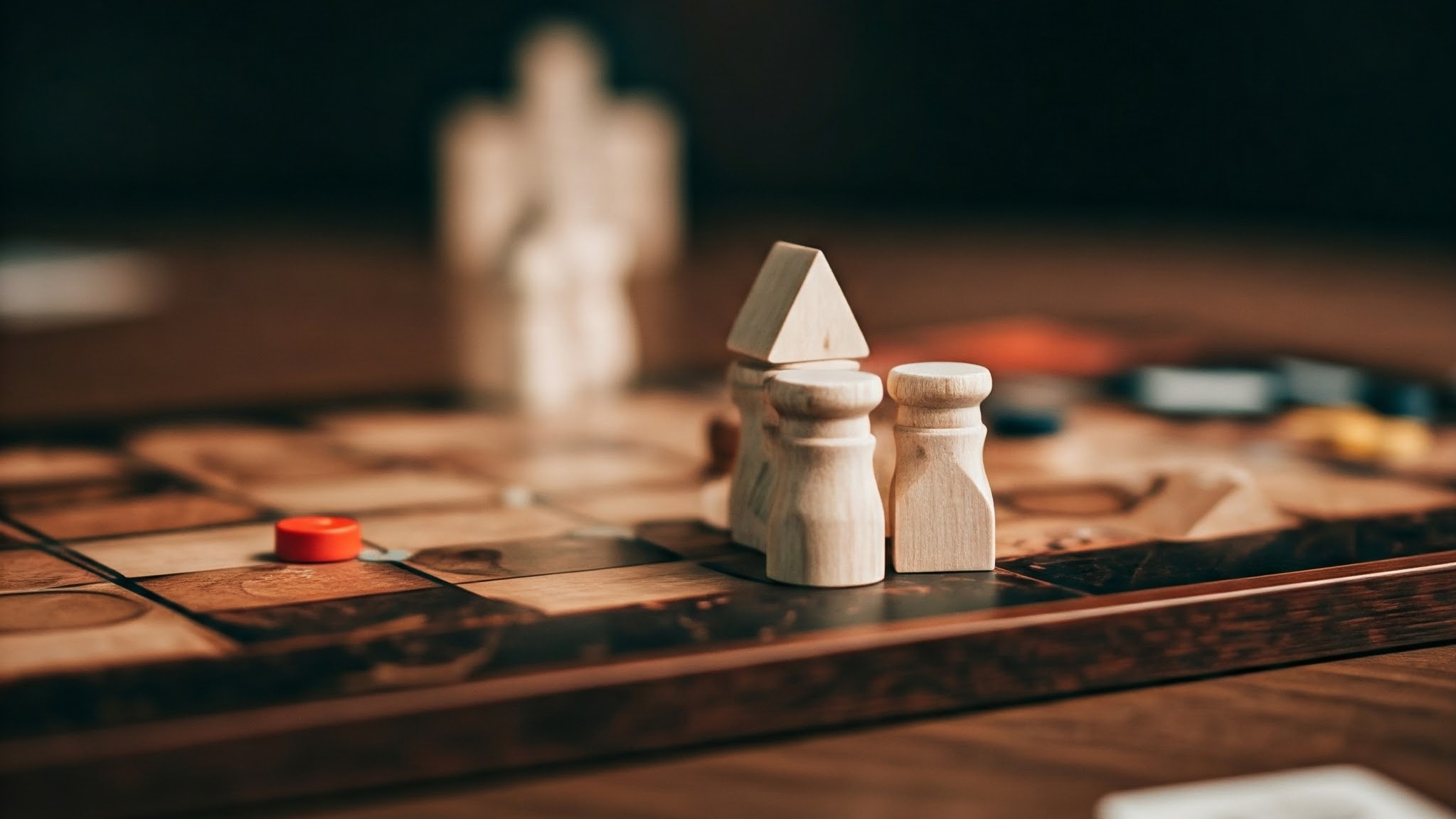
大人のプレゼントに最適!おしゃれなボードゲーム14選【インテリアにも】 | 京大ボドゲ製作所 | Kyobo
今回は、 遊び心とデザイン性を両立した14個のボードゲームを厳選してご紹介します 。 かわいい今風のデザインのものから、インテリアとしても置けそうな美しいデザインのものまで、幅広く取り上げてみました! おしゃれなゲームやプレゼント用のゲーム
kyodai-boardgame.comGenre Recommendations and Specific Titles
For abstract games, Azul works well in this context too. The tile color arrangements create a composed rhythm as the game progresses, making it visually compelling mid-play — it photographs well and the coherence from box art to components is consistent. Hard to go wrong here even when design is the primary concern.
Kingdomino also holds up as a display-oriented gift. There's something genuinely satisfying about watching a landscape of terrain tiles grow across the table — and after the game ends, the completed "kingdom" reads almost like a little diorama. It's the kind of game where the final board state leaves an impression.
For a gift where ownership feel matters, Splendor enters the conversation. The chip quality and how the pieces look spread on the table are part of the appeal — it's more about handling a well-made tool than about minimal visual elegance. Suited to recipients who value physical craft.
Ticket to Ride and Catan aren't strictly minimal, but their box presence and canonical status carry their own kind of value. For someone who cares about building a collection, owning a recognized classic has its own satisfaction — not just visual refinement, but "this belongs on my shelf" legitimacy.
For something lighter in spirit, Ghost Blitz has component shapes that function almost like objects — less suited to quiet living-room permanence, but for someone who enjoys design-forward gadgets and novelties, the visual playfulness makes sense alongside the actual fun of the game.
In this gift category, the more reliable approach is to choose based on where the visual quality actually lives — in the box, the components, or the board state in play. A game whose box belongs on a bookshelf, whose wooden components carry the experience, whose mid-game tableau completes itself into something worth looking at. When one of those is clearly true, the game makes the shift from "something to play with" to "a box worth having."
Budget Breakdown: Under ¥3,000 / ¥3,000–5,000 / ¥5,000+
Under ¥3,000 (~$20 USD): Card, Dice, Memory, and Reflex Games
Under ¥3,000 (~$20 USD) is the range dominated by light card games, dice games, and memory or reflex-based titles. These work well as add-on gifts for a birthday — the small box and modest price point lower the psychological stakes on both sides. At the editorial team, this tier consistently delivers the "let's just try one round" impulse, which is often the highest compliment a gift game can get.
Concretely: reflex titles like Ghost Blitz, memory-and-word-play titles like Nansen'ja Monja (Who Are You?), and reading-games like Cockroach Poker live in this tier. None of them need a full table, none take long to explain, and they make sense pulled out at a family gathering or a friend's place without ceremony.
The limitation of this range is that lighter games can sometimes feel like a one-time event. Strong opening energy paired with thin decision-making or low Replayability can result in a gift that generates one good memory and then sits idle. For adult recipients especially, the question isn't whether it's affordable — it's whether the fun-to-Replayability ratio justifies the gift. Even in the light-game range, a box that doesn't read as a throwaway option holds up better as a present.
¥3,000–5,000 (~$20–$33 USD): Box Games, Co-op, and Light-to-Medium Standards
This is the range where the classic box game selection is deepest. Light-to-medium gateway games dominate here — and as you move up from cards-only into boards, tiles, and more substantial components, the satisfaction-to-accessibility ratio is at its best. As mentioned earlier, this is the most reliably gift-safe range, and the reason is simple: it gives you a "proper" game feel without being heavy.
Kingdomino (that box-garden warmth), Azul (visual elegance meeting tactile pleasure), The Game and lighter co-op titles (building shared momentum) — these represent what this range does well. They're accessible enough for first-timers playing with other first-timers, but they don't bore experienced players.
From the editorial team's observations and broader trends, birthday gifts in the ¥3,000–5,000 range that explain in under 10 minutes tend to be the most likely to get played, with strong uptake among families and friend groups in particular. The "open and play same day" factor is the biggest practical advantage.
The thing to watch is the balance between rules explanation length and recommended age. Even within light-to-medium weight, games with lots of explanation steps or cluttered boards become surprisingly heavy as beginner gifts. The inverse — standard box games with clear entry points and an honest age rating — adapt to family, couple, and friend contexts equally well.
The quick-reference table below is a useful tool when budget and complexity intersect:
| Price Range | Typical Complexity | Typical Player Count | Common Genres |
|---|---|---|---|
| Under ¥3,000 (~$20 USD) | Light | Often works well at 2–6 | Card, dice, memory, reflex |
| ¥3,000–5,000 (~$20–$33 USD) | Light to gateway medium | 2–4 or 3–4 is the sweet spot | Standard box games, tile-laying, co-op, light-medium standards |
| ¥5,000+ (~$33+ USD) | Medium to heavy | 2-player-only or 3–4 with sustained attention | Premium components, heavier games, collector's pieces |
ℹ️ Note
Higher price doesn't mean higher satisfaction. A box that's easy to explain, fits the player count, and gets out on the table beats a more expensive one by a wide margin as a gift.
¥5,000+ (~$33+ USD): Premium, Display-Worthy, or Commitment Titles
At ¥5,000+ (~$33+ USD), premium component games and heavier titles enter the picture. Wood, thick tiles, custom trays, imposing boxes — ownership satisfaction spikes noticeably. Splendor has that "you feel like you're handling something well-made before you even start" quality. Ticket to Ride and Catan deliver the "this is a proper gift" presence.
The condition here is that you need to have a read on the recipient's experience level. Fancier tends to mean more rules, and a beautiful box that's intimidating to open goes straight to the shelf. This range works well for people who lean toward being gamers, who visit board game cafes, or who already own several titles — but for someone new to the hobby, it can be too much as a first-game gift.
This is also where display value peaks. Premium wooden pieces, satisfying chips, and a board that looks good in full spread create an ownership experience that goes beyond just playing. Genuinely compelling as an adult hobby gift — but it still matters whether the recipient will actually play it. Heavy games aren't a problem in themselves; the question is whether this person thinks of a game night as a destination they want to commit to.
From the editorial team's experience, games over ¥5,000 (~$33 USD) land deeply when you're confident the person is already a gamer. Deluxe editions and medium-heavy classics are exciting to receive if you love this stuff — and can read as "a difficult-looking box" if you don't. Matching the weight to what the recipient can actually engage with produces more consistent satisfaction than chasing the price point for special-occasion feel.
Physical Gift vs. E-Gift: Which One Fits the Situation?
Strengths and Caveats of Physical Gifts
A physical board game has the opening moment working in its favor — the rush of unwrapping and seeing the box art up close, feeling the weight, is an experience a link can't replicate. Titles with strong visual presence or tactile components create a first impression that holds on. Beyond the moment of receiving it, there's also the ongoing ownership satisfaction of having it on a shelf. A game that's both something to play and something to look at justifies the physical format fully.
Strengths and Caveats of E-Gifts
The primary advantage of an e-gift is that you don't need the recipient's address. For a coworker you're not close enough to ask, a friend you mostly connect with online, or someone who lives far away — that single factor changes the entire logistics. A message with a redemption link can arrive on a birthday with no shipping lead time, which is a practical advantage that matters. When you can't fully read someone's taste, "the recipient picks from a selection" also removes the failure mode entirely.
The market reflects this shift: Japan's e-gift segment has grown from ¥90.9 billion (~$600 million USD) in 2017 to ¥319.6 billion (~$2.1 billion USD) in 2023, with forecasts pointing to ¥405.7 billion (~$2.7 billion USD) by 2025. Japan's overall gift market reached ¥10.89 trillion (~$72 billion USD) in 2023 and is projected to reach ¥11.35 trillion (~$75 billion USD) by 2025 — the shift toward digital delivery is structural, not incidental. Gift cards, vouchers, and e-gifts combined are projected at ¥1.08 trillion (~$7 billion USD) in 2025 alone.
That said, e-gifts can't fully replicate the unboxing experience. Board games are a category where the box weight, component sounds, and peeling the shrink wrap are all part of the memory — and skipping that can feel a bit flat for recipients who care about it. The editorial team's read: for recipients whose address you don't have, e-gifts are the fastest and least error-prone option; for people you're closer to, physically handing over a box tends to create stronger lasting satisfaction. Convenience versus the joy of having something tangible — the right answer follows from knowing your recipient.
💡 Tip
When address is unknown, distance is a factor, and taste is uncertain — those three together point toward e-gift. When you know the person's preferences and can hand it to them, the physical format's advantages come through fully.
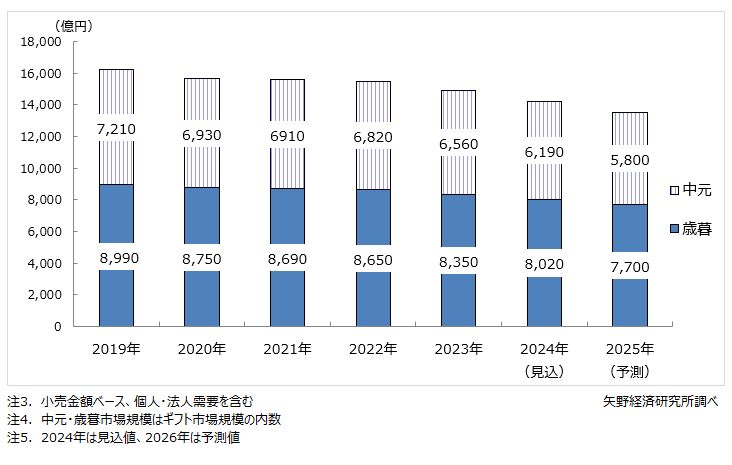
ギフト市場に関する調査を実施(2024年) | ニュース・トピックス | 市場調査とマーケティングの矢野経済研究所
矢野経済研究所のプレスリリース ギフト市場に関する調査を実施(2024年)
www.yano.co.jpWhen to Use "Choose Your Own" or Experience-Based Gifts
When taste is genuinely hard to read, letting the recipient make the final call is the most practical move. Board games vary enormously by subgenre, and two people who both "like popular games" can have completely opposite preferences when it comes to social deduction, 2-player mechanics, or player count. A catalog-style gift that offers selection eliminates that mismatch entirely. The giver provides the occasion; the recipient picks the specific box. Clean division of responsibility.
Going further, gifting the experience itself is a real option. Something like SOW EXPERIENCE's board game gift catalog offers not a fixed box but an invitation — "let's go play" or "here's the occasion to try something new." For a partner, close family, or a tight-knit friend group, the experience can outlast any individual game. Especially for recipients who already own several games, adding to their collection isn't always as meaningful as giving them a reason to play.
Physical, e-gift, and "choose your own" are all genuine options here: physical for the full unboxing experience, e-gift to bridge the address-or-taste gap, and selection-based or experience gifts when you can't fully read the person. Matching the format to the relationship and what you actually know about the recipient absorbs the logistics problems — shipping delays, unknown preferences, address uncertainty — more cleanly than defaulting to any single format.
ボドゲで盛り上がる時間を贈る、みんなであそぶ!ボードゲームギフト(eギフト)
さまざまなテーマから、好みのゲームを取り寄せ自宅で楽しめるギフトです。ボードゲームカフェで新しいゲームを体験する、お出かけコースも選べます。夫婦やカップル、子どもがいる人へ、ゲームで盛り上がる時間を贈います。
www.sowxp.co.jpQuick Diagnosis and Reference Table for When You're Stuck
4 Questions to Find Your Gift Type
Fixing the order in which you decide narrows things down fast. These 4 questions — player count, game experience, desired experience, and budget — are enough to identify the right genre without starting from a list of titles. The key is deciding "what kind of moment will this box be opened into?" before you ever look at specific games. For gifts, "feels like it would be fun" is a much weaker signal than "the first session will happen naturally."
- How many people will be playing?
2 / 3–4 / 5–6
- How much game experience does the recipient have?
None (essentially first time) / Some (plays the occasional classic) / Comfortable (enjoys medium-weight games)
- What kind of experience are you going for?
Laughs / Co-op / Strategy
- What's the budget?
Under ¥3,000 (~$20 USD) / ¥3,000–5,000 (~$20–$33 USD) / ¥5,000+ (~$33+ USD)
The logic: player count sets the foundation, experience determines weight, desired experience narrows the genre, budget locks in the tier. "5–6 players × none × laughs × under ¥3,000" doesn't lead to a complex strategy game — it leads to a short, immediately playable party game. For a home party where laughs × 5–6 players × ~15 minutes is the goal, a game that matches all three can realistically run twice in the same session, and the "played it the day I got it" likelihood goes way up.
From there, the navigation is straightforward:
| Diagnosis | Genre | Specific Candidates |
|---|---|---|
| 2 players × none × co-op | 2-player co-op, conversational, light puzzle | The Mind, Love Letter |
| 2 players × some–comfortable × strategy | 2-player competitive, abstract, reading-the-opponent | Splendor, Catan |
| 3–4 players × none × co-op | Family co-op, standard box game | Pandemic, Ticket to Ride |
| 3–4 players × some × strategy | Light-to-medium standard, resource management gateway | Catan, Splendor |
| 5–6 players × none × laughs | Party, word association, reaction-based | Coyote, Who Are You? |
| 5–6 players × some–comfortable × strategy | Social deduction, negotiation, reading opponents | Werewolf-style titles, Dixit |
The genres in this table map directly back to the recipient-specific selection criteria covered earlier. Parent-child: 3–4 players, short, clear. Couples: 2-player-first. Friend groups: 5–6 without losing coherence. The 4 questions compress those axes into one consistent decision flow.
Quick-Reference Table
The table below is a compact map organized by recipient × budget × complexity to get to a candidate quickly. Rather than making definitive claims about specific game specs, this is formatted as a consistent tool for gift-worthiness judgment. Columns follow the 5-point checklist directly: localization, player count, recommended age, play time, price tier, and availability.
| Recipient | Budget | Complexity | Best Genre Fit | Specific Candidates | Localized? | Players | Age Range | Play Time | Price Tier | Availability |
|---|---|---|---|---|---|---|---|---|---|---|
| Family / Parent-child | Under ¥3,000 (~$20 USD) | Light | Memory, reflex, word | Who Are You? (Nansen'ja Monja) | Yes | Works well at 3–4 | Many options scaled to children | Short | Under ¥3,000 | High |
| Family / Parent-child | ¥3,000–5,000 (~$20–$33 USD) | Light–medium | Co-op, standard box | Pandemic, Splendor | Localized editions available | 3–4 core | Match to age rating | 15–30 min range | ¥3,000–5,000 | High |
| Family / Parent-child | ¥5,000+ (~$33+ USD) | Medium | Commitment play, high ownership feel | Ticket to Ride, Catan | Standard localized versions available | 3–4 core | Many work for ages 8+ | 30+ min | ¥5,000+ | Varies by retailer |
| Couple / Partners | Under ¥3,000 (~$20 USD) | Light | 2-player co-op, conversational | The Mind, Love Letter | Yes | Comfortable at 2 | Adult-oriented | Short | Under ¥3,000 | High |
| Couple / Partners | ¥3,000–5,000 (~$20–$33 USD) | Light–medium | 2-player competitive, standard strategy | Splendor | Yes | Works well at 2 | Adult-oriented | 15–30 min range | ¥3,000–5,000 | High |
| Couple / Partners | ¥5,000+ (~$33+ USD) | Medium | Board-based strategy, world-building | Catan, Ticket to Ride | Yes | 2-player compatibility varies | Adult | 30+ min | ¥5,000+ | Varies by retailer |
| Friends / Game nights | Under ¥3,000 (~$20 USD) | Light | Party, bluffing, reaction | Coyote, Who Are You? | Yes | Scales to 5–6 | Wide age range | Short | Under ¥3,000 | High |
| Friends / Game nights | ¥3,000–5,000 (~$20–$33 USD) | Light–medium | Word association, social deduction, mid-session | Dixit, Splendor | Localized versions available | 3–6 range | Wide | 15–30 min range | ¥3,000–5,000 | High |
| Friends / Game nights | ¥5,000+ (~$33+ USD) | Medium | Negotiation, classic big-box, session centerpiece | Catan, Ticket to Ride | Yes | 3–4 core, anchors the night | Adults | 30+ min | ¥5,000+ | Varies by retailer |
Reading the table: just follow recipient → budget → complexity vertically. "Hosting a home party, first-timers in the mix, want some laughs" — that's friends × under ¥3,000 × light, which leads straight to Coyote or Who Are You? Short to explain, one game goes fast, and those characteristics make them ideal "first box of the night" openers.
In contrast, Catan or Ticket to Ride carry strong gift presence, but they belong with recipients who'll "sit down and really commit." Selecting based on looks and price alone — rather than player count and complexity — is what leads to boxes that stay on the shelf.
ℹ️ Note
If you want to give the gift of laughter: 5–6 players + short play time + localized edition is the combination that delivers it most reliably. At a home party, games that check all three boxes tend to run back-to-back without anyone needing convincing.
From the Diagnosis to Deeper Research
Once the 4-question diagnosis and quick-reference table have narrowed things to 2–3 candidates, the next question is "is this reliably beginner-accessible?" and "does it work as someone's first game?" If you want a fuller framework for that, the [first board game buying guide] and [beginner board game recommendations guide] are natural next steps. The standbys named here — Catan, Splendor, Pandemic — aren't in the list simply because they're famous. They're there because they hold up when filtered through player count, experience level, and desired experience together.
That thread connects naturally to [how to explain a board game clearly], and for anyone looking to cast a wider net across beginner-friendly options, the [beginner board game guide] offers a broader set of angles.
The point of this section isn't to hand you a single answer — it's to move you to the right shelf for your specific gifting scenario. When player count and desired experience align, it becomes much easier to picture what the room feels like when that box gets opened. For gifts, "this seems fun" is a far weaker guide than "we could play this tonight."
FAQ
Whether to give a heavy game to a beginner is a common source of uncertainty. The short answer: as a first game, the answer is generally no. The problem isn't the game's quality — it's that the path to "this is fun" often runs through "the explanation is too long" and "I don't know what I'm supposed to be doing," and that kills momentum before it starts. For gifts especially, the ability to play on the day of receiving is itself part of the value. Light-to-medium base sets where the goal is clear from the first turn and each decision makes sense in context have a much higher chance of actually hitting the table. And unless the recipient is already a seasoned player, expansion sets are worth avoiding as gifts too — they assume familiarity with the base game, and however well-intentioned the choice is, in practice it raises the barrier rather than lowering it.
Two-player vs. multi-player is a question that cuts to the recipient's actual life. For couples or spouses where two players is reliably the playing configuration, a true 2-player design is by far the safest choice. A multi-player game with "2-player support" is technically playable but often loses the tension and density that make it good — the reading-each-other quality and board pressure thin out. From the editorial team's experience, 2-player gifts consistently land better when the game was designed specifically for two rather than merely accommodating them.
The recommended age number is another source of confusion. Read it as a guide to cognitive accessibility, not a difficulty rating. "Ages 10+" can describe a game that's a perfect entry point for adults. For adult-only play, rather than being misled by a lower-looking number, it's more useful to look at rule volume, session length, and how clear each turn's action is. Those three variables will tell you far more about whether the game is right for your recipient.
Japanese-only editions are worth thinking through carefully. For beginner gifts, prioritize games with a localized edition — the difference in accessibility is significant. Board games include the rules-learning process as part of the experience, and any language barrier quietly tanks how often the game actually comes out. If you genuinely need to go with an unlocalized edition, check whether an official translation exists, or whether a concise summary card is available — that can help. But over "looks amazing" and "critically acclaimed," the filter of "will they get through the first ten minutes without getting stuck?" is what makes a gift actually kind.
On the logistics side, gift wrapping, whether the receipt or price slip is included, and delivery date are all easy to overlook but matter in practice. For online orders especially, it's worth confirming before checkout whether a packing slip with the price appears in the box, and whether gift packaging that excludes it is available. Amazon's FBA gift wrapping, for reference, typically runs in the range of ¥157–354 (~$1–$2.50 USD) for packaging. More important than the fee itself is knowing at order time whether the price disclosure and wrapping can be handled separately. For birthday or anniversary gifts, getting the delivery date and time window right completes the experience.
For recipients whose address you don't know, whose taste you can't fully predict, or who already have a few games — e-gifts are a genuinely good fit. They're not a fallback. The e-gift segment has grown from ¥90.9 billion (~$600 million USD) in 2017 to ¥319.6 billion (~$2.1 billion USD) in 2023, with forecasts of ¥405.7 billion (~$2.7 billion USD) by 2025. It's no longer an awkward alternative — for distant recipients and hobby-focused gifts, it's an operationally superior format that's become normal.
ℹ️ Note
For beginner recipients: light-to-medium base set + localized edition + matched to the typical player count — those three things together raise the success rate of a board game gift meaningfully. Whether the box looks impressive matters far less than whether it gets played the day it arrives.
For browsing actual popular titles for two-player scenarios, Bodogema's 2-player rankings are a useful starting point. The e-gift market context is covered well in this BBT Graduate School article. If reducing the stumbling block of the Rules explanation is a priority, [how to explain a board game clearly] addresses that directly; for recipients who'd rather experience games before committing to a purchase, [the board game cafe beginner guide] connects well.
Summary: The Safest Gift Is the One Scaled to the Recipient
If there's one principle behind any reliably good board game gift, it's this: match the weight to the recipient. Start lighter than you think. Prioritize the game's fit with how many people actually play together. Don't let box aesthetics or prestige drive the decision. Those three habits, consistently applied, raise the odds that the game gets played after it's opened.
When you're ready to choose: sort the recipient into "family," "couple," "friend group," or "gamer." Lock in the typical player count and budget ceiling. Check localization and recommended age. If you're still uncertain after all that, a localized classic or an e-gift where the recipient picks for themselves is the most reliable landing zone.
For the full unboxing experience, go physical. To clear the address-or-taste barrier, go e-gift. Keep that axis in mind and the decision becomes much simpler.
Related Articles
7 Essential Worker Placement Games for Beginners|How to Choose Your First Game
The appeal of worker placement lies in how shared action spaces and turn order create a natural mind-reading game between players. When you play Stone Age with three people on a weekday evening and someone claims the timber spot you wanted, forcing you to pivot toward hunting and dice rolls—that mix of 'frustration at being blocked' and 'the joy of finding an alternative' is the core of this mechanic.
15 Best Two-Player Board Games | Compared by Type
When it comes to two-player board games, you'll have better luck starting with games designed specifically for two rather than picking whatever's popular. That said, there are multi-player games like Azul and Splendor Duel that genuinely shine as two-player experiences.
10 Best Solo Board Games | How to Choose & How Deep You'll Get
Whether you want a quick 15-30 minute game on a weeknight or a solid 90-minute deep dive on the weekend, solo board games get easier to choose once you narrow things down by whether the game is solo-only or has a solo mode, and then filter by play time, weight, and format. This article breaks down 10 titles — including Onirim, Under Falling Skies, and Coffee Roaster — in a clear, side-by-side way.
Best Board Games for 3 Players — Standout Titles Built for Bluffing and Negotiation
Finding the right board game for three players isn't just about headcount. Three-player games occupy a sweet spot — more tension than a two-player duel, tighter reads than a four-player free-for-all — where "who do I stop right now?" and "when do I swoop in for the win?" become genuine strategic questions.