
20 Best Board Games for Beginners — Sorted by Player Count and Play Time
20 Best Board Games for Beginners — Sorted by Player Count and Play Time
A curated list of 20 beginner-friendly board games with player counts, play times, complexity ratings, rules explanation times, and reference prices — ranked from easiest to introduce.
If you want to nail your first board game purchase, this is for you. We've pulled together 20 beginner-friendly titles, each with player count, play time, complexity (BGG Weight), rules explanation time, and reference price — sorted from easiest to introduce. Whether you're planning a family game night or want to impress friends without risking a flop, you can compare these side by side and zero in on the right pick for your situation.
One rule of thumb we keep coming back to: under 30 minutes with a 5-minute rules explanation is a safe zone; 60 minutes is a yellow flag. In practice, starting with Sushi Go and Love Letter before graduating to Splendor has consistently produced that smooth "I get it now" feeling at every first-timer table.
This article goes beyond a simple ranked list. We cross-reference by player count, play time, and genre so you can narrow your options down to three or fewer.
How to Choose a Beginner Board Game
Start with Player Count and How Long People Will Sit Still
When picking that first game, the five axes we always check are player count, play time, rule volume (= explanation time), luck-to-skill ratio, and price. Of those, the two that hurt most when you get them wrong are player count and acceptable play time. Even a classic can tank in reputation if it doesn't fit the headcount or runs longer than the room's patience.
Player count isn't just "how many people can play" — it's "does it actually shine with that many people?" Take Love Letter: Arclight's Japanese edition lists 2–4 players, 5–10 minutes, ages 10+. Blokus from Mattel is 2–4 players, roughly 15–20 minutes, ages 7+. Both work well as small-group openers with a natural "one more round?" pull. Coyote, on the other hand, is listed by New Games Order as 2–10 players, about 15–30 minutes, ages 10+ — dominant at large gatherings, but a poor choice if two people are looking for a quiet head-to-head.
Play time: stick to 30 minutes or under for a reliable first impression, explanation time included. Once you hit the 60-minute mark, even complete beginners can start to feel the drag. Splendor sits at 2–4 players, about 30 minutes, ages 10+ — neither too short nor too long, and while it works as a first game, satisfaction tends to spike when you save it for round two after something quicker.
Catan is listed on Japanese distribution pages as 3–4 players, about 60 minutes. Its pedigree is undeniable — GP's product page cites 20 million copies sold worldwide — but calling it "the perfect starter game" deserves a second look. Negotiation, resource management, and opening placement decisions all land at once. It's a hit for chatty 3–4 player groups, but brings friction to quieter tables or gatherings with a hard end time. Handing Catan to a group that includes people who hate negotiating is one of the most common beginner-selection mistakes.
Luck-to-skill ratio feeds directly into first-impression satisfaction. Love Letter and Coyote pack a lot of fun into short windows — misreads and wrong guesses become laughs. Splendor and Quest for El Dorado reward forward planning and accumulation, delivering a "this is what a board game feels like" moment. Start with games where skill gaps don't dominate, so newcomers feel welcome rather than steamrolled.
On price: rather than chasing the cheapest option, think play frequency × Replayability. Blokus can be found around ¥2,149 (~$14 USD) on Amazon, and Love Letter around ¥2,380 (~$16 USD) on various platforms — both pay for themselves quickly when they see regular table time. Splendor sits higher at around ¥4,973 (~$33 USD) on Amazon, but it earns its keep if it becomes a go-to for family and friends. A cheap game that never hits the table because the player count doesn't match? That's genuinely the most expensive purchase you can make.
Reading BGG Weight (1.0–5.0) — Yellow and Red Flags for Beginners
When scanning a list of games, BGG Weight is a handy shorthand. Used on BoardGameGeek, it measures complexity, not quality, on a scale of 1.0–5.0. Lower numbers mean easier to grasp; higher means more rules and decision points.
For beginners, a simple mental model works well: 1s are entry-level, 2s are the entrance to mid-weight games. A Weight in the low 1s usually means you can start playing while the rules are still being explained, with few nasty surprises for a first-timer group. Once you cross into the 2s, options multiply, reads get harder, and jumping in with a shaky understanding leaves people behind.
The key is never reading Weight in isolation. A short, silly party game and a quiet abstract can share the same Weight and feel completely different. Blokus reads instantly from the board — you understand what's happening the moment you look at it. Splendor wraps everything up in around 30 minutes, and buying cards plus tracking icons makes for a gentle first session, even though the optimization layer is real. Our sense is these games hit a sweet spot: "not too easy, but it never feels hard."
Combine Weight with time and it gets more actionable. A game in the 2-Weight band that also runs long presents a genuine step up for complete beginners. Conversely, something with a slightly elevated Weight that finishes quickly can still be accessible. When scanning a list, check whether Weight is high and time is long and the explanation is lengthy — that triple combination is where things get rough. Stick to the 1s as your core, and treat the 2s with care as a first-game pick.

BGG(Board Game Geek)を使ってみよう|ゴクラキズム
ボードゲームを遊ぶようになると「BGG」という言葉を目にしたり、耳にしたりすることがあります。最近だと自分の所有ゲーム管
gokurakism.comRules Explanation Time = Table Momentum. Over 5 Minutes? Consider Cutting It From the "First Game" Slot
What gets overlooked at beginner tables isn't play time — it's rules explanation time. A lengthy pre-game rundown kills focus before a card is drawn, and when people are still processing rules, the impression that settles is "this seems complicated." Our experience is that the most stable first-game performances come from titles where the explanation fits inside 5 minutes. Short explainers mean any confusion can be fixed mid-play with "you'll get it after one round."
💡 Tip
When you're unsure, ask yourself: "Can I get everyone playing in 5 minutes?" Use that as your filter. Starting with one quick game and ramping up to 30-minute territory in round two flows beautifully.
Through that lens, Love Letter at 5–10 minutes total is excellent. The short loop means a rough explanation gets patched naturally during play. Blokus lets you teach by showing the board in motion, so you're never stopping the atmosphere to explain. Both create instant table energy whether it's a new group or a family night.
Splendor is around 30 minutes, but in practice the first explanation stays compact. The sequence — get chips, buy cards, build up to noble tiles — maps directly onto what you see in front of you, so hands start moving right after the rulebook closes. Follow something quick with Splendor and the table naturally finds "a bit more thinking, a bit more game." Catan is the counterpoint: resources, construction costs, trading, the robber, opening placement — the first explanation always runs long. Not because the game is bad, but because its pace just doesn't match what you want from a first game.
Quest for El Dorado has a solid reputation as an accessible deck-builder, but Arclight's product information lists it as 2–4 players, 45–60 minutes, ages 10+. The card effects are relatively intuitive, but it's a long first game. The cleanest ramp is: Love Letter or Blokus → Splendor or El Dorado, with each step feeling like a natural upgrade.
A common trap is picking on brand recognition alone. "It's a classic, so it must be easy" or "it's been around forever, so it's simple" — those assumptions mislead more often than you'd think. Mismatches on player count, expected run time, or table personality hurt satisfaction in ways that have nothing to do with whether the game is good. For spec-checking, browsing a retailer's comparison page that filters by player count, time, and age works well. Reference pricing is easy to track too: Monopoly/Life equivalents run around ¥3,480 (~$23 USD), which gives you a familiar baseline. But in board games, "how often will this actually hit the table?" is a more meaningful metric than the price tag itself.
Quick Reference Table First
Quick Comparison
Sorting by player count, time, and age targets makes it easy to cut the candidate list at a single glance. We use this kind of table at the start of our game nights — "four players tonight, one quick opener then something 30–60 minutes" — and candidates fall into place fast. Breaking it down further by under 10 minutes, social/conversational, or something with a little more bite brings the list down to about three options just from the tags.
BGG Weight would normally sit in this table, but confirmed side-by-side values weren't available for most of these ten titles during research, so we're marking those as "unconfirmed." The "short?/quick explain?/beginner-friendly?" breakdown in the tags does the same filtering job in practice.
| Game | Players | Time | Age | Complexity (BGG Weight) | Explain Time | Reference Price | Best Count | Genre | Use Tags |
|---|---|---|---|---|---|---|---|---|---|
| Love Letter | 2–4 | 5–10 min | 10+ | Unconfirmed | — | ~¥2,380 (~$16 USD) on Amazon | 2–4 | Deduction / Bluffing Card Game | Under 10 min / First opener / Bluffing / Small groups |
| Blokus | 2–4 | ~15–20 min | 7+ | Unconfirmed | — | ~¥2,149 (~$14 USD) on Amazon | 2–4 | Abstract Tile Placement | Family-friendly / Reads visually / Strong at 2 / Low talk |
| Splendor | 2–4 | ~30 min | 10+ | Unconfirmed | ~5–10 min | ~¥4,973 (~$33 USD) on Amazon | 2–4 | Engine Building / Set Collection | Classic / 30-min tier / Beginner staple / Strong at 2 |
| The Mind | 2–4 | ~20 min | 8+ | Unconfirmed | — | — | 2–4 | Co-op / Telepathy Card Game | Co-op / Wildcard / Creates shared atmosphere / Hits on first play |
| Coyote | 2–10 | ~15–30 min | 10+ | Unconfirmed | — | ~¥996+ (~$7+ USD) on Amazon | 4–6 | Bluffing / Deduction / Party | Large groups OK / Bluffing / Conversation driver / Light |
| Catan | 3–4 | ~60 min | 8+ | Unconfirmed | ~10–20 min | ~¥2,582 (~$17 USD) on Amazon | 3–4 | Negotiation / Resource Management | Classic / Negotiation lovers / Mid-weight intro / 4-player groups |
| Quest for El Dorado | 2–4 | 45–60 min | 10+ | Unconfirmed | ~5–15 min | Available on Amazon | 2–4 | Deck Building / Racing | Deck-builder intro / Real depth / Strong at 2 / Step-up game |
| Carcassonne | 2–5 | ~30–45 min | 7+ | Unconfirmed | ~10 min | ~¥3,200+ (~$21+ USD) on Amazon | 2–5 | Tile Placement / Area Control | Family-friendly / Classic / Visual board / 30–45 min tier |
| Dobble (Spot It!) | 2–8 | ~10–15 min | 6+ | Unconfirmed | — | ~¥800 (~$5 USD) | 3–6 | Speed / Perception | 10-min tier / Large groups OK / Kid-friendly / Icebreaker |
| Hanabi | 2–5 | ~25–30 min | 8+ | Unconfirmed | — | — | 4–5 | Co-op / Deduction | Co-op / Deliberate discussion / 30-min tier / Quietly intense |
Looking at this spread, Love Letter, Dobble, and Blokus are the strongest openers. Splendor, Hanabi, and Carcassonne tend to surface when you want satisfying 30-minute play. For a 4-player session in around 90 minutes across two games, pairing Splendor with Carcassonne works well — or leading with Coyote as the quick opener before Catan. Conversation-heavy tables gravitate toward Coyote and Catan; quieter, more contemplative tables are better served by Splendor or Hanabi.
Legend: Terms and Complexity Benchmarks
What this table rewards is reading combinations of numbers, not individual numbers. A 30-minute game can feel completely different depending on its explanation load. Splendor's turns are simple and its setup is fast; Catan involves negotiation, resources, and opening placement, so the perceived weight lands noticeably higher even though the raw time is similar. Player count, time, and age dominate beginner comparisons precisely because those three factors alone cut the failure rate significantly.
Best Count is not an official spec — it's the player count where the game feels most like itself. Coyote lists 2–10, but 4–6 is where the bluffing and laughter flow most naturally. Splendor and Quest for El Dorado hold up well at 2 players, with clean competitive reads as you track what your opponent is building toward.
Rules explanation time is how long it takes to explain the game and start the first turn. Where no official figure exists, we've left it as "—," but the practical gap can be significant. Light/filler games like Love Letter make their short explanation part of the appeal; Quest for El Dorado at 45–60 minutes still tends to click fast because the card roles are intuitive. The shorter this is, the less likely a new group or a table of people who haven't played together in a while will lose momentum before the game starts.
Complexity (BGG Weight) is BoardGameGeek's 1.0–5.0 scale for mechanical complexity. The practical read: 1s are entry level, 2s are the entrance to mid-weight. For most titles here, confirmed cross-list values weren't available, so "unconfirmed" does not mean "difficult." A more useful way to read the tags:
- Strong at 2: The competitive dynamic stays sharp with two players and downtime is minimal. Splendor, Blokus, and Quest for El Dorado fit here.
- Large groups OK: Works with 6+ players without falling apart. Coyote and Dobble are your go-to options when you don't know the headcount ahead of time.
- Under 10 min / 10-min tier: Easy to put down first, minimal explanation burden. Love Letter and Dobble are especially useful as mood-setters.
- Co-op: The focus shifts from winning vs. losing to "solving it together." The Mind and Hanabi make it easier to include people who don't enjoy competition.
- Bluffing: Fun comes from reading faces, calls, and responses — not from calculation. Love Letter and Coyote lean hard here.
- Deck-builder intro: The joy of purchasing cards and growing your own deck, in a package that's easier to approach than most. Quest for El Dorado is the recommended entry point.
ℹ️ Note
With four players, the table filters itself. Cut by time first, then by co-op vs. competitive, then compare what's left by tag. That sequence takes a "four people, 90 minutes, two games" conversation and turns it into a decision in under a minute.
20 Best Board Games for Beginners
- Love Letter
The name that comes up first when you're building an opening slot. Your whole turn is "draw one card, play one card" — which means people who've never touched a board game don't freeze. Yet there's genuine tension in figuring out what everyone else is holding and timing when to strike.
Arclight's product information lists it as 2–4 players, 5–10 minutes, ages 10+. Distribution pricing tends to land in the low-¥2,000 (~$13 USD) range, which is accessible for a filler. The game shines with four players — elimination happens fast and rounds reset immediately, so no one sits around waiting. It delivers "real board game tension" without the weight, which is why it's one of the few games where beginners almost always ask for another round.
- Blokus
ラブレター公式サイト
www.arclight.co.jp— Recommended: family / parent-child / language-independent tables / Not ideal: conversation-heavy groups
The explanation for Blokus is almost zero. Connect your colored pieces corner to corner — that's the entire game. The board tells its own story as pieces pile up, so you're never killing the mood to re-explain rules.
Mattel's product information lists 2–4 players, roughly 15–20 minutes, ages 7+. Amazon pricing examples on price comparison sites have come in around ¥2,149 (~$14 USD). Four players is the sweet spot — four colors colliding makes the late-game squeeze genuinely tense and the territorial battle most satisfying. There's not a lot of talking, which makes it ideal for families, parent-child pairs, or any table where language should stay out of the equation. The trade-off is that a table of people who want to chat and joke through the game may find it a little quiet.
- The Mind

ブロックス | Mattel Games マテル ゲーム | Mattel マテル
ボードのマスに各色21個の形の異なるピースを交互に置いていく陣取りゲーム。2~4人で遊ぶことができるので、家族みんなで楽しめます。プレイ時間は15分~20分程度なので、短い時間でも遊ぶことができます。最後に一番多くピースを置いた人が勝者とな
mattel.co.jp— Recommended: groups that bond over shared experiences / Not ideal: tables full of people who want to talk constantly
The Mind is a Co-op game where you play numbered cards in ascending order. That's it. The explanation takes about 30 seconds — and then the table transforms. "Should I wait?" "Is now my window?" The social pressure that builds without a word being spoken is genuinely unique. The game sells itself through experience, not rules.
Domestic distribution pages list it as 2–4 players, roughly 20 minutes, ages 8+. The sense of synchrony is strongest at 3–4 players — the success high when everyone clicks at the right moment is substantial. It's one of the most accessible games for competitive-averse newcomers. The one case where it underdelivers: when most of the table wants the entertainment to come from talking rather than listening.
- Dobble (Spot It!)
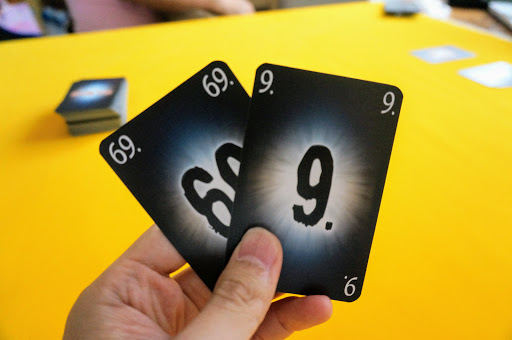
ゲーム紹介『ザ・マインド (The Mind)』
『ザ・マインド』は、1~100までの数字カードを各自持ちそれらを出し切ることを目指す協力ゲームです。ただし、出すカードは小さい順である必要があり、お互いに相談をすることができません。はじめしゃちょーの畑でも紹介されました。 ドイツ年間ゲーム
nicobodo.com— Recommended: families including young children / Not ideal: quiet contemplative sessions
Every pair of round cards shares exactly one matching symbol — that's the whole mechanic. Anyone is instantly in the game; age gaps close themselves. For family game nights, Dobble is the reliable fallback.
Standard product labeling puts it at 2–8 players, about 10–15 minutes, ages 6+. Street pricing sometimes dips below ¥1,000 (~$7 USD), which keeps the entry cost low. The energy peaks with 4–6 players — everyone calling out at the same time, voices overlapping. The flip side: if someone prefers to think slowly or doesn't enjoy competing on raw reaction speed, this one won't land.
- Nanda Nanda (Namiji / Noch mal!)
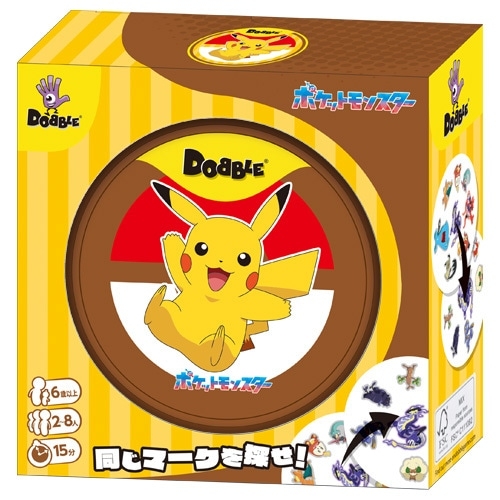
ドブル ポケットモンスター |【公式】ポケモンセンターオンライン
ドブル ポケットモンスターをご紹介。ポケモンセンターオンラインではポケモンセンターオリジナルグッズや最新ゲームソフト、ポケモンカードゲームなど、オフィシャルショップならではの最新情報をお届けします。
www.pokemoncenter-online.com— Recommended: mixed kids and adults / Not ideal: serious strategy tables
Nanda Nanda (Nanjamonja) works like this: you name each bizarre character as it appears, then shout the name when it shows up again. Less about learning a win condition and more about the laughs that come from bad naming decisions and foggy memories — the gap between kids and adults nearly disappears.
Beginners tend to click with it because there's genuinely nothing to memorize about strategy. The person who invents the funniest name steers the room's energy, and the inevitable memory errors keep generating fresh moments. It's at its best with 4–6 people in a lively mood. Competitive players looking for strategic depth will find it too light — but as an icebreaker, it's hard to beat.
- Haa tte Iu Game (The Expression Amigos)
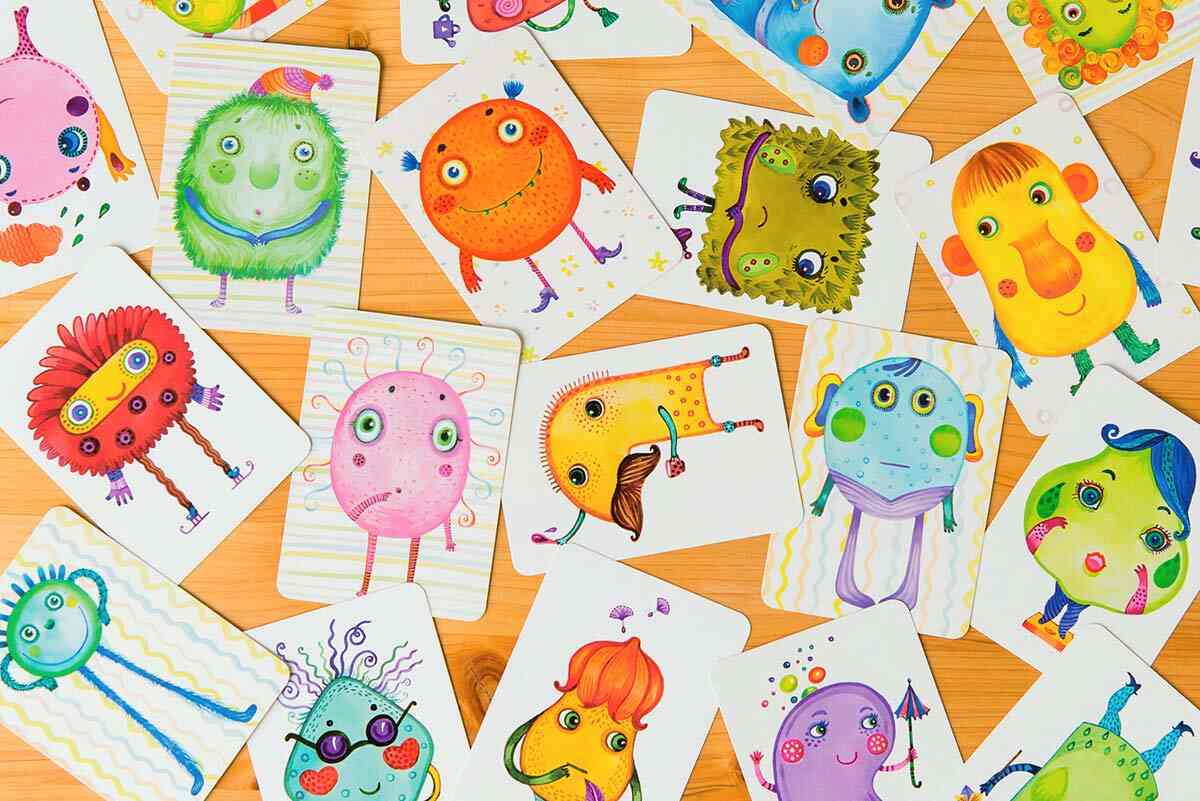
ナンジャモンジャ・シロ&ミドリ | すごろくやのボードゲーム
すごろくやのボードゲーム『ナンジャモンジャ・シロ&ミドリ』の紹介
sugorokuya.jp— Recommended: parties / first meetings / Not ideal: shy or reserved groups
The premise: say the same word in different emotional tones and guess what the others meant. The rules are nearly nothing, and the entry feels less like "acting" and more like "just try it." That low bar makes it surprisingly effective with strangers.
What makes it work is that personality beats skill. Whether you're emotionally expressive or deadpan, that becomes your contribution to the game. It's especially effective as an icebreaker when the social temperature is still cool. Four to six players works well — everyone gets their moment in the spotlight. Tables with a lot of reserved people may see hands stop moving, and it's a different direction entirely from contemplative thinking games.
- Skull

『はぁって言うゲーム』特設ページ | 幻冬舎
『はぁって言うゲーム』の特設ページです
www.gentosha.co.jp— Recommended: bluffing enthusiasts / Not ideal: people who don't enjoy being read
Don't let the minimal rulebook fool you — Skull packs a surprising density of psychological tension. You're deciding whether to stack flowers (safe) or a skull (dangerous) in your own pile, then bidding on how many cards you can flip without hitting a skull. The explanation is short; the atmosphere change at the table is immediate.
Three to six players, but the balance of information and momentum is sharpest at 4–5. Price comparison sites have shown it available from around ¥2,280 (~$15 USD), which is reasonable for a compact game. For players who enjoy reading people, this is a standout. The caveat: if someone really doesn't like being watched or having their tells analyzed, the tension becomes stress rather than fun.
- Coyote
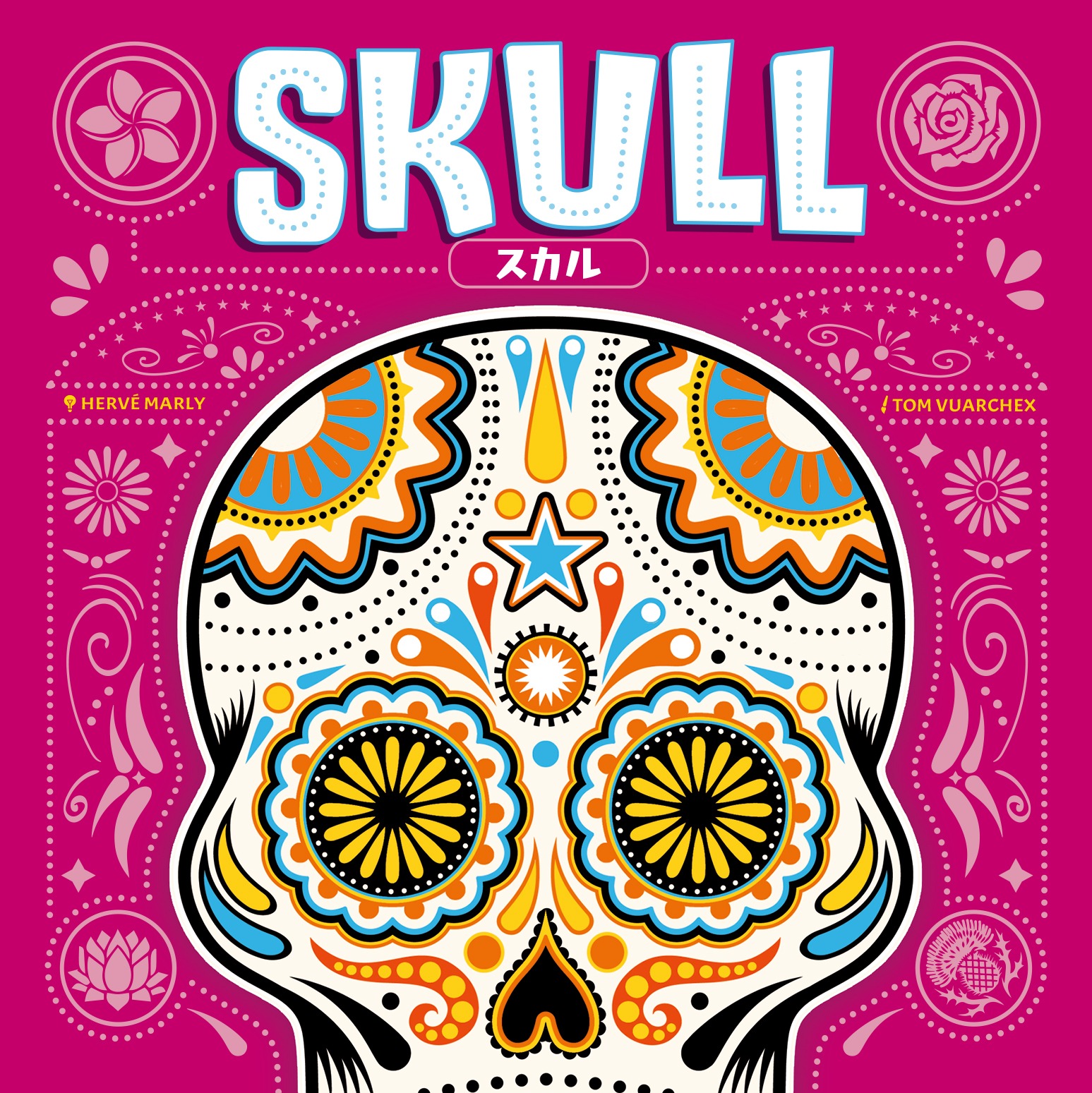
スカル | ANALOG GAME INDEX
傑作ブラフゲーム、待望の日本語版登場!シンプルなルールながら奥深い、度胸と駆け引きの華麗なる遊戯
hobbyjapan.games— Recommended: large groups / first-meeting tables / Not ideal: people who struggle with numbers
You can't see your own number. Everyone else's is visible. You bid on the total. The mix of genuine probability estimation and pure bluster is what makes the conversation at a Coyote table so good. The 2–10 player range means you can almost always set this game up no matter who shows.
New Games Order's sales page lists it as 2–10 players, roughly 15–30 minutes, ages 10+. Amazon pricing examples sometimes come in around ¥1,000 (~$7 USD) or below, which is excellent value for a large-group game. The sweet spot is 5–8 players — everyone reacts to every bid, and the "you're really going with that number?" energy fills the room. Technically weak with anyone who has strong number anxiety, but played as a read-the-table game rather than a math exercise, it's one of the most accessible options here.
- Hannin wa Odoru (The Culprit is Dancing)
Coyote Coyote
プレイ人数: 2-10人 対象年齢: 10歳以上 プレイ時間: 15-30分 作者:Spartaco Albertarelli 画:TANSANFABRIK
よくあるご質問 Q. プレイヤーの持っている最大の数|https://lh3.googleusercontent.com/sitesv/APaQ0STmEh6NTTcjWXePesTtKs6TTFB2ueM1qhSbxWQQ8JrjXpgDk-vYqQAudpe7hmO-QWTM9B1B_NF-8pTAY2VzSu117hbZSfXH2nhTcT0lZay0g1xrj4wWyS--IGrc2LELDWegDI3I4DDKzW-QD37le5DAj9pmC74Gm4Y=w16383}}
— Recommended: talkative, social tables / Not ideal: quiet, reserved groups
The culprit card keeps moving between hands via card effects, which means the situation changes constantly. You're not just trying to catch the criminal — the whole board state reshuffles every few cards. Short games mean a blunder doesn't linger.
What makes this beginner-friendly is the easy entry into hidden-role fun. It's much lighter than social deduction games like Werewolf, rounds fly by, and the finger-pointing and table talk hit a natural comic rhythm with 4–6 players. Pull this out at a quiet table and a lot of its charm stays dormant.
- Geister (Ghosts!)
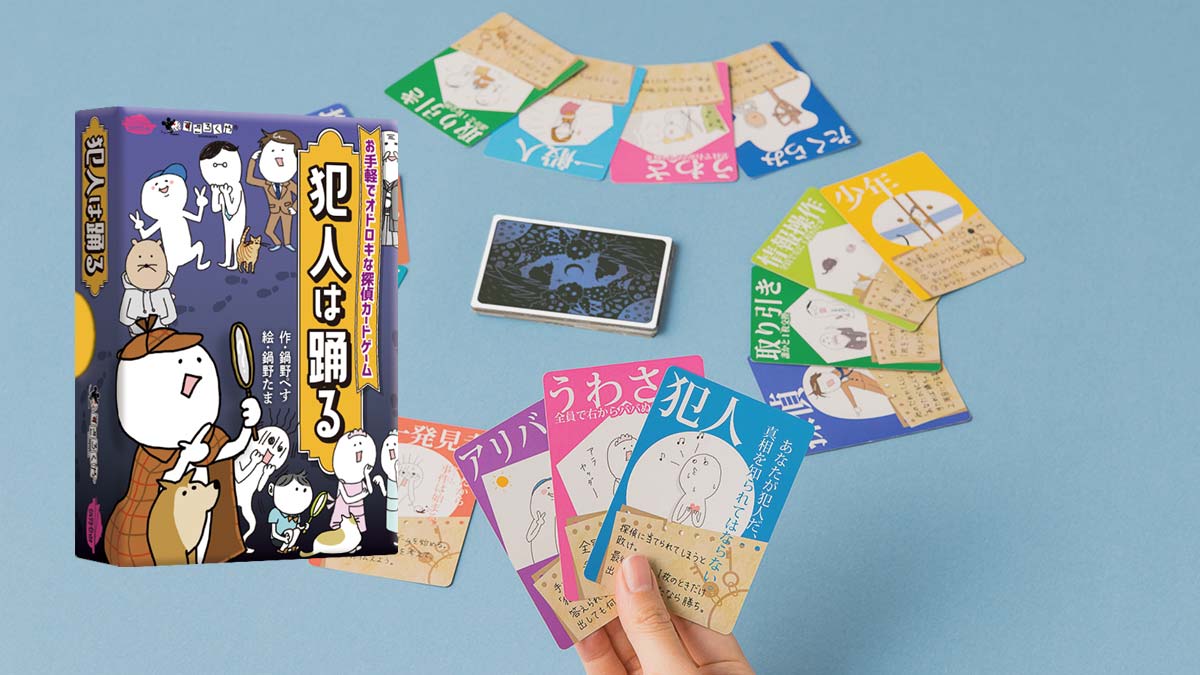
犯人は踊る | すごろくやのボードゲーム
すごろくやのボードゲーム『犯人は踊る』の紹介
sugorokuya.jp— Recommended: couples / two-player sessions / Not ideal: large groups
If you need a two-player game, Geister deserves serious consideration. It looks like a simple piece-movement game on the surface, but guessing which of your opponent's ghosts are good and which are dangerous adds a bluffing layer that keeps it from feeling as heavy as chess or shogi.
Sessions tend to run 10–20 minutes, which naturally leads to "one more?" Couples and parent-child pairs find the format particularly satisfying, and the rules are clear enough that board game newcomers can see the logic quickly. The trade-off is self-evident: bring six people and it has nowhere to go.
- Quarto
ガイスター
www.mobius-games.co.jp— Recommended: players who want quiet mental challenge / Not ideal: party-atmosphere tables
Quarto's twist: you don't choose which piece to place — your opponent hands it to you. Match four pieces with a common attribute (color, height, shape, or hollow vs. solid) to win. That one rule change turns what could be a simple four-in-a-row game into a completely different kind of tension.
Two players only, best suited for a session where you want to think quietly. The rules take about 30 seconds to explain, but there's plenty to wrestle with, making it ideal for beginners who want a 2-player game that doesn't feel trivial. It goes quiet in social settings where reactions and banter are the energy source.
- Sushi Go!
### — Recommended: fast, casual groups / Not ideal: players seeking deep strategic reads
With 3–4 players, the card rotation feels natural and the urgency of grabbing what you need before it cycles around comes through well. The game wraps quickly, the artwork is inviting, and it's easy to recommend to people who usually stiffen up at rulebooks. The Replayability is real but light — don't expect the depth of a heavy strategy title.
- Hanabi

<Gigamic> クアルト | 『ゲームマーケット』公式サイト | 国内最大規模のアナログゲーム・ テーブルゲーム・ボードゲーム イベント
<Gigamic> クアルト | 国内最大規模のアナログゲームイベント『ゲームマーケット』公式サイトです。
gamemarket.jp— Recommended: quiet collaborative strategy / Not ideal: chatter-first tables
Hanabi imposes one unusual constraint: you can see everyone's cards except your own. Players exchange limited hints to guide each other toward launching fireworks in the right order. Among Co-op games, this one leans furthest into deliberate, careful thinking.
Hobby Japan's product information lists it as 2–5 players, roughly 25–30 minutes, ages 8+. The information density is balanced best at 3–4 players — enough context to make interesting deductions without it becoming overwhelming. Players who don't enjoy head-to-head competition find it approachable; players who want noise and chaos probably won't. For beginners, it's a solid introduction to the pleasure of solving something together.
- Dixit

HANABIE.
HANABIE. OFFICIAL WEBSITE
hanabie.jp— Recommended: families / creative conversation tables / Not ideal: players expecting logical deduction
Dixit asks you to attach a single-word or phrase clue to a dreamlike illustrated card, then figure out which card the storyteller meant. The fun lives in the gaps between what you meant and what others understood. The mismatch is the game — which is why age and experience gaps barely matter.
Hobby Japan lists it as 3–6 players, roughly 30 minutes, ages 8+. Four to six players is the ideal range — more varied guesses, more moments where the room splits on an answer. It's not a logic game; it's about sharing intuition and imagination. That makes it well-suited for family gatherings and relaxed social settings. Players looking for tight competitive tension may find it too loose.
- Codenames

ディクシット | ANALOG GAME INDEX
絵と物語がゲームになったコミュニケーションゲーム。数々のゲーム賞で受賞&ノミネート。
hobbyjapan.games— Recommended: larger mixed groups including first-timers / Not ideal: groups of 3 or fewer
A team word-association game where the Spymaster gives a one-word clue plus a number, and teammates try to identify the matching cards on the grid. The rules click fast and the action is readable even to spectators, which makes it surprisingly easy to manage with large groups.
The Japanese edition can technically be played with 2, but the game only reveals its character with 4 or more. Even-numbered groups of 4, 6, or 8 split into teams naturally, and conversation becomes the connective tissue even among strangers. Note: the Japanese edition's age recommendation is listed as 14+ in distribution information, which is higher than the rough benchmark for some other games here.
- Splendor

【全てわかる】ブラウザ版『コードネームオンライン』のルール・設定を徹底解説 | ぼくボド
このご時世で、オンライン飲み会をするようになりました。その合間によく遊ぶのが『コードネームオンライン』。登録不要&簡単でみんながスムーズに参加できるので、すごく重宝しています! そこで今回は、『コードネームオンライン(CODENAMES O
boku-boardgame.net— Recommended: beginners who want the "engine coming online" feeling / Not ideal: players who want direct conflict
When you want to feel like you actually played something in about 30 minutes, Splendor delivers consistently. Collect gem chips, buy cards, let those cards make future purchases cheaper — the engine-building loop is elegant and completely transparent.
Two to four players, roughly 30 minutes, ages 10+. Amazon listing examples on price comparison sites have shown around ¥4,973 (~$33 USD). The rules click within one turn, and by mid-game the "if I take this now, the next move gets easier" logic starts feeling natural on its own. With 3–4 players, the competition for cards and noble tiles generates just enough pressure to prevent the game from feeling like a solo puzzle. Direct attacks don't exist here, so players who want combat-style confrontation may find it too gentle.
- Quest for El Dorado
### — Recommended: players ready for the "buy or advance?" deck-building decision / Not ideal: ultra-short-session seekers
- Carcassonne
宝石の煌き 2024年新版 / Splendor - ボードゲーム&アロマ LITTLE FOREST online shop
発売10周年を記念してアートワークが一新された『宝石の煌き 2024年新版』 このゲームでは、プレイヤーは工芸
littleforest.shop— Recommended: players who enjoy the quiet satisfaction of building something / Not ideal: negotiation-seekers
Carcassonne is the classic tile-laying game where you connect landscapes, claim roads, cities, and fields, and score as they complete. The map grows with every tile placed, which makes the table visually engaging even for people who aren't actively thinking.
Mobius Games' product information lists it as 2–5 players, roughly 30–45 minutes, ages 7+. Reference pricing in Japanese distribution starts around ¥3,200 (~$21 USD). The rules reduce to two actions — place a tile, optionally place a meeple — which stays manageable for family tables. Two to four players tends to produce the best rhythm and the clearest sense of tactical placement. It's not a negotiation or conversation game, so it suits people who want to enjoy building the board rather than driving discussion.
- Ticket to Ride: First Journey

カルカソンヌ日本選手権
2023年7月22日にカルカソンヌ日本選手権を開催いたします。 日本選手権優勝者は10月にドイツのエッセンシュピール内で行われる世界大会への出場権が得られます。 また、出場する場合には渡航補助金15万円が贈られます。
carcassonne.jp— Recommended: families discovering the satisfaction of "connecting the route" / Not ideal: players expecting heavy strategic reads
Ticket to Ride: First Journey is the streamlined, kid-accessible version of the acclaimed Ticket to Ride series. You collect colored cards and claim train routes to connect destinations — the objective is transparent enough that elementary-age children can follow along without getting lost.
Product examples list 2–4 players, roughly 15–30 minutes, ages 6+. Playing with 3–4 people produces healthy competition for key routes. The rule load is lighter than the standard version, and completing your own route network pays off in a satisfying way within a much shorter window. Experienced players may find it breezy, but as a family-friendly introduction, the format holds together well.
- Catan
### — Recommended: 3–4 players who enjoy conversation and negotiation / Not ideal: quiet solo-focused tables, complete beginners sensitive to 60+ minutes
Japanese distribution pages list 3–4 players, roughly 60 minutes, with a variant for 2. Amazon pricing examples on price comparison sites show around ¥2,582 (~$17 USD), and GP's product page promotes over 20 million copies sold worldwide. The first session requires explaining resources, production, construction, trading, and the robber — a noticeably heavier start than the light games above. That said, for four players willing to lean into the conversation, it remains a strong choice.
💡 Tip
Looking at these 20 games by ease of introduction: Love Letter, Blokus, or Dobble as the opener tends to land reliably, with Splendor, Carcassonne, or Quest for El Dorado as a strong second game for the evening. For larger groups, Coyote or Codenames fits well; for a two-player session, Geister or Quarto are clean fits.
Ticket to Ride(チケット トゥ ライド)攻略
iphoneac.comChoosing by Player Count: 2 / 3–4 / 5+
Best at 2: Geister / Quarto / Sushi Go!
When you know it's going to be two players, there's no point shoehorning a four-player classic into a smaller format. Go for games designed from the ground up to work with two. For a weeknight where the window is short but you still want real decision-making, Geister and Quarto deliver.
Geister is the two-player dedicated option — modest rules overhead, but every turn involves reading what your opponent is trying to do. Rounds stay short enough that you walk away feeling like you played a full match, not just a preview. It doesn't have the weight of chess, but it's far from a coin flip. It's the standard recommendation when two people want to actually face off.
Quarto has the same two-player affinity. The wrinkle is that you hand your opponent the piece they must place next — which means every turn is about what you're forcing as much as what you're building. Visually abstract, but internally it reads like a psychological game that works in silence. Particularly satisfying for pairs who enjoy thinking without needing to fill every moment with conversation. Because the whole board is always visible, even losing tends to feel logical rather than arbitrary.
For something lighter — after dinner, before anyone commits to deep thought — Sushi Go! fills the slot well. It plays 2–8 players in roughly 20 minutes, ages 8+, and the drafting mechanic is gentle enough to pick up from zero. The two-player version lacks the chaotic read-stealing of a full table, but "charming visuals, fast turns, quick reset" is a reliable combination. Think of it as: Geister and Quarto for focused heads-down play, Sushi Go! when you want something that moves quickly and stays light.
At 3–4: Splendor / Quest for El Dorado / Carcassonne / Love Letter
Three to four players is the richest bracket for beginner-friendly games. Competition and conversation both calibrate naturally, and starting with a 30-minute classic is the lowest-risk entry. Our own game nights consistently see high satisfaction from Splendor and Quest for El Dorado at four players.
Splendor's 2–4 players, roughly 30 minutes, ages 10+ format is just easy to handle. The gameplay loop doesn't stall, and within a few turns the goal becomes clear. At 3–4, competition for cards and nobles appears organically — it stops being a solo puzzle without tipping into antagonism. It accommodates methodical players alongside faster, more instinct-driven ones without breaking down.
Quest for El Dorado (2–4 players, 45–60 minutes, ages 10+) earns its place when you want a notch more engagement. The deck-building plus racing combination sounds complex, but the card effects stay readable as you learn them. Three to four players creates route traffic and buying competition, which is where the "build my own engine while racing to the finish" duality actually comes to life. It's the right next step after you've cleared the 30-minute tier.
Carcassonne has a "building together" quality that makes 3–4 the sweet spot. Within the 2–5 players, roughly 30–45 minutes, ages 7+ spec, it plays well with families, and the map growing on the table gives the session a visual life. There's strategic interaction, but it doesn't demand bluffing or negotiation skills, so the tone stays calm without going completely silent.
Love Letter is the opener for 3–4 person sessions. Two to four players, 5–10 minutes, ages 10+ — sit down and start immediately. The deduction works from a minimal hand, and a single card effect can flip a round. If the main event is Splendor or Carcassonne, warming up with Love Letter first makes the heavier game land better. One short opener before a mid-length game reliably settles the table's energy.
ℹ️ Note
When you're stuck at 3–4 players: Love Letter for a safe first read, Splendor as the classic 30-minute pick, Quest for El Dorado when you want more substance, Carcassonne for family-mixed groups. That four-way split covers most situations.
At 5+: Coyote / Codenames / Hannin wa Odoru / Dobble / Dixit
Beyond five players, low downtime and everyone having a voice matters more than strategic depth. Scaling small-group classics to five-plus usually produces boredom faster than fun — lean into party-oriented designs and you'll hit far more often.
Coyote is the standard-bearer here. Two to ten players, roughly 15–30 minutes, ages 10+ — pure number bluffing, and the fact that you can't see your own number tends to generate laughs from the moment you explain it. Nobody gets to sit back and watch; everyone is always part of the active decision. At five or more, there's no sense of anyone running away with the game while others watch.
Codenames scales upward beautifully. Technically playable at 2, but the atmosphere genuinely transforms at 4+, especially 5+. Roughly 15 minutes, ages 14+, and the whole mechanic is "one word, one number." The brevity of the rules versus the richness of the team discussion is the appeal. It handles first-timers well because thinking out loud is part of the game — no one ends up silent and uncomfortable.
Dobble is nearly a guaranteed icebreaker at five or more. Two to eight players, roughly 10–15 minutes, ages 6+ — finding matching symbols is so immediately accessible that children and adults compete on even footing, and within 30 seconds everyone understands who's winning. It doesn't offer deep strategy, but very few games can spike a room's energy that fast.
Dixit also has its best moments around five. At its core it's 3–6 players, roughly 30 minutes, ages 8+ — clue-giving and illustration-reading rather than combat. People's personalities surface, and the game rarely feels aggressive. When the group skews toward wordplay and imagination, it leaves more of a memory than a standard party game.
Hannin wa Odoru works well at large counts too, but when you're choosing for 5+, Coyote for bluffing, Codenames for team play, Dobble for reflexes, Dixit for creative expression is a cleaner way to pick. Anchor on the type of fun first and the game selection becomes obvious.
Coyote Coyote
プレイ人数: 2-10人 対象年齢: 10歳以上 プレイ時間: 15-30分 作者:Spartaco Albertarelli 画:TANSANFABRIK
よくあるご質問 Q. プレイヤーの持っている最大の数|https://lh3.googleusercontent.com/sitesv/APaQ0STmEh6NTTcjWXePesTtKs6TTFB2ueM1qhSbxWQQ8JrjXpgDk-vYqQAudpe7hmO-QWTM9B1B_NF-8pTAY2VzSu117hbZSfXH2nhTcT0lZay0g1xrj4wWyS--IGrc2LELDWegDI3I4DDKzW-QD37le5DAj9pmC74Gm4Y=w16383}}
Choosing by Session Length: 10–20 min / ~30 min / ~60 min
Session length is the most reliable filter for beginner board game selection. More than rule complexity or theme fit, deciding how long you want people to stay focused has the biggest impact on first-impression satisfaction. From our own experience, under 30 minutes is the comfortable zone for a first session — once you approach 60 minutes, "fun but a little long" starts showing up. When beginners are in the mix, two games in the 10–20 minute range, followed by one 30-minute game is a natural sequence — the table warms up before the main event.
10–20 Minutes (Icebreakers): Love Letter / The Mind / Sushi Go! / Dobble / Hannin wa Odoru
The job of this time slot isn't winning — it's loosening the table and establishing that playing together feels comfortable. Start with a long explanation or a high-stakes first turn and people tighten up. Short games in this range are best thought of as "getting used to this group" time rather than competition.
Love Letter fits this role cleanly. Two to four players, 5–10 minutes, ages 10+ — short, but the deduction tension is real. One card drawn, one played, and you're already trying to read everyone else's hand. "Light and still board-gamey" is hard to pull off, and Love Letter manages it consistently for small groups opening a session.
The Mind is a Co-op option at 2–4 players, roughly 20 minutes, ages 8+. Playing numbered cards in silence without consulting each other is a genuinely strange experience, but the rules take seconds to absorb. Even strangers start generating "that was the right moment" / "too early" banter naturally — which makes it more versatile than it first appears. When you want group cohesion more than competition, this is the pick.
Sushi Go! runs 2–8 players, roughly 20 minutes, ages 8+. The drafting mechanic gives a gentle introduction to card selection strategy, and the visual design makes the card roles easy to parse. Within the short-session tier, it has the most "what do I actually want?" decision space — not just reflex play. It carries enough of the 30-minute tier's judgment quality to work as a bridge between them.
Dobble is 2–8 players, roughly 10–15 minutes, ages 6+. Easier to demo than explain — just play a round. Kids mix in without slowing anything down, and the room temperature rises within a few turns. The value is universal access on the same level, not strategic depth.
Hannin wa Odoru runs short, keeps everyone shifting roles as the culprit card moves hands, and generates suspicion and laughter simultaneously. It's lighter than full social deduction games, heavier than pure luck, and comfortable in the casual/social end of this bracket.
For quick reference in this tier: Love Letter = small-group tension, The Mind = Co-op synchrony, Sushi Go! = light strategy, Dobble = reflex energy, Hannin wa Odoru = social suspicion.
~30 Minutes (Core Beginner Territory): Splendor / Quest for El Dorado / Carcassonne / Dixit / Blokus
This is where beginner satisfaction is most consistent. More "played a real game" feeling than the short tier, without the concentration drop-off that longer games risk. If you're placing the main game of the evening, this range is your home base.
Splendor: 2–4 players, roughly 30 minutes, ages 10+. Chip collection into card purchasing into stronger future turns — the loop is clean and the goal is immediately visible. One session usually produces "next time I want to try building a different color combination." The balance between pace and meaningful decisions is why it keeps getting recommended.
Quest for El Dorado has an official play time of 45–60 minutes, so it's technically longer than this header. But the cognitive load is lighter than you'd expect — it fits as a mid-weight entry point and works well for groups that have already done one quick game and want a step up. The deck-building interest without the complexity wall is exactly where its accessibility lives. It pairs well with this bracket's rhythm even if it runs a bit longer.
Carcassonne: 2–5 players, roughly 30–45 minutes, ages 7+. Placing tiles and connecting landscapes is intuitively physical — the map building in front of you is something you can feel, not just score. Scoring involves some concepts to absorb, but the game teaches them as it moves. Family-mixed tables don't break down. The tone lands between animated and quiet — social without demanding conversation.
Dixit: 3–6 players, roughly 30 minutes, ages 8+. Difficulty level matters less than who your group is — the members' imagination and associations are the content. Heavy strategy players step back, low-experience players step forward, and the table levels itself. For groups where you need to bring everyone in, the 30-minute framing helps keep it from feeling like a commitment.
Blokus: 2–4 players, roughly 15–20 minutes, ages 7+ — technically faster than this header, but its strength as a first center game puts it here. Rules read visually, and the natural squeeze of the late game generates its own satisfying difficulty without external pressure. It's not a conversation game, but everyone finding the same constraints challenging is its own form of shared experience.
In this tier: Splendor is the safe default, Carcassonne for the expanding map experience, Dixit for imaginative conversation, Quest for El Dorado when you want a notch more strategy, Blokus for the most visual and direct explanation.
~60 Minutes (Go Deep): Catan
Once you're at 60 minutes, the question is no longer just "is it fun?" — it's "does this group enjoy negotiating? can they stay with it?" This is the ceiling of what we'd recommend to complete beginners, and the warning flag we mentioned earlier applies. The payoff when it lands, though, is substantial.
Catan is the archetype. Three to four players, roughly 60 minutes, ages 8+: collect resources, build roads and settlements, develop your position through trading. Twenty million copies sold worldwide, and the negotiation-resource management-shifting alliances combination still holds up. Every turn can change because of someone else's dice roll or trade offer — the social layer is genuinely central.
The caveat for beginners: it's not a "read the rules and start running" game. Understanding resource value and opening placement takes some turns to develop. Our experience is that running Love Letter and Dobble to warm up, then doing one 30-minute game like Splendor before Catan, means the length never becomes a burden. For a group that specifically wants to commit to something deep from the start, Catan is still a top-tier option in the 60-minute bracket.
⚠️ Warning
For mixed-experience tables, two games in the 10–20 minute range, then one 30-minute game is the most stable structure. Save Catan for the "we still have energy and want more" moment at the end. Build up to the 60-minute game rather than leading with it.
カタン スタンダード版
www.gp-inc.jpChoosing by Genre: What Kind of Fun Are You After?
Working backward from preference is often the fastest path. Board games in the same "beginner-friendly" bucket can feel completely different depending on whether you enjoy reading people, solving a puzzle together, or building something on the board. When someone says they love psychological tension, Skull and Coyote hit at a very high rate. When they'd rather think with their hands than their mouth, Blokus tends to satisfy more reliably.
Bluffing and Psychological Play: Skull / Coyote / Geister
The appeal here is finding the gap between what people say and what they mean. It's less about calculating lines and more about reading the room. Even complete beginners find the format accessible, because the energy of the table carries the experience more than rule mastery does.
Skull is the purest form of psychological play in this list. Every decision is whether to trust your read of another player's confidence. The information is minimal — which means player personality bleeds into the gameplay faster than almost any other game here. When you want to show someone new what "this is what board game tension means," Skull says it in under 20 minutes.
Coyote adds conversational momentum to bluffing. Because you're estimating a total from incomplete information, you end up mixing actual logic with pure bluster — and neither is cleanly separable. The 2–10 player range makes it reliable for large-group psychological play entry, and the inevitably ridiculous bids generate natural laughter. Unlike Skull's silent stares, Coyote gets loud.
Geister takes the psychological reading off the table and puts it onto a board. You're moving pieces whose identity you're trying to hide while figuring out your opponent's. It's the bluffing type for players who'd rather manipulate through positioning and movement than through words and expressions. Quieter than Skull or Coyote, but no less tense.
Cooperative Play: The Mind / Hanabi
Co-op games let everyone pull in the same direction. Rather than winning against each other, the satisfaction lives in that moment when everything clicks for the whole table at once. Great for players who don't enjoy competition, or for softening the opening energy of a session.
The Mind leads with the feeling of telepathy. You're releasing numbered cards in ascending order, relying purely on timing and instinct rather than communication. The rules take almost no time; the impact of the experience is outsized. "How did you know it was time?" — that moment happens early and reliably. As Co-op games go, it's unusual, but it tends to leave a strong impression on first-timers.
Hanabi mixes cooperation with deduction. You can't see your own hand; the information you receive comes filtered through other players' limited hints. This pushes it closer to logic-based cooperation than The Mind's intuitive play. When it comes together, the payoff is deeply satisfying. For players who enjoy working with constraints and reasoning through them, Hanabi lands better than The Mind.
Puzzle and Abstract: Blokus / Quarto
Abstract games are about the elegance of rules and the readability of the board, not theme or narrative. Little to no luck, minimal text effects — the satisfaction comes from solving the spatial or logical problem in front of you. These are games for people who enjoy finding the right move more than building a story.
Blokus is the accessible entry here. Corner-to-corner tile placement, and the game reads itself from a single glance at the board. The late game tightens naturally — when to place a big piece, how long to hold small ones — without any of that difficulty needing to be explained. Low conversation, high visual engagement, age-range flexible.
Quarto is a thinking game built on four-attribute piece placement, where the wrinkle is that your opponent hands you the piece you must place. This single rule shift — deciding what to force on your opponent while protecting your own options — turns a simple grid game into a genuine logic puzzle about conditions and constraints. If Blokus is "expanding placement," Quarto is "reading the sequence."
Engine Building: Splendor
Engine building means your production and efficiency grow with each turn. The small choices in the early game unlock larger possibilities in the mid-game — the "engine coming online" feeling is what this genre is about. Among beginner-friendly options, it has unusually good balance between depth and clarity.
Splendor is the representative example. Gems become cards, cards make purchases cheaper, efficiency compounds — the game keeps doing more of the same thing but with growing impact. The rules are tight, yet which color to develop, whether to claim this card now creates real personal expression. A session almost always ends with "I want to try a completely different build next time." Direct conflict is minimal, which means it's best for players who prefer developing their own strategy to direct disruption.
Deck Building Intro: Quest for El Dorado
Deck building means you buy new cards during the game and build up your own shuffled draw pile. You start with weak cards, but purchases stack up and your options expand over the course of the game. The concept sounds technical, but Quest for El Dorado makes it accessible enough that first-timers regularly succeed with it.
The game pairs card-strengthening with an intuitive map-racing objective. Getting through jungle and water terrain requires the right cards, so what you buy clearly maps to where you can go — the board shows your progress in real time. More immediately purposeful than pure deck-builders, and the card effects stay manageable. For someone who wants a strategic game now and room to grow toward heavier titles later, this is the right bridge.
エルドラドを探して 新版 完全日本語版 - ArclightGames Official
ご購入はコチラから! ゲームデザイナー:Reiner Knizia タイトル原題:The Quest for
arclightgames.jpDeduction and Hidden Roles: Love Letter / Hannin wa Odoru
Deduction games reward reading public information and drawing conclusions about what people are hiding. Hidden role games add another layer — you're managing your own secret while trying to expose others. The satisfaction sits in information, not expression, which distinguishes this genre from pure bluffing.
Love Letter delivers that deduction satisfaction in 5–10 minutes. With so few cards in play, tracking who might hold what is genuinely tractable, and a single card effect can reverse the round. The low stakes mean a miss doesn't sting — and for players who click with it, rematches start immediately. The clean logic of deduction from minimal information makes it one of the strongest genre introductions here.
Hannin wa Odoru keeps the situation unstable by moving the culprit card between hands as effects trigger. You're reading the current state and watching it change, which means yesterday's confident conclusion may not survive the next two cards. Where Love Letter is "close the case," this game is the room suspecting each other continuously. It sits between full-on social deduction and simple guessing, which makes it a natural fit for casual groups who want suspicion without weight.
Word and Communication: Codenames / Dixit / Haa tte Iu Game
Language and association games derive their entertainment from how people's sense-making aligns or diverges. Experience gaps matter less here, which makes them ideal for first-meeting groups or tables where people want to play but don't want to learn systems.
Codenames centers on connecting multiple words with a single clue word. Simple rules, enormous variation in how people play them — the mismatches between what the Spymaster meant and what the team heard is where the laughs live. Team structure creates natural discussion and reaction, making conversation the game's engine. Works particularly well for people who enjoy wordplay or want the social side of gaming to carry things.
Dixit is about chasing the right level of ambiguity in a clue. Too obvious and you lose; too obscure and you lose. Finding the hint that lands for some of the table but not all of it is the puzzle. What stays in people's memories isn't the final score but "I can't believe you read that image that way." Suits groups who prefer nuance and atmosphere over precision.
Haa tte Iu Game generates laughs through how people differentiate the same line emotionally. Personality and physicality beat vocabulary — which means newcomers walk in on equal footing. It's lighter than Codenames or Dixit, fitting more naturally in the icebreaker slot within word games.
Set Collection and Drafting: Sushi Go! / Ticket to Ride: First Journey
Set collection means gathering matching groups or combinations for points. Drafting is the mechanism for getting there — pick one card for yourself, pass the rest. The appeal is collecting what you want while watching what your neighbor takes.
Sushi Go! is the cleanest entry point for this genre. Card roles map directly onto their illustrations, and scoring is direct enough that drafting logic clicks without explanation. Adjusting your strategy based on what comes around is the heart of it — a light strategic layer without the cognitive overhead of a heavy game. It works as a first light strategy experience for players who want decisions without complexity.
Ticket to Ride: First Journey is the entry-level version of the series, bringing the satisfying set-collection feel of gathering colored cards plus the visual satisfaction of a growing route network on the map. More streamlined than the standard game, with shorter sessions and cleaner objectives. Sushi Go! is card-speed and agility; First Journey is watching your progress accumulate on the board, which suits families or groups that want tangible, visible results from their play.
For more structured guidance on purchasing decisions, the beginner board game buying guide (ref:) organizes this further.

Play Sushi Go! online from your browser
Play Sushi Go! online from your browser with the whole world!
en.boardgamearena.comFrequently Asked Questions
Q1. How long should the first game be?
10–20 minutes is the safest zone for a first game. Too short and it can feel insubstantial, but the thing to avoid most on a first session is "rules exhaustion before the fun starts." Our experience is that sessions in this length range warm up the table most consistently.
In practice: Love Letter at 5–10 minutes is purpose-built for "establish the atmosphere first," Blokus at roughly 15–20 minutes keeps the board readable while providing real decisions. Splendor at around 30 minutes is accessible but benefits from being saved as game two when the group is entirely new. Catan at roughly 60 minutes is a proven classic, but it's a heavy first game.
Q2. Luck-heavy or skill-heavy — which is better for beginners?
A moderate dose of luck tends to make entry easier. Luck here means draw outcomes and dice results affecting the flow; skill means reads and accumulated decisions driving results.
With a new group of beginners, a skill-dominant game risks creating obvious skill gaps early — one person visibly runs ahead while others feel lost. Love Letter, where card draws and reads mix, is forgiving in that way: losses don't linger and rematches happen naturally. Blokus and Splendor lean toward decision-making over luck, which produces a stronger "board game feel" but can go quiet when the group has people who don't want to think hard.
"Beginner-friendly" doesn't mean pure luck. The optimal profile is a little luck, short rounds — that combination raises first-session success rates without removing meaningful decisions.
Q3. Can 7–10-year-olds and adults play together?
Yes — and at that age range, whether the rules are visually trackable is the main variable.
Blokus is the benchmark at age 7+. Two to four players, roughly 15–20 minutes, and the piece placement reads visually from the board without text-heavy explanations. Adults engage seriously without the game dumbing down. Dobble at 6+ also mixes parent and child well, but the reflex competition skews results by reaction speed — Blokus is more stable if you want deliberate play across generations.
From age 8+, Co-op games like The Mind and Hanabi enter the picture. Cooperative formats are naturally lower-pressure for mixed-age groups — winning and losing is shared, so nobody is singled out. Around age 10, Splendor and Love Letter become realistic. Games where progress reads visually consistently outperform text-heavy mechanics for multigenerational tables.
Q4. Are there genuinely good two-player options?
Yes, and honestly low downtime and consistent pace can make two-player games easier for newcomers than larger tables.
For clarity of experience, Blokus holds up cleanly at two — your opponent's moves directly shape your options in real time. Love Letter works well for quick reads in 5–10 minutes per round. If you want more weight, Splendor at two players has sharper competitive reads as the game scales down — you always know exactly what your opponent is chasing.
Coyote and Codenames can technically be played at two, but they're built for social dynamics that don't fully activate in a head-to-head. For two players, games where the board is highly readable, or where quick rematches are natural, tend to outperform.
Q5. Can I run the rules explanation if I'm not confident explaining things?
Yes. The less comfortable you are explaining, the more it pays to start with games that have fewer rules. The difficulty of a rules explanation comes more from what you lead with than from how much there is to say — and the right game selection handles most of the load.
ℹ️ Note
If you're nervous about the explanation, Blokus and Love Letter both start in under two minutes of setup. "What are we trying to do" reads immediately from the board or hand, and the first turn demonstrates the rest.
The pattern that works: start with the goal, then what you do on your turn, then what you can't do. Blokus: "Place as many pieces as you can." "On your turn, place one piece." "Your own color's edges can't touch — corners only." That's the game. Love Letter: "Draw one card, play one card." "Use the card's effect." "Eliminate opponents or survive to the last round." That's enough to start. Detailed rules fill in as questions arise mid-play.
For more on running explanations, the guide on Rules explanation tips for board games covers the structure in detail. For first-time board game café visits, the Beginner's Guide to Board Game Cafes covers the full flow.
Q6. What should I budget for a first game?
The ¥2,000–¥4,000 (~$13–$27 USD) range is where most well-regarded beginner titles cluster. Entry-level options: Coyote from roughly ¥996 (~$7 USD) on Amazon, Blokus around ¥2,149 (~$14 USD), Love Letter around ¥2,380 (~$16 USD). A step up: Dixit from roughly ¥3,480 (~$23 USD), Splendor around ¥4,973 (~$33 USD). Price variation is real, but in board games the more meaningful question is always whether the game fits your group and how often it'll actually get played.
Coyote Coyote
プレイ人数: 2-10人 対象年齢: 10歳以上 プレイ時間: 15-30分 作者:Spartaco Albertarelli 画:TANSANFABRIK
よくあるご質問 Q. プレイヤーの持っている最大の数|https://lh3.googleusercontent.com/sitesv/APaQ0STmEh6NTTcjWXePesTtKs6TTFB2ueM1qhSbxWQQ8JrjXpgDk-vYqQAudpe7hmO-QWTM9B1B_NF-8pTAY2VzSu117hbZSfXH2nhTcT0lZay0g1xrj4wWyS--IGrc2LELDWegDI3I4DDKzW-QD37le5DAj9pmC74Gm4Y=w16383}}
Q7. How low should the BGG Weight be for a beginner?
Starting in the lower end is perfectly valid. BGG Weight is BoardGameGeek's 1.0–5.0 complexity scale — lower means lighter rules and fewer decision layers; higher means more experience required. A low number signals "you can start playing while the rules are still being explained."
The catch is that Weight alone doesn't tell the whole story. Combine it with player count, session length, and how long the explanation runs, and it becomes genuinely useful. For a practical beginner filter, think "lean toward light" — Love Letter, Blokus, and Dobble are the natural entry cluster. Catan and Quest for El Dorado make more sense as second-wave picks once someone has a session or two under their belt.
Summary
Narrowing candidates works best when you start with who's playing and how much complexity you're comfortable with in the first game. The three anchors: Blokus as the option that works on almost any table, Love Letter for a quick read on who wants to keep playing, and Splendor as the slightly deeper pick that stays in rotation long-term.
From there, the second game fills a gap. If two-player evenings are common, Love Letter pairs naturally with Blokus. If the table wants more conversation in the mix, follow Splendor with Coyote.
The process is straightforward: decide on player count, set an acceptable first-session length, narrow to three candidates, check the rules and vibe of each — then pick a first game and one backup. The "three-game method" means that even when the group changes, at least one of your picks will land.
Related Articles
12 Best 2-Player Cooperative Board Games in Japan | How to Choose Without Winners or Losers
Looking for a 2-player board game but worried competitive play will create tension? Cooperative games where you work toward the same goal through conversation are perfect. This article breaks down three types—fully cooperative, high-score update, and one-time experience games—and covers titles like Codenames: Duet, EXIT: The Game, and more.
10 Board Games for Three Generations in Japan | Selection Guide and Comparison
During holiday visits or weekend family gatherings in Japan, kids might enjoy a game while grandparents find it hard to join, or the opposite—adult-focused games bore the children. Picking the right three-generation board game is surprisingly tricky. This guide compares 10 titles based on player count, playtime, and age suitability, from games that flow smoothly even at 6-player tables to 30-minute classics.
12 Best Board Games for Elementary School Kids | By Grade Level
Choosing board games for elementary schoolers gets tricky when everything is lumped together as "for kids." The truth is, younger kids need games with quick rules and short playtimes, while older kids want depth and strategic challenge — and satisfaction levels vary a lot depending on which you pick.
Top 10 New Year's Board Games for Family Fun in Japan | How to Choose Games That Get Everyone Excited
For New Year's family game nights in Japan, what matters most isn't whether a game is a classic—it's whether everyone can jump in immediately and the atmosphere stays positive even when someone loses. When grandparents, parents, and children gather at the same table, celebrated titles like Catan (a trading and resource management game) are reliable, but they can sometimes feel a bit heavy for a first pick.