
7 Tips for Getting Better at Explaining Board Game Rules
7 Tips for Getting Better at Explaining Board Game Rules
Master the art of teaching board game rules in Japan with structured explanations, weight-appropriate instruction depth, and practical templates for 1, 5, and 15-minute rule teachings.
Rule explanation confusion stops even great games in their tracks. This article is for people who struggle with lengthy, unclear, or audience-faces-clouding rule explanations—it breaks down how to create a playable state in minimum time.
Based on my hands-on café experience and shared patterns across multiple expert sources, I'll walk through 7 core tips, weight-adjusted approaches, and talk-script templates for 1-, 5-, and 15-minute explanations.
Board Game Rule Explanation Isn't Hard Just Because You Don't Know Enough
Fun Hinges on Understanding × Expectation × Pace|理解×期待感×テンポ
When rule explanation feels hard, the explainer often blames themselves: "I don't understand the game well enough." Of course, the explainer grasping the structure is a baseline. But the real sticking point I see in practice is information that connects in the explainer's head hasn't become a single line for the newcomer yet. That's the real gap.
Board game fun doesn't rest on whether you know the rules. I always sense fun rises when three things align: "I can understand," "I'm excited what happens next," and "explanation weight or downtime doesn't kill my mood." In short: understanding × expectation × pace. Miss one, and the game entry falters.
For example, starting without clear victory conditions or turn flow leaves players asking "what am I aiming for?" Then choices become chores, and even cool mechanics look like "confusing stuff." Flip it—rush to cover every exception and the opening drags, killing expectation and pace. Listener focus isn't infinite like a rulebook.
Board Game Instruction Tips and "Understandable" Rule Explanation both highlight that showing the goal or big picture first, then details later, works well. This isn't just talk technique; it's building the skeleton "what do we do in this game?" in players' minds before adding meat. With skeleton in place, exceptions read as "where this thing connects" rather than chaos.
This shows in the air at the table. A mid-weight taking 15 minutes' preamble can fall silent mid-game when "what's the payoff of this move?" isn't clear—technically legal, but confusion beats joy. Flip it: light games where "this is how we roll" clicks in two turns suddenly fill with laughter. Early understanding lifts expectation and pace together.
Pinning failed explanation on explainer knowledge alone backfires. Usually it's just knowledge-holder processing speed vs. newcomer processing speed—different, not better or worse. Instruction is "say everything accurately" sport; it's carrying participant minds to the point fun starts moving.
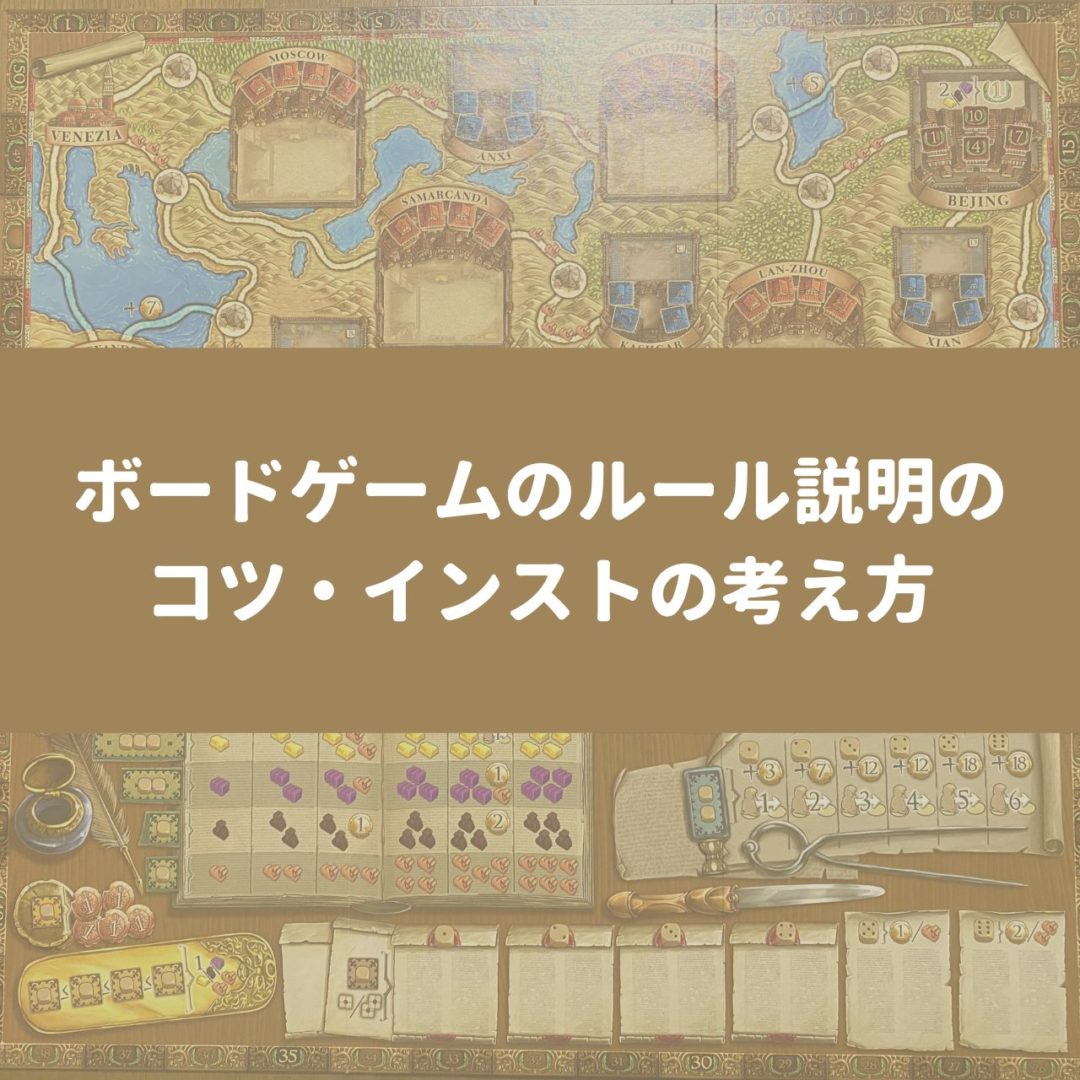
Board Game Instruction Tips
When playing board games frequently, rule explanations (called "instruction") become crucial. Through running a board game venue and introducing games to friends, I've done quite a few explanations and picked up tips.
bodogenist.comShared Understanding Is Instruction's Real Goal
Instruction's purpose isn't memorizing rulebooks. It's creating a state where everyone sees the same game. I've watched the table air shift the moment this clicks. When a participant says "so if I collect this, I win?" or "my turn I basically pick from these three," that table runs smooth.
Without shared understanding, same board, different minds. One grasps scoring, one knows only turn order, another's stuck on terminology. Then every in-game question becomes noise. "Can we do this?" "What's that for?" piles up, and rule-checking talk drowns out actual gameplay.
That's why opening explanation must hand everyone the same map first. The core three points: what the game aims for, what one turn does, what main choices exist. With these lined up, fine rules absorb well even added mid-play. Start with jargon or card specifics, and newcomers feel guided down alleys with no map. Second nature to an explainer—still "what's this term?" for fresh eyes.
This gap hides among experienced players. Say "worker-place and convert resources into engine, building VP by triggering mechanics" and they follow. Newcomers get buried. Swap for "pick one spot each turn, place your piece, grow materials, turn finished goods into points"—much clearer. Minimize vague words, then add terms. Card Splendor|宝石の煌き becomes "buy cards you picked, they stay in your deck, future buys get cheaper" then "this is called deck-building."
Demos work because they build shared understanding. Hard-to-speak-about actions suddenly clear when you move a piece: "piece on this spot, resources grow here, score lands here." Seeing turns understanding from "hearing info" to "watching flow"—newcomer load drops hard. Visuals like summary sheets help for the same reason: not adding info, but aligning what everyone looks at.
💡 Tip
To read understanding mid-instruction better than "any questions?", try "what would you do to get closer to winning?" Silence often means "lost, but can't say what" not "got it."
Shared understanding happens when full information—when the same mental model lives in all heads. Short instruction alone, plus solid prep, builds this faster than word-by-word rules.
Needed Explanation Depth Differs Between Short Games and Mid-to-Heavy Weight
Instruction success doesn't follow one universal rule because game weight and experience reshape how much explaining actually helps. Ignore this, push "just talk less" or "start and learn," and light games work fine while mid-to-heavy games suffer badly.
Short-time light games often design for incomplete upfront grasping. Few turn choices, bounce-back room after mistakes, readable board changes—"get the vibe from first few turns" works. Café blogs cover Tutorial-style explanation|チュートリアル型説明 as strong for newcomers because this game type supports it: 1 minute goal + turn share, then hands-on learning. Very practical.
Mid-weight and heavy flip the script. When fun comes from "forward planning" or "comparing multiple score routes," structure must show before play or choice meaning vanishes. Especially 30+ minute-per-person games or 15+ minute instruction types—starting blind eats the experience. Mid-weight, around 1 hour play / ≤15 min instruction, sits where "light vibes startup" and "skeleton-first is way better" meet.
Actual practice holds: even needing full 15-minute instruction, core to share upfront sits around 40% of material. So priority teaching becomes roughly 6 minutes. Share goal, win method, turn flow, main action, finish upfront; rest goes to demo or mid-play addition. Key: not shortening for shortness' sake, but spotting what structure needs before the game breathes.
Rule Quantity and Play-Time Balance|ルール量とプレイ時間のバランス notes instruction carries real cost. 20 minutes of rules then 20-30 minutes play wastes entry time even in good games. That doesn't mean always cut—light games benefit from speed over completeness, but mid-weight often gain more satisfaction when needed understanding lands first. No universal answer here.
Experience shifts targets too. Sushi Go!|ニムト or Love Letter|ラブレター light staples click fast even for non-players—spare the fine details. Catan|カタン or Carcassonne|カルカソンヌ—simpler core rules but point-taking/interaction meaning matters—need a small setup preview to warm the room. Step heavier, "learn-as-you-go" breaks fairness fast.
Instruction gold is choosing just-right amount for this table, not proving explainer perfection. 15 minutes on a light game's overkill; 1 minute on a 15-minute-instruction game won't work. Game weight, player history, table mood—when these three sync, rule explanation stops being work and becomes a polished game entry.

The Easiest Way to Give Clear Rule Explanations
Rule explanation—the must-do when playing new board games with others. How clear you make it shapes how fun the game becomes. Board game café staff share the trick!
solace777.jpCore Premise First: The Goal Isn't Saying Everything|全部話す—It's Creating a Playable State|遊べる状態を作ること
Long-winded explainers often lock onto "share everything I know" as the target. Real table need: participants reach the state "I see what I look at each turn and what I can pick". Rule instruction is knowledge show-and-tell; it's building play-start footing.
This shift alone changes what to say. Starting with exceptions or fine point-tweaks, listeners lose "what's this game actually?" and flail. Reverse—outline the game shape first—fine details now "hang on what?" visibly. I've noticed instruction that started with exceptions got more questions and ran long, but rearranging smoothed everything, cutting first-turn hesitation sharply and feeling much more fluid overall.
Understanding Rule Explanation and How to Teach Board Games|How to Teach Someone a Board Game share: show big picture first, details fit later. Judge instruction not by "did I cover everything?" but by "do hands keep moving once play starts?". This mindset cuts waffling.
Explanation Order Template
The shape overview → goal (win condition) → turn flow → end condition → exceptions is plain but rock-solid. Shortest path to "playable."
Overview: put "what does this game do?" in one line. Catan|カタン: "collect resources, build roads and towns, race for development points." No need for world or detail here. Listeners want genre and feel first.
Next, state the win. Carcassonne|カルカソンヌ: "place landscape tiles, draw points from paths, cities, monasteries—highest points wins." With this first, later placement rules read as "point-taking tools" not busywork. Vague aim leaves actions as mere labor.
Then one-turn flow. Run a piece slowly while saying it. "Draw card, play one, process effect, turn ends." Skeleton visible, players can replay a turn in their heads seated. Works doubles when shown.
End condition tells when the game closes. Mountain exhausted? Someone hits score ceiling? Fixed rounds? Knowing this, players naturally pace themselves. Early-sprint or late-surge game reading also builds.
Exceptions come after. "This card alone ignores duplicates." "That square gets bonus moves." Wait until basics land, else "what's normal?" flips wrong. Exception-first scrambles listener priority.
This order also feeds shared understanding building|理解の土台をそろえる. Skeleton shared first means later notes just attach: "based on win rules I showed, this bonus plays big." Templated order keeps instruction quality steady across games.
Catan (CATAN) Official Japan Site
catan.jpStrategy Advice Boundaries
One place kindness runs wild in instruction: strategy hints. "That card's strong." "Always grab this spot first." "Doing that gets you stuck." I get the urge. But over-share and instruction becomes walkthrough video.
Aim for entry-move direction + painful-to-step-on traps max. Catan|カタン example: "early resource variety beats single-focus, so scout both target spots and resource spread before placing." Keeps freedom while helping. But "prioritize wood and clay on this layout, shift mid-game from trade to development" crosses into playing their game.
Board Game Instruction Tips|ボードゲームのルール説明のコツ・インストの考え方 also flags not drowning strategy talk—this isn't just time-saving. Protecting their "I found it!" joy matters. Early tables especially—feed the right answer, the thinking space collapses. That "this move swung it!" nice feeling thins out.
My café split: "avoid-this-accident note gets shared, best play doesn't." So Splendor|宝石の煌き: "tapping out reserves cripples you" is guard-rail gold. NOT "hoard the discount cards first." That spoils discovery.
💡 Tip
When strategy uncertainty hits, cut: "is this something you can't play without, or close to winning technique?" First type enters explanation, second you answer if asked.
Pin strategy additions to two points: first-move direction and painful traps. Accident avoidance notes work; leading straight to solutions doesn't.
Seven Tips for Getting Better at Board Game Rule Explanation
Here come seven practical patterns I arrange almost as scripts, swapping content per-game. After practice, seating-to-skeleton takes ~5 minutes. For ~1-hour mid-games especially, stopping direction-doubt cuts stuck explanation hard.
- Lead with the game's big picture
Diving to detail at opening leaves listeners with no frame for "why is this rule here?" Catan|カタン: start covering resource types, dice, trading, roads, building costs one after another—info lands but the game shape stays foggy. No organizing axis; get lost easy mid-explanation.
Fix: open with a one-line game summary. Catan|カタン: "collect resources, build roads and houses, push settlement points to win." Splendor|宝石の煌き: "gather gems, buy cards, make buying cheaper and easier, race points." One line, then each rule reads "which part of the whole is this?" visibly.
Trick: keep whole-game summary to one-line summary + repeated action, then stop. Pile world and parts here and shape blurs again. broad.tokyo's way: frame first, then fill—instruction feels like a map, not encyclopedia.
- State winning conditions early
Goalless explanation is roadmap-free guiding. Common flub: "let's start setup," "this card comes three colors," then later "whoever scores most points wins." Listeners don't know what to weight.
Fix: straight after overview, say what makes winning happen. Ticket to Ride|チケット・トゥ・ライド: "link routes, claim tickets, highest combo score wins." Azul|アズール: "clever tile arranging racks up points—highest final score takes it." Now rules read as "winning tools" so absorption speeds up.
Trick: when stating win, pack end-game and loss paths together. "Unclaimed tiles on you dock minus points." Shows "avoid this" behavior too. Aim, worth, when-it-ends clear early settles faces noticeably.
- Sketch turn flow roughly, upfront
Clear win, but faces still unsure: "so, what do I do?" Flub example: individual action or card type rules first, turn skeleton last—details heard but timing cloudy.
Fix: next, show turn outline light. Wingspan|ウイングスパン: "each turn pick one of four actions." Dominion|ドミニオン: "core is: use actions, buy cards, discard hand and redraw, done." No exception detail yet. Key: listeners image their own-turn movie in heads.
Trick: keep turn sketch to three-ish layers of detail. "Pick → execute → end turn" enough—card specifics wait. I script this segment same across all games: "your turn you pick something, it does something, how does the turn end?" Skeleton visible, skeleton-build on game-day runs quick.
- Push exceptions back
Explainers helping too hard front-load exceptions. "Base case like X, but this card flips," "this square differs," "two-player changes rules"—listeners now think exceptions > base. What's usual, what's special—order inverts. Root confusion.
Fix: run base rules one full cycle, then add exceptions. Carcassonne|カルカソンヌ: "place tile, place meeple if needed, score happens" core, then "wait, finish early scores right away." Splendor|宝石の煌き: normal take-and-buy flow, then reserve and gold chips noted. Understand through this, then "but here."
Trick: mark break-point: "so far, base rules." Listeners file info in boxes now. Absolute Must-Know Instruction Tips stresses not knowing-volume but clear order. Detailed-knowing and clear-passing split.
- Move pieces to show how
Talk-alone hard-to-land games flip with light demo. Flub pair: zero showing-and-talking, or show too much (basically a full round-demo). Long, info-explodes.
Fix: self-turn only, minimal demo. Azul|アズール: "grab tiles, place in your line, leftovers floor." Dominion|ドミニオン: "this money buys this card, goes discard, comes back later." Just move-and-show. Demo teaches action-shape, not full-replay.
Trick: show self-turn only, no others. Listeners track "what happens" not "what they do," losing focus. JELLY JELLY's summaries show visual support is strong, so don't overload.
💡 Tip
Stuck on demo? "most basic one turn only"—if one turn teaches it, add nothing more.
- Shift explanation depth per crowd
Same density every time: light games overlong, heavy games short-changed. Flub pair: full-heavy explain on newcomer light table, or "learn-as-you-go" on heavy. First tires before start; second breeds unfairness and abandonment.
Fix: adjust upfront-share volume by game weight + crowd experience. Light: goal + turn, start fast tutorial-style. ~1-hour mid-games: core to shared, then begin smoothly. My feel: this class—not "all first" or "all after"—skeleton-first hits brightest faces. Slim to ~40% core data if cutting; standard 15-min heavy-instruction games means ~6 minutes' skeleton target.
Concretely, first Wingspan|ウイングスパン crowd: win method, round-flow, four-action meanings, food/egg base only upfront. Card interaction comes in-play. Opposite Nana|ナナ or Sushi Go!|ニムト: long preamble vs. one round shown + light Q&A warms tables better.
Trick: don't split on "newcomer or expert" only. People count, available time, table warmth shift too. 3-hour event needing 1-hour games twice = 2 games per-table realistically, reshaping instruction + setup time. So "will this work at this table?" not correctness decides depth.
- Reconfirm only frequent stumbles, at close
Recap everything re-walks listeners through organized info, then balloons again. Flub: "let's review" then replay the whole show—new info gone, focus just lost.
Fix: short-confirm just accident-prone spots. Catan|カタン: "7 rolls trigger discard." "Roads need connection." Splendor|宝石の煌き: "chip cap." "Reserves max three." Azul|アズール: "can't-place colors dock floor and ding points." Not full recap—just stumble-prevention sticky-notes|つまずき防止の付箋.
Trick: cap reconfirm to 3 points max. More won't stick. Prefix: "this game's first-time stall-spot is here," then hand over. Rule Count vs. Play-Time|ルール量とプレイ時間のバランス shows instruction weight directly hits pre-play experience. So reconfirm—comfort raising, minimum best.
Stack these seven and explanation flows: outline → aim → turn → add → demo → dial → double-check. I don't build perfect script at box-open; just frame-headers in head fill me. Mid-explain lost? Scaffold to return to. Not too-long, faces easy to track.
Light vs. Mid vs. Heavy: How Instruction Shifts
Light (15-30 min): Learn-while-playing premise + mid-round catch-ups
Light games prize speed to playable over explanation precision. 15-30 min games: small understanding gaps close next round, single-move errors don't sink you. "Learn in first few turns" actually works here. Sushi Go!|ニムト or Love Letter|ラブレター-style simple-turns: goal + turn + go, then "here's what we look at" mid-round one keeps air bright vs. slow prep. Key: learn-while-play only works when low-penalty design backs it.
Light games fail at that deal, have exceptions galore, or early-understand gaps doom you—risky play.
My café move: goal + turn + don't-do-this short, quick one round. Once board-watch flips on: add notes while gaze's there, lands faster than words alone. Café blogs call this tutorial-strength: "once-you-start, you want-to-know" beats "know then start." Light thrives there.
Play 6 nimmt! online
Play the classic card game 6 nimmt! with players worldwide.
en.boardgamearena.comMid (≤60 min, ≤15 min instruction): pre-show winning-path sight-lines
Mid-weight risks dropping satisfaction if you cut like light-games. 138GAMES notes ~1-hour play, ≤15 min instruction mid-game target. This band: simple turns, but "what am I building?" and "which pick beats?" matter—missing them, just processing, no joy.
Prior section hit: 40% core structure, so 15-min-standard becomes ~6-min teaching priorities. Don't cut the choice map. Wingspan|ウイングスパン: show four basics split roles, which resource chains where—first turn pivots toward forward. Splendor|宝石の煌き: "chips," "card-buy," "reserve" land—each makes what?—newcomers think, not flail.
What lifts mid-weight joy: judgment meaning-seeing, not rule-memorizing. I've run mid-weight: explain-and-forget-details tables beat "find-out-live" tables post-game-smile-wise. "What's this move for?" clarity cuts "I have no idea" time.
Understanding Rule Explanation|「わかりやすい」ルール説明をするために stresses listener-brain language + sight-forward framing. Mid-weight needs this sight forward especially—it is the fun. Mechanics-solo runs playable; unseen win-paths kill it.
Wingspan
The award-winning bird-themed engine builder with beautiful artwork
arclightgames.jpHeavy (30+ min/person, 15+ min instruction): thick pre-share needed
Heavy rots if you import light-game success: "just touch and learn." 138GAMES notes 30+ min-per-person, 15+ min-instruction as heavy band. Structure layers thick; playing blind long matches breeds unfairness—needs upfront sight-share.
Rule Count vs. Play-Time|ルール量とプレイ時間のバランス shows instruction-time is pre-game experience itself, not side-load. Heavy: 20-min teach + 20-30-min play wastes entry on a short game. Long games? Share upfront, pay later—huge satisfaction swing. 40% rule: exceptions crowd, upfront sits higher. Delete mid-weight-style and lost-trust out-weighs shaved minutes. More needed: less info-chop, more info-sequence anxiety-downward.
Thick explain + goal → round-shape → main-actions → score-sources → exceptions—frame-smart, not run-fast. Listeners "where am I now?" lost need structure. Long teach minus structure = exhaustion; long teach with bones = comfortable.
💡 Tip
Heavy speed-cut? Delete fine-rules; save first-move loss-points, score mainlines, round-end rules—those trim make tables unstable.
Rule Count vs. Play-Time
Domestic indie board games often have many rules for short play-time. Setting up understanding takes 20 minutes; game finishes in 20-30 minutes. Frustrating waste.
tgiw.infoTeaching method comparison: Talk-only / Demo + Talk / Tutorial-style
As game weight shifts, teaching method match shifts too. None's "best"—each leans to a weight-band.
| Method | Best Weight | Strength | Weakness |
|---|---|---|---|
| Talk-only | Mid-to-Heavy | Whole structure syncs fast | Board image fades, left-behind easier |
| Demo + Talk | Mid | Turn-flow and choices link clear | Over-demo gets cluttered |
| Tutorial-style | Light | Start fast, learn in-play | Heavy breeds unfairness, resentment |
Light shines tutorial: startup demo is explanation. Mid nails: brief talk-structure whole, then one-turn demo. "Goal, main actions, turn" words, then board-show once. Grasps without drowning.
Heavy: tutorial-main = danger. Learning-fast folks ghost slower ones—fairness dies. Heavy: talk-structure whole upfront, demo as back-up. Board-point helps but stays support, not lead.
Common: explanation aims at 共通認識|同じ地図—shared footing, not rote. Light walks map while drawing; heavy needs map before walking.
Practical Templates: Pre-Teach Checklist + 1/5/15 Min Talk Scripts
Pre-Teach Checklist
Blank-brain "where start?" stops with four upfront syncs: people, time, game-weight
Frequently Asked Questions
Should I explain everything before we start?
The short answer: it depends on the game's weight and your group's experience. For lightweight games, sharing the objective and turn structure and jumping straight in works fine. For mid-weight to heavy games, though, skipping the upfront framework means players cannot see "what am I even working toward," and they fall behind from turn one.
A useful approach is limiting the pre-game explanation to the core structure. As covered earlier, instead of covering everything evenly, hand off the "skeleton you need to play" first: how to win, the main choices, and what a turn looks like. From my own table experience, groups that have that skeleton before the first turn play with visibly more confidence. "I don't understand everything yet, but I know what to do" is exactly the state you are aiming for.
On the other hand, "let's just start" can be risky with heavy games. When each move carries real weight, learning as you go creates a sense of unfairness. For those games, delivering a structured overview, running a quick sample turn, and then starting the real game ends up producing better pacing and a better table atmosphere. Shortening the teach is not the goal. Getting everyone comfortable enough to place their first worker is.
How much strategy should I share?
This is where most teachers hesitate, and the right amount is just enough to avoid first-turn traps plus a preview of where points come from. You are not handing out a solved playbook. You are showing "miss this and you'll struggle" and "points mostly flow from these areas."
For an engine-builder, "if you don't set up a resource pipeline early, the late game stalls" is useful. For a game with multiple scoring paths, "points mainly come from these three sources" anchors a beginner's attention right away. Neither feels like a spoiler, yet both prevent the blank-stare first turn.
Going too deep into established strategies or optimal lines robs the game of its discovery. Especially in games like Splendor or Wingspan, where finding your own engine is the fun, declaring "this card is broken" or "this path always wins" shrinks the thinking space. What you want to hand off during the teach is not a strategy guide but a safety net so players can start thinking for themselves.
broad.tokyo has also pointed out that the best rule explanations organize information into units players can act on, rather than dumping everything at once. In practice, the sessions where I held back on strategy advice left players with a stronger sense of "I figured that out myself" and higher post-game satisfaction.
Splendor 2024 New Edition / Splendor - Board Games & Aroma LITTLE FOREST online shop
Celebrating the 10th anniversary, Splendor receives a refreshed art treatment.
littleforest.shopWhat if I forget a rule mid-game?
Do not try to paper over it. Stop, look it up, and share the answer with the whole table. That sequence minimizes fallout. Whispering a correction to just one player or quietly adjusting on the fly creates information asymmetry, which breeds frustration fast.
When I blank on a rule at a cafe table, I say: "Give me 30 seconds, I need to check the rulebook." The table does not get restless, and the pause actually puts everyone at ease. Once I have the answer: "This is how this interaction works. We'll apply it this way going forward." That one beat of realignment prevents "nobody told me that" from surfacing later.
For games where rule lapses happen often, make the rules visible. Annotate the summary sheet in red, stick a post-it near the board for commonly forgotten procedures. End-of-round upkeep, special card resolution order, and exception-based restrictions all stick better when they are visible rather than verbal.
ℹ️ Note
The heavier the game, the more "stopping to confirm" is not lost time. It is time spent protecting trust at the table. A short pause that resets everyone to the same understanding keeps the whole session feeling fair.
How do I teach a heavy game to beginners?
Heavy games break down when you extend the "just dive in" approach from lighter fare. What works is a structured overview followed by a sample turn followed by a short Q&A window.
For the explanation order, start with the objective and end condition, then describe what repeats each round, then walk through the main actions one by one. solace777 has also highlighted that leading with the big picture before drilling into details is especially critical for newcomers. In heavy games, showing "this exception belongs to that base rule" teaches faster than listing every exception independently.
The sample turn is where everything clicks. Verbal explanations that felt long suddenly make sense once players touch the components and move through one action. In my experience, tables that ran a brief sample turn before the real game had noticeably less silence in round one. The question shifts from "I don't even know what to ask" to "I just need to clarify this one step."
Then there is the Q&A window. Instead of jumping straight into play after the teach, set aside a couple of minutes for questions. It visibly lowers anxiety. In the heavy-game sessions where I built in this space, the table was noticeably more relaxed before turn one, and immersion afterward was deeper. More than the questions themselves, the effect comes from communicating: "you do not have to start while confused."
Bodogenist has also discussed how teach depth should flex based on the audience rather than following a one-size-fits-all template. What heavy games need is not more information but information arranged in an order that reduces anxiety. Get that right, and even a long explanation transforms from "that was hard to follow" into "I think I can play this."
Wrap-Up: Great Teaching Comes Down to Sequence, Courage to Cut, and Presentation
If you want to tighten your prep, see "How to Make Your Board Game Teach Land: From Prep to Script Template." If you are rethinking your first game pick, "Buying Your First Board Game" is a natural companion. And if you plan to play at a cafe, pairing the above with our Cafe Beginner Guide (/howto/board-game-cafe-beginner) gives you a complete picture from game night planning to execution.
Related Articles
7 Essential Worker Placement Games for Beginners|How to Choose Your First Game
The appeal of worker placement lies in how shared action spaces and turn order create a natural mind-reading game between players. When you play Stone Age with three people on a weekday evening and someone claims the timber spot you wanted, forcing you to pivot toward hunting and dice rolls—that mix of 'frustration at being blocked' and 'the joy of finding an alternative' is the core of this mechanic.
15 Best Two-Player Board Games | Compared by Type
When it comes to two-player board games, you'll have better luck starting with games designed specifically for two rather than picking whatever's popular. That said, there are multi-player games like Azul and Splendor Duel that genuinely shine as two-player experiences.
10 Best Solo Board Games | How to Choose & How Deep You'll Get
Whether you want a quick 15-30 minute game on a weeknight or a solid 90-minute deep dive on the weekend, solo board games get easier to choose once you narrow things down by whether the game is solo-only or has a solo mode, and then filter by play time, weight, and format. This article breaks down 10 titles — including Onirim, Under Falling Skies, and Coffee Roaster — in a clear, side-by-side way.
Best Board Games for 3 Players — Standout Titles Built for Bluffing and Negotiation
Finding the right board game for three players isn't just about headcount. Three-player games occupy a sweet spot — more tension than a two-player duel, tighter reads than a four-player free-for-all — where "who do I stop right now?" and "when do I swoop in for the win?" become genuine strategic questions.