
Can Educational Board Games Sharpen Children's Thinking? Research, Real Examples, and How to Start
Can Educational Board Games Sharpen Children's Thinking? Research, Real Examples, and How to Start
From personal experience, when I introduced a cooperative game at a table of younger kids who were sensitive to winning and losing during a weekend game session, the arguments gave way to "what should we do?" discussions, and the atmosphere stayed calm even after losses. Board games hold real promise for developing children's thinking and communication — but the picture is more nuanced than a simple yes or no.
From personal experience, when I introduced a cooperative game at a table of younger kids who were sensitive to winning and losing during a weekend game session, the arguments gave way to "what should we do?" discussions, and the atmosphere stayed calm even after losses. Board games hold real promise for developing children's thinking and communication — but the picture is more nuanced than a simple yes or no.
This article is for parents and teachers who've wondered whether "educational" board games actually work, and wants to understand what changes with the type of game, how often you play, and how adults stay involved.
We draw on quantitative data including a classroom intervention RCT with 522 elementary school students, a 2025 review covering 76 studies from 2000–2024, and a 68-year cohort tracking 1,000+ participants at ages 70, 73, 76, and 79 — reading correlation studies and intervention studies separately throughout.
From there, we connect everything into three practical steps: choosing a game appropriate for the child's age, building in a weekly 15–30-minute slot, and developing a short review habit — laying out what board games can realistically offer, and under what conditions.
Can Educational Board Games Improve Thinking? The Short Answer: Yes, Under the Right Conditions
The most accurate answer is that educational board games can develop thinking skills — with conditions. They're not a universal teaching tool, but when the mechanics of a game and the way it's played click together, the type of thinking a child uses shifts in visible ways. Cooperative games, for instance, replace "how do I win?" with "how do we divide this up?" — planning-heavy games make visible the question of "spend now or save for later" — and even lighter memory games cycle through retention and updating rapidly enough to serve as a clean entry point.
Reading the research carefully matters here. Studies have continued in recent years, and a systematic review in Wiley Online Library covers 76 papers from 2000 to 2024. The consistent thread is that different mechanics develop different skills — treating all board games as equivalent misses the point. A classroom intervention RCT with 522 elementary school students found that the intervention group showed stronger results in updating functions and academic skills than the control group, but that doesn't translate to "any game at home will suddenly make any child smarter." Age, frequency, and the way adults engage all shape what changes actually emerge.
The Skills That Develop Depend Heavily on the Type of Game
A cooperative game like Pandemic — available in English from Z-Man Games, rated 8+, 2–4 players, about 45 minutes — is built around making decisions as a group, which makes it natural practice for incorporating others' perspectives. Playing it at home generates organic conversations about who does what. That kind of situation opens up learning that goes beyond logic: how you phrase a suggestion, how you convert a setback into the next move.
Competitive and strategic games like chess, Othello, or ワカプレ|Worker placement games are where planning and forward-reading hit hardest. Othello's simple board makes it easy to trace "what flips if I play here?" Chess adds piece roles that bring longer-term planning to the front. In Worker placement games, the competition for limited action slots develops a feel for weighing "what I want right now" against "what will pay off later." These games deliver the deepest thinking experience, but they're also the most likely to exhaust players when the difficulty is misjudged — especially early on.
Memory games like Concentration sit at the lighter end but are excellent entry points. They run 5–15 minutes, work from preschool through early elementary, and keep the barrier to repetition low. Even in short sessions, the cycle of "remember where I saw that," "update my memory with new information" repeats enough times to warm up the thinking circuits before any formal study. With around 16 pairs, a round feels quick, and "one more game" comes easily — which is exactly the kind of foundation that makes repetition stick.
Think "Habits of Thought Shift Gradually," Not "Big Gains Fast"
Managing expectations matters here. Educational writing tends to reach for phrases like "builds logical thinking" and "develops creativity," but academic papers are more measured. J-STAGE's synthesis notes that generalizing board game effects requires finer distinctions in game classification and conditions. In practice, the thinking habits used in play shift gradually — that framing fits the lived experience better than any claim of rapid dramatic change.
That gradual shift is visible to parents. A child who used to stop immediately with "I don't know" at every turn starts, after a few sessions, to lay out options on their own before asking. A child who used to end on pure frustration after a loss starts saying "next time I'll lock in this spot first." These aren't changes you can capture with a single test score, but the shift in how a child hesitates, how they ask for help, how they build their next move — that's where board games show their value most clearly.

ボードゲームがもたらす効果の分析と一般化のための検討
With the spread of digital games, board games as analog games are also popular. There are several discussions focusing o
www.jstage.jst.go.jpWhat Actually Works: Enjoyment That Continues, and a Brief Conversation After
Designing for sustainability comes before engineering for outcomes. Age-appropriate, short-format, and something the child wants to return to — break that sequence and you're more likely to kill interest in games before any thinking develops. At home, games that fit inside a weekly 15–30-minute window are easier to keep in rotation and easier to slot into everyday life. It's not that long games are bad; it's that what doesn't continue can't accumulate.
What adds real leverage is a brief review conversation after playing. Questions like "where did you get stuck?", "why did you pick that move?", and "what will you do first next time?" give the thinking a name in the child's mind. Without that step, even genuine engagement flows away. When it happens, the insight carries into the next session. The same logic explains why having children explain the rules themselves deepens learning in educational settings: the moment thinking is put into words, understanding consolidates.
💡 Tip
In cooperative games, asking "why did you come up with that plan?" rather than "whose idea was right?" keeps kids from waiting to be told what to do. In strategy games, pointing to the moment mid-game when someone changed their plan — rather than just why they won — makes planning and adjustment visible.
If you're unsure which game to start with, there's no need to hunt for something marketed specifically as "educational." For guidance on building a good entry point, the site's beginner board game guide and the rules explanation tips at bodogenist.com work well together. To browse options matched by age, thinking by type — what each kind of game naturally develops — gives you the clearest map.
ボードゲーム初心者におすすめの簡単ゲーム25選 | ぼくボド
これからボードゲームで遊んでみたいという方の中には「種類が多すぎて、どれが簡単か分からない…」と迷ってしまう方が多いと思います。 実際、有名なボードゲームの『カタン』や『ドミニオン』などは、ボドゲ初心者にはルールがやや難しいです。 そこで今
boku-boardgame.netWhat the Research Actually Shows: Evidence on Cognition, Academics, and Creativity
Correlational Research: Elderly Cohort Studies
One frequently cited piece of correlational work is an elderly cohort study published in Oxford Academic. The study followed over 1,000 participants aged 70 and above, tracking cognitive function at ages 70, 73, 76, and 79 across a 68-year baseline. Those who played analog games more regularly showed a smaller associated decline in cognitive function over time.
The key point to hold onto is that this study shows "people who played tended to show better outcomes" — an association, not proof that board games themselves prevented decline. People who are cognitively active may be more likely to keep playing; social engagement and education level are also in the picture. And the participants are elderly adults, so drawing a straight line to "children's academic performance will improve" isn't a valid move.
What makes this cohort study meaningful anyway is that board games were treated not as trivial entertainment but as something worth measuring as sustained cognitive activity. GIGAZINE's writeup captures the highlights well for general readers, though the right reading is "a promising association exists" and not much more. Correlational studies are strong maps for designing interventions, but they don't fix the causal arrow.
Intervention Research: Elementary School Cluster RCT
For something closer to causal evidence, studies that intervene in actual classroom settings are more useful. The 2024 classroom intervention RCT with 522 elementary students is the most substantive study available right now. It covered students in grades 1–6, with a mean age of 8.83 ± 1.85 years and 45.5% female participation, run as a cluster-randomized controlled trial.
The study compared a group receiving modern board game sessions during class time against a group in regular instruction, measuring changes in updating functions and academic skills. The intervention group showed significantly greater improvement. Unlike correlational research, this is specifically asking whether a difference appears when board games are embedded in the curriculum — missing that distinction distorts every conclusion drawn from it.
Reading the study carefully still involves some nuance. First, it's studying a "designed classroom intervention," not kids playing at home when they feel like it. The conditions differ in terms of time allocation, facilitation, review, and class-wide shared rules. The effects also reflect a specific combination of selected games and how they were run, not board games in general. The right reading: reasonably strong evidence within a school context — not license to generalize to any setting.
My own sense from watching kids in these situations is that when there's a facilitator and structured thinking time, as in a classroom, children's thinking tends to align more consistently. The drive of competition doesn't just stop there; "what drove that decision?" actually lands. The RCT results, read this way, mean that kind of structured design is starting to show up in the numbers.
Short-Term Intervention: Pre/Post Comparison from a 3-Month Board Game Class
For a more practice-oriented intervention in Japanese, the J-STAGE exploratory study of a board game classroom is worth a look. This compared outcomes before and after three months of participation, and found a trend toward improved divergent thinking scores. It doesn't compare academic performance or executive function at scale, but its focus on "expanding the range of ideas" is distinctive.
This type of study has exploratory value that more controlled designs can miss. In cooperative games, or games that encourage voicing ideas, the play naturally surfaces "generate alternatives," "receive someone else's suggestion and build on it" — modes of thinking that are harder to elicit in a test setting. Creativity doesn't reduce to test performance, so this kind of accumulating pre/post evidence has its own weight.
That said, pre/post designs are susceptible to participants' natural growth and the effects of familiarity, and it's hard to separate board games from everything else happening in a child's life over three months. "Creativity may have increased" is defensible; "the class alone caused it" is not. Recognizing that intervention studies vary in their own internal strength keeps the research landscape readable.
ボードゲーム教室参加者の教育効果に関する探索的試行
本研究では、対面とオンラインにて3 ヶ月にわたって実施したボードゲーム教室の参加者への教育効果を事前・事後の調査、および事後に実施した貿易ゲームにおける保護者による観察から探索的に明らかにすることを目的とした。拡散的思考を測定する乖離性連合
www.jstage.jst.go.jpSynthesized Findings: The 2025 Review (76 Studies) Maps Mechanics to Learning Outcomes
Looking at individual studies in isolation makes it hard to see the overall picture — the age ranges, games, and measures used all vary. The 2025 Wiley review addresses this by synthesizing 76 studies from 2000–2024, covering both analog and digital board game research. The most important contribution is the shift away from talking about "board games overall" toward reading the correspondence between specific mechanics and learning outcomes.
In the review's framework, cooperative mechanics link to teamwork and joint decision-making; resource management mechanics link to critical thinking and planning. That matches lived experience well. A cooperative game like Pandemic demands whole-group optimization — you can't just play your best move in isolation because card trade constraints and role assignments mean the group's overall position has to stay in view. ワカプレ|Worker placement and resource management games put the question of how to allocate limited actions — how to balance short-term gain against long-term payoff — at the center. Memory games like Concentration foreground retention, updating, and sustained attention. Put simply: what develops depends on what the game looks like mechanically.
This matters because it lets us drop the vague phrase "educational board games." Mismatches happen in practice: playing lots of memory-repetition games while hoping to see creativity develop; choosing heavy negotiation games when you're trying to build updating functions. The review gives us the unit of analysis needed: not just the game title, but the mechanic.
Limitations: Correlation Is Not Causation, and Age, Education Level, and Measurement Bias All Matter
One thing worth keeping in view when reading across studies: correlational and intervention research are answering different questions. Correlational studies tell you what characteristics tend to appear in people who play regularly — but they're also prone to confounds like "cognitively active people may be more likely to keep playing" or "more educated people do better on cognitive tasks." Intervention research closes that gap but requires controlled conditions and sustained participation that don't automatically transfer to everyday settings.
Some analyses show that controlling for age and education level weakens or limits the association — a point that connects to J-STAGE's own discussion of the challenges of generalizing effects. Lumping all board games together and saying "board games improve cognition" erases the difference between cooperative, strategy, memory, and negotiation types and blurs every conclusion. Measurement bias is also real: changes that are easy to capture with tests don't always match the shifts visible in daily conversation or classroom behavior.
None of this calls for pessimism. A research literature that's careful and measured is healthy. What the evidence currently shows is not "any game works for anything," but rather: with the right age group, setting, mechanics, and measurement, improvement in specific capacities is visible under certain conditions. The evidence base for cognitive function, academic skills, and creativity is genuinely accumulating — but its contours still need to be drawn with precision. Board game research isn't a binary "effective or not" question; it's an ongoing project of raising the resolution on what works, for whom, under which conditions.
Why Board Games Actually Exercise Thinking
It's not just that board games are "a game that uses your brain." More specifically, the information layout on the board, turn constraints, victory conditions, the need for discussion, and exception rule handling all directly engage cognitive functions. Which capacities get used varies by game, but a useful framework is: mechanic → capacity used → action on the board. This reading aligns well with the systematic review on analog and digital board games mentioned earlier.
A table helps make visible what's actually happening during play:
| Mechanic | Capacities Used | Example Action | |
|---|---|---|---|
| Memory / Matching | Updating function, working memory, attention | In Concentration, holding the location of a card just flipped while updating memory based on non-matching cards | |
| Resource management / Limited actions | Planning, decision-making, prioritization | In a [[ワカプレ | Worker placement]] game, choosing between "resource I need now" and "action that pays off later" within a limited number of turns |
| Cooperation / Role division | Perspective-taking, joint decision-making, discussion | In Pandemic, discussing who moves, who treats, and who positions for a card trade | |
| Negotiation / Trading | Perspective-taking, persuasion, consensus-building | Proposing a trade, then rephrasing the terms so the other player finds them acceptable | |
| Rule-based turn procedure | Rule comprehension, attention control, exception handling | Following turn order, effect timing, and prohibitions during play | |
| Forward-reading competition | Planning, prediction, decision-making | In chess or Othello, reading not just your next move but the opponent's response |
Updating Function and Working Memory: Holding and Overwriting Information
Updating functions and working memory show up most visibly in memory games. In Concentration, temporarily holding the position and picture of the card just flipped is only the beginning. When new information arrives on the next turn, the task isn't to preserve the earlier memory unchanged — it's to constantly adjust "which information to keep and which to release." That "hold while overwriting" process is updating function in action.
If you remember where you saw an apple card on the first flip, but the second card isn't a match, that information isn't immediately useful. Meanwhile, the dog card just seen might connect with a position your opponent flipped earlier. Inside your head, a kind of inventory check is running: scan the board, hold briefly, let go of what's no longer relevant, bring what matters to the front. That small cycle of processing is the core of memory games.
The short run time is part of why this capacity shows up so cleanly. Concentration with a small number of pairs wraps up in 5–15 minutes, making it easy to repeat from preschool through early elementary. Over several short sessions, self-correcting language starts to appear naturally: "I saw it a second ago," "wait, that was somewhere else." That's not mere memorization — it's a sign that memory content is being updated with each attempt.
The same capacity appears in other game types too. In a cooperative game like Pandemic, the group tracks which cities have spread infection, the flow of discards, and who's holding which color of cards through ongoing discussion. In chess and Othello, a move shifts the value of positions on the board, and you update your evaluation accordingly. Updating function isn't just for "memory games" — it's basic processing that runs in any game where the situation changes.
Planning, Decision-Making, and Resource Management: Medium-Term Planning and Trade-Offs
The strongest sense of thinking-in-action tends to come from resource management and ワカプレ|Worker placement situations. The core of these games isn't finding the best move — it's deciding what to give up among several reasonably good options. Planning and decision-making are trained through that continuous series of letting-go decisions.
In ワカプレ|Worker placement games, the spaces available for placing workers are limited, and actions already claimed by others are often unavailable. The questions that arise are sharp: "Should I secure food now?" "Should I recruit a worker to strengthen the next round?" "Should I hold back to open a scoring engine?" What's being used is medium-term planning and trade-off evaluation. Taking an immediate gain often narrows what's available later; investing in setup weakens the current turn. Reading that differential is the work.
At any session with a ワカプレ|Worker placement game, the conversations tend to heat up at exactly these moments. When there aren't enough turns to do everything you want, "we should claim the lumber first" and "no, if we recruit now we can recover later" collide. The board shows tiny action spaces, but what's happening is genuine decision-making. Constraint is what brings habits of thought to the surface.
Chess and Othello are also planning games, but resource management games differ in a specific way: the opponent's responses reshape your plan as it unfolds. In chess, how you use pieces in hand tests the precision of your reading; in Othello, which squares you allow your opponent to take shapes your forward planning. Resource management games tilt more toward "how to allocate among available options on the board," which makes them feel more like economic decision-making. Both use planning, but the texture of that use is different.
ℹ️ Note
What resource management games reveal isn't just the ability to find the best move. Arguably more significant is the ability to set priorities under limited turns, accept what got passed over, and pivot to the next-best path.
Perspective-Taking, Negotiation, Cooperation: Joint Decision-Making and Consensus
Board game thinking isn't only the silent, solitary kind. In cooperative and negotiation games, inferring how others see the situation and aligning that understanding is itself a central task. That's where perspective-taking enters.
Pandemic makes this dynamic particularly visible. Because the goal is for everyone to win, one person solving the board while others watch doesn't work. Roles carry different strengths and card trading has constraints, which means thinking can't stop at "what I'd do" — it has to extend to "with this role, that person should move" and "that card does more good if it goes to someone else." What runs simultaneously is board comprehension + reading others' hands + understanding roles.
What stands out in cooperative game sessions is how the atmosphere changes once good discussion gets going. In a situation where infection has surged, what starts as isolated "where do we treat?" questions gradually becomes "this turn I take the containment role," "next turn we shift toward finding the cure" — a conversation about role division. That's no longer just figuring out individual moves; it's articulating as a team what to prioritize. What's developing isn't individual judgment alone but the circuitry of joint decision-making.
In negotiation games, perspective-taking becomes directly tied to winning and losing. Getting a trade accepted requires more than pushing for what's good for you. You have to restructure the terms so the other player actually wants to accept. Negotiation is less about verbal skill than about a cognitive act: reading the other person's interests and designing the proposal around them. Figuring out what someone wants, what they'll resist, and how to phrase it accordingly maps directly onto classroom discussion and family problem-solving.
Cooperative games are easy to recommend as introductions partly because this social dimension of thinking shows up so naturally. Where losing a competition can feel like a personal failure, cooperative games redirect the conversation toward "how do we get through this." The increased discussion isn't a coincidence or just a mood thing — the mechanics themselves require perspective-taking.
Rule Comprehension and Attention Control: Following Procedures and Handling Exceptions
Often overlooked is how much board games require rule comprehension. Games aren't free-form imaginative play — they're thinking within constraints. That's exactly why understanding the rules, following the procedure, and handling exceptions are necessary.
Chess is especially clear through this lens. Each piece moves differently, promotion has conditions, and captured pieces can be re-entered. You're not just reading the board — you're tracking "can this piece make that move?", "is it legal to play here?", "what follows from this?" as a sequence. Othello looks simpler, but pieces can only be placed where they flip at least one opponent's stone — placement isn't free. Attention control is required: even when you can see an appealing spot, you have to narrow your focus to only the moves that are actually legal.
In cooperative games and mid-weight designs, exception handling multiplies. In Pandemic, regular actions, event cards, infection processing, and outbreak chains each work differently — getting the sequence wrong breaks the entire board state. In ワカプレ|Worker placement games, some effects resolve immediately and others trigger at round end. Playing these games demands the ability to track what gets done, in what order, under what conditions.
This kind of capacity doesn't look spectacular the way a sudden insight does, but it's the foundation. Without accurate rule-following, planning and negotiation can't function. When kids improve at games, it's not just from learning stronger moves — it's from getting clearer on "what do I need to check during my turn?" Scan the board, follow the sequence, rule out prohibited moves, keep only valid options. When that chain of attention control becomes stable, planning and perspective-taking can build on top of it.
Board games become venues for exercising thinking because multiple processes run simultaneously. Memory games surface retention and updating; resource management surfaces planning and decision-making; cooperative and negotiation games surface perspective-taking and consensus-building; rule-heavy games surface procedure-following and exception handling. Change the game's design, and the capacities it activates change too. Once that correspondence becomes clear, you can move past vague questions about whether games are "educational" and ask specifically which experience is pulling out which kind of thinking.
Real-World Examples: What Happens at Home, in Tutoring, and at School
At Home: 15-Minute Post-Dinner Sessions and Praising Decisions Instead of Outcomes
At home, the changes that appear most reliably aren't improvements in some measured "ability" — they're shifts in the quality of conversation and how kids engage with rules. Setting up a 15-minute session after dinner, rather than a long-form event, makes it much easier to fold into the daily flow.
Short memory games like Concentration fit into one sitting and are manageable even for preschoolers and early elementary kids — the "that's enough for today" moment is easy to find. In these brief, repeated sessions, what becomes visible to parents isn't so much the win or loss as where the child remembered, where they hesitated, and how they chose.
What works here is commentary aimed at the decision, not the result. "You won, nice job" matters less than "you remembered where that didn't match, and changed your next move." The same applies in Othello or chess: responding with "you were thinking about what your opponent might play back" keeps the conversation alive even after a loss. Whether board games continue at home often comes down to what words get left behind after a session, not how hard the game was.
The social dimension is just as concrete at home. Waiting your turn, staying out of your opponent's turn, finishing without knocking the board over even when you're losing — none of those show up on a test, but they're genuinely significant in real life. The Japan Board Game Education Association representative quoted on Tokyo Gas's "Uchikoto" site framed it similarly: board games create experience in engaging with others within rules, not just thinking alone. At home, "following the rules" is experienced not as mere restraint but as a shared agreement that makes the game possible together — which is where the real value lives.
One of the most memorable examples involves introducing a cooperative game to a child who gets frustrated easily. In an afterschool environment where competitive games were turning every loss into a bad mood, switching to a cooperative format often frees up the child to say "what should we do next?" A game like Pandemic, where everyone faces the board together, shifts "I lost" into "we couldn't quite get there this time." Even when infection spreads, the instinct to blame gives way to "do we prioritize treatment or position ourselves for what's coming?" — and the atmosphere at the table noticeably softens. This is one kind of setting, not a universal rule, but the increase in conversation and the reduction in post-loss meltdowns are changes that show up reliably at home too.
In Tutoring: Focus and Mental Switching During "Board Game Time" at the End of Class
What makes board games interesting in tutoring settings is that they don't just function as a reward — they can actively close out a session. A short board game window near the end of class gives kids a chance not to zone out, but to practice switching their mode of thinking. It's a different kind of focus from math or reading, but in the sense that it involves understanding rules, waiting your turn, and choosing within time pressure — the concentration is closely adjacent to academic work.
Games that fit this window well are short and leave a clear sense of having made decisions. For younger students, memory games like Concentration are manageable and end quickly, making the mental shift clean. From mid-elementary onward, forward-reading games like Othello or lighter strategy games offer both a "that was fun" and "that took real thinking" feeling. What tutoring centers find useful are games where engagement during a player's turn is visible: whether a child can keep their eyes on the board while deciding, update their read after an opponent's move, or say "I'd do this differently next time."
The fear that adding games after class will scatter attention tends not to materialize — often the opposite happens. A child who was mostly passive during instruction starts speaking up the moment a game begins. Short remarks like "if I play there I'll lose a piece" or "I saw that card earlier" start to appear, and they give tutors a clearer read on how that child's thinking actually works. Board game time functions less as a direct measure of academic ability and more as a window into how a child processes and switches gears.
When using cooperative games in tutoring, the quality of discussion is what matters. When one person drives all the decisions, the learning concentrates in them while everyone else coasts. Getting each participant to name what they noticed — "why do you want to move there?", "why would you prioritize treatment?" — even briefly prevents the game from becoming a directed sequence of instructions. Even in a window of roughly 10 to 30 minutes at the end of class, building this joint decision-making pattern does something unexpected: it steadies the room during a tired time of day. What looks like play has a clear shape to it — training to stay focused while shifting into a different thinking mode.
At School: As an Introductory Activity or as Homework
In school, board games tend to shine not as the main lesson but as an entry point and a tool for generating dialogue. An Impress Watch classroom report featured exactly this kind of practice: not separating play from learning, but using games as a doorway to motivation and discussion. Starting class with a short game creates a shared experience. Asking "why did you pick that move?" and "what would have worked better?" afterward gives the discussion and explanation activities a concrete anchor.
Games that work well as openers are those with short rules where everyone can participate immediately. For younger grades, Concentration-style games — remember, find, wait — can double as a warm-up before instruction begins. Othello works for introducing rule comprehension: because placement is constrained to "squares where you can flip an opponent's piece," it makes immediately tangible the idea that not everything is allowed. Chess, with its clearly distinct piece roles, lends itself to gradually introducing pieces and their rules as practice for exception handling and sequence understanding.
Homework is another distinctive use. Unlike a paper drill, board game homework tends to generate family conversation. An assignment like "play one round of Othello at home and write down a moment you were unsure about" or "play Concentration and be ready to explain how you used what you remembered" turns homework from answer-submission into a process of bringing thinking home. For teachers, the next day's sharing — "we played the same game but were watching for different things" — is easy to use as a discussion launch.
Cooperative games fit naturally into homeroom and relationship-building activities at school. Because winning and losing aren't attached to individuals, they're easier to use as a starting point for discussion. Even in classrooms where competitive games tend to produce friction, a shared goal shifts conversation away from "whose fault was it?" and toward "what do we do next?" The changes happening in the classroom aren't dramatic transformations — they're the quiet kid saying one thing, the rule-resister learning to wait for their turn, the child frozen by losing finding their way back into the next conversation. Small but real. That's the reason board games end up being used in schools as introductory activities and homework.
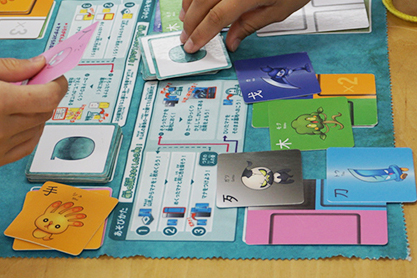
授業でボードゲーム、「遊び」と「学び」の中で意欲を育む
ゲームやYouTubeなど子供たちの娯楽はデジタルへと変わっているが、一方で電源を使わない、企業や個人が制作するボードゲームも世界的なトレンドになっている。最近では、ボードゲームが持つ教育効果に注目する教育者も増えており、学校の授業や教育活
edu.watch.impress.co.jpRecommended Game Types by the Skill You Want to Develop
Rather than asking "which game is best?", the more useful frame is: which game type naturally draws out the capacity you're after? The same 30 minutes of Concentration, Othello, or a cooperative game engage meaningfully different cognitive circuits. The focus here is on types before titles. The selection criteria that actually matter are: what skill develops, age range, session length, and setting.
A summary table to start:
| Game Type | Skills That Develop | Age Range | Time | Tips and Caveats |
|---|---|---|---|---|
| Memory | Retention, updating, focus | Introduceable from ages 3–4; accessible around age 5 | 5–15 min | Start with fewer pairs for early wins. Good for short-session repetition; doesn't develop deep strategic thinking |
| Strategy | Planning, forward-reading, resource management, decision-making | Later elementary through middle school is an easier entry | 30–90 min | Introduce gradually, lighter games first. Too heavy too soon creates aversion before thinking begins |
| Cooperative | Discussion, joint decision-making, loss tolerance | Many titles accessible around age 8 | 20–45 min | Good entry for kids who get heated in competition. One person driving all decisions limits learning |
| Negotiation | Perspective-taking, persuasion, consensus-building | Mid-elementary and up is easier | 30–90 min | Age and verbal confidence gaps show up clearly. Setting explicit trading rules makes play more manageable |
| Balance / Dexterity | Fine motor, attention control, sequence understanding | Accessible from ages 3–6 | 5–30 min | Physical engagement lowers the barrier. Prioritize following procedure over winning |
Memory Games: Retention, Updating, Focus
Memory games are the most accessible type. Concentration is the standard example — what looks simple actually involves "remembering positions just seen," "updating memory with non-matching information," and "staying with the board until your turn." That visible entry point is why it works well from preschool through early elementary.
Around ages 4–6 in particular, something they can touch and understand immediately matters more than a long explanation. Concentration with a reduced set of pairs can run in 5–10 minutes, making it easy to play one round, then another — a structure that works well before or after home study sessions, or during mental-switch time in tutoring.
The flip side is that the gains from memory games are focused. Retention and concentration are well served, but extended planning and back-and-forth discussion aren't prominent. That makes this type ideal for the entry phase — "getting comfortable with games," "learning to sit and wait," "building a quick sense of completion" — and a natural stepping stone before branching into other types. Cross-referencing recommendations for ages 4–6 and early elementary deepens the picture here.
Strategy Games: Planning, Forward-Reading, Resource Management
Strategy games are where the feeling of having actually thought something through comes out most clearly. In forward-reading games like chess or Othello, and in resource management games like ワカプレ|Worker placement, you're constantly comparing "the move that gains something now" with "the move that pays off later." Sequencing and prioritization come into focus, which adds a layer to the depth of thinking.
This territory demands cognitive endurance more than raw age. Younger kids can absolutely get hooked, but loading a game with too much board information can exhaust them before they've had a chance to think. Starting with games like Othello — where the rules are relatively short and the feel of forward-reading comes through quickly — makes it easier to get a child interested in strategy games overall. Chess with a reduced piece set and simplified rules can also be a strong tool for building sequencing and prediction skills.
For choosing a first game, the site's beginner board game guide offers a useful perspective. Avoiding titles that are too heavy and starting with something short and completable makes failure less likely.
Cooperative Games: Discussion, Joint Decision-Making, Loss Tolerance
The core strength of cooperative games is that the narrative of winning and losing shifts from "I lost" to "how do we get through this together?" Pandemic — the English edition by Z-Man Games, rated 8+, 2–4 players, around 45 minutes — is appealing not because of its difficulty but because of the ongoing conversation about who handles what. Losses don't break the table because the cause doesn't pin to one person.
For kids who get competitive and reactive, or who can't find their next move after a loss, this type works. Even just knowing "everyone's trying to win together" changes the quality of the conversation from the start. Discussion, checking in, role division, recovering from setbacks — the kinds of behaviors worth seeing at school and at home tend to come out naturally.
💡 Tip
For kids who let emotions run ahead of them in competition, cooperative games are a good place to start — the tone settles quickly. Once there's a shared goal, asking "what's happening right now?" in sequence rather than "whose plan do we use?" keeps the game from becoming a directive chain.
That said, cooperative games have their own distinctive pitfall. If one experienced player decides everything, the board advances while everyone else stops thinking. In a role-differentiated game like Pandemic, a parent or more experienced player running through optimal moves in advance turns the game into a lesson in following, not a lesson in deciding together. The move that matters: asking "what do you see?" rather than "what should we do?" Getting participants to articulate the reasoning behind their decisions is what makes joint decision-making practice function.
Negotiation Games: Perspective-Taking, Persuasion, Consensus-Building
Negotiation games are fundamentally about reading people's interests and motivations, not just the board. In resource exchange or trading games, pushing for the best deal for yourself isn't enough. You have to think about what the other player wants, where they can give ground, and how to phrase an offer they'd actually accept. What develops isn't pure logical reasoning — it's the practical communication that includes perspective-taking.
Age gaps and personality differences show up clearly in this type. Players with larger vocabularies, more assertiveness, or a competitive streak tend to do better, and the feel of the same game can vary a lot by group. For this reason, up through mid-elementary, designs where negotiation freedom is bounded — "one trade per round," "agreements only valid this turn" — are more manageable than wide-open trading.
Negotiation games also tend to produce friction when emotions are already high. Pairing strongly competitive kids in negotiation from the start often produces arguments rather than persuasion. In those situations, building discussion habits with a cooperative game first, then moving to negotiation, flows more naturally. Conversely, for a child who enjoys talking, watches how others react, and adapts their proposals accordingly — this type hits hard. It's a genre where the skills least visible on academic tests show up most clearly in real interaction.
Balance and Dexterity Games: Fine Motor, Attention Control, Sequence Understanding
Balance and dexterity games might seem to drift from "thinking games," but they're actually a way to learn attention through the body. Stacking, placing, flicking, and not knocking things over involves not just motor control but also following turn order, calibrating force, and adhering to procedure. For preschoolers and early elementary kids, these games are strong because movement is where understanding lives, not verbal instruction alone.
Around ages 3–6, "see, do, wait" is more natural than extended thinking. Balance tower games and simple dexterity games are easy to cut off in 5–30 minutes, success and failure are visually obvious, and the barrier to participation is low. When things fall, the reason is readable — "I pushed too hard," "I skipped the sequence" — which makes post-game reflection natural too.
This type is ideal when the goal is experience following rules with the body before reading a board. It works for situations where attention needs settling before formal work, and for kids whose emotions aren't yet ready for the back-and-forth of competition. Its value becomes clearest when you look not at who won, but at how carefully a child worked through the procedure. And it doesn't become obsolete as children grow — for kids who lose focus easily, or who don't respond well to purely verbal explanation, it can remain a genuinely effective entry point for a long time.
Getting the Most Out of It: 3 Steps That Work at Home
Step 1: Choose One Game That Fits the Age, Setting, and Time Available
Whether things work well at home depends less on the quality of the game itself than on whether it matches the child's current age and the time the household can realistically protect. The first game should fit the child's rule capacity and not run too long in a single session. Targeting something that wraps up in 15–30 minutes makes it easier to hold both "we finished" and "let's play again" in the same session.
For preschoolers through early elementary, memory games like Concentration are reliably manageable. With a reduced card set, a session stays short, and the flow of retention, updating, and focus is visible. For younger kids where competition goes directly to emotions, starting with a cooperative game rather than a head-to-head game keeps the atmosphere steadier. Having the experience of working together first means a failure reads as the table's shared outcome, not a personal one. For children aged 8 and up who can talk through decisions together, a cooperative game like Pandemic functions cleanly as joint decision-making practice. The standard run is about 45 minutes, but cutting the first session shorter — fewer roles, simplified setup — makes entry easier.
For forward-reading and planning games like chess, Othello, or ワカプレ|Worker placement games, the engagement is strong for the kids who connect with them, but they're prone to landing too heavy at the start. Rather than choosing on "sounds interesting" alone, ask whether the child can hold the rules in mind while taking one turn — that's the better filter. When building the first successful experience at home, something that feels slightly too easy actually makes repetition more sustainable.
If competitive play tends to produce friction, starting with a cooperative game first smooths the flow. Shared success and failure come first, then "how did we decide that?" becomes easier to talk about than "who won or lost." If rules explanations become a sticking point, the board game rules explanation tips at bodogenist.com give a concrete method for presenting goal, turn, and end condition in that order and keeping it brief.
Step 2: Repeat Weekly, 15–30 Minutes at a Time
Once you have the game, the next important thing isn't enthusiasm — it's anchoring the interval. Long special-event sessions at home don't sustain. Set a fixed 15–30-minute window once a week in advance, and run the same game for 2–4 weeks. By the second session, "I got stuck here last time" and "I spotted that earlier this time" start to appear.
Make the conversation after a session more than just reaction to the outcome. The point is to get the child to say something brief about which information they used and how they decided. In Concentration: "I flipped that spot because I remembered where it didn't match." In Othello: "I checked the corner approach before placing." In a cooperative game: "We treated the infection before it spread." A sentence like that makes the reasoning visible, not just the result.
When a parent is involved, pointing to information on the board works better than providing answers. When the cooperative game pattern of "adult makes all the decisions" takes over, the conversation increases but the decision-making doesn't develop. "What are you stuck on?" and "what options can you see right now?" keep the child as the one making the judgment. Win or lose, the evaluation should stay on how decisions were made rather than what the outcome was.
ℹ️ Note
Ending with "good play" alone is less useful than "the reason you picked that move was good" or "you went back and compared again after hesitating — that worked." At home, praise that can be repeated is what sticks.
Step 3: Two Questions After the Game, and the Habit of Praising Decisions
Right after a session, keep it to two questions rather than a long debrief — that's what keeps the habit alive. "Where did you get stuck?" and "what will you do differently next time?" are enough. Fewer questions produce more specific answers. "I wasn't sure where to put my second card" and "next time I'll check the spaces near the corner first" are short, concrete, and reveal exactly the child's decision-making patterns.
This is where praising decisions over outcomes comes in. Rather than "lucky win," say "you used the earlier information to make that choice," "you talked it over before moving," "you went back and compared after being unsure" — attaching a label to the action tells the child what to keep doing. Even in a losing session, "you consulted more this time" or "your turns were more settled than before" makes the next session something to build toward rather than avoid.
Records don't need elaborate sheets. At home, noting the same few items each session is more sustainable than any formal template. The most useful things to track are small behavioral changes: number of hesitation moments, number of times discussion happened, shifts in turn duration.
A short checklist is enough:
- Number of hesitation moments
- Number of times discussion happened
- Change in time per turn
- Number of times the child put their thinking into words
- Number of times the child changed their plan based on someone else's input
A simple log at the corner of a notebook is all it takes:
| Session | Game | Hesitation moments | Discussions | Turn time feel | Where did you get stuck? | What will you do next time? |
|---|---|---|---|---|---|---|
| 1 | Concentration | 3 | 2 | Felt long | Couldn't remember the same spot | Say the location out loud as I flip |
| 2 | Othello | 2 | 1 | Slightly shorter | Missed where pieces would flip | Check the corner area first |
| 3 | Cooperative | 1 | 4 | Settled | Wasn't sure which role should move | Have everyone name a candidate first |
Even this level of tracking, kept over 2–4 weeks, makes small improvements visible: fewer hesitations, more discussion, steadier pace of play. The formula for making board games work at home isn't adding special materials — it's keeping sessions short, taking small notes, and praising how decisions get made.
Frequently Asked Questions
What age should we start?
Rather than a hard age cutoff, you'll have better luck with two questions: how many rules does this game actually require, and can my child wait until their turn? Toddler years are better suited to games that complete quickly — remember, place, match — than to games that require tracking a long chain of strategy. Concentration is the classic example: "flip two, keep them if they match" is simple enough to make it one of the most accessible starting points. A full deck of 52 cards tends to drag; starting with fewer gives the game a clearer shape.
Competitive games like chess or Othello present a different kind of challenge — not usually the rules themselves, but sitting through the moment when a loss becomes visible. Othello is often cited as suitable around ages 4–5, but in practice the "flipping pieces is fun" stage and the "reading the board ahead" stage are separate things. Chess can start around age 5 as well, but given the range of pieces, introducing just a subset at first is more natural than learning everything at once.
A flow that works well: memory and dexterity games for preschoolers, then cooperative or lighter strategy games once they start school. Cooperative games like Pandemic are rated 8+ on the box, so the enjoyment of working things out together really starts to click around that age. More than an exact age, whether a child can sit through a 3-minute explanation or wait between turns tells you more about readiness.
How often and for how long?
Daily sessions aren't necessary. The cadence that works best at home, as mentioned earlier, is a fixed weekly slot of 15–30 minutes. With thinking-focused play, consistent repetition matters more than intensity. Even in short windows, playing the same game a few times lets you notice "I got stuck here last time" and "I spotted that earlier this time."
Some children do well with brief daily contact, but only when it flows naturally as a habit. Committing to a game that requires active engagement every day tends to create strain before the habit takes hold. Locking in a specific time — Friday evenings, Sunday mornings — makes it far easier to sustain than leaving it open.
Longer isn't better, either. A memory game like Concentration can deliver a full session's worth of focus in 5–15 minutes; keeping Othello and chess sessions short actually makes it easier to wrap up cleanly. Pandemic normally runs about 45 minutes, but on a first play the rules explanation adds time, so ending earlier works better. At home, a system that keeps things going beats the session that's maximally intensive.
Are chess and Othello enough on their own?
Chess and Othello are genuinely strong choices for building core thinking skills. Chess develops forward-planning and branching analysis; Othello builds positional judgment and board awareness. Drilling deeply into one game does sharpen the read-compare-decide cycle.
That said, sticking to just these two tends to narrow the range of skills in play. Both are excellent competitive games, but they leave less room for conversation, cooperation, and the short-term memory updating that other game types provide. A child who's strong in these games will keep improving, but one who struggles may hit a wall and disengage.
A type-based rotation works well here. Othello for forward-planning on some days, Concentration for retention and updating on others, a cooperative game for discussion and joint decision-making on others. The depth of chess and Othello stays intact, but mixing in different kinds of judgment keeps the overall play from going stale. One deep anchor game, with lighter games of different types orbiting around it.
What do we do when a child melts down after losing?
Stacking competitive chess or Othello for a child who falls apart after every loss turns the game into "the frustrating time." Starting with a cooperative game before any head-to-head play shifts the whole dynamic. When the opponent is the game system rather than another person, the loss reads as "we couldn't get there together this time" rather than "I failed." A cooperative game like Pandemic softens the pressure of winning and losing just by the way its structure works.
How you respond verbally matters too. Naming the quality of the strategy lands better than reassurance. Saying "the order you thought through that move was good" or "you spotted the risky spot early" — attaching a label to the decision itself — carries further than "it's okay to lose." Cutting the post-game analysis short after a rough finish helps keep the next session from feeling loaded.
⚠️ Warning
For kids who struggle with losing, the better move isn't avoiding competitive games entirely — it's ordering them by how much win-or-lose pressure they carry. Cooperative games first, then lighter competitive ones, then planning-heavy head-to-head. That sequence builds a foundation where strategy conversations come more naturally than emotional reactions.
One more thing worth watching: adults shouldn't slip into the role of decision-maker. Cooperative games generate more conversation when they're going well, but if one person is dispensing correct answers, the child ends up with "I did what I was told and we still lost," which makes the meltdown worse. Presenting options and letting the child choose keeps both the emotion and the judgment theirs.
What's the relationship to academic performance?
It's not unrelated. Studies using board games as classroom interventions have shown positive changes in certain academic skills. The classroom intervention RCT with 522 elementary school students is particularly rich in implications when you look at what happened in an actual school setting. There's real potential for board games to work on capacities adjacent to learning — attention, judgment, discussion, and applying rules.
The important thing not to misread here is that this isn't a simple story of "play games and grades go up." Board games pushing test scores directly is a stronger claim than the research supports. What the studies show is that changes can occur in the cognitive and social foundations connected to learning. Correlation and intervention-produced change have to be read separately.
In terms of felt experience, what tends to improve is closer to classroom behavior: articulating your thinking, comparing options before deciding, following rules to move forward. When those things come together, it becomes easier to engage with learning. The most accurate framing isn't "a shortcut to academic performance" but "a way to rehearse through play the mental moves that learning requires."
Wrapping Up: "Fun Enough to Continue" Is the Foundational Condition
Board games are better understood as play that develops how thinking gets used, within a design that's easy to sustain — not as tools for rapid dramatic gains. What separates experiences that build something from those that don't isn't the prestige of the title — it's whether the type fits the child, whether the time commitment is genuinely manageable, and whether the adult's involvement is well-matched.
The next steps are simple. Pick one type that fits the child's age and available time, run it at a steady rhythm for a while, and after each session say something brief about "where did you get stuck?" and "what will you do next time?" If competitive play tends to produce friction, starting with a cooperative game like Pandemic before chess or Othello protects the fun and keeps things stable.
"Fun enough to continue" isn't wishful thinking — it's a design requirement. If it's too hard, drop down a level. If the type doesn't fit, swap to Concentration or a cooperative game. That flexibility is what turns the first game into a good one. On a related note, a beginner's guide to board game cafes can also help ease the entry for families who want to try before they buy.
A scenario writer with 18 years of TRPG experience and 15 years as a game master. With over 5,000 cumulative downloads of his original scenarios, he conveys the magic of narrative experiences through games.
Related Articles
7 Essential Worker Placement Games for Beginners|How to Choose Your First Game
The appeal of worker placement lies in how shared action spaces and turn order create a natural mind-reading game between players. When you play Stone Age with three people on a weekday evening and someone claims the timber spot you wanted, forcing you to pivot toward hunting and dice rolls—that mix of 'frustration at being blocked' and 'the joy of finding an alternative' is the core of this mechanic.
15 Best Two-Player Board Games | Compared by Type
When it comes to two-player board games, you'll have better luck starting with games designed specifically for two rather than picking whatever's popular. That said, there are multi-player games like Azul and Splendor Duel that genuinely shine as two-player experiences.
10 Best Solo Board Games | How to Choose & How Deep You'll Get
Whether you want a quick 15-30 minute game on a weeknight or a solid 90-minute deep dive on the weekend, solo board games get easier to choose once you narrow things down by whether the game is solo-only or has a solo mode, and then filter by play time, weight, and format. This article breaks down 10 titles — including Onirim, Under Falling Skies, and Coffee Roaster — in a clear, side-by-side way.
Best Board Games for 3 Players — Standout Titles Built for Bluffing and Negotiation
Finding the right board game for three players isn't just about headcount. Three-player games occupy a sweet spot — more tension than a two-player duel, tighter reads than a four-player free-for-all — where "who do I stop right now?" and "when do I swoop in for the win?" become genuine strategic questions.