
Best Mid-Weight Board Games | Deep Strategy in 60 Minutes
Best Mid-Weight Board Games | Deep Strategy in 60 Minutes
Not quite satisfied with light games, but no time to commit to hours of heavy gaming? Mid-weight board games hit the sweet spot — giving 3-4 players a satisfying strategic challenge that wraps up in around 60 minutes.
Light games leave you wanting more, but you can't commit to three hours of a heavy euro on a weeknight. Mid-weight board games solve that problem — you get real strategic decisions and a satisfying game in roughly 60 minutes. This guide treats mid-weight as "strategic enough to genuinely challenge you, light enough to explain on a weeknight, best with 3-4 players." We cover how to choose, how the top picks compare, and which one fits your group — narrow it down to three candidates or fewer. There's no industry-wide definition of "mid-weight," but in practice the question is whether a 30-60 minute game leaves you feeling like you actually played something. We've logged plenty of sessions at our weeknight game nights, and this list sticks to titles that are easy to run but dense enough to keep you coming back.
What Is a Mid-Weight Board Game? Defining the 60-Minute Strategy Sweet Spot
Editorial approach
"Mid-weight" gets used constantly, but there's no single authoritative definition. Appliv lists 30-60 minutes, JELLY JELLY CAFE's time-based categories also run 30-60 minutes, while Boardgame Family's mid-weight roundup treats 45-60 minutes as the "just barely fits on a weeknight" bracket. Kyodai Boardgame's breakdown adds another useful layer: roughly one hour of play plus a rules explanation of around 15-20 minutes.
Looking across all of these, the lower time bound varies, but one thing stays consistent: mid-weight games are complex enough to make you think, but not so heavy that you need to dedicate your evening to them. That's why they're the natural step up from light games — there's real decision-making at every turn, but you don't need to schedule around them.
For this guide, we use a practical editorial benchmark: games that finish around 60 minutes, where the rules explanation takes roughly 15-20 minutes (our estimate), and that play well with 3-4 people. Splendor's official time is ~30 minutes, but at the table you get genuine strategic texture in a short window — that qualifies. Istanbul: Big Box lists 40-80 minutes officially, but with 3-4 players we consistently land around 50-70 minutes.
The overview at Bokuboardgame's mid-weight feature is useful here. Splendor, Century: Spice Road, Istanbul, and Azul all show up as mid-weight staples — and looking at that list, you notice these aren't just "medium-length games." They're games where strategic depth shows up in a short window.
That framing fits what this guide is after. Splendor wraps up around 35 minutes with setup, yet the race to claim cards is intense. Century: Spice Road lands at 40-45 minutes with 3-4 players, and optimizing your conversion chain is front and center the whole time. Neither game is strategic because it's long — both are strategic despite being short.
If you want a tighter definition, Kyodai Boardgame's mid-weight framework is worth bookmarking. The key insight there isn't just total play time — it's the rules explanation ceiling of 15-20 minutes. Whether a game gets picked on a weeknight depends as much on how long setup takes as on how long the game runs. If the explanation runs 30 minutes, a 45-minute game still feels like a commitment.
That lens makes it easier to see the mid-weight field. Splendor and Century: Spice Road have clean rule structures that click quickly at a new table. Istanbul: Big Box asks a bit more up front given its options, but board movement and efficiency are clear enough axes that it sits naturally as the "one step heavier" end of the bracket. Our internal guide on explaining board game rules covers the instinct side of this in more detail.
The 45-60 minute feel described in Boardgame Family's piece resonates with real table experience. "Just barely fits on a weeknight" captures it — these games aren't too long or too short, and they let you play one satisfying session and wrap up cleanly. That's not a claim about the exact minute count; it's about whether the whole evening — setup, play, cleanup — stays manageable.
Market context matters too. Domestic table game sales in Japan reached ¥7.54 billion (~$50 million USD) in 2023 according to Table Games in the World reporting, and there's a growing segment of players who return to familiar titles rather than always chasing new releases. Mid-weight staples get purchased because they're reliable — you know a night with Splendor or Azul won't disappoint. Light games serve as the entry point, but mid-weight titles are what people keep on the shelf for 3-4 player evenings.
At our game nights, the sweet spot is a rules explanation under 20 minutes (our practical estimate, not a published spec) with total time landing within 60 ± 10 minutes. That range fits cleanly into a 7:30 PM start with a 9:30 PM wrap — the format that gets used most.
Against those benchmarks: Splendor anchors the lighter end, Century: Spice Road sits squarely in the middle, Istanbul: Big Box pushes toward the heavier end when you want more substance, and Azul earns a spot in the mix despite its ~30-minute runtime because the drafting and competition read as genuinely mid-weight. Time alone doesn't tell the whole story — does each turn feel worth thinking about? Does the game avoid downtime with 3-4 players? Both criteria need to be true before a game earns the 60-minute strategy label.
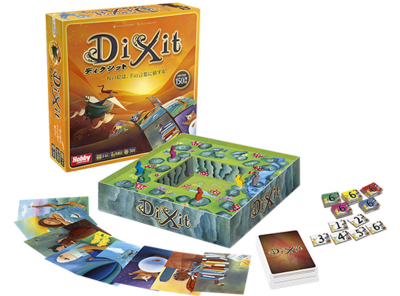
【ボードゲーム】中量級のおすすめタイトル10選 人気作や新作を厳選 - カイドキ
じっくり遊べる中量級ボードゲームを紹介。中量級とは30分~60分程度で遊べる作品を指します。新作から人気作まで幅広く紹介していくので、これから本格的にボードゲームを始めてみたい方は必見です。
mag.app-liv.jpHow to Choose Without Getting It Wrong | Player Count, Rules Explanation Length, and Strategic Weight
Before looking at any rankings, it helps to settle on your criteria — otherwise you end up picking something well-reviewed and still having it fall flat. Mid-weight games all have meaningful decisions, which also means there's a real fit/misfit gap. Our editorial team finds that six factors narrow things down reliably: how well it plays with 3-4 people, how long the rules explanation takes the first time, what kind of strategy it rewards, how much direct conflict is involved, whether it fits a weeknight timeline, and price.
Does it shine with 3-4 players?
The first question isn't whether 3-4 players is within the supported player count — it's whether the game is actually at its best there. You want turns to move quickly, meaningful competition for cards or actions, and a score race where other players' choices genuinely affect your options.
Splendor supports 2-4 players, but with 3-4 the pressure on public cards and reservation becomes real — the board tightens up noticeably even in a 30-minute game. Century: Spice Road goes up to 5, but with 3-4 the card market and turn rhythm hit a balance where downtime doesn't outpace interaction. Istanbul: Big Box also plays 2-5, and with 3-4 players the board positioning and race to key locations both start to matter in ways that don't quite emerge at 2. Games that are especially praised at 2 players often play differently at 3-4 — it's worth treating those as separate considerations.
When you're unsure about a game's fit at a specific count, resources like Bokuboardgame's 3-4 player feature give you a sense of how different games play at different sizes. Even within the mid-weight category, there's a difference between games that get more contested with more players and games that just get slower.
3人・4人でできるボードゲームのおすすめ30選(軽量級~重量級) | ぼくボド
僕が3~4人で集まった時によく遊ぶ『3人・4人でできるおすすめボードゲーム&カードゲーム』を紹介。プレイ時間別に3タイプ(軽量級・中量級・重量級)に分けてまとめています。
boku-boardgame.netWill the rules explanation stay under 15-20 minutes?
The thing that actually determines whether a mid-weight game gets played on a weeknight isn't the play time — it's how heavy the rules explanation feels. Our practical benchmark is whether the first rules explanation stays under 15-20 minutes. This isn't a published spec; it's an editorial estimate, and we flag it as such throughout.
Splendor keeps turns down to a handful of options, and the winning path — build toward expensive cards — can be summarized in a sentence. Century: Spice Road has a clear backbone of converting resources into better resources to claim point cards; people can start moving right after the explanation. Istanbul: Big Box is legible at the core (move your merchant, collect resources, be efficient), but the extra components mean more upfront to absorb. More than the raw complexity, what matters is whether you can answer "what am I trying to do?" in under a minute. That alone determines how smoothly a first session runs.
The Boardgame Nist guide on rules explanations makes the case for leading with the game's objective before getting into rules, and our experience matches that — leading with context visibly speeds up how fast a table gets going. A single reference card can shave five minutes off the explanation.
💡 Tip
The games that work best for first sessions are the ones where you can explain "what does winning look like?" in under a minute. Whether the game is about building an engine, controlling territory, or optimizing efficiency — the sooner everyone shares that frame, the faster the table moves, even if the rules themselves aren't especially simple.
ボードゲームのルール説明のコツ・インストの考え方
ボードゲームのルール説明(通称インスト)を頻繁にします。 ボードゲーム宿をやっているからというのもありますし、それ以前からボードゲームを友人に布教する役回りであったことから相当数のルール説明をしてきま
bodogenist.comMatch strategic weight to your group's preferences
"Heavy" versus "light" is subjective, but thinking in terms of what kind of strategy the game rewards gives you something concrete to work with. In the mid-weight range, the main categories are engine building, resource conversion, area majority, and abstract.
Engine building is the "snowball" model — what you build early accelerates your late game. Splendor is the clearest example: a modest card in round two becomes a discount engine by round four. Resource conversion is about transforming what you have into something more valuable; Century: Spice Road runs entirely on this logic. Area majority rewards fighting for positional control, making contested territory central to scoring. Abstract games put the beauty of moves and board shapes ahead of theme — Azul is the most approachable entry point.
The question isn't how much thinking a game requires, but whether the type of thinking matches what your group finds satisfying. If you enjoy calculating and optimizing, Century: Spice Road and Istanbul: Big Box are natural fits. If you'd rather read your opponents and make sharp tactical calls in a short session, Azul and Splendor are built for that.
Direct conflict shapes the room's temperature
Two mid-weight games can feel completely different socially depending on how much direct interference is possible. The spectrum runs from competing for the same card or action, to reserving something to deny it, to forced discards that undo plans.
Splendor's reservation mechanic lets you block cards without being overtly aggressive. Azul's tile drafting creates real pressure — the rules are light, but the player-versus-player tension runs high. Istanbul: Big Box works through positioning and first-mover advantage, which disrupts opponents' timing without direct attacks. On the other end, if your group prefers to focus on their own optimization without being targeted, games built around personal efficiency over interference tend to land better.
For a group mixing beginners and experienced players, communicating the conflict level up front matters more than the conflict itself. Mild competition is often welcome; having a plan dismantled is more polarizing.
Match the luck-to-strategy ratio to your group makeup
The degree to which randomness affects outcomes matters a lot for mixed groups. "Luck" here means card draws, the arrangement of available options, or starting position variance. More strategic games reward repeat play and skill — but they also make it easier for experienced players to dominate from game one.
Splendor and Azul have high information and are fairly readable, but the draw state and turn order create small gaps. That variance gives newer players windows to keep up. Century: Spice Road rewards efficiency and careful hand management — luck is a smaller factor, which is satisfying for players who enjoy optimization but can feel punishing in very mixed groups. Istanbul: Big Box leans heavily on board reading and planning; skilled players tend to outperform based on routing choices more than fortune.
For sessions with newcomers, games where some variance keeps the outcome in play tend to produce better table experiences. Players need to feel like they could catch up — a game can be skill-rewarding while still leaving room for that.
Factor in setup and cleanup, not just play time
One thing that gets overlooked in mid-weight game selection is total time including setup and cleanup. A 45-minute game that takes 10 minutes to set up and 10 to put away is a 65-minute commitment before anyone sits back down. Our practical threshold: everything from sitting down to walking out the door in 70 minutes or under.
Splendor's official play time is ~30 minutes, and with setup it typically stays under 35 — strong as a first game of the night. Century: Spice Road lands in its listed 30-45 minute range cleanly with 3-4 players, around 40-45 minutes in practice. Azul is short enough that starting after dinner doesn't feel like a problem. Istanbul: Big Box has that 40-80 minute official range and genuinely uses it — plan for it to be the main event on the nights you bring it.
Price-wise, the ¥3,000-¥7,000 (~$20-$47 USD) range covers most mid-weight staples. The prices we cite are reference figures based on manufacturer MSRP and retail snapshots (e.g., price aggregators) as of 2026/03/14, and are subject to change: Azul at ~¥3,663 (~$24 USD), Splendor at ~¥4,973 (~$33 USD), Century: Spice Road at ¥5,280 (~$35 USD) from Arclight's official listing. Always check current listings before purchasing.
When you look at the rankings below, run each game through two filters first: does it play well with 3-4 players, and does the rules explanation stay under 15-20 minutes? Then layer in conflict level and strategic style. Our guide to buying your first board game covers the broader selection angle; if explanation flow matters to you, the rules explanation guide covers how to structure that.
Top Mid-Weight Board Game Picks
Comparison at a glance
The fastest way to narrow a 3-4 player weeknight shortlist is to lay out play time, rules explanation load, and strategic type side by side. This table focuses on games we've run repeatedly — titles that consistently fit within 70 minutes from setup to cleanup while delivering a genuinely satisfying session. All of these seat 3-4 people well, and none of them feel padded for their runtime.
| Title | Players | Time | Age | Difficulty | Rules Explanation Load | 3-4 Player Feel | Strategy Highlight | Best For | Reference Price |
|---|---|---|---|---|---|---|---|---|---|
| Splendor | 2-4 | ~30 min | 10+ | Light mid-weight | Low | Excellent | Engine building and reservation timing | Mixed beginners, groups wanting a tight one-game session | ~¥4,973 (~$33 USD) via price aggregator |
| Century: Spice Road (Japanese Edition) | 2-5 | 30-45 min | 8+ | Standard mid-weight | Low | Excellent | Hand management and resource conversion | Groups who want strategy without going too heavy | ¥5,280 (~$35 USD) via Arclight official |
| Istanbul: Big Box (Japanese Edition) | 2-5 | ~40-80 min | 10+ | Heavy mid-weight | Moderate | Excellent | Board movement and action efficiency | Groups committing to one substantial game | Typically higher given included expansions |
| Azul | 2-4 | ~30 min | 8+ | Light mid-weight | Low | Excellent | Tile drafting and pattern scoring | Mixed groups, players who value visual appeal | ~¥3,663 (~$24 USD) via price aggregator |
| Tenkameidou DELUXE | 2-4 | ~30 min | 10+ | Light-leaning mid-weight | Low | Excellent | Dice placement and area control | Groups who want energy in a short session | ¥3,900 (~$26 USD) ex-tax via Hobby Japan |
Mid-weight covers everything from 30-minute games to roughly one hour depending on who you ask — you'll find both poles represented in lists like the 27-title mid-weight roundup and the 2025 mid-weight top 11. This table prioritizes games that feel satisfying within 60 minutes, or in Istanbul: Big Box's case, games where the extra time is clearly worth it and you're committing to it as the night's main game.
中量級ボードゲームのおすすめ27選(30分~60分) | ぼくボド
ボードゲームの世界には、初心者向けからゲーマー向けまで様々な難易度のゲームがあります。 その中でも、中量級ボードゲームはルールが単純すぎず、かといって複雑すぎないのが良いところ。ちょうどいい難易度なので、友達や家族と一緒に楽しむのにぴったり
boku-boardgame.netSplendor | 2-4 players / ~30 min / Ages 10+
Splendor remains one of the strongest entry points to mid-weight games. It plays 2-4 in roughly 30 minutes from age 10 up, and despite the simple surface mechanics, every single turn asks you to decide: take now, or set up for later? Difficulty sits at light mid-weight, rules explanation load is low, and new players tend to understand the core loop within a round or two.
The strategic appeal is classic engine building. Early turns look quiet — collecting gem tokens feels modest — but by mid-game you're chaining card discounts to reach expensive cards more efficiently. The reservation mechanic adds a layer: you're not just optimizing your own path, you're also deciding which cards to deny your opponents. That small amount of interference keeps the game from becoming a pure solo optimization exercise.
With 3-4 players, competition over public cards creates real tension that doesn't exist in the same way at 2. Two players makes it more of an efficiency contest; four players makes reservations matter significantly more. Our read is that Splendor plays truest to itself at 3 or 4, and at those counts it wraps up with setup in around 35 minutes — which makes it a reliable first game of a weeknight session.
Reference price is ¥4,973 (~$33 USD) based on price aggregator data. The Japanese edition is distributed by Hobby Japan and is available on Amazon Japan. Our first-time buyer's guide covers selection criteria, and our rules explanation guide lines up with how we recommend teaching it.
Works well for: Groups with a mix of new and experienced players who don't want a learning-curve penalty, and sessions where you want real strategic weight in a short window. Not the right pick for: Groups who want direct conflict or dramatic swings — Splendor accumulates advantage gradually, and its appeal is in elegant moves rather than big moments.
Century: Spice Road | 2-5 players / 30-45 min / Ages 8+
Century: Spice Road (Complete Japanese Edition) nails the balance between accessible rules and meaningful strategic depth. It plays 2-5 in 30-45 minutes from age 8, at a standard mid-weight difficulty. Rules explanation load is low — arguably lighter than Splendor — but the satisfaction of seeing your hand engine click into place hits harder.
The core of the game is hand management and resource conversion optimization. You're acquiring cards to improve your conversion efficiency, then trading up spices until you can claim point cards. The sequence is clear, but how you build your deck makes an enormous difference — do you go for the shortest path to a strong engine, or maintain flexibility? That's where the skill gap emerges, and it's exactly the right amount of depth for mid-weight.
With 3-4 players, the card market sees just enough competition to keep things interesting without grinding. Our consistent experience is that 3-4 player sessions land at 40-45 minutes — one of the most reliable games for fitting real strategy into an hour-long block. Five players works, but 3-4 is the sweet spot.
Price is ¥5,280 (~$35 USD) from Arclight's official listing. The visuals are understated, but the design is tight, and this is a game that improves with each session. It doesn't have the immediate visual hook, but players who enjoy optimizing come back to it.
Works well for: Groups who enjoy personal optimization, and anyone looking for genuine mid-weight strategy on a weeknight without going full heavy. Not the right pick for: Groups who want dramatic board changes or strong player interaction — this game is primarily about building your own engine, not breaking opponents' plans.
Istanbul: Big Box | 2-5 players / 40-80 min / Ages 10+
Istanbul: Big Box (Japanese Edition) is the most substantial mid-weight title in this lineup. It plays 2-5 in 40-80 minutes from age 10, rated at heavy mid-weight with a moderate rules explanation load — one step more to absorb than the other four games here. That investment comes back in a richer, more layered game, and it lands perfectly for sessions where you want to commit to one serious game rather than a series of quick ones.
The strategic hook is board movement and action efficiency. You're moving your merchant figure around a market, collecting resources and money, compressing your route to reach the win condition. The game asks not just "what do I do?" but "in what order do I do it?" — and that sequencing is where skill shows up clearly. Positional competition and first-mover advantages create real interaction without direct attacks; you can meaningfully disrupt opponents' timing without targeting them.
The BIG BOX edition includes the base game plus two expansions — "Mocha & Baksheesh" and "Letters & Seals" — which lets you modulate complexity depending on your group's experience. With 3-4 players you're typically looking at 50-70 minutes of play, and we usually slot it as "the upper limit for a setup-to-cleanup-under-70-minutes weeknight" — achievable, but this is the main event. Best player count is 3-4; it has more board tension than at 2, and less downtime than at 5.
Pricing varies and we couldn't lock down a reliable single figure, but BIG BOX editions generally run significantly higher than base games given the included expansion content. Think of this as a game for nights when you're deliberately choosing one substantial session rather than two quick ones — it's not an extension of the shorter games, it's a commitment to genuine mid-weight play.
Works well for: Groups who want to dig into one meaty game, and players who enjoy routing and efficiency puzzles. Not the right pick for: Sessions where quick explanation is the top priority, or evenings where you want a 30-minute palette cleanser.
Azul | 2-4 players / ~30 min / Ages 8+
Azul is one of those games that looks approachable and then turns out to be surprisingly sharp. It plays 2-4 in roughly 30 minutes from age 8, light mid-weight difficulty, low rules explanation load. The entry rules are genuinely accessible — but the actual tension at the table runs higher than the rulebook suggests.
The strategic core is tile drafting and pattern scoring. You're collecting colored tiles to fill rows on your personal board, but the tiles you can take are limited, and taking extras causes penalties. This means you're not just optimizing your own pattern — you're constantly evaluating what you leave for opponents, and what they're about to leave for you. A game that looks like an orderly puzzle is actually a fairly aggressive competitive exercise.
It works at 2, but with 3-4 players the drafting gets genuinely contentious. Four players pushes sessions to around 35-45 minutes rather than 30, but the pacing stays tight throughout. One of the easiest games to pitch to non-gamers, Azul's visual appeal gets it to the table when heavier-looking boxes don't. And once it's on the table, experienced players have plenty to think about.
Price is ¥3,663 (~$24 USD) based on price aggregator data — the most accessible price point in this lineup, and the components deliver visible quality. If your group mixes board game regulars with first-timers, or you're looking for something to recommend at a board game cafe, Azul is consistently reliable.
Works well for: Groups that want the combination of visual appeal and strategic depth, and mixed groups with beginners and veterans. Not the right pick for: Players looking for a pure personal-optimization experience — other players' choices affect your game constantly, and if you prefer building quietly without interference, that pressure gets uncomfortable.
Tenkameidou DELUXE | 2-4 players / 20-40 min / Ages 10+
Tenkameidou DELUXE packs genuine mid-weight-style reading and positioning into a very short runtime — which makes it one of the most versatile titles in the lineup. The official box time is ~30 minutes; our research puts it comfortably in the 20-40 minute bracket. It plays 2-4 from age 10, light-leaning mid-weight difficulty, low rules explanation load. Useful as an opener before a heavier game, or as the main event on shorter nights.
The strategic hook is dice placement and area control. You're placing dice to contest locations on the board, and within that simple action structure there's real game: "will this space be contested?" "locking up this area now pays off in the endgame." Dice introduce randomness on the input side, but where you deploy your results matters enough that this isn't a luck exercise. Short-game tempo plus per-turn tension is a combination this game handles well.
The DELUXE edition upgrades the components and adds enough dice for all player counts, plus new general cards and figures with additional rules. It's a premium edition, but it doesn't slow the game down — setup including everything typically lands at 30-35 minutes. Plays best with 3-4 players when area competition heats up, and those sessions consistently leave everyone feeling like something happened despite the short runtime.
Reference price is ¥3,900 (~$26 USD) ex-tax based on Hobby Japan's listing via 4Gamer — the most accessible entry point here. It doesn't play as airy as a typical light game, which is the point. For groups who've been through the beginner guide and want a bridge before going heavier, this is a natural next step.
Works well for: Groups who want energy and big moments in a short session, and players who enjoy the mix of luck and reading opponents. Not the right pick for: Groups who want to build long-term plans across an extended game — at 30 minutes, deep economic strategy doesn't have room to develop.
Best Picks by Player Count: 3 vs. 4 Players
Works best at 3: Century and Splendor
For a 3-player table, Century: Spice Road and Splendor are the most reliable choices. Both have fast turn processing, which means the "just right" rotation speed that makes 3-player sessions feel snappy without feeling crowded. Not so tight that the board becomes suffocating, not so open that the game loses tension. Every decision lands cleanly.
Century: Spice Road at 3 keeps the card market moving at a good clip. Your target cards might still be there on your next turn — or they might not. That uncertainty hits the right note without being punishing. Since the game is fundamentally about hand management and conversion, 3 players lets you focus on your own engine while still tracking opponents' acquisition pace. The 30-45 minute listing becomes genuinely tight with 3 players, and you get the full density of decisions without the session stretching.
Splendor is equally comfortable at 3. The engine building stays satisfying, and reservation-based blocking has just the right amount of bite. Two players opens the board up noticeably; four creates intense card competition; three sits in between where you have room to execute a plan while still needing to decide whether to secure key cards before someone else does. Turns move fast enough that concentration doesn't slip, and the ~30-minute runtime leaves real strategic residue.
The short version: Century: Spice Road centers personal optimization, Splendor layers light competition on top of optimization. With 3 players who prefer quiet engine work, Century; with 3 players who want to mix strategy and tactical interference, Splendor.
Tightens up at 4: Istanbul and Azul
Istanbul: Big Box and Azul both improve notably with 4 players. More players means more board pressure, more contested decisions, and sharper timing — the games come alive in ways that don't fully emerge at 3.
Istanbul: Big Box at 4 players makes board positioning genuinely matter. Every decision about which location to visit first, whether to route around a crowded area, or whether to move efficiently and accept a slight detour — all of it has real stakes with 4 players. The game is already built around movement and efficiency, and player count amplifies that. With 4 players the session can run 50-70 minutes, but it doesn't feel long — each turn gains weight as the board gets busier. For mid-weight strategy played at full intensity, 3-4 player Istanbul is the clearest example in this lineup.
Azul with 4 players sharpens the tile drafting to a fine edge. The colors you want become harder to guarantee across a full round; managing what you give opponents and what you avoid becomes significantly more complex. Three players already has good interaction, but 4 players cycles through factory tiles faster, making "take now or wait" a much tenser call. The mechanics stay light despite the increased pressure, so 4-player sessions don't drag — they sharpen. That "quick game that plays tight" feel is Azul at its best.
Comparing the two at 4: Istanbul for groups who want a longer, fully strategic session; Azul for groups who want sharp tactical play in under 45 minutes. Both tighten with 4 players, but the experience is board movement and routing efficiency versus tile selection under pressure.
Works for beginners too: Splendor, Azul, and Tenkameidou
For a mixed table with newcomers, Splendor, Azul, and Tenkameidou DELUXE all hold up without requiring a ringer to facilitate. What they share: the entry rules are visible, the first move is obvious, and experienced players still have meaningful decisions throughout.
Splendor keeps turn options down to three: take chips, buy a card, or reserve. The flow from "more resources" to "better cards" is intuitive, and the engine building arc makes sense fast. The only conflict mechanic is reservation, which is mild enough that beginners don't feel attacked. It plays well at both 3 and 4 with mixed groups, and new players get visibly better between game one and game two — which is the best signal a mid-weight game can send.
Azul explains itself visually before you've finished the rules explanation. Collect tiles, fill your board — the objective is apparent. Penalty scoring and what-to-leave-opponents take a game or two to internalize, but beginners can play on instinct and have a real experience. Experienced players meanwhile have plenty of pressure to navigate. The combination of accessible entry and genuine depth for veterans is rare and valuable.
Tenkameidou DELUXE works for mixed groups because dice placement gives everyone an obvious action even when they're still learning the board. The short runtime means an early mistake doesn't cost you the whole evening, and the contest structure reads naturally as the game progresses. Conflict exists but is positional rather than plan-destroying, which means experience gaps show up in optimization rather than in one player dismantling another.
ℹ️ Note
For the fastest 3-4 player pick with mixed experience: Splendor for gentle engine building, Azul for visual appeal plus competition, Tenkameidou DELUXE for quick energy and reading play. Each has a clear entry angle and a distinct strategic identity.
The 3-4 player recommendation lists (like Bokuboardgame's 30-title roundup) cover the landscape, but for a mid-weight entry point with beginners, the criteria that matter most are: conflict that doesn't punish too hard, fast-moving turns, and a board state that's easy to read. All three games above check those boxes.
Mid-Weight Strategy Games That Don't Overwhelm New Players
Before stepping up to heavier mid-weights, the best games for players who want real strategy without first-session paralysis share three traits: low rule count, clear turn structure, and a game that gets more interesting the second time you play it. Kyodai Boardgame's framework puts the rules explanation ceiling at 15-20 minutes for mid-weight, but even within that, the question is whether a first-timer can make a meaningful first move. At our game nights, sessions where we gave players a single opening objective — rather than a complete rules download — ran noticeably smoother, and second-session satisfaction was consistently higher.
Splendor, Century: Spice Road, and Azul all fit this pattern. Each wraps up in 30-45 minutes, plays well back-to-back on a weeknight, and has a first session that's really just preamble — the real game starts on play two, when the shortcuts and strategic patterns become visible.
Splendor: The most visible entry to engine building
Turn options in Splendor reduce to three actions: take tokens, buy a card, reserve. That structure means beginners rarely get stuck deciding what to do — they get stuck deciding which of the three to do, which is exactly the right kind of decision. The progression from token collecting to buying to chaining discounts maps to a classic engine building arc, and the moment it clicks is deeply satisfying.
First sessions look like picking cheap cards. Second sessions look like building a color base early so expensive cards become reachable without overpaying. Same rules, completely different game. Teaching approach: tell beginners to focus on building permanent bonuses first, and to keep a target card vaguely in mind. Don't ask for precision — just orientation. The strategic sophistication shows up naturally as the session unfolds.
Century: Clearest turn structure of the three
Century: Spice Road is the most accessible entry point for genuine strategic gaming. Turn options center on playing cards to convert resources, acquiring new cards, or resting to recover your hand — the shape of each action is clear. Box time is 30-45 minutes, it moves well with 3-4 players, and the rhythm fits naturally into a second game of the night.
What makes it exceptional for beginners is that the first session teaches you what's possible, and the second session teaches you how to be efficient. Playing session one, you're converting yellows into reds and trying to hit a point card. Session two, you suddenly see that one card you passed on would have doubled your conversion rate. Learning cost is low; the reward for returning is high. Teaching tip: give each player one specific point card to aim for in session one. Evaluating every card in the market is paralyzing. Narrowing to "can this help me complete this card?" removes the bottleneck and gets the game moving.
Azul: Visual clarity up front, reading depth in game two
Azul's opening pitch is "collect color tiles, arrange them on your board." That's enough to start. The mechanics are few, turns reduce to a single decision, and the game ends cleanly. The ~30 minutes moves quickly, and finishing a pattern row is immediately legible as progress.
Then players come back for a second session and realize what they missed: what you leave for opponents, and whose penalty you're feeding, is half the game. The strategic layer that feels absent in game one is fully present in game two. That's a design that's genuinely hard to pull off — Azul manages it by separating the "understand it" experience from the "feel it" experience across sessions. Teaching tip: tell beginners to focus on completing rows one by one without overreaching for high-scoring patterns. Players who try to maximize from game one tend to pile up penalties. Build the complete-a-row instinct first, and the competitive angle opens up naturally.
ℹ️ Note
If you're introducing strategic gaming to a new player, frame each game's core win condition explicitly before you start: Splendor is engine building, Century is resource conversion, Azul is drafting and penalty management. One sentence per game is enough — it gives players a frame to hang the rules on, and first sessions are dramatically smoother as a result.
All three of these games share the same pattern: you don't need to play perfectly in session one, because session two is when the game actually reveals itself. When choosing a mid-weight for beginners, the question to ask isn't just "is it simple?" — it's "does it reward the learning that happens between games?" Games that do are the ones that stay on your shelf.
Frequently Asked Questions
What's the difference between mid-weight and heavy games?
The clearest distinction is play time and rules density. Mid-weight games generally wrap up around 60 minutes; heavy games center on titles running 90 minutes or more. Beyond time, the dividing line is whether the rules you explain are the rules you actually play — mid-weight games have fewer edge cases and more stable turn structures, so players can start immediately after the explanation ends.
Splendor and Century: Spice Road have organized, focused turn options: lots to think about, but the game doesn't stall. Move to something like Istanbul: Big Box — technically still mid-weight, but toward the heavier end — and you need to internalize board reading and efficiency instincts in addition to the rules. Same category label, meaningfully different feel. JELLY JELLY CAFE's 30-60 minute categorization works because it captures not just play time but how quickly a table gets moving after explanation.
Will it really finish in 60 minutes?
Budget box time plus 10-15 minutes for your first session, and you'll be close. The rules explanation plus early-game uncertainty tends to add time to that initial play; from the second session onward, you'll usually land right on the box estimate.
At our game nights, sessions where we spent one minute up front establishing the end condition and opening objectives ran noticeably more smoothly. Knowing when the game ends and what to work toward cuts the aimless early-game meandering. Splendor's ~30-minute estimate becomes about 35 minutes with setup on a first play; Century: Spice Road typically lands in the low 40s with 3-4 players. Istanbul: Big Box has a wide official range of ~40-80 minutes, and that variance is real — expansion content makes table time genuinely variable.
ℹ️ Note
The single biggest help for hitting the 60-minute mark: agree on two things before you start — what triggers the end of the game, and what everyone should be working toward in the first few turns. Tightening the explanation matters less than making that first move feel obvious.
Can you play with just 2 players?
Yes — most of these games support 2 players well. Among the titles here, Splendor plays 2-4, Century: Spice Road plays 2-5, Istanbul: Big Box plays 2-5, and Tenkameidou DELUXE plays 2-4. If you're just checking player count minimums, the mid-weight category has plenty of 2-player options.
The more relevant question is how the game changes. At 2 players, games become more predictable and planning-forward. At 3-4, contested markets, timing pressure, and unexpected interference all increase — the games come alive differently. Azul and Splendor hold up well at 2, but Istanbul: Big Box, where crowded board positions and action collisions are central, really finds its stride with 3-4 players. It's worth keeping "can we play 2-player?" and "is 2-player the best count?" as separate questions.
Is it okay for a group of all beginners?
Absolutely. One thing shared up front prevents the most common early confusion. In mid-weight games, beginners don't usually stall on complicated rules — they stall when they don't know how aggressively reserving, claiming, and contesting for tiles actually gets. In Splendor, reserving a card isn't just securing what you want — it blocks your opponents. In Azul, you're not just managing your own score; every tile you take affects what others are left with. Saying "other players' moves will change your options" up front makes these dynamics click much faster.
The most effective facilitation approach: give each player a small, concrete opening objective rather than front-loading every rule. In Splendor, that might be "focus on building permanent bonuses first." In Century: Spice Road, "pick one point card to work toward." This aligns with experienced hosts' instinct to get players to their first few meaningful turns — once the game is moving, the rules fill in naturally. A table of all beginners runs most smoothly when everyone has a clear sense of their opening moves, not a complete rules inventory.
What's the typical price range?
Most mid-weight staples cluster in the ¥3,000-¥7,000 (~$20-$47 USD) range. Concretely: Azul runs around ¥3,663 (~$24 USD) based on price aggregator data; Splendor is around ¥4,973 (~$33 USD); Century: Spice Road (Japanese Edition) is ¥5,280 (~$35 USD) from Arclight's official listing. Since these are games designed to be played repeatedly, the price-to-enjoyment ratio tends to feel solid.
Istanbul: Big Box and other expansion-inclusive editions command higher prices, given the additional content. Tenkameidou DELUXE is listed at ¥3,900 (~$26 USD) ex-tax via Hobby Japan, but as a premium edition it carries a different value proposition than the standard release. In mid-weight, the more useful question than the absolute price is whether you're buying a base game, a deluxe edition, or a bundle — that distinction shapes how you evaluate the cost.
Summary | Weeknight Pick vs. Game Night Pick
For a weeknight where you want something that explains quickly and plays twice, Splendor or Azul are the anchors. If your group mixes experienced and new players, Splendor or Century: Spice Road are the safest bets. When strategic depth is the priority, Istanbul: Big Box is the clear main event. Fixed at 3-4 players? Azul tightens with more people; Istanbul: Big Box generates the most competition. For nights when you want to run two games, pick for density of thought per minute rather than raw heaviness — Tenkameidou DELUXE delivers.
Next step: lock in your player count and whether you'll have beginners, then run through this comparison list to narrow to three candidates. For your first pick, prioritize "easiest to explain" over "most exciting" — a smooth first session is what makes everyone want to come back. Before going live, verify current edition names, publishers, and prices through official and retail listings, and if you're building out affiliate links, have your Amazon and Rakuten product links ready to go (see our board game first-purchase guide for selection framing).
Related Articles
7 Essential Worker Placement Games for Beginners|How to Choose Your First Game
The appeal of worker placement lies in how shared action spaces and turn order create a natural mind-reading game between players. When you play Stone Age with three people on a weekday evening and someone claims the timber spot you wanted, forcing you to pivot toward hunting and dice rolls—that mix of 'frustration at being blocked' and 'the joy of finding an alternative' is the core of this mechanic.
15 Best Two-Player Board Games | Compared by Type
When it comes to two-player board games, you'll have better luck starting with games designed specifically for two rather than picking whatever's popular. That said, there are multi-player games like Azul and Splendor Duel that genuinely shine as two-player experiences.
10 Best Solo Board Games | How to Choose & How Deep You'll Get
Whether you want a quick 15-30 minute game on a weeknight or a solid 90-minute deep dive on the weekend, solo board games get easier to choose once you narrow things down by whether the game is solo-only or has a solo mode, and then filter by play time, weight, and format. This article breaks down 10 titles — including Onirim, Under Falling Skies, and Coffee Roaster — in a clear, side-by-side way.
Best Board Games for 3 Players — Standout Titles Built for Bluffing and Negotiation
Finding the right board game for three players isn't just about headcount. Three-player games occupy a sweet spot — more tension than a two-player duel, tighter reads than a four-player free-for-all — where "who do I stop right now?" and "when do I swoop in for the win?" become genuine strategic questions.