
Engine-Building Board Games: Recommendations and Comparison Guide | How to Choose
Engine-Building Board Games: Recommendations and Comparison Guide | How to Choose
At a recent game night in Japan, right after playing Splendor, someone said, \"The discount kicks in, so the next turn is easy!\" That single remark perfectly captures the essence of engine-building games. Resources and abilities earned now strengthen your next move, and the momentum of your actions becomes pure satisfaction. For those who want to experience this mechanism, this article compares masterpieces across light, medium, and heavy categories.
At a recent game night in Japan, right after playing Splendor, someone said, "The discount kicks in, so the next turn is easy!" That single remark perfectly captures the essence of engine-building. Resources and abilities earned now strengthen your next move, and the momentum of your actions becomes pure satisfaction. For those seeking this experience, this article compares masterpieces across light, medium, and heavy categories.
We'll also clarify the often-confused distinction between engine-building and expansion-reproduction for practical game selection. For beginners choosing a first title, the answer isn't just to expand endlessly—it's to find a game where "when to invest and when to convert to points" becomes visible. That's the winning strategy.
What Are Engine-Building Board Games? A Beginner's Explanation
Definition (Plain Language)
Engine-building games, in a nutshell, are games where you use current resources or abilities to create a state where you earn bigger rewards in your next turn. Early actions strengthen subsequent actions, which in turn amplify what comes next. Once you feel this "growth cycle," the genre's appeal clicks instantly.
JELLY JELLY CAFE's engine-building tag describes it well: "Games where your board or hand develops over time." In Splendor, discount cards accumulate, making your next card acquisition easier. In Dominion, cards you buy strengthen your deck, expanding next turn's options. In CATAN, resource gathering and building combine so the board itself grows.
The word mechanics here refers to game systems. Engine-building is one such system. Good explanation (called rules presentation or induction) matters hugely for this genre. I typically open by saying, "Early turns are tight, but actions that ease your next turn are powerful." This communicates investment thinking—"act now, expand later"—far faster than standard rules delivery.
Worth noting: "expansion-reproduction" (or "extended reproduction") originates from economics, particularly Marxian theory. Wikipedia's entry and Kotobank treat it as economic terminology. In board games, we use it less as rigorous academic jargon and more metaphorically: "Small capital generates next profit; growth cascades."
Engine-Building
JELLY JELLY CAFE Board Game Cafe
jellyjellycafe.comScale and Scope
Engine-building is a remarkably broad genre within board gaming. For market context, BoardGameGeek's Wikipedia entry notes over 84,000 titles registered. Within that vast database, engine-building spans light 30-minute entries like Splendor through medium 90–120 minute games like Terraforming Mars to heavy 100–200 minute epics like Le Havre. It's neither a lightweight niche nor exclusively for strategy veterans.
Domestically, that breadth is visible. JELLY JELLY CAFE's online store shows 153 products found in engine-building—clearly a sustained, mainstream category from beginner through heavy-weight offerings, not a fringe interest.
Experientially, growth "feels" differently across titles. Splendor delivers quick satisfaction in half an hour and fits easily into a two-hour game night (play 3 rounds with breaks). Terraforming Mars stretches into 90–120 official minutes plus rules time, becoming a full-session narrative. The same engine-building can unfold dramatically visible or subtly layered—drastically different experiences from identical core mechanics.
For straightforward definitions, JELLY JELLY CAFE's engine-building tag works as entry point. For etymological grounding, Wikipedia's expansion-reproduction and Kotobank provide context. For scale, JELLY JELLY CAFE's 153-item category plus BoardGameGeek Wikipedia anchor the breadth.
💡 Tip
On first induction, saying "Early turns are tight, but actions that make your next turn easier are powerful" accelerates understanding. Growth rhythm matters more than point mechanics in this genre.
Splendor
ANALOG GAME INDEX
hobbyjapan.gamesWhy It's Fun: Three Layers of Engine-Building Satisfaction
Engine-building works not because numbers increase, but because your choices reshape the board's future, and you feel that change every turn. This satisfaction divides into roughly three layers. Whether it's Splendor's discount stacking, Dominion's deck-spinning moment, or CATAN's building rhythm, the root is remarkably similar.
- The growth curve itself becomes drama
This genre has a clear arc: tight early game → expanding mid game → explosive late game. Early turns leave you frustratingly short of what you want. That's precisely why mid-game takeoff hits hard. Around round three, combos ignite: "3 points this turn, 7 next turn"—the table's energy shifts. That "spinning" sensation is engine-building's core.
Splendor compresses this arc into 30 minutes remarkably well. Initially short on gems with limited card options, by turn 2–3 discount cards stack, and hand density jumps. Le Havre (100–200 min) stretches the same curve luxuriously: T-machine's analysis highlights it as a heavy classic where early scarcity yields to late abundance, savoring growth as historical narrative rather than brief climax. 60-minute games hit the "growth rush" sweet spot; long games make growth history itself the experience.
- Expanding options crystallize your strategy
Another thrill: having more choices feels inherently good. The constrained early board shifts into branching: "Build resources or pursue points? Block rivals? Rush this column?" Options multiply—not mere complexity, but your early investments becoming concrete strategy.
In Dominion, purchased cards reshape deck character: "This table, I'm going wide on money" or "I'm comboing actions." In Terraforming Mars, card and production linkage makes each player's planet diverge entirely. That's when engine-building becomes your game. Early investment becomes expanded late options, which coalesce into "your winning path." This self-expression hooks newcomers surprisingly hard.
- Prior investment eases your next turn—the "forward motion" feeling
This might be why beginners latch on hardest. Engine-building means prior-turn investment visibly lightens your next turn. One more resource, one discount tier, stable income, extra action—you immediately feel "that move mattered." Effort returns as next-action improvement, creating powerful momentum.
Machi Koro earns its beginner reputation this way. More income sources mean closer access to building; building stabilizes income. Splendor parallels: one card card makes next acquisition trivial, so "moment of take-off opens future." Newcomers crave this ease-of-life over point elegance. Yesterday's effort aids today's play. When investment feels viscerally useful, "one more round?" emerges naturally.
💡 Tip
Engine-building satisfaction isn't just winning. If mid-game feels noticeably stronger than early game, you've tasted this genre's core pleasure already.
These three layers interweave. Drama, branching options, and visible payoff coexist. Engine-building truly explodes when your engine actually spins, not when you learn rules. That's why transparent entry games like Splendor and Machi Koro onboard newcomers so effectively.
Engine-Building vs. Expansion-Reproduction: What's the Difference?
These terms genuinely confuse, so upfront: they substantially overlap but aren't identical. Both evoke "nurturing weak early self into mid-late strength," yet focus differently.
Practically, engine-building leans toward "systems design." You engineer combinations of cards, buildings, and abilities; their synergies produce cascading resources and actions. The crafting itself is the showcase. Furnace highlights competitive engine auction mechanics; Century: Spice Road showcases resource-conversion engines. The center of gravity is how to design something that runs.
BiblioGames' breakdown helpfully separates expansion-reproduction into types where expansion itself is the joy versus types where expansion is a milestone within broader progression. This reveals expansion-reproduction's unexpected breadth: not all such games crown engine completion as top priority. Some center on growth as main course; others use growth as a plot point toward victory.
So for clarity here, engine-building = systems/synergy perspective; expansion-reproduction = growth-momentum perspective. The same game answers to both framings. Confusion is real in Japanese board game culture. But readers grasping "what makes this fun" benefit from noticing the angle shift.
💡 Tip
Dominion's "nursing weak starting deck through multi-turn refinement into form" is engine craft; Splendor's "one discount cascades through future purchases" leans expansion-feeling. That distinction illuminates the difference.
Both describe the same mountain from different slopes. Which angle you use shifts focus from "designed cascade" to "strength cycle." Recognizing that pivot clarifies later discussions.
Top Picks to Try First: Light, Medium, Heavy Comparison
Note: Our "light/medium/heavy" divisions are editorial judgment. Where BGG Weight data is available, that reference and date should accompany it; this article uses data available at writing time. For objective confirmation, consult each game's BGG page.
For short-session context, Happiest Town runs 2–4 players, ~15 minutes, 6+. Our six picks play longer; Machi Koro → Res Arcana progression holds growth satisfaction while raising complexity—a clean arc even with 2 experienced + 2 newcomer four-player tables.
Splendor: The "Essence" of Stacking Discounts
Splendor (2–4 players, ~30 minutes, 10+). Japanese edition by Hobby Japan lists ¥5,000 (roughly $34 USD). Entry appeal lies in its diamond-clear mechanism: one card permanently discounts future purchases. Taken cards directly become future aid, so "this move eases my next turn" transmits vividly.
Weight data wasn't publicly confirmed in our check, but it feels solidly light-weight. Perfect for families, newcomer sessions, or "squeeze several 30–40 minute games in." At ~30 minutes, a 2-hour night accommodates 3–4 plays comfortably with setup. Short yet satisfying, it anchors "first game" deliberation.
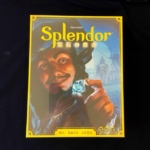
Splendor 2024 New Edition / Splendor - Board Game & Aroma LITTLE FOREST online shop
Art refreshed for the game's 10th anniversary edition.In Splendor, players become master gem merchants.
littleforest.shopDominion: Bought Cards Become Your Next Power—the Deck-Building Standard
Dominion (2+, ~30 minutes). Japanese edition by Hobby Japan; check their product page and major retailers for current pricing and age rating, as these vary by printing.
This game's growth lives in your deck. Weak copper-and-estate starter deck absorbs added purchases: extra draws, extra actions, pruned dead weight. Gradually "what you accomplish per turn" balloons—a quintessential engine-building + expansion-reproduction overlap. Shines with 2–4 experienced players focused on deck velocity rather than casual chat. A step beyond Splendor's accessibility—more "design joy" here. Dominion often follows Splendor as a medium-weight standard.
Dominion: Second Edition
ANALOG GAME INDEX
hobbyjapan.gamesCATAN: Negotiation Meets Growth on a Variable Board
CATAN (official new edition: 3–4 players, 60+ minutes, 8+). Distributor Gip's recent materials specify 3–4 players. Manufacturer list price ¥4,500 ($30 USD approx).
Growth here intertwines with negotiation and board conflict. Strong settlement placement stabilizes income; cities amplify further. Wanted resources don't flow from dice alone—trading and road politics reshape outcomes. Suits family tables, regular groups, negotiation-heavy 4-player sessions. Direct player interaction is high, so silent map-nurturers may prefer elsewhere. Tournament organizers budget ~68 minutes, suiting groups wanting one satisfying play.
CATAN (CATAN) Japan CATAN Association Official Page
catan.jpMachi Koro: Climb Income Stairs—Entry-Level Growth
Machi Koro (standard: 2–4 players, ~30 minutes, 7+; newer editions support up to 5). Old edition: ¥3,600 (≈$24); newer: ¥3,500 (≈$23).
A gateway to engine-building because dice → money → buildings → more income unfolds transparently. The staircase structure means even first-timers see growth. Perfect for families, child-inclusive tables, quick-rules contexts. ~30 minutes lets you reliably fit it into lunch breaks or session openings. Playstyle drifts celebratory—successes and setbacks become shared table moments rather than quiet efficiency hunts. Where Splendor feels like silent stockbroking, Machi Koro feels like cheering your town.
Res Arcana: Concentrated Combo in ~1 Hour—Bridge to Medium-Weight
Res Arcana (2–4 players, 30–60 minutes, 12+). No widely confirmed official Japanese product page; pricing unavailable from our check. Yet as a gateway from light to medium, it's exceptional.
Tight deck size means each card carries weight; combo density spikes. Where Machi Koro climbs income ladders slowly, Res Arcana compresses sparse hand into sudden momentum. Suits 60-minute focused tables, mixed experience groups, or "I want a step up from light games" scenarios. Novice + experienced 4-player tables find smooth progression: light → medium jump without losing satisfaction.
💡 Tip
"I love light games but want 'my own way to win' too"? Placing Res Arcana after Machi Koro transmits combo-rush before rule weight lands.
/picture_e5dd29f8-018b-4118-9029-2a6a0cd027ba.jpg?2026-03-14-18)
Res Arcana / Res Arcana
Board Game Totality Site "Bodoge-Ma": Members post introductions, reviews, replay diaries, strategy, product info for Res Arcana and more.
bodoge.hoobby.netLe Havre: Buildings and Ships Snowball—Heavy Weight
Le Havre (1–5 players, 100–200 minutes, 12+). Japanese edition by Hobby Japan (page exists; pricing data unavailable from check). Clearly heavy-weight; suits half-day game nights or "digest one game thoroughly" sessions.
Growth isn't mere resource stacking. Buildings unlock new actions; ships reshape food and income; cascading opens bigger plays. Resource + conversion + actions simultaneously strengthen. Early tightness becomes mid-game sigh of relief ("that costly turn now runs smooth") then endgame snowball. Rewards sustained engagement; short games risk "the engine starts as credits roll," but Le Havre lets you exhaust your creation. Not for plot twists—for savoring compounding growth.
For heavy-weight comparison, Terraforming Mars (1–5 players, 90–120 minutes, 12+; Arclight, ¥7,700/$52 approx) offers card-synergy depth over board logistics. Le Havre: board-operational weight; Terraforming: card-cascade weight. Long-session choice hinges on whether you prize board mastery or card combos.
Le Havre Complete Pack
ANALOG GAME INDEX
hobbyjapan.gamesGame Comparison Chart: Pick by Mechanism
You've seen each game's shape, but selection gets easier focusing on "what grows and how it feels?" rather than "is it engine-building?" Splendor discounts payment; Dominion grows the deck. Machi Koro inflates income directly; Le Havre expands entire action-scope.
Teaching difficulty scales clearly: Splendor → Machi Koro → Dominion → Le Havre in cognition steps. Res Arcana bridges mid-tier; heavy with short runtime. CATAN adds negotiation as core experience layer—conversation depth beyond pure board development.
Charting by axis:
| Title | Mechanism Type | Growth Focus | Beginner-Friendly | Direct Conflict | Rules Overhead | Game Length |
|---|---|---|---|---|---|---|
| Splendor | Resource Conversion | Tokens→Cards→Permanent Discounts | Very High | Low | Very Low | <60 min |
| Dominion | Deck-Building | Purchased Cards Strengthen Deck | Medium-High | Low (Medium w/ attack cards) | Medium | <60 min |
| Machi Koro | Income Growth | Expand Revenue→Buy Big Facilities | Very High | Medium | Low-Medium | <60 min |
| Res Arcana | Card Combo Medium | Hand Synergy Multiplies Output | Medium | Medium | Medium | <60 min |
| CATAN | Negotiation+Development | Resource Acquisition+Building via Trade | High | High | Medium | 60–90 min |
| Le Havre | Heavy Development | Buildings+Ships Expand Conversion+Actions | Low-Medium | Low-Medium | High | 120+ min |
Splendor nails expansion-reproduction's "pure form"—what inflates (discount cards) stays visible. Purchase cascade cause-effect chains cleanly.
Dominion: Expansion through design, not visibility. Building deck quality (hidden in composition) rather than visible factories. Design-satisfaction focuses more.
Machi Koro: Income-increase clarity delights. Dice → cash → building → stability flows intuitively. Growth wears growth on its sleeve.
Res Arcana: Card-combo medium—small pieces, big moment. Unassuming until synergies fire.
CATAN: Outlier—growth is negotiation's fruit, not its driver. Conversation is interference here.
Le Havre: Growth transcends income into economy-scope. Decisions multiply; planning satisfaction eclipses "more resources good."
💡 Tip
Reading the chart: scan "Beginner-Friendly" + "Rules Overhead" first, then layer "Direct Conflict." Silent efficiency → Splendor; celebratory growth → Machi Koro; card-craft → Dominion; negotiation → CATAN; concentrated depth → Res Arcana; long mastery → Le Havre.
Table shows same "growing fun" hits very differently per design. Selection success hinges on spotting what expands (currency? deck? actions?) and that medium resonating with you.
Beginner Stumbles: Three Common Traps
Newcomers stumble less from complex rules than from confusing "expansion" with "victory". Board/deck growth feels so potent that enthusiasm overspills into runaway builds. Yet winning turns growth into points at the right moment—transformation, not mere size.
- "Just expand and I win"—a pervasive myth
Biggest error: assuming bigger engines always win. Early investment does help—but all games end. Points thresholds, building targets, fixed rounds force timing. Miss that windfall-to-victory conversion, you lose with a beautiful economic corpse.
Classic Dominion trap: pure deck joy overshadows estate purchases until late-game scramble. Combos sing, hand overflows, purchases glow—but scoring cards languish unchosen. Game ends; superior deck loses. Lesson: termination-condition matters more than engine size. Mid-game pivot from expansion to scoring is the actual skill.
- Resource bottlenecks left untended
Another frequent stumble: total output climbs but conversion stalls. Forests accumulate, needed-color discounts vanish, cash exists but no extra actions spend it. Growth stops—hidden, not obvious, because the spreadsheet looks fine. Production imbalance early lingers late.
Fix: diagnose the jam. Need conversion tools? Buy them. Want smoother income? Stabilize generation. Feeling action-starved? Grow action sources. Expansion includes bottleneck removal. Le Havre teaches this sharply—pure production volume without next-step building leaves you stuck.
- Chasing explosive plays while baseline crumbles
Novices fixate on standout combos. Yet consistency wins. Strong tables prioritize minimum viable turn over home-run spikes. One guaranteed resource per turn beats three-turn feast/famine.
This consistency—each turn hitting minimum threshold—sustains advantage. Expansion-reproduction satisfaction marries explosion to stability: big moments rest on solid foundation. FTC pieces on "steady scaling" nail this: reliability over volatility wins.
Rules clarity at induction that touches endgame, bottleneck risk, and baseline consistency shifts first-play satisfaction dramatically. Board Game Induction: Clarity Tips & Script Templates pairs helpfully here.
💡 Tip
Stuck? Reframe: "What's my floor this turn?" not "How big can I go?" Endgame-aware choices + bottleneck spotting + baseline security = growth that scores.
Picks by Player Count & Time
Engine-building character swings sharply with people and duration. "What grows?" and "When does growth start feeling good?" matter more than rule weight.
Two-Player Tight
Splendor shines 2-player: 2–4 support, ~30 min, no downtime feel. Taken tokens → cards → permanent breaks—short window, thick satisfaction. Multi-plays in one session breed read-ahead.
For denser 2-player: Res Arcana (2–4, 30–60 min). Tight hand = heavy per-card weight. One-on-one pressure peaks.
Three to Four-Player Anchor
CATAN (3–4, new edition specs) is tableside canon. Negotiation breathes at 3+ humans. Growth intertwines with "will they trade?"
Dominion (3–4 anchors well too): ~30 min, deck-refresh-as-story scales. Expansion option breadth lets groups dial complexity up easily after mastery.
60 Minutes or Bust
Splendor, Machi Koro, Res Arcana all live here. Splendor compresses growth-curve tightest. Machi Koro spreads income staircase-clear. Res Arcana concentrates combo-rush. Pick flavor: purest curve, clearest ladder, densest click.
Comparison reference: Eureka: Moment (2–4, 60 min) occupies similar 1-hour-ish medium weight. 60-min tier rewards how fast the "unspooling" starts, not minimal complexity.
💡 Tip
Weeknights: play 60-min light twice, then 90-min medium once. Quick satisfaction + sustained depth bridges evening well.
90–120 Minutes with Medium-to-Heavy Heft
Terraforming Mars (1–5, 90–120 min; Arclight, ¥7,700) dominates mid-long. Card synergy density spikes. 90–120 official + rules = comfortable 2-hour block. Step above light, yet short of Le Havre marathon.
120+ for Full Commitment
Le Havre (1–5, 100–200 min) stands alone. Not long for duration's sake—board economics unfold across hours. Early scarcity yields late abundance. Development blooms as history, not spike. Long-game devotees see marathon as feature.
FAQ
Can beginners enjoy this?
Absolutely. Light-weight games showing rapid reward-returns work best as entry. Splendor's one card instantly lightens next purchase—intuitive cause-effect. Machi Koro's income-to-building climb feels natural. Age: Machi Koro 7+, Splendor 10+. For younger: Happiest Town (6+, ~15 min). Family satisfaction hinges on visible growth, not depth—watch your town blossom beats watching point tallies.
How much luck factors?
Varies sharply. CATAN exemplifies luck-heavy: dice determine output; negotiation + board placement layer on. Good rolls advantage players, but conversation—"trade with whom?"—becomes game spine. Dominion and Res Arcana compress luck substantially via composition/compression choices. Card-draw randomness exists, but hand/deck quality you engineer means luck-tossing feels gentler. Not "luck yes/no" but "how does the design frame luck?"—that question guides selection.
Typical play duration?
Broad range. Shortest: Happiest Town, ~15
Wrap-Up: Start with a Game Where the Growth Payoff Is Easy to See
The best first game is one where the satisfying moment of growth is immediately visible. For beginners, Splendor. For a step up, Res Arcana. For a long, immersive build, Le Havre. The selection criteria are straightforward: match your player count and the time you can commit, and you are set.
Start with the comparison table and find the one title that fits your table. If you want to stay under 60 minutes, stick with entry-level picks; if you can commit 90 minutes or more, the mid-to-heavy range opens up. Before purchasing, a quick check of player count, play time, and target age on each game's official page or info site will keep you from missing.
Before purchasing, a quick check of player count, play time, and target age on each game's official page or info site will keep you from missing. If you are unsure about pulling the trigger, our guides on Buying Your First Board Game and Board Game Beginner Recommendations are helpful companions.
A scenario writer with 18 years of TRPG experience and 15 years as a game master. With over 5,000 cumulative downloads of his original scenarios, he conveys the magic of narrative experiences through games.
Related Articles
7 Essential Worker Placement Games for Beginners|How to Choose Your First Game
The appeal of worker placement lies in how shared action spaces and turn order create a natural mind-reading game between players. When you play Stone Age with three people on a weekday evening and someone claims the timber spot you wanted, forcing you to pivot toward hunting and dice rolls—that mix of 'frustration at being blocked' and 'the joy of finding an alternative' is the core of this mechanic.
15 Best Two-Player Board Games | Compared by Type
When it comes to two-player board games, you'll have better luck starting with games designed specifically for two rather than picking whatever's popular. That said, there are multi-player games like Azul and Splendor Duel that genuinely shine as two-player experiences.
10 Best Solo Board Games | How to Choose & How Deep You'll Get
Whether you want a quick 15-30 minute game on a weeknight or a solid 90-minute deep dive on the weekend, solo board games get easier to choose once you narrow things down by whether the game is solo-only or has a solo mode, and then filter by play time, weight, and format. This article breaks down 10 titles — including Onirim, Under Falling Skies, and Coffee Roaster — in a clear, side-by-side way.
Best Board Games for 3 Players — Standout Titles Built for Bluffing and Negotiation
Finding the right board game for three players isn't just about headcount. Three-player games occupy a sweet spot — more tension than a two-player duel, tighter reads than a four-player free-for-all — where "who do I stop right now?" and "when do I swoop in for the win?" become genuine strategic questions.