
12 Best Board Games for Elementary School Kids | By Grade Level
12 Best Board Games for Elementary School Kids | By Grade Level
Choosing board games for elementary schoolers gets tricky when everything is lumped together as "for kids." The truth is, younger kids need games with quick rules and short playtimes, while older kids want depth and strategic challenge — and satisfaction levels vary a lot depending on which you pick.
Grouping board games as "for kids" makes it hard to find the right one. Younger elementary kids thrive with fast rules and short sessions, while older kids want enough strategic depth to feel genuinely satisfied. Those are two very different things.
This article lines up 12 games — from Dobble and Blokus to Catan — and compares them on the same axes: clarity for each grade level, sense of accomplishment, and whether adults enjoy them too. Player count, playtime, recommended age, difficulty, and reference pricing are all laid out consistently. Whether you need something for 2 players, a family of 4, a bigger group, or a game under 20 minutes, this guide is built for families trying to pick that first game for a rainy day or a weekend.
In our own playtesting with households and game nights, tables with a 7-year-old and a 12-year-old showed a clear pattern: fast-reaction games sparked excitement right away, while longer think-heavy games created noticeable gaps in patience between the two ages. We'll touch on the educational angle too — but without overstating it. We'll point to classroom examples and research as supplementary references, with the primary goal of finding a game that's genuinely fun to play.
How to Choose Board Games for Elementary Schoolers
Reading the Grade Level
The first filter that actually works is the recommended age on the box. The 5+, 7+, 8+, and 10+ labels you see in stores and on product pages aren't arbitrary — they compress three things: rule comprehension, attention span, and fine motor handling. As a rule of thumb, younger kids (lower elementary) tend to find 5+–7+ games accessible, while upper elementary kids get more satisfaction from 8+–10+ games.
For kids roughly 6–8 years old, what matters most is short playtime, instantly readable visual design, and minimal downtime between turns. Dobble (ages 6+, ~15 minutes, 2–8 players) and Halli Galli (ages 6+, ~15 minutes, 2–6 players) both fit this perfectly — rules take minutes, and kids can react from the very first card. In our experience, showing a 7-year-old a card and saying "find the matching symbol first" or "ring the bell when it hits 5" works far better than a verbal explanation. Games like Niji Monja (name-assigning memory) or Rhino Hero (see-it-instantly stacking) hit the same sweet spot.
By grades 4–6, the definition of fun shifts. It's no longer just about accessibility — it's about whether there's a meaningful decision to make and whether the game plays differently each time. Blokus (ages 7+, ~20–30 min), Kingdomino (~15–30 min), Carcassonne (30–45 min), Splendor (ages 10+, ~30 min), and Catan (ages 8+, ~60 min) all reward players who think ahead. When older kids suddenly look serious mid-game, it's usually because they've hit that threshold — the point where light games give way to the first taste of medium-weight strategy.
If the recommended age doesn't perfectly match your child's actual grade, the adjustment factor is parental support. A 10+ game can work for a younger upper-elementary player if someone helps them see what their options are on each turn. Conversely, a 7+ game can feel heavy for younger kids if it's text-heavy or has long turns. Think of age ratings as the entry point; actual playability comes down to the length of the rules explanation and how obvious each move is.
Matching Playtime to Your Schedule
Playtime is one axis where matching your daily routine beats matching personal taste. Light games run 15–20 minutes, medium-light around 30, family games around 45, and medium-weight games 60–90 minutes — aligning with that framework makes selection much easier.
On a weeknight, games that wrap up in 20 minutes are the most reliable. For younger kids, aim for rules explanations of 3–5 minutes. Dobble clocks in at "5-minute rules explanation + 15-minute game" for one complete session; Niji Monja gets going even faster. If you only have 30 minutes after dinner, running two 15-minute games keeps the atmosphere lighter than forcing one longer game — and short games make "one more round" feel natural, which helps board gaming stick in families new to the hobby.
On weekends or longer breaks, 30–45 minute games hit the sweet spot. Blokus, Kingdomino, Carcassonne, and Viva Topo all sit in a range that feels satisfying without dragging. For older kids, this 30–45 minute window is where "reading ahead" and "watching your opponents" actually become interesting. It's not just a longer version of a quick game — it's where momentum shifts become part of the experience.
60–90 minute games go deeper, but kids' focus can drift. A game like Catan (~60 min) is a powerful experience when negotiations and planning click — but it's a weekend game, not a weeknight one. On days when older kids are in "I want to think and win" mode, the length lands perfectly; on tired days, it drags. Matching game length to the moment makes the same game feel totally different.
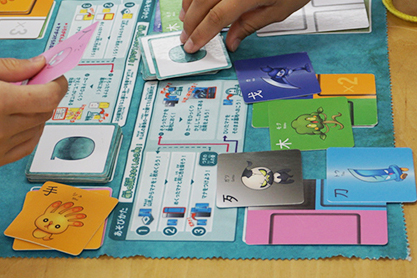
授業でボードゲーム、「遊び」と「学び」の中で意欲を育む
ゲームやYouTubeなど子供たちの娯楽はデジタルへと変わっているが、一方で電源を使わない、企業や個人が制作するボードゲームも世界的なトレンドになっている。最近では、ボードゲームが持つ教育効果に注目する教育者も増えており、学校の授業や教育活
edu.watch.impress.co.jpChoosing by Player Count
Beyond the supported player range, look at the best player count — that's what actually determines how much fun you'll have. A game listed for 2–4 players might be tight and tense with 2 but come alive with 4. The numbers on the box only tell part of the story.
If your household often has just two players — siblings or parent and child — 2-player dedicated games are worth prioritizing. Dobutsu Shogi is designed for exactly 2, explains quickly, has an immediately readable win condition, and works well for young kids while still developing forward-thinking habits. Geister is also 2-player only, with 10–20 minutes of bluffing and deduction. Two-player games have no downtime between turns, which works especially well for kids who struggle to wait.
The sweet spot for most families is 3–4 players. That's where the strongest selection lives. Dobble shines with 4–6, Halli Galli with 3–6. Blokus, Kingdomino, Carcassonne, Splendor, and Catan all comfortably seat 2–4 or 3–5 — right in the range of one parent plus two kids, or both parents plus two kids.
When 5 or more people gather, shift away from deep strategy toward team energy and party feel. Simultaneous-action games like Dobble and name-memory games like Niji Monja maintain pace with larger groups. Trying to run a 2–4 player strategy game with 5+ players stretches downtime and younger kids disengage first. More players doesn't automatically mean more fun — the question is whether the game's pacing holds.
💡 Tip
At tables with younger kids, prioritize "how fast does your turn come back?" over headcount limits. A game that technically fits your player count but has long downtime will bore younger players before it entertains them.
Genre (Reaction / Strategy / Cooperative) and Who Gets to Win
Different genres give kids different reasons to win — and understanding that tells you a lot about whether the game will work for a given table, whether parents can stay engaged, and whether siblings will fight.
Reaction games are the best genre for bridging age gaps. Dobble and Halli Galli are the classic examples — winning depends on what you notice right now, not on accumulated knowledge or experience. Adults don't automatically win, and kids have a real shot. That keeps the atmosphere at family tables positive. For younger kids especially, spotting something and reaching for it is far more engaging than making complex decisions.
Strategy games are more fun for thinking and building, but experience gaps show up. Blokus, Kingdomino, Carcassonne, Splendor, and Catan all live here. For upper elementary kids, the feeling that "the outcome matched how hard I thought" becomes the source of fun. In the 30–45 minute zone, there are moments when a player's ability to read ahead suddenly clicks — strengths invisible in lighter games come through. For younger kids, too many options cause paralysis, so starting with games like Blokus or Kingdomino, where each turn is structured, makes the transition smoother.
Cooperative games make age-gap tables easier to manage. Our 12-game lineup skews competitive, but it's worth keeping co-ops in mind as a selection principle. Without individual winners, large age gaps between siblings stop being a problem, and the sting of losing fades. Educators have noted this too — as referenced in the Impress Watch article about classroom use, the appeal is real. But at home, "do we have fun together" matters more than "is it educational."
The shorthand: younger kids → reaction/memory games, older kids → strategy games, siblings with age gaps → cooperative games. Reaction games get picked as first games not just because rules are short but because kids have a genuine chance to win.
Price and Availability
Family board games aren't an extremely expensive hobby. The sweet spot sits in the 3,000–5,000 yen (~$20–35 USD) range for mainstream titles, and that matches real-world browsing on sites like Price.com. The average sold price for "board games" on auction sites like Aucfan was 4,271 yen (~$28 USD) over the past 30 days — which means the new vs. used decision is easy to make at that price point.
Looking at specific examples: Dobble has been listed on Amazon Japan for around 3,088 yen (~$20 USD), while the Japanese edition of Halli Galli has appeared at 2,370 yen (~$16 USD). Viva Topo has shown up around 5,200 yen (~$35 USD). Short games for younger kids are generally more affordable; games with elaborate components or heavy import costs run a bit higher.
On availability: well-established classics are easiest to find, and the market itself has grown substantially — academic data from a University of Aizu study shows the market grew 4.5x between 2009 and 2015. More titles are now stocked at retail, stable on Amazon, and circulating in the used market. Beyond the initial price, consider whether the game is easy to replace or expand — that's a factor that pays off in long-term satisfaction.
The 12 Best Board Games for Elementary Schoolers
Quick Comparison Table
Here's the full lineup on the same axes. Think of them in two bands: short-play games suited for weeknight sessions, and mid-length games better for weekends. Reaction games get cheers the moment a younger kid outpaces an adult; strategy games produce that quiet confident look on an older kid's face when a single move decides the game.
| Game | Genre | Players | Time | Age | Difficulty | Reference Price | Grade Level | Best Count | Rules Explanation |
|---|---|---|---|---|---|---|---|---|---|
| Dobble (Spot It!) | Reaction / Recognition | 2–8 | ~15 min | 6+ | Beginner | ~3,088 yen (~$20 USD) on Amazon Japan | Lower–Upper Elementary | 4–6 | ~5 min |
| Niji Monja | Memory / Party | 2–6 | ~15 min | 4+ | Beginner | — | Pre-K–Lower Elementary; Upper Elementary fine too | 3–6 | 1–3 min |
| Halli Galli | Reaction / Number Recognition | 2–6 | ~15 min | 6+ | Beginner | ~2,370 yen (~$16 USD) on Amazon Japan | Lower–Upper Elementary | 3–6 | A few min |
| Rhino Hero (Captain Riino) | Balance / Dexterity | 2–5 | 10–15 min | 5+ | Beginner | — | Pre-K–Lower Elementary | 3–5 | A few min |
| Viva Topo! | Race / Tactical | 2–4 | ~30 min | 4+ | Beginner | ~5,200 yen (~$35 USD) on Amazon Japan | Lower Elementary | 3–4 | A few–5 min |
| Blokus | Placement / Territory | 2–4 | ~20–30 min | 7+ | Beginner | MSRP listed on Mattel official site | Late Lower–Upper Elementary | 4 | 3–5 min |
| Geister | 2-Player Deduction | 2 | ~10–20 min | 8–10 (est.) | Intermediate | — | Upper Elementary | 2 | 1–5 min |
Dobble (Spot It!) — Bridging Age Gaps Through Pure Recognition
Dobble's strength is how cleanly it absorbs age differences. The rules take minutes to pick up, and gameplay comes down to spotting the one shared symbol between two cards — younger kids jump right in. At family tables, "wait, you saw that?" moments happen regularly when kids outpace adults, which is why this makes such a reliable first game. A complete session — rules plus one game — fits in 20 minutes, making it easy to squeeze into the time after dinner.
Specs: 2–8 players, ~15 minutes, ages 6+, beginner difficulty, ~3,088 yen (~$20 USD) on Amazon Japan. Works for lower through upper elementary; best at 4–6 players. Rules explanation takes ~5 minutes.
Best for households with siblings of different ages, families expecting relatives over, or anyone wanting a quick weeknight game. Since winning is about reaction and recognition — not knowledge or long explanations — nobody gets left behind. Watch out: simultaneous gameplay can feel noisy to kids who prefer quiet thinking, and repeated losses can turn "I almost had it" into real frustration. Great fit for kids who love spot-the-difference puzzles and fast-paced play. Not ideal for kids who prefer thinking carefully in turns or who get rattled by speed.
Niji Monja — Chaos, Laughter, and Impossible Names
Niji Monja is the kind of game that instantly softens the atmosphere at the table — more so than the outcome of who wins. Each weird creature gets a name made up on the spot; when it reappears, the first person to shout that name wins the pile. It's a memory game, but it never feels like one. For younger kids, the naming alone is already fun before the competition kicks in. With families, it's usually the ridiculous names that generate laughter, not the final scores.
Specs: 2–6 players, ~15 minutes, ages 4+, beginner difficulty. Pricing varies by retailer — check current listings. Best for pre-K through lower elementary; upper elementary players do fine too. Optimal at 3–6 players; rules explanation is 1–3 minutes.
Works well for households where kids zone out during rules explanations, where laughs matter more than competition, or where grandparents are at the table. One caveat: because the fun of naming is part of the game, shy kids may take a round or two to warm up. It's also not the right game for older kids craving strategic challenge — it'll feel too casual. Great for kids who love wordplay and goofing around. Less so for kids who prefer structured board decisions.
Halli Galli — Bell-Smashing Reaction Fun
Halli Galli layers a satisfying physical action on top of the reaction genre, which makes it especially popular with younger kids. Spot when a single fruit type totals 5 on the table, ring the bell first, take the cards. The visual logic is easy for young players to follow, and number sense develops naturally through play. The win feels more visceral than Dobble — the bell makes it audible.
Specs: 2–6 players, ~15 minutes, ages 6+, beginner difficulty, ~2,370 yen (~$16 USD) on Amazon Japan. Works for lower through upper elementary; best at 3–6 players; rules explanation in a few minutes.
Good for sibling groups who want an energetic game, families who want something with just enough math woven in, and anyone who wants quick, high-energy fun. The downside: the bell creates momentum that can get heated, and it's not the quietest late-evening option. Kids who love active, physical reactions and clear win moments will love it. Kids sensitive to noise or speed, or who struggle to let go after losing, may find it frustrating.
Rhino Hero (Captain Riino) — Stacking Tower of Shared Suspense
Rhino Hero is all about understanding the fun before the rules are even explained. Players build walls and roofs from cards and stack a Rhino figure higher and higher. Younger kids connect with it immediately because opening the box tells you exactly what you'll be doing. It's technically a competitive game, but as the tower grows, everyone starts holding their breath together — competition and collective suspense blur naturally.
Specs: 2–5 players, 10–15 minutes, ages 5+, beginner difficulty. Great for pre-K through lower elementary; older kids enjoy the dexterity challenge too. Best at 3–5 players; rules explanation in a few minutes.
An ideal first board game for families, especially if kids respond better to physical objects than card games, and works well when you want a game where losing still ends with laughter. The strategic depth is limited — it's a dexterity game — so older kids seeking planning and deduction may find it shallow. Perfect for kids who love building toys or anything with tension-filled suspense. Less ideal for kids who struggle when physical mistakes lead directly to losing, or who want lots of decision space.
Dobutsu Shogi — The Gentlest Gateway to Strategic Thinking
Dobutsu Shogi is a genuinely well-designed on-ramp to abstract strategy. The board is small, the pieces move simply, and younger kids can quickly see what they're actually trying to accomplish. This isn't just an educational toy — it delivers the genuine pleasure of thinking one step ahead of your opponent, in a format that doesn't overwhelm. Feels like chess but without the intimidation factor.
Specs: 2 players, a few minutes to ~15 minutes, ages 4+, beginner difficulty. Best for pre-K through lower elementary; works as an intro for middle elementary too. Optimal at 2 players; rules explanation in a few minutes.
Best for parent-child pairs who want calm, focused sessions; families where full chess feels too early; or anyone looking to introduce thinking-based play in short bursts. The 2-player limit means three or more siblings can't play simultaneously, and experienced adults can outpace kids quickly. Great for kids who enjoy reading ahead and quiet, face-to-face competition. Not suitable for kids who want constant action or large group energy.
Viva Topo! — Adorable Theme, Genuinely Satisfying Decisions
Viva Topo! hooks younger kids with its look, then surprises them with real decision-making underneath. Mice racing toward cheese while a cat gives chase is instantly understandable as a theme — kids get the premise before a rule is explained. But there's actually meaningful choice in how far to push each mouse forward and which ones to protect. Cute, but not shallow.
Specs: 2–4 players, ~30 minutes, ages 4+, beginner difficulty, ~5,200 yen (~$35 USD) on Amazon Japan. Best for lower elementary; optimal at 3–4 players; rules explanation a few to 5 minutes.
Works well for families who prioritize an approachable look, who want one step up from roll-and-move games, and who want sibling play in the 30-minute range. One thing to note: the charm of the theme contrasts with mid-game decisions that are surprisingly unforgiving — if someone expects pure luck, they'll be caught off guard. Great for kids who love animal themes and enjoy mixing light strategy with chance. Less so for kids who prefer a faster pace or get very upset when tactical choices go against them.
Blokus — Equal Footing, Spatial Puzzle for the Whole Family
Blokus stands out because every player is truly on the same footing regardless of age. The rule is simple: connect your pieces corner to corner and expand your territory. But where you place larger pieces, and which spots you block, is what separates players — so younger kids can participate while older kids stay genuinely engaged. As the board fills up, "oh, you blocked me there" becomes visible even without words, and a quiet game can suddenly get intense.
Specs: 2–4 players, ~20–30 minutes, ages 7+, beginner difficulty, MSRP listed on Mattel's official site. Best for late lower elementary through upper elementary; optimal at 4 players; rules explanation 3–5 minutes.
A solid pick for families of four looking for a reliable game, for anyone who wants skill over luck, and for those who want a strategy game with a short rules explanation. With 3 players the board dynamics shift somewhat, and forward thinking matters more than it looks — experienced players gain an edge gradually. Great for kids who enjoy puzzles and spatial thinking. Less suited for kids who want random reversals or lots of social interaction.
Geister — The 2-Player Psychological Duel
Geister is one of the best introductions to the pleasure of reading your opponent available to elementary schoolers. You move pieces whose identity is hidden from your opponent — they can't tell good ghosts from bad ones. Rules are short, but the content is dense. By upper elementary, kids start reading moves: "that's suspicious," "they're deliberately letting that one get away," and suddenly parent and child are locked in a genuine battle of wits.
Specs: 2 players, ~10–20 minutes, ages 8–10 (estimated), intermediate difficulty. Best for upper elementary; optimal at 2 players; rules explanation 1–5 minutes.
Ideal for parent-child pairs who want a real contest, for families seeking something lighter than chess but still full of strategic depth, and for anyone who wants a short but intense competitive game. The 2-player restriction is a real limit, and the game's core is psychological — reading expressions and habits — so players who aren't interested in that angle will find it flat. Great for kids who love figuring out what others are thinking and enjoy bluffing and deduction. Not for kids who prefer hidden-role tension to be absent, or who would rather have more randomness.
Kingdomino — The First Taste of Trade-Off Thinking
Kingdomino is an excellent entry point to tile-placement games. The action is simple — pick a tile, add it to your kingdom — but the mechanism that taking a better tile means acting later in the next round adds a layer that pure optimization can't solve. Upper elementary players find exactly the right amount of "immediate gain versus long-term turn order" to wrestle with here. Looks gentle, but the choices genuinely sting.
Specs: 2–4 players, ~15–30 minutes, ages ~8, beginner difficulty. Best for middle through upper elementary; optimal at 3–4 players; rules explanation 3–5 minutes.
Good for families who want a step up from Blokus in decision depth, who want strategic feel within 30 minutes, and where both parents and kids enjoy lighter strategy. The one limitation: with limited direct conflict, players expecting dramatic interference or events will find it quieter than anticipated. Great for kids who like arranging and combining, and enjoy growing their own board. Less ideal for kids who want dramatic moments or lots of table talk.
Carcassonne — The Medium-Weight Gateway
Carcassonne has players draw tiles, build a landscape, and position meeples to claim points. The core rules are simpler than they look, but deciding where to play, whether to complete a feature, and whether to share (or steal) a city all add up to real strategic weight without being heavy. When older kids start muttering "don't let them finish that road" or "should I invest in the farm now," the game opens up properly. Widely recognized as a gateway to medium-weight games for good reason.
Specs: 2–5 players, ~30–45 minutes, ages 7+, intermediate difficulty. Best for late middle through upper elementary; optimal at 3–4 players; rules explanation 5–10 minutes.
Works for families where kids can sit through 30+ minutes, who are starting to appreciate area control and scoring mechanics, and where parents also want to think. Younger kids may find the tile evaluation and scoring a bit information-dense. Great for kids who love maps and city-building vibes, and who want their score accumulation to feel logical. Less ideal for kids who want short, punchy sessions or who stall when options are wide open.
Splendor — Planning Ahead, Then Watching It Pay Off
Splendor delivers the satisfaction of engine-building in about 30 minutes. The early game looks modest, but the moment your discounts stack and a high-value card becomes buyable, the payoff is real — the feeling that a plan came together is unmistakably there. Upper elementary kids start seeing "should I take gems or a card right now?" as a genuine puzzle. Parents stop going easy pretty quickly.
Specs: 2–4 players, ~30 minutes, ages 10+, intermediate difficulty. Best for upper elementary; optimal at 3–4 players; rules explanation 5–10 minutes.
Ideal for families who value planning over luck, for parent-child sessions that favor calm thinking, and for households where a slightly adult-feeling theme isn't a barrier. The downside: the fun lives in turn-by-turn planning, and the board state is relatively quiet visually — younger kids may not feel the appeal until several turns in. Great for kids who love efficient collection and building toward a goal. Not the right pick for kids who want dramatic reversals or flashy action.
Catan — Negotiation, Resources, and a Full Weekend Afternoon
Among everything on this list, Catan delivers the strongest sense of having actually played a game. Gathering resources, expanding roads and settlements, negotiating trades — it's clearly different from moving pieces around a track. For upper elementary kids, the realization that dice luck alone doesn't determine outcomes — that how you negotiate and which direction you expand matters — is when the game really clicks. Worth setting aside proper time on a weekend.
Specs: 3–4 players, ~60 minutes, ages 8+, intermediate difficulty. Best for upper elementary; optimal at 3–4 players; rules explanation 10–20 minutes.
Works well for families who can sit down for a focused hour, who enjoy talking and negotiating through play, and who are curious about resource management and trading mechanics. The rules explanation is the longest of this 12-game lineup, and younger kids may find the downtime and decision volume heavy. Great for kids who love negotiating and planning, and who can sustain focus through a longer game. Not for kids who prefer quick resolutions, or who have a hard time shaking off unlucky dice streaks.
Best Board Games for Younger Elementary Kids
Start Here: Dobble / Niji Monja / Viva Topo!
Picking games for younger elementary kids comes down to a clear set of criteria: rules explained in 3–5 minutes, a visual design that communicates the goal instantly, short downtime between turns, and a real chance for kids to win even with age gaps at the table. Dobble, Niji Monja, and Viva Topo! check every box. Genre-wise, they cover reaction, memory, and light tactical decision-making — the right entry zone for keeping younger kids focused and engaged.
Dobble is the one you explain with a single card. "Find the matching symbol first" is the entire pitch, and seeing one example makes it click faster than any verbal walkthrough. 2–8 players, ~15 minutes, ages 6+, ~5-minute rules explanation. Everyone looks at the same cards at once, so there's virtually no downtime between turns. Adults don't automatically dominate either — and the first time a young kid beats a grown-up, the energy at the table shifts noticeably. That first win is the hook. It's also short enough to fit into time after dinner without anyone feeling cheated.
Niji Monja also builds early wins naturally for younger players. 2–6 players, ~15 minutes, ages 4+. New creature = make up a name = shout it faster when it reappears. The rules explanation is 1–3 minutes at most, there are no hard decisions, and younger kids often remember their own made-up names better than adults do — so the "experienced player has the edge" assumption breaks down in a fun way. Works across age gaps without anyone getting left behind, and the stakes stay light enough that losing doesn't leave a bad taste.
Viva Topo! takes a bit longer, but the visual setup does the explaining. 2–4 players, ~30 minutes, ages 4+. Mice fleeing, cat chasing — the board state narrates itself. The dice and movement create enough randomness that strategic skill gaps don't dominate outcomes, and younger kids can genuinely finish ahead. Turns resolve quickly enough that watching is interesting, not tedious. There's a slight narrative quality that draws kids who want to be in the game's world, not just reacting to it.
ℹ️ Note
How you explain the rules matters too. The approach covered in our guide on teaching board games effectively — from setup to a step-by-step script — applies directly to sessions with younger kids.
Under 20 Minutes: Halli Galli / Rhino Hero
On school nights or after homework, the one question that determines the game is whether it wraps up in under 20 minutes. Younger kids don't disengage because a game is boring — they disengage because it's too long. Games that produce results fast are simply more stable. Both Halli Galli and Rhino Hero deliver here.
Halli Galli is a classic: 2–6 players, ~15 minutes, ages 6+. Flip fruit cards, ring the bell when a single fruit totals 5. It's entirely visual — no reading required, no turn-long calculations. What makes it useful for younger kids specifically is that it builds number sense while feeling like pure reaction. Turns process fast, player count doesn't slow the pace, and the "faster hand wins" dynamic means age advantage doesn't lock outcomes. Reversals happen regularly.
Rhino Hero runs 2–5 players, 10–15 minutes, ages 5+. Stand up card walls, place roof cards, advance the Rhino — the game explains itself before the rules do. One turn is never long, and the growing tower means spectators stay glued to the table. Dexterity differences exist, but brave kids who commit their moves often outperform cautious adults. Even when the tower falls, the collapse is the event — not a disappointing ending. The game resets without anyone feeling bad.
These two games share the same strengths — short rules, instant visual communication, quick sessions — but play very differently. Halli Galli is about reaction and number sense; Rhino Hero is about dexterity and spatial judgment. Either one plants the idea that board games start fast and stay fun, and that idea sticks.
First Steps Into Thinking: Dobutsu Shogi / Blokus
Even for younger elementary kids, there are games where "making a real decision" is the point — not just reacting. The conditions are the same: not too many options at once, a board that's readable at a glance, turns that don't drag. Dobutsu Shogi and Blokus both fit.
Dobutsu Shogi is a 2-player game, quick (a few minutes to ~15), and serves as an on-ramp to abstract strategy. The piece movements are printed on the pieces themselves — no memorization required. That's the thing that makes chess-style games feel heavy for younger kids (holding all movements in your head), and Dobutsu Shogi removes that entirely. The board is small enough that threats and opportunities are clearly visible. It doesn't reduce the thinking — it makes the thinking visible. With 2 players and short games, the gap between repeated matches narrows fast, and kids start finding their own winning lines.
Blokus is 2–4 players, ~20–30 minutes, ages 7+. Connect your pieces corner to corner and spread. Rules fit in 3–5 minutes. There's one central constraint — corner connections only — and that single rule structures every decision. Younger kids don't get lost in too many options because the constraint narrows the search space. Adults have an edge in forward planning, but kids who place their large pieces early can build shapes that hold up, and age doesn't lock results.
Moving from Dobble or Niji Monja into these two games is a natural progression. Once kids have felt "I can win" and "I get the rules immediately," they're much more willing to sit with the discomfort of actually thinking. The key at the lower elementary level isn't making hard games accessible — it's stacking games that start easy and have just enough decision-making to grow into.
Best Board Games for Upper Elementary Kids
Start Here: Kingdomino / Blokus / Geister
For older kids, the first filter is whether the decision points are clear enough to reflect on. Even a simple ruleset works if players can identify why they won or lost — "I thought that through and it paid off" or "I'll do that differently next time" are exactly what upper elementary kids need for a game to leave a mark. Without that, the session just disappears. Research cited in guides for upper elementary board games consistently shows that strategic feel — even in short games — is what makes these players come back.
Kingdomino is 2–4 players, ~15–30 minutes. What clicks for older kids is the two-layer decision: which tile to grab, and where to place it. You can't just optimize greedily — taking the best terrain means acting later next round, which may cost you flexibility. That tension between immediate benefit and turn-order positioning is exactly the right level of mental friction. The changing tile lineup every round means the board never looks the same twice, keeping Replayability high for a short-format game. When parents compete seriously, kids step up to match them.
Blokus runs 2–4 players, ~20–30 min. Older kids who've played it before see it differently on a replay. It's not just "find where to place" anymore — it's expand your own paths while closing off your opponents'. Younger players celebrate getting big pieces down early; upper elementary players wince at having a key corner cut off, or realize in retrospect they should have saved a small piece for the endgame. The board is simple, which means the feedback loop is tight: the reason you lost is usually visible right there on the board. That's the kind of defeat that becomes a lesson — exactly what makes a placement game worth returning to.
Geister is 2-player only, ~10–20 minutes. For older kids, the hook isn't the complexity — it's reading an opponent through incomplete information. Multiple win conditions (escape a good ghost or bait them into capturing a bad one) mean a seemingly losing position isn't necessarily lost. Every piece movement carries implied information. Older players start wanting to track habits, not just positions. The losing moment — "I followed a decoy," "I should have blocked the exit" — is sharp enough to fuel a rematch immediately. One short game turns into three before anyone notices.
All three games wrap up in 20–30 minutes while giving clear, thinkable reasons for outcomes. That's the right density for upper elementary kids who are past blaming luck and ready to sit with "my decision cost me."
【2026年】小学生高学年向けボードゲームのおすすめ13選
小学生高学年向けのおすすめボードゲームを紹介します。考える要素のある、やり応えがあるボドゲばかりです、ぜひチェックしてみてください。
chokobodo.comDeeper Strategy: Carcassonne / Splendor
Once the pleasure of thinking is established, the next step is medium-light games where cumulative decisions create meaningful gaps. For upper elementary kids, 20–45 minutes is the right window — long enough for one weeknight game, easy enough to replay on a weekend.
Carcassonne runs 2–5 players, 30–45 minutes. What makes it interesting is that every turn asks something: extend this road, complete this city, commit a meeple now or hold it for later. As players develop, the mid-game view opens up — "using a meeple here will hurt me in three turns," "they're going to share my city." The tile draws are random, but what you do with what you get creates real skill gaps, so losing feels fair. Tile configuration and board state change every game, making Replayability high. Parents who know the game won't give ground easily, which means kids who beat them have actually earned it.
Splendor is 2–4 players, ~30 minutes, ages 10+. It answers older kids' "I want something that feels a bit more grown-up" perfectly. The actions are simple — take gems, buy cards — but the actual layer is whether to pursue the card you want now, build a discount engine first, or block an opponent's path. It's not a text-heavy game, but the resource management and turn sequencing have real depth. The fun of Splendor for upper elementary kids is that a small early choice visibly compounds later — and when it doesn't, you can see exactly why. The regret from a misread turn becomes a lesson, not just frustration. When parents play to win, kids who figure it out against genuine competition feel that win.
Both games sit one notch above Kingdomino and Blokus in thinking depth. But neither has a steep rules barrier, and the meaning of individual moves stays legible — which makes them good bridges before anyone is ready for the full medium-weight tier.
💡 Tip
With upper elementary kids, the sentence after a loss changes. "One more game" is fine, but "I should have taken that tile earlier" is the signal that a game is doing the right work. The more parents are genuinely puzzling over the same board, the better the conversation gets.
Serious Weekend Game: Catan
When there's real time on a weekend, Catan is the natural first step into 60-minute games. Basic set is 3–4 players, ~60 minutes. The rules explanation takes a while, but once play begins, it's not "just long" — negotiation, resource management, and board judgment come together into a dense hour.
Catan works for upper elementary kids because the decision points feel intuitive even when they're complex. Where to place settlements, what to gather, whether to trade now, when to push roads — all of it connects directly to winning. More importantly, opponents are involved, which means your plan alone isn't enough. The dice create variance, but recovering from bad luck and finding the right trade partner at the right moment are the real skills. Older kids who can feel that — who can play despite unfavorable conditions — find this genuinely exciting.
At family tables, parents who soften their negotiations to be nice actually undermine the game's appeal. Catan works best when everyone is reading the actual trade value and playing accordingly. When kids start recognizing "that deal helps them more than me," the game gets serious fast. No one perfects it on the first play — early positioning, managing resource imbalances, learning when to try to stop the leader — but each session adds something new, which makes Replayability strong.
Among upper elementary games, Catan is the clearest signal that the next level exists. The skills built in 20–45 minute games — reading ahead, watching opponents, learning from losses — all converge here. The first session may feel long; by the second, the board starts to make sense, and the game becomes something parents genuinely can't afford to sleepwalk through.
Recommendations by Player Count and Occasion
Best for 2 Players: Geister / Dobutsu Shogi
When choosing by player count, start by asking: "Can we get a full game done on a weeknight with just two of us?" Parent and child, two siblings, or two kids sitting down together all benefit from games in the 10–20 minute range with instant replayability.
Geister is 2-player only, ~10–20 minutes. It uses the gap between what your opponent sees and what they don't know to drive the game — short rules, real psychological depth. Older kids learn fast that protecting strong pieces isn't the whole strategy; deliberately misleading your opponent is. A single session leaves a clear post-game takeaway, and an "I'll just play one" session turns into three without anyone noticing. With parents, neither side needs to go easy — the quieter the game, the more intense it gets.
Dobutsu Shogi is 2-player, just a few minutes to ~15. The chess-style intro appeal is real: movement rules are on the pieces, the goal is obvious, and younger kids can get started immediately. A parent can guide lightly while still playing fully. Losing is easy to analyze — "next time I'll advance the pawn first," "I shouldn't have taken there" — which means each loss builds directly toward the next game. Short sessions mean the gap between players narrows faster than expected.
The difference between these two is simple. For an accessible entry into thinking games, Dobutsu Shogi. For denser psychological play, Geister. Younger and middle elementary kids entering strategy games: Dobutsu Shogi. Upper elementary kids who've outgrown simple games: Geister. Neither requires setup time, and both transform a 15-minute window into a proper competitive match.
Best for 4 Players: Blokus / Kingdomino / Carcassonne
Family of four? The main axis is whether everyone can stay engaged without too much downtime, and whether 30–45 minutes produces real satisfaction. Even with a sibling age gap, games where each turn has a clear task work best — players know what they're doing when their turn comes.
Blokus is 2–4 players, ~20–30 minutes, and is at its most natural with four. The corner-connection rule is crisp enough that a mix of younger and older players stays on the same track — the gameplay core doesn't blur by age. The endgame crunch, where placeable spots shrink, is genuinely hard for adults too, and the visual color-blocking produces real energy at a family table. Turns are quick, so four players doesn't mean long downtime.
Kingdomino runs 2–4 players, ~15–30 minutes. With four, the tile-drafting and kingdom-building interact — turn-order management and landscape design combine to make short sessions feel denser than they look. Older kids feel the trade-off between the tile they want and when they'll act next; younger kids enjoy watching their kingdom take shape visually. Nobody in a family of four tends to spiral into long deliberation, which makes post-dinner play viable.
Carcassonne is 2–5 players, 30–45 minutes in the base game. Four players around a family table is where individual playing styles become most visible — how someone develops their roads or places their meeples says a lot. More depth than Blokus, more direct interaction than Kingdomino, and suited for weekend sessions where a bit more sitting is fine. The tile-draw-and-play loop is intuitive, so the rules-to-payoff ratio is favorable for families.
The simple guide: Blokus for short and light, Kingdomino for landscape-building with turn order tension, Carcassonne when you want a full sit-down session. On weeknights, the 20–30 minute tier; weekend afternoons, 30–45 minutes. Mapping time backward to game length is the most reliable way to avoid regret.
When the Relatives Come Over (5–8 Players): Dobble / Halli Galli / Rhino Hero
Family gatherings call for a different calculus. Age gaps and experience gaps spread wide, so games need short rules explanations and an atmosphere that accepts drop-in participants. The question isn't "who's the strongest player" — it's "did we laugh within the first two minutes?"
Dobble is 2–8 players, ~15 minutes. The reason it works with a crowd is that everyone reacts to the same cards simultaneously — downtime is essentially zero. Six relatives playing Dobble will have the table loud within a few minutes. The format naturally becomes a mini tournament with rotating winners, and observers wander over to join. Once that energy is running, shifting to a 30-minute game or even an hour-long one becomes viable. Dobble has the highest ignition-speed of any game on this list.
Halli Galli is 2–6 players, ~15 minutes — a reliable choice for family gatherings. The bell moment is legible to everyone; age and experience stop mattering once the ring-when-it-hits-5 logic clicks. Young kids play, adults ring wrong, everyone gets equal opportunity to be embarrassed or triumphant. Easy to start before everyone has arrived, and the short game means latecomers can join the next round instantly.
Rhino Hero only supports 2–5 simultaneous players, so it can't accommodate a full large group at once, but it excels at warming up the room. The tower visibly grows, the crowd gasps together, the collapse is a shared moment. With 5–8 gathered, a rotation approach works well: warm up with Dobble or Halli Galli, then watch Rhino Hero in groups while others wait for their turn. Spectators follow the action without needing an explanation.
ℹ️ Note
At family gatherings, starting with a 15-minute game that gets people laughing creates the conditions for longer games to work later. Dobble is uniquely good at this entry function — reliable and consistently effective.
Rainy Days Under 20 Minutes: Niji Monja / Dobble / Halli Galli
On rainy days, you're not looking for an epic game — you need something that starts immediately and wraps up in under 20 minutes. The longer indoor time drags, the more valuable a light game becomes. One session is fine; two in a row is fine too. Neither option feels heavy.
Niji Monja is 2–6 players, ~15 minutes. The name-invention mechanic means the moment you start playing, the mood in the room shifts. Younger kids get silly making up names; older kids and adults get tripped up by their own memories. The rules explanation is short enough that "before homework" or "between errands" actually works. It's a genuine mood reset, not just filler.
Dobble is the rainy-day fallback that earns its place. ~15 minutes including the explanation, and the focus-then-done arc of each session is satisfying. Reaction and recognition means your brain switches modes — good for breaking up study or chore time. Short enough to use on a weeknight too, with the same "just one game" reliability.
Halli Galli also runs ~15 minutes, and works well indoors on slow days. The bell action cuts through inertia — passive, slightly bored sitting turns into active, reactive play immediately. The number recognition element means kids are doing something with their brains, not just reflexes, and that gives the session a sense of having amounted to something.
For rainy-day selection, the split is simple: Niji Monja for laughter, Dobble for fast-reaction energy, Halli Galli for number sense plus reaction. All three run around 15 minutes, so any of them fits a gap in the day without overtaking it.
Frequently Asked Questions
How to Handle the Gap Between Recommended Age and Actual Age
Recommended ages on board games are genuinely useful — but they mean two things: first, safety considerations (small pieces, etc.), and second, the age at which a child can process the rules independently. They don't directly map to academic ability or general intelligence. Blokus says ages 7+, Catan 8+, Splendor 10+ — but none of those numbers are hard cutoffs. A parent helping structure turns ("here are your two best options this turn") can shift the functional accessibility meaningfully.
A helpful framework: think about grade level combined with how much support you're providing. Younger kids can handle Blokus or Kingdomino with a bit of setup because each turn has a clear task. Older kids will still find the first few sessions of Catan rough because negotiation and multi-step planning take experience. Conversely, age-low but high-reflex games like Niji Monja or Dobble regularly beat adults — the "suitable for young kids" label obscures that adults lose these games sincerely.
In our experience, whether a game works below the stated age depends less on the game's complexity rating and more on how long each turn takes and whether the rules require reading. Games where the board tells you what to do (Dobble, Halli Galli) travel well below their age labels. Games where you read card effects every turn stay closer to the listed age. Think of the age rating as "the age where it runs itself" — not as a strict lower bound.
Handling Tables with Siblings of Different Ages
The hard part isn't the age gap itself — it's that the older child ends up driving the game while the younger one waits to react. The fix is building in reaction or cooperative elements that redistribute who matters when. Dobble, Halli Galli, and Niji Monja all run on in-the-moment response — older players don't benefit from accumulated advantage, so the gap flattens.
Another tool: shortening turns deliberately. In placement games like Carcassonne or Kingdomino, wide options favor older players. Setting a soft "place within 30 seconds" rule, or having a parent narrow the options to two candidates before the younger player chooses, keeps pace and equity. In two-player games like Dobutsu Shogi, alternating who plays with whom prevents a gap from becoming a permanent hierarchy.
In situations with a large age spread, games with sudden reversals or physical comedy work better than pure strategy. Rhino Hero creates moments for anyone with steady hands. Viva Topo! doesn't let the frontrunner coast. Fairness at a mixed-age table isn't about equal win rates — it's about whether every player had a moment that felt like theirs.
💡 Tip
At mixed-age tables, choosing games with short downtime and plenty of moments for everyone to react or respond leads to more total sessions over time than trying to find the "fair" strategy game.
Building Loss Tolerance Through Game Design
For kids who go quiet or upset when they lose, the direct approach — "get used to winning and losing" — rarely works. What works better is formats where losing doesn't end the table. Cooperative games or team setups remove individual loss entirely; pairing parent-child against another parent-child already softens how loss lands.
In individual play, pre-agreed handicaps are far more effective than in-the-moment adjustments. Before Blokus, adults commit to a placement restriction for their opening move. In Dobutsu Shogi, experienced players hold advice for the first few turns. In Dobble or Halli Galli, the previous winner moves to a slightly less advantaged position. The key is setting the rule before the game — not as a consolation, but as part of how this particular session runs. That way, losing becomes the pipeline to the next game, not a verdict.
Game selection matters too. Games like Catan or Splendor, where gaps accumulate gradually and visibly, can feel grinding for loss-sensitive kids. Starting with short-session games — Dobble, Niji Monja — where you're back at zero in 15 minutes — makes resetting easier. Our experience: games under 20 minutes make "lost but want to play again" the natural outcome, which is how emotional recovery gets practiced without anyone making it a lesson.
How Much Should the Educational Angle Matter?
Wanting board games to double as learning tools is natural — but the educational benefits are more accurately described as byproducts than primary outcomes. The Impress Watch classroom example shows games being used deliberately as tools for dialogue and thinking within a structured educational context. On the other end, academic commentary notes that framing games purely as "educational materials" can deflate the fun first and the benefits with it.
Research on board game use in education (available through J-STAGE) shows potential for communication and cognitive engagement — but the effects aren't automatic or universal. Halli Galli touches number sense, Dobutsu Shogi builds forward planning, Catan introduces negotiation — these are real. But the right order is: it's fun, so they keep playing, and because they keep playing, the skills build. Not the reverse.
From this angle, whether kids want to sit back down at the table matters more than any educational property the game has. If arithmetic motivation is the goal, Halli Galli fits. Spatial reasoning, Blokus. Planning and negotiation, Catan. But none of it sticks if the player isn't bought in. Board games' actual strength is that conversation, judgment, waiting, and compromise get mixed in naturally — without any of it being labeled as learning. The educational value rides on top of that, and that's exactly where it belongs.
Summary
When you're stuck on which game to pick, the shortest path is to start from the dominant age at your table. Lower elementary households: Dobble or Niji Monja. Upper elementary households: Kingdomino or Blokus. For long-term family staples, Carcassonne, Splendor, and Catan reward repeated play. For loud, crowded sessions, Dobble, Halli Galli, and Rhino Hero are the anchors.
- Best first game: Lower elementary → Dobble / Niji Monja; Upper elementary → Kingdomino / Blokus
- For families who want to keep playing for years: Carcassonne / Splendor / Catan
- Party-first sessions: Dobble / Halli Galli / Rhino Hero
Our gift guide for board games and beginner's guide to board game cafes are worth reading alongside this — they'll help sharpen the criteria before you commit.
Related Articles
12 Best 2-Player Cooperative Board Games in Japan | How to Choose Without Winners or Losers
Looking for a 2-player board game but worried competitive play will create tension? Cooperative games where you work toward the same goal through conversation are perfect. This article breaks down three types—fully cooperative, high-score update, and one-time experience games—and covers titles like Codenames: Duet, EXIT: The Game, and more.
10 Board Games for Three Generations in Japan | Selection Guide and Comparison
During holiday visits or weekend family gatherings in Japan, kids might enjoy a game while grandparents find it hard to join, or the opposite—adult-focused games bore the children. Picking the right three-generation board game is surprisingly tricky. This guide compares 10 titles based on player count, playtime, and age suitability, from games that flow smoothly even at 6-player tables to 30-minute classics.
Top 10 New Year's Board Games for Family Fun in Japan | How to Choose Games That Get Everyone Excited
For New Year's family game nights in Japan, what matters most isn't whether a game is a classic—it's whether everyone can jump in immediately and the atmosphere stays positive even when someone loses. When grandparents, parents, and children gather at the same table, celebrated titles like Catan (a trading and resource management game) are reliable, but they can sometimes feel a bit heavy for a first pick.
20 Best Board Games for Beginners — Sorted by Player Count and Play Time
A curated list of 20 beginner-friendly board games with player counts, play times, complexity ratings, rules explanation times, and reference prices — ranked from easiest to introduce.